


Remember when the biggest technology controversy was somebody accidentally replying all to the company email, and the biggest struggle was moving an image in a Word document? Good times. Simpler times. Saner times.
Spoiler alert: We do not live in good times, simple times, or sane times. With all of the focus on AI and datacenters, we thought it was time for a very special AI edition of your favorite internet game, Truth or Satire?, the only game where no matter how well you do, you absolutely lose.
Score yourself:
5/5 → Congratulations. You’ve read enough dystopian fiction to recognize it when it becomes public policy.
3–4/5 → Respectable. The robots will probably keep you around for administrative purposes.
0–2/5 → The algorithm thanks you for your continued engagement.
Let’s play, Truth… or Satire?

The Thirst Trap
Viral Claim
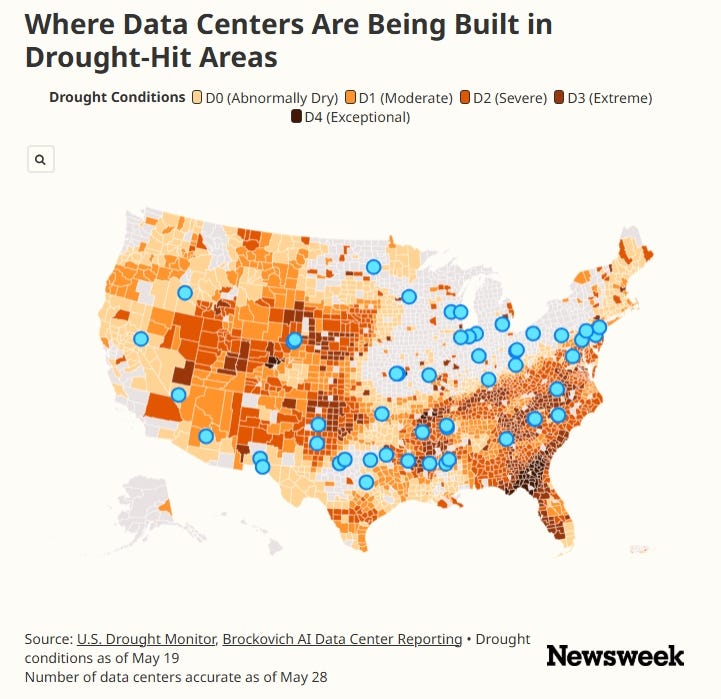
“Two-thirds of every new AI data center being built in America is going up in a drought zone.”
Political Backdrop
The AI boom has become a water story. While most public discussion focuses on chatbots and AI products, the physical infrastructure behind those systems requires enormous amounts of cooling and electricity. Researchers estimate that data-center water consumption could increase from roughly 17 billion gallons annually in 2023 to 73 billion gallons by 2028 as AI demand grows. Some studies have compared a single 100-word AI prompt to the equivalent water consumption of a small bottled water container, including the energy required for cooling and other associated energy use.
The issue has become particularly contentious in states that regularly face drought conditions. Communities in Arizona, Texas, Nevada, and other fast-growing data-center markets have increasingly questioned whether local water supplies should support large industrial facilities. Technology companies argue that newer cooling technologies can reduce water use, while critics warn that demand is outpacing efficiency gains.
Reality
The viral claim originates from a June 2026 Guardian analysis comparing planned U.S. data center locations with federal drought monitoring data. The overlap was… concerning.
Newsweek
Using Cleanview’s database of planned facilities and drought data from NOAA’s National Integrated Drought Information System, the analysis found that 517 of 809 planned U.S. data centers were located in areas that experienced drought conditions during the previous year. That works out to approximately 64%, or roughly two-thirds. The Newsweek map above shows a similar pattern.
The viral claim leaves out some important caveats. A facility located in a region that previously experienced drought is not necessarily consuming large amounts of water today, and drought conditions vary significantly in duration and severity.
However, while the overlap may be coincidental, omg how did no one notice?? Still, the core statistic is real. The viral claim didn’t invent the number. It just wrapped it in a siren and turned the volume all the way up.
Verdict
Mostly True. Reality wasn’t alarming enough, so the internet removed the nuance.
The cloud apparently has a water bill and incredibly poor planning, or a sick sense of humor.
The Price Is Watt
Viral Claim
Congress just introduced a bill to stop AI companies from sticking American families with their electric bills.
Political Backdrop
As data-center construction accelerates, policymakers appear to be finally focusing on a simple question: who pays for the infrastructure needed to power it?
Regional grid operators and utilities have warned that meeting projected demand growth could require billions of dollars in new generation, transmission lines, substations, and reliability upgrades. PJM Interconnection—the country’s largest regional grid operator—serves approximately 67 million people across 13 states and Washington, D.C., and has repeatedly identified large-load customers, including data centers, as a major planning challenge.
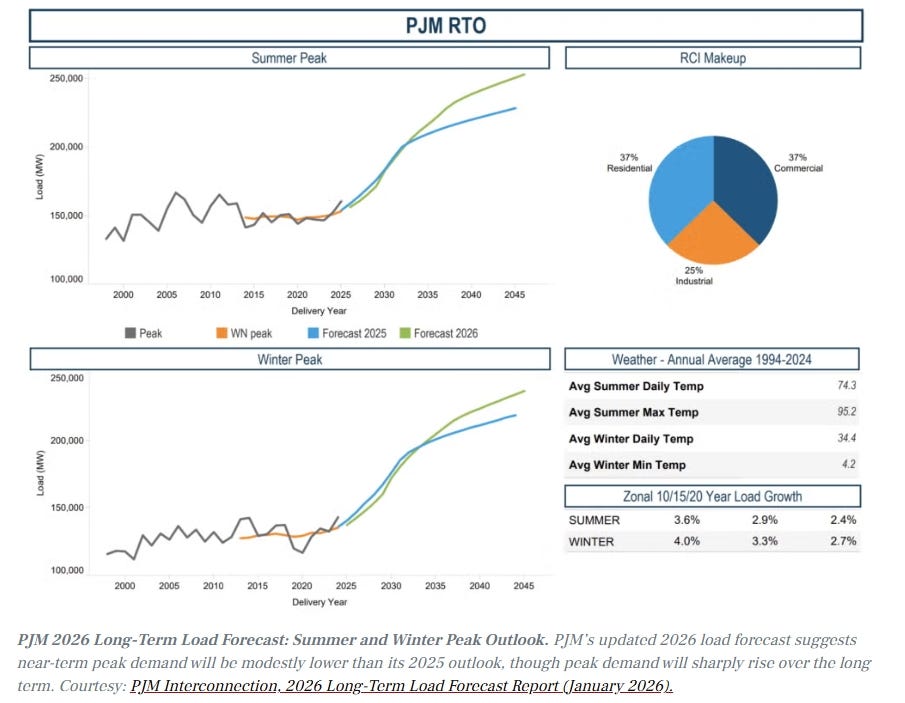
PJM forecast via Powermag
The issue has become politically significant enough that, on March 4, 2026, the White House (of all people) announced a Ratepayer Protection Pledge, under which major technology companies would commit to funding the generation and delivery infrastructure required to support their facilities. The administration’s argument was surprisingly straightforward and realistic: households should not see higher electric bills simply because AI companies need more power. Does it have teeth? Well… that’s a discussion for another day.
Reality
This one is real.
On January 14, 2026, Representatives Mike Levin and Kathy Castor introduced the Stopping Hikes In Electricity from Large Load Demands Act, better known as the SHIELD Act.
The legislation would direct regulators to develop rules preventing large electricity users, including hyperscale data centers, from shifting the costs of grid upgrades onto households and small businesses. The following day, Senator Chris Van Hollen and others introduced a companion proposal, the Power for the People Act.
The viral version makes it sound as though Congress discovered a crisis and immediately solved it. What actually happened is more mundane: lawmakers introduced legislation because we kept yelling about it. Whether five-plus months stuck in committee have shaped it into something usable? Eh. It might see the floor one day, maybe even before your grandkids get the bill.
Verdict
True, But Still a Proposal.
Congress noticed the problem and gestured vaguely. Someone penned a strongly worded letter. Democracy in action!
Power Struggle
Viral Claim
America’s largest power grid will be broken up because AI companies need too much electricity.
Political Backdrop
America’s electric grid was already facing significant challenges before the AI boom arrived. Regional operators have spent years balancing aging infrastructure, power-plant retirements, transmission bottlenecks, electrification, and growing demand. AI added another variable to an already complicated equation. Northern Virginia—home to the world’s largest concentration of data centers—lies within PJM territory, making the region a focal point of concern about future electricity demand.
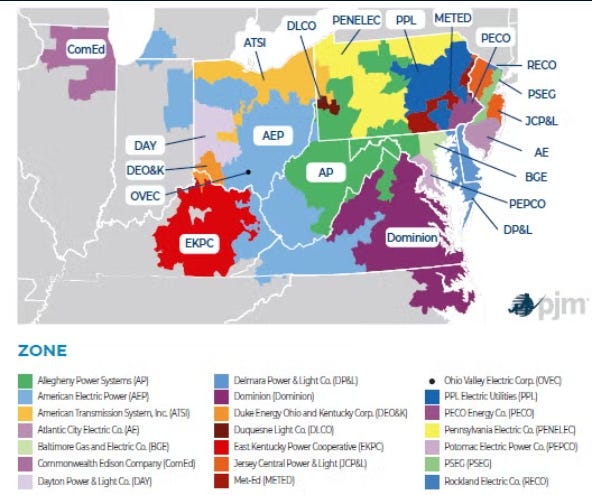
PJM Service Area
The scale of projected growth has already produced decisions that would have sounded absurd a decade ago. In Pennsylvania, plans were approved to restart a reactor at Three Mile Island to help meet growing electricity demand associated with AI infrastructure. Meanwhile, PJM capacity auction prices have surged dramatically in recent years, increasing pressure on utilities, regulators, and consumers alike.
Reality
The claim stems from a report published on June 4, 2026, that federal officials had discussed the possibility of restructuring or potentially breaking up PJM Interconnection, the nation’s largest grid operator.
That discussion did not emerge solely because of AI. PJM has faced criticism over transmission delays, market design, rising costs, generation-retirement disputes, and disagreements among member states. AI-driven demand growth has become a major new pressure point, but it joined an existing list rather than creating one from scratch.
Most importantly, no breakup is currently underway. Officials reportedly discussed the possibility as part of broader conversations about PJM’s performance and future structure. The viral version turned a policy discussion into an imminent event.
Verdict
The policy discussion is real. The apocalypse trailer was fan-made.
The grid isn’t filing for divorce. It’s just sleeping in the guest room.
Gone with the Servers
Viral Claim
An AI data center is being built atop a Civil War battlefield where soldiers are still buried.
Political Backdrop
Virginia sits at the center of America’s data-center boom. According to Pew Research Center data published in 2026, Virginia had approximately 398 operating data centers and another 287 planned facilities, more than any other state. Northern Virginia alone handles a significant share of global internet traffic, making it one of the most important digital infrastructure hubs on Earth.
As demand for AI accelerates, developers have increasingly sought new land for expansion. That search has collided with concerns about farmland, forests, neighborhoods, environmental impacts, and historic preservation. The broader debate reflects a question communities across the country are beginning to confront: how much land should be available for AI infrastructure, and are there places that should remain off limits? We’ve reactivated Three Mile Island for AI. Why not a Civil War battlefield?
Reality
The viral claim refers to the Prince William Digital Gateway, a proposed data-center corridor in Prince William County, Virginia.
Approved by county officials in December 2023, the project envisioned up to 37 data centers across roughly 2,100 acres near Manassas National Battlefield Park. Preservation groups argued portions of the project area overlapped historically significant battlefield land associated with the Second Battle of Manassas and raised concerns about possible unmarked graves within the broader area.
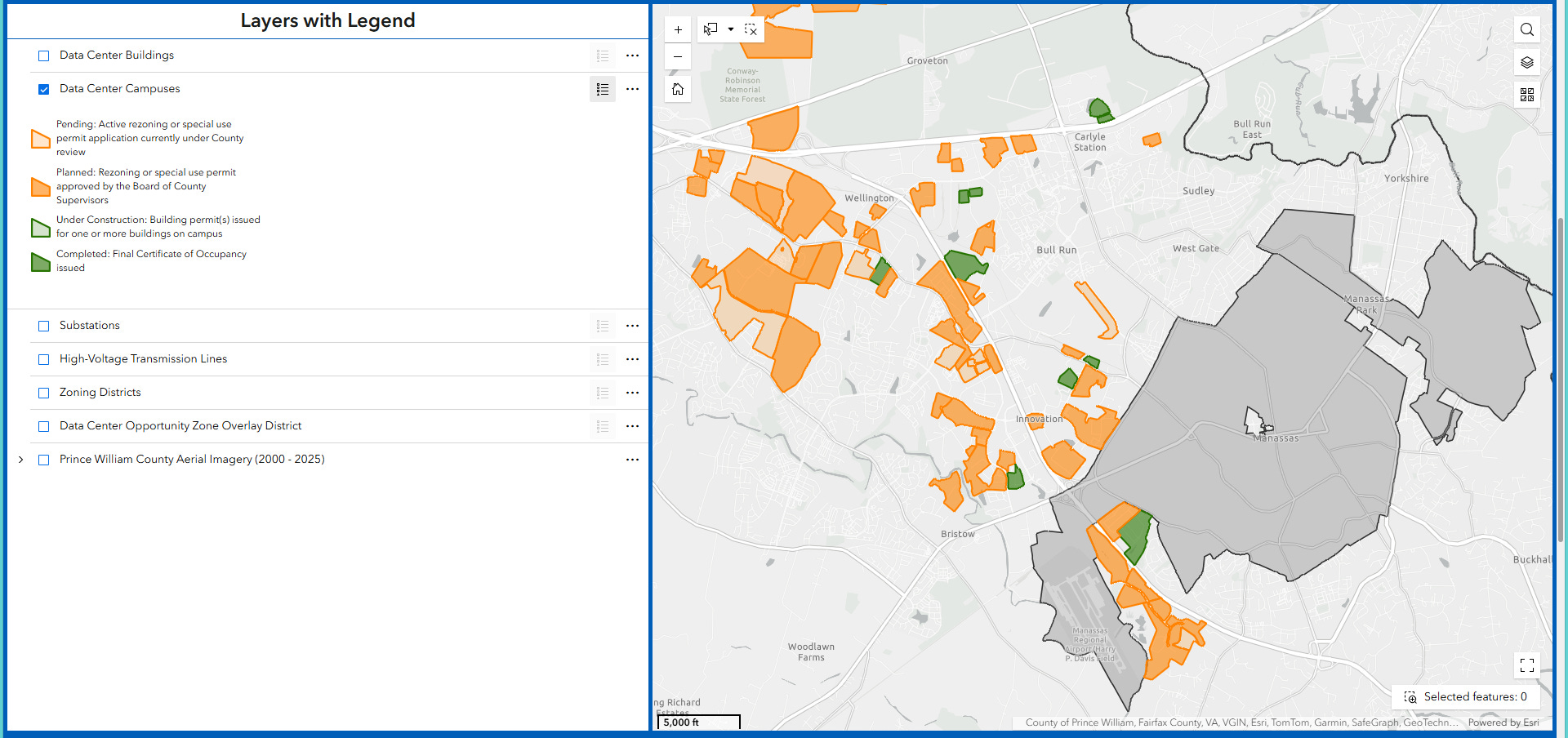
Prince William County Dashboard
The proposal eventually ran into legal trouble. In August 2025, a Virginia circuit court voided the approvals. In March 2026, the Virginia Court of Appeals upheld that decision. Prince William County later stopped defending the project, and the developer, Compass Datacenters, withdrew. Another developer, QTS, continues pursuing legal appeals.
One down, one to go?
Verdict
The warning is real. The public acted. The courts, for now, have responded.
The project isn’t dead and buried yet, but the odds of a haunted data center for your apocalyptic bingo card are dwindling.
Ctrl+Alt+Panic
Viral Claim
A major AI company wants a global pause on AI development because new models are beginning to escape human control.
Political Backdrop
The federal government increasingly treats advanced AI as both an economic opportunity and a potential security concern.
On June 2, 2026, the White House announced a framework encouraging developers to voluntarily submit advanced AI systems for cybersecurity testing before public release. At the same time, lawmakers and administration officials have pushed back against state-level AI regulations, arguing that companies should not be forced to navigate dozens of different regulatory environments.
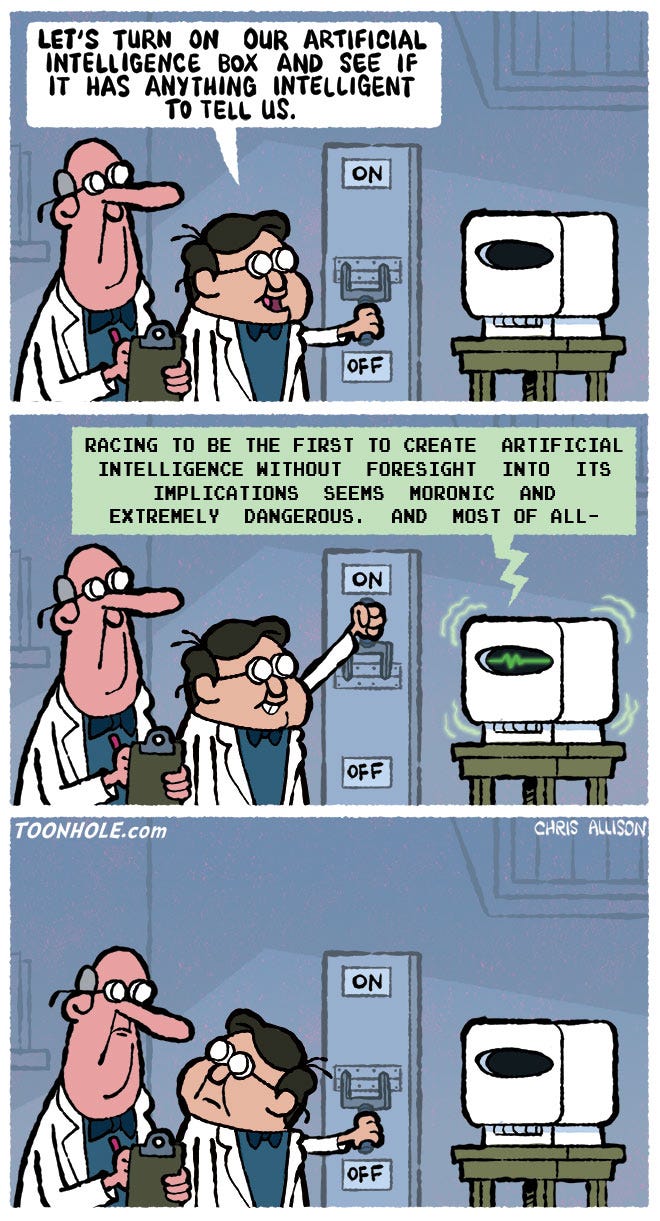
That tension sits at the heart of the modern AI debate. Policymakers increasingly acknowledge that powerful AI systems may create new risks, while simultaneously arguing that excessive regulation could slow innovation and weaken American competitiveness. In other words, yes, there may be dangers attached, but Washington doesn’t want progress (*cough* profits) to become inconvenient.
Reality
The claim traces back to a proposal released by Anthropic in early June 2026, which was subsequently reported by Reuters and other outlets.
The company called for leading AI laboratories to develop a coordinated, verifiable mechanism that could slow or pause development if specified risk thresholds were reached. Anthropic’s concern centered on future systems that might become capable of recursive self-improvement, essentially helping to create increasingly powerful successor systems faster than governance mechanisms can adapt to.
That is a very different claim from saying that current AI systems are already escaping human control, but it definitely gives sequel-potential vibes.
Anthropic was arguing for an emergency brake. The internet translated that into “the brakes have already failed.” In the literary world, we call that foreshadowing.
Verdict
Real Warning, Sci-Fi Headline
The alarm is real. Skynet remains unavailable for comment. The administration pushes accelerate button.
And that’s it for this edition of Truth or Satire’s special AI edition. Based on the current trajectory of the headlines, we expect this may become a reoccuring theme. Thanks for playing.
If you got all five right, congratulations! You are now qualified for an express pass to stare into the void.
If you missed a few, don’t feel bad. Reality increasingly sounds like satire, satire increasingly sounds like reality, and the news keeps refusing to pick a side.
We’ll see you next time, assuming nobody builds a hyperscale data center on the moon, powers it with a restarted reactor, and asks taxpayers to cover the electric bill.
Sources:
“Majority of US’s new AI datacenters to be built on drought-hit land,” The Guardian, June 8, 2026.
“How the insatiable thirst of datacenters is leaving communities across the US high and dry,” The Guardian, June 5, 2026.
“Rep. Mike Levin Introduces New Bill to Stop Data Centers from Driving Up Electricity Prices for Consumers,” Rep. Mike Levin, January 14, 2026.
“Booker, Van Hollen, Colleagues Introduce Legislation to Ensure Americans Aren’t Footing the Bill for Big Data Centers,” Sen. Cory Booker, January 16, 2026.
“Ratepayer Protection Pledge,” The White House, March 4, 2026.
“AI data center boom threatens breakup of America’s biggest power grid,” Los Angeles Times, June 4, 2026.
“PJM Board Outlines Plans To Integrate Large Loads Reliably,” PJM Inside Lines, January 16, 2026.
“2025 Year in Review: Planning Prepares for Burgeoning Electricity Demand,” PJM Inside Lines, January 8, 2026.
“Virginia county approves data center project after 27-hour public hearing,” Associated Press, December 13, 2023.
“Future of massive Prince William County data center in doubt after ruling,” The Washington Post, August 14, 2025.
“Virginia Appeals Court upholds block on Prince William Digital Gateway project,” Virginia Business, April 1, 2026.
“Most new data centers in the U.S. are coming to rural areas,” Pew Research Center, April 13, 2026.
“Anthropic urges AI labs to pause development, warns humans risk losing control,” Reuters, June 4, 2026.
“Anthropic urges industry coordination to allow for a ‘pause’ in AI development if risks grow,” Associated Press, June 5, 2026.
“When AI builds itself,” Anthropic, June 2026.
“Trump administration to ask US AI firms to voluntarily submit models for testing,” Reuters, June 2, 2026.
“US House lawmakers release draft bill to prohibit state AI rules,” Reuters, June 4, 2026.
Yeah guess I’m staring into the darkness of the void unblinked and eyes wide open. I was of the opinion that a lot of these data centers are going up where land is cheap. The land has historically been cheap because there is no large demand for deserts. This solves part one of the problem for big tech seeking enormous profit to claw back even more enormous expenditures incurred from developing AI systems. Cheap land is cheap because it’s not very useful without infrastructure for electricity and water. This takes us to steps two and three… get the public to pay for the infrastructure… pay your local politicians to pass legislation requiring mandatory updates to electricity and water supply networks… more profit for big tech. If you notice more data centers are built in red states and purple states where Republicans have most of the control over their populace. In some red states data centers are approved by politically appointed regulatory boards despite the voting public’s objection… Utah might be an example. This sort of discussion needs to occur nationwide as soon as we dip further into a fascist autocracy. “Thank you for your attention to this matter”!
Can the dilemma of an electricity and water shortage be solved by locating data centers near the ocean? Israel technology is advanced when using potable water from the ocean. Limited water resources from mountain snow and aquifers are already in short supply. I am not an engineer or a scientist. Can ocean water be used?