


The holiday weekend vibes are long gone, and we are back into the grind. And we seriously mean grind… our teeth, our joints, and lots and lots of coffee beans.
Since artificial intelligence is too busy replacing everyone’s jobs, including satirists', we are forced to untangle social media claims on our own, between gig work and the occasional sketchy internet venture. But enough about our poor life choices.
Welcome back to Truth or Satire?, the game show for people who remember when determining whether a headline was real did not require forensic analysis, three browser tabs, and a working knowledge of administrative law.
You know the drill. Five viral headlines, an alarmingly thin line between news and fantasy.
Score yourself:
4–5/5: Congratulations. You are now wildly overqualified for American citizenship.
2–3/5: Not bad. Frankly, anyone still attempting to distinguish news from a psychotic Mad Lib deserves partial credit.
0–1/5: The headlines and the satire are now functionally interchangeable. Your dignity remains intact.
Let’s play…
This Community Is Powered by You
We cover the chaos, the corruption, the propaganda, and the policies shaping the country, plus the occasional descent into the surreal.
Follow for sharp political commentary, brutal media analysis, and weekly reminders that reality is now competing directly with parody.
The Pain in Spain…
Viral Claim
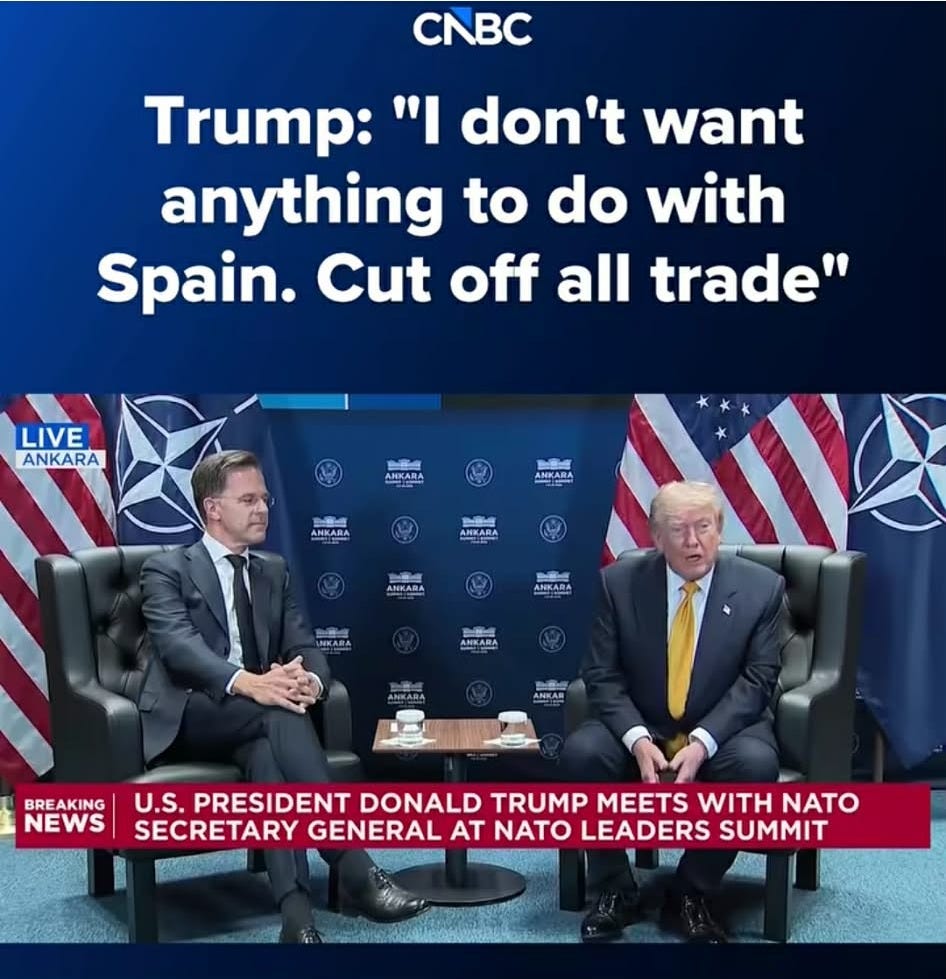
Donald Trump said, “I don’t want anything to do with Spain,” and ordered the U.S. to cut off all trade with Spain.
Political Environment
U.S. presidents exercise unusually broad authority over foreign affairs compared with most areas of domestic policy. The executive branch conducts diplomacy, manages relationships with foreign governments, negotiates with allies and adversaries, and administers significant portions of America’s national-security and international economic policy.
Governments also routinely use economic tools to pursue diplomatic and national-security objectives. Tariffs raise the cost of imports. Sanctions can restrict transactions with governments, companies, or individuals. Export controls can limit access to goods and technology. Broader economic restrictions can dramatically reduce interaction with another country.
Donald Trump has repeatedly linked economic consequences to disputes that extend well beyond traditional trade policy. His administration explicitly tied tariffs on Canada, Mexico, and China to concerns about fentanyl and migration, and invoked emergency authority to justify broader tariff actions.
Trump also routinely describes international relationships in transactional terms: whether another country is paying enough, buying enough, contributing enough, or taking advantage of the United States. In that worldview, access to the American economy and American goodwill often serve as leverage when another government resists U.S. demands.
Also, did we mention that he just says stuff like all of the time, with absolutely no context and often completely devoid of logic or a reasonable grasp of the English language?
The Reality
On July 8, at a NATO summit in Ankara, Turkey, Trump was speaking to reporters when the country in question turned out to be Spain. He called the NATO ally a “terrible partner” and a “wasted cause.”
Then came the part that sounded like somebody’s parody account had gotten a press credential. “I don’t want anything to do with Spain,” Trump said. He added that the United States did not have to trade with the country before instructing Treasury Secretary Scott Bessent to “cut off all trade with Spain, please, including visits.”
Trump’s anger centered on Spain’s refusal to commit to NATO’s new target of spending 5% of GDP on defense and its opposition to U.S. military operations in the Iran war. Spain says it has increased defense spending, supports NATO, and remains a reliable ally.
There is, however, a small administrative wrinkle known as the European Union.
Spain is an EU member, and trade policy is handled collectively through the bloc. A comprehensive Spain-only embargo would therefore be considerably more legally and logistically complicated than simply telling Treasury to hit the big red NO MORE SPAIN button. Reuters reported that Trump could potentially attempt restrictions using emergency economic powers, but legal experts questioned whether Spain’s defense spending would justify the necessary national-emergency declaration. A full cutoff would also affect more than $74.5 billion in annual bilateral goods and services trade.
And if we are being honest, we completely imagine his goons are drafting the language as we speak. He throws a tantrum, and fifty lawyers pull an all-nighter, disrupting everything for months before the courts are ultimately forced to weigh in.
The Verdict
TRUE. The quote is real. The policy is still loading.
Somewhere, Marco Rubio is learning that “Secretary of State” is mostly just apologizing to countries Dad blocked overnight.
Server Side Infection
Viral Claim
An AI data center contaminated a city’s water with a drug-resistant bacterium.
Political Environment
Modern data centers concentrate enormous amounts of computing equipment in relatively small spaces, and computing generates heat. Cooling is therefore a basic operational requirement. As artificial-intelligence workloads increase computing density and electricity demand, the infrastructure needed to remove that heat has become a growing public-policy concern.
Some data-center cooling systems consume substantial quantities of water, particularly systems that rely on evaporation. Other facilities use closed-loop designs that recirculate cooling fluid, thereby reducing ongoing water consumption. Even recirculating systems are part of a much larger industrial water infrastructure involving pipes, pumps, heat exchangers, and treatment equipment.
Bacteria, meanwhile, naturally occur in soil, water, air, buildings, and the human body. Humans live with enormous microbial communities every day, and many bacteria are harmless or beneficial. Scientists have formally identified and characterized only a fraction of the microbial diversity believed to exist on Earth.
Bacteria reproduce through cell division. When water, temperature, nutrients, time, and other environmental conditions favor a particular organism, a tiny starting population can grow to a measurable size. Conditions that suppress competing organisms can also leave more resources and space for bacteria capable of surviving that environment.
Antimicrobial resistance can develop through genetic mutation or the exchange of genetic material between bacteria. Exposure to antibiotics can also select for resistant organisms by killing susceptible bacteria while resistant ones survive and reproduce. Some bacteria, however, possess intrinsic structural or biochemical characteristics that naturally make certain antimicrobial drugs ineffective.
Water and wastewater systems also vary significantly based on jurisdiction and intended use. Federal law establishes national requirements in areas including drinking water and pollutant discharges, while states and municipalities administer permits, impose additional treatment standards, and regulate industrial discharges into local sewer systems. Treatment processes and permitted destinations for treated water can therefore differ based on the system and applicable regulations.
So we know AI is taking all of the water, but it is also a potential infector?
The Reality
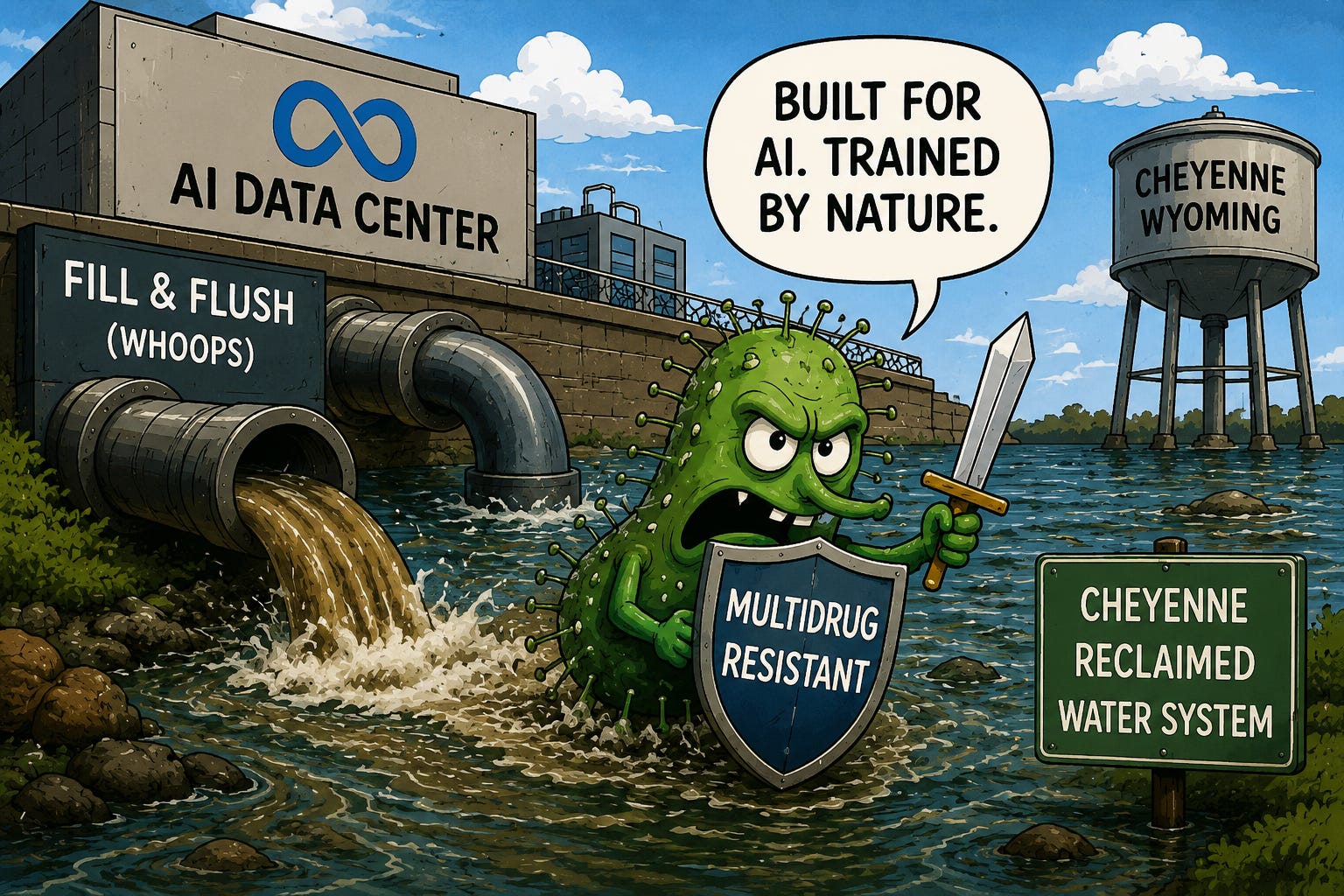
In February, the Cheyenne Board of Public Utilities in Wyoming detected Cupriavidus gilardii in its reclaimed-water system. Investigators traced the bacterium through the wastewater system to Goat Systems LLC and fill-and-flush operations associated with the construction of Meta’s Project Cosmo AI data center.
The data center was not yet operational. The discharge came from commissioning work on cooling infrastructure. Water had been circulated through newly constructed piping to remove construction debris and prepare the system for operation.
And yes, the cooling system is intended to be closed-loop. “Closed-loop,” however, describes the system’s operating design. The pipes do not arrive from the factory magically filled, sterile, and blessed by a tiny HVAC priest. During construction and commissioning, systems still have to be filled and flushed. The water used in that process was discharged into Cheyenne’s sanitary sewer.
C. gilardii is a rare environmental Gram-negative bacterium increasingly recognized as an opportunistic pathogen. Researchers have described it as an emerging multidrug-resistant organism, and genomic research has identified a conserved intrinsic resistance profile in the species. Clinical infections are rare, but the organism can be especially concerning in vulnerable or immunocompromised patients.
In other words, there is no evidence that the AI data center created a drug-resistant bacterium or somehow trained one on antibiotics until it achieved sentience. The organism is known for its resistance characteristics, which it can naturally possess.
Exactly how the bacterium became abundant enough to cause the downstream problem remains less clear publicly. Water-filled industrial piping can provide environments where environmental organisms persist or proliferate, and bacterial communities can adhere to surfaces and form biofilms. That is a plausible mechanism, though not a confirmed explanation for what happened in Cheyenne.
Now for the phrase “a city’s water.” The bacterium was detected in Cheyenne’s reclaimed-water system and water reclamation facilities. It was not detected in the city’s potable drinking-water supply. The systems are separate. Wastewater from the data-center construction entered the sanitary sewer and moved downstream to reclamation facilities; it did not enter residents’ drinking-water mains.
Cheyenne uses treated reclaimed water for irrigation. That is not the same as saying there was no possible exposure concern. Irrigation can create aerosols, and an opportunistic bacterium understandably gets public health attention. However, “rare bacterium detected in reclaimed irrigation water” and “AI superbug in your kitchen faucet” are two very different horror movies.
BOPU deemed the discharge a significant noncompliance, revoked Goat Systems’ fill-and-flush discharge privileges, disinfected the affected system, temporarily shifted some irrigation systems to potable water, and broadened restrictions on data-center fill-and-flush and closed-loop wastewater discharges. Meta and its general contractor, Fortis, stopped onsite wastewater discharge, and independent testing commissioned by Fortis reportedly found no trace of the bacterium.
The Verdict
MOSTLY TRUE, but infected with fearmongering.
Silicon Valley promised to disrupt public utilities. We probably should have asked a follow-up question.
The Buck Stops… Somewhere
Viral Claim
The Treasury killed the long-planned Tubman currency.
Political Environment
Redesigning American currency is a remarkably slow, technical process. The Treasury Department oversees U.S. currency design, while the Bureau of Engraving and Printing develops and produces the notes Americans eventually fold into wallets, lose in washing machines, and hand to children who immediately spend them on Robux.
Currency redesigns are frequently driven by security. Anti-counterfeiting technology, accessibility considerations, production requirements, and the sequencing of denomination redesigns can stretch the process across multiple administrations.
However, American money is also political memory carried in a pocket. The portraits and symbols chosen for currency elevate particular people and stories into the national canon. Changing those images inevitably raises questions about who gets commemorated, which historical narratives receive prominence, and whether altering a familiar bill constitutes overdue recognition or an assault on somebody’s laminated diner placemat version of history.
Presidents and Treasury secretaries can influence priorities, timelines, and public messaging around redesigns, but even with political support, changing a banknote is not as simple as selecting a new profile picture and hitting save.
The Reality
In 2016, Treasury Secretary Jacob Lew announced that Harriet Tubman would appear on the front of a redesigned $20 bill. Andrew Jackson, whose portrait currently occupies the front, would move to the reverse side as part of an expanded depiction of the White House and American history. The Treasury originally expected to unveil final concepts in 2020.
Trump was not subtle about his opinion. During his 2016 campaign, he called putting Tubman on the $20 “pure political correctness” and suggested she be placed on another denomination instead, because… the $20 is uniquely sacred? During his first administration, Treasury delayed the $20 redesign, with then-Secretary Steven Mnuchin citing security and production timelines. The decision on the portrait was effectively pushed into the future.
The Biden administration revived the effort. In 2021, the White House said the Treasury was resuming steps to put Tubman on the $20, returning the decade-spanning redesign to the bureaucratic equivalent of “still buffering.”
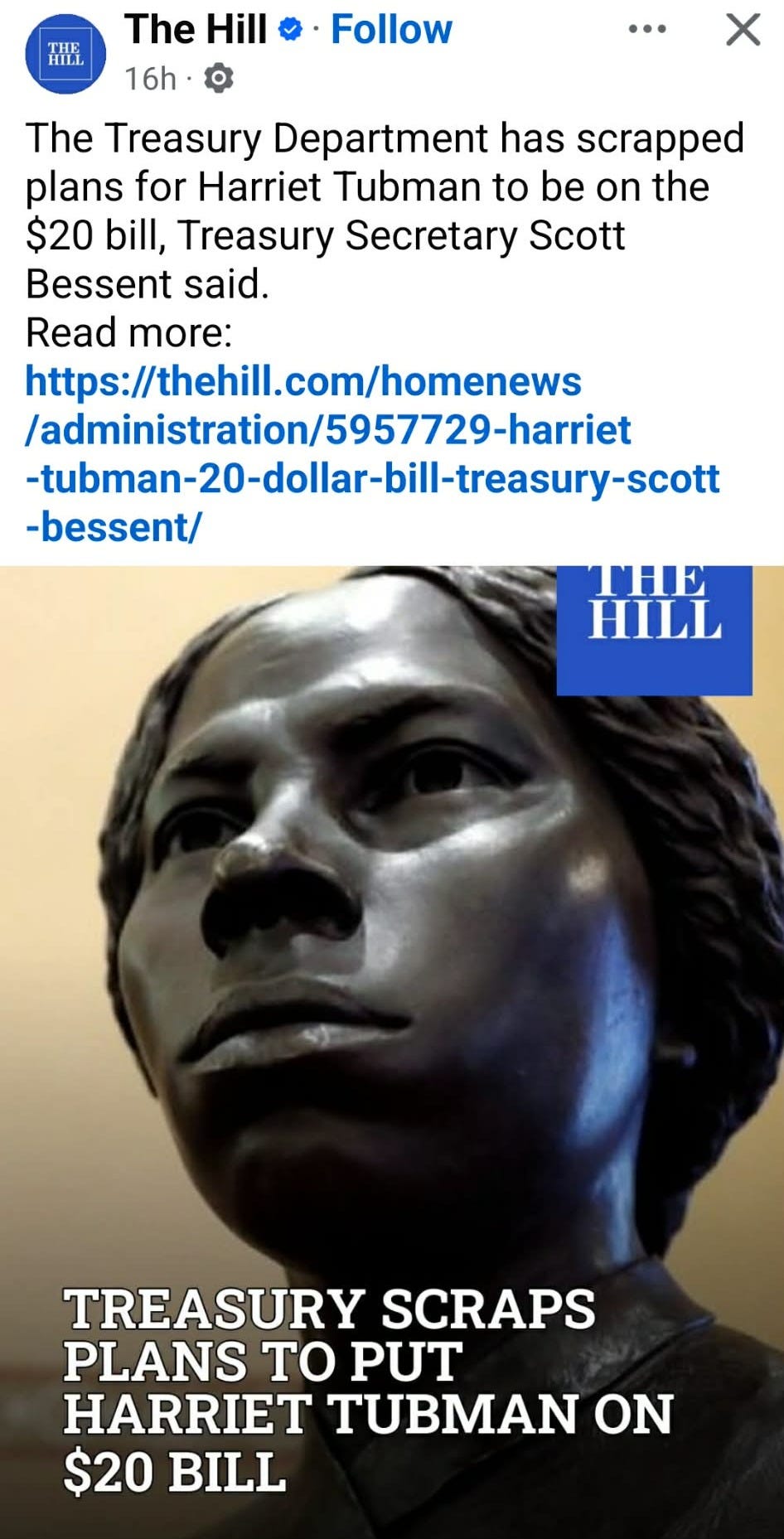
Then, this week, Treasury Secretary Scott Bessent was asked whether the department still planned to move forward. “We are not at present,” Bessent said. He offered no further explanation, and a Treasury spokesperson declined to elaborate beyond his answer. Reuters reported that the department is no longer planning to place Tubman on the $20, while Spectrum News described the administration as having abandoned the decade-old plan.
So yes: Treasury has stopped pursuing the Tubman $20.
“Killed” makes the process sound considerably more cinematic than a redesign spending ten years being delayed, revived, rescheduled, and eventually suffocated beneath a weighted blanket of federal bureaucracy. However, as of now, the long-planned Tubman currency is no longer the Treasury Department’s plan. Should we expect Trump’s mug instead? I’m sure Representative Luna is drafting up a proposal at this very moment.
The Verdict
TRUE, but killed by paperwork, politics, and a suspiciously well-timed printer jam. Probably.
Even the Underground Railroad moved faster than the Bureau of Engraving and Printing.
Troubled Waters
Viral Claim
Trump spent millions restoring another D.C. water feature, and it immediately turned brown.
Political Environment
Washington, D.C., has an unusual patchwork of local and federal control. Many of the capital’s best-known parks, monuments, fountains, and ceremonial spaces are managed by the National Park Service rather than the city government.
Public water features are also deceptively complicated pieces of infrastructure. Pumps circulate water. Pipes move it. Basins have to be sealed and maintained. Sediment, mineral buildup, algae, filtration, water chemistry, weather, and aging mechanical systems can all turn “make water look pretty” into an expensive engineering assignment.
Insert your Algae-gate jokes in the comments.
The Trump administration has made beautifying Washington a highly visible political project. The effort has included work on parks, monuments, fountains, and other prominent public spaces as the country marks its 250th anniversary.
Deferred maintenance makes this kind of work politically attractive. A visibly broken public space offers an opportunity for a highly visible repair, a ribbon-cutting, and a declaration that somebody finally fixed what previous leaders ignored.
The plumbing, regrettably, does not vote.
The Reality
The water feature is the cascading fountain at Meridian Hill Park, also known as Malcolm X Park, in Washington. We will respectfully allow you to insert your own snide remark approximately… here. The National Park Service manages the historic site, whose 13-basin cascade had been dry for years before it reopened this spring after restoration work.
The work was part of a much broader push to restore D.C. fountains and water features. The Washington Post previously reported that the Park Service was spending at least $54.2 million on seven sites across the capital.
The Meridian Hill cascade reopened in May. By July 8, the water was brown. snicker Reuters photographed the restored fountain closed with brown water sitting in the basins.
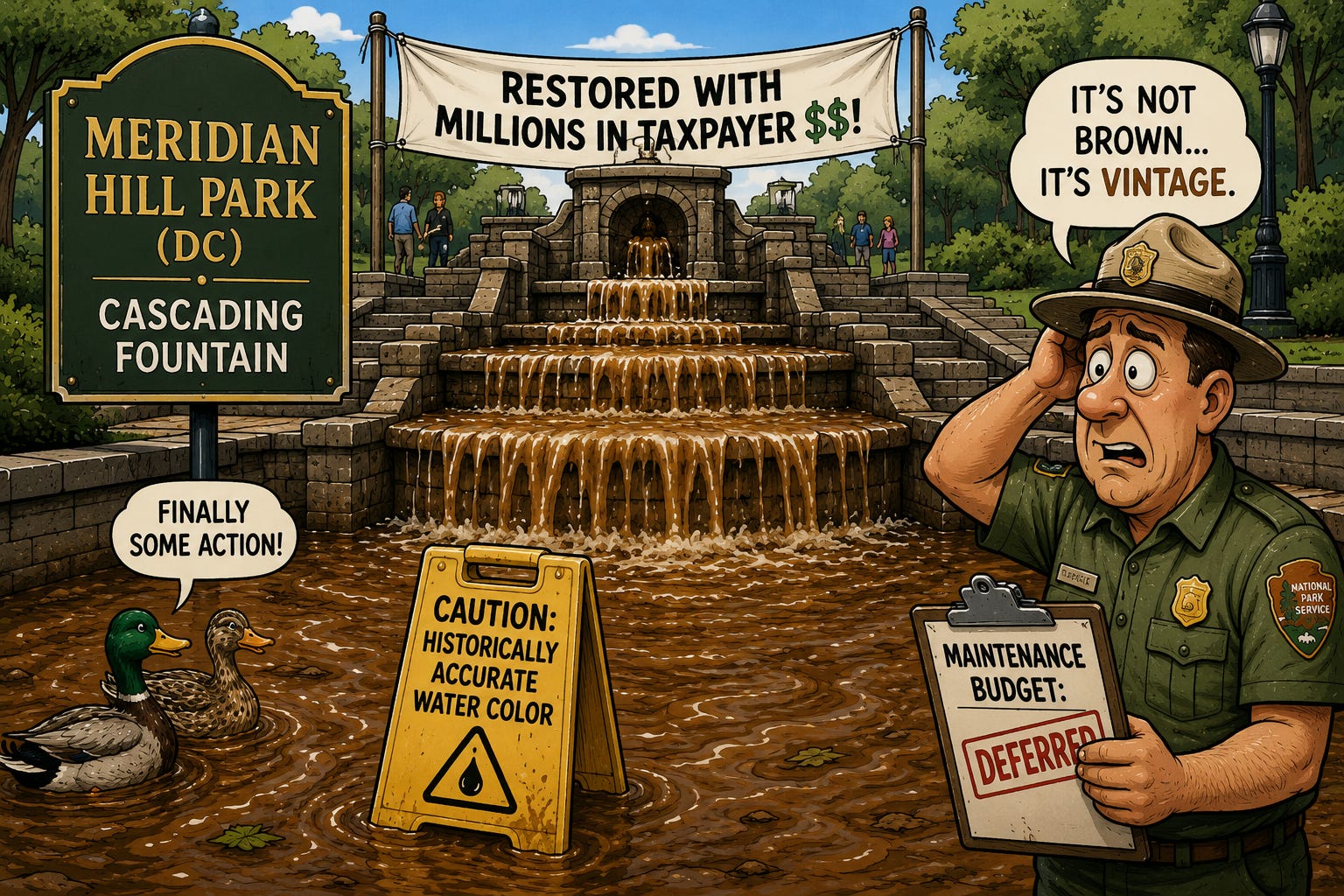
The National Park Service says the discoloration is sediment from newly reopened water lines and expects the water to clear as the system runs.
To be honest, no one is really surprised. That’s what happens when a country treats infrastructure maintenance like flossing: ignore it for generations, then act betrayed when something turns brown. But we digress.
The optics are particularly unfortunate because this follows another highly publicized water-feature fiasco at the Lincoln Memorial Reflecting Pool, where algae, peeling paint, repair costs, and presidential claims of vandalism had already turned decorative water into a recurring political subplot and the emergence of some of the best memes in years.
So yes, millions have been spent as part of Trump’s D.C. fountain-restoration campaign, and yes, another restored water feature is spewing less-than-ideal optics shortly after reopening.
The current explanation, however, is sediment from water lines—not sewage, industrial contamination, or the Potomac finally developing a political opinion.
The Verdict
MOSTLY TRUE, but probably sediment, not Watergate 2.
At this point, D.C. fountains are less “Make America Beautiful Again” and more infrastructure filing a whistleblower complaint.
Night at the Museum
Viral Claim
The White House wants the Smithsonian to warn visitors that its history exhibits were made by people who don’t want you to love America.
Political Environment
Museums are not simply buildings full of old objects and schoolchildren being threatened with the loss of gift-shop privileges. Public history decides what gets preserved, what gets emphasized, whose suffering is documented, and which national myths are allowed to survive contact with primary sources.
The Smithsonian Institution occupies an unusual position in American government and culture. It receives substantial federal support and was established by Congress, but it is not simply another executive-branch department taking daily exhibit instructions from the White House. Its museums rely on historians, curators, educators, researchers, donors, and a Board of Regents.
American museums have long been political battlegrounds. Exhibits involving slavery, Indigenous history, immigration, racism, war, gender, labor, and civil rights routinely provoke disputes over whether presenting painful parts of the national story constitutes honest history or insufficient patriotism.
Trump has made that dispute an explicit governing priority. In March 2025, he signed an executive order titled “Restoring Truth and Sanity to American History,” directing federal officials to combat what the White House called “divisive ideology” at cultural institutions and emphasizing exhibits that highlight American achievement.
The administration has also targeted the Institute of Museum and Library Services for reduction “to the maximum extent consistent with applicable law” and proposed eliminating the agency in its budget. The IMLS provides grants and support to libraries and museums across the country.
Meanwhile, references to Trump’s two impeachments disappeared from Smithsonian displays on multiple occasions. The Smithsonian denied White House pressure in the 2025 controversy and later restored impeachment references in an updated presentation. In January 2026, AP again reported that references to Trump’s impeachments had been removed from his National Portrait Gallery display.
The Reality
On July 4th, with absolutely zero irony, the White House released a report titled Saving America’s Story: How Ideological Capture at the Smithsonian Institution’s National Museum of American History Erases Our Heritage. The 162-page document, produced by Trump’s Domestic Policy Council, attacks the Smithsonian and reserves particular hostility for the National Museum of American History.
The report accuses Smithsonian leadership of turning the institution into a vehicle for “extreme political activism” and presenting a radical version of American history. It argues that the flagship history museum has abandoned a celebratory national narrative in favor of themes involving oppression, inequality, and systemic injustice.
And then the White House wrote the sentence that satirists will cite in their workers’ compensation claims. The report says the National Museum of American History “would benefit most Americans” if every entrance displayed this label:
“Warning: the exhibits in this museum were prepared by people who don’t want you to love your country.”
Yeah… even the internet couldn’t exaggerate the quote. That is the actual language in the actual White House report.
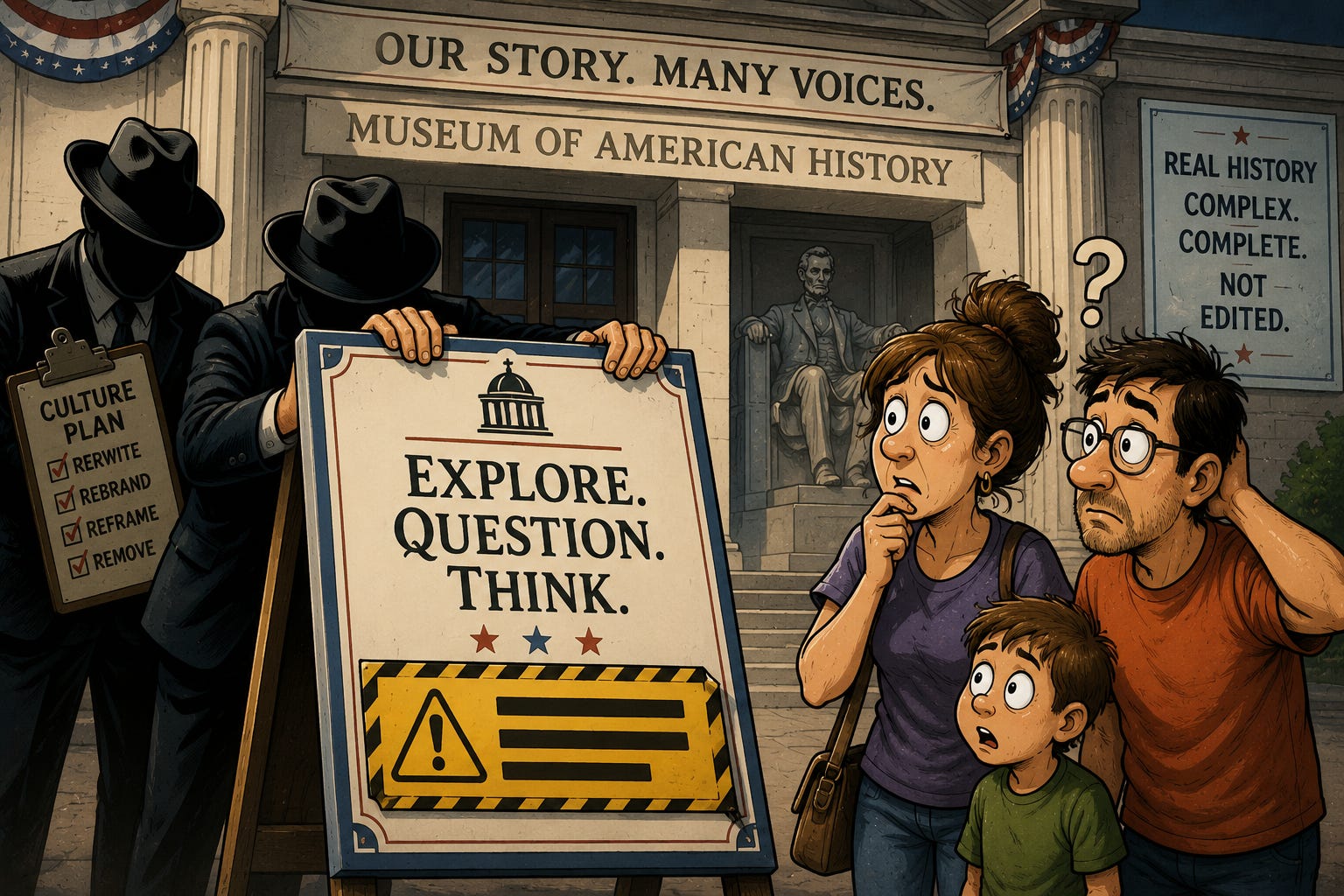
There is, however, one important distinction. While the report proposes the warning signs in its attack on the museum, there is no evidence that physical signs bearing the language have been ordered installed at Smithsonian entrances. And as anyone in retail, public service, libraries, museums, and really any space used by the public can tell you, no one reads signs anyway.
Smithsonian Secretary Lonnie Bunch has pushed back against the administration’s characterization of the institution, and historians and museum advocates have criticized the broader campaign as political interference in professional historical interpretation. The White House report, however, makes its position unusually difficult to misinterpret.
The viral claim is therefore not a liberal parody of the Trump administration’s museum policy. If anything, it cleaned up the prose.
The Verdict
TRUE, with one footnote: the sign is in the report, not on the door. Yet.
Future historians are going to need a drink, a helmet, and one hell of a union to decipher this timeline.
So, how did you score?
Actually, don’t tell us. We no longer know whether getting all five right indicates media literacy or a prolonged exposure injury.
We’ll do this again soon, assuming we are not infected by a dangerous, weirdly wet, and brown AI pathogen with particular opinions about how one demonstrates passion for one's country, its history, and its current governance. Until next time, maybe avoid drinking from public fountains and read a book or something.
If this game gets any harder, we’re going to need constitutional scholars, trauma counselors, and three Onion editors on retainer just to sort the headlines.
Follow for the next round of Truth or Satire, where every week America dares parody to catch up. Or tune in for our regularly scheduled analysis and commentary, when the meds kick in, and we can take the headlines seriously.
Sources:
“Trump orders halt to US trade with Spain over NATO spending, Iran,” Reuters, July 8, 2026.
“How can Trump ‘cut off all trade’ with Spain?” Reuters, July 8, 2026.
“Wyoming tightens wastewater rules after Meta datacenter contractor flushed contaminated water,” The Guardian, July 8, 2026.
“‘I wouldn’t want it anywhere’: Officials trace rare bacteria back to Meta data center construction,” SFGATE, July 8, 2026.
“A Wyoming city found a rare bacterium in wastewater tied to a Meta data center,” Business Insider, July 7, 2026.
“Trump administration puts plan for Harriet Tubman $20 bill on ice,” Reuters, July 7, 2026.
“Exclusive: Trump administration says it has abandoned plans for new Harriet Tubman $20 bill,” Spectrum News, July 6, 2026.
“Meridian Hill Park,” National Park Service, accessed July 8, 2026.
“Meridian Hill Park Cascades,” National Park Service, June 17, 2026.
“Restored cascading fountain in Meridian Hill Park is seen with brown water in Washington, D.C.,” Reuters Connect, July 8, 2026.
“Historic DC fountain restored by Trump turns brown, video shows,” Newsweek, July 8, 2026.
“White House report brands Smithsonian leadership as radical activists who can’t be trusted,” AP News, July 5, 2026.
“Smithsonian head says White House report unfairly characterized US history museum,” Reuters, July 8, 2026.
“In scathing report, White House accuses Smithsonian of presenting ‘a radical view of American history,’” ABC News, July 6, 2026.
“Saving America’s Story,” The White House, July 4, 2026.
Satire my friend, we hardly knew ye.
The more bizarre the claim that the administration did something stupid, rascist, or against something in history that he declines to acknowledge, the more likely I am inclined to think it’s at least partially true. Nothing he does seems to make good sense anyway. He’s a bundle of satire himself, but unlike Borowitz, he’s not funny.