


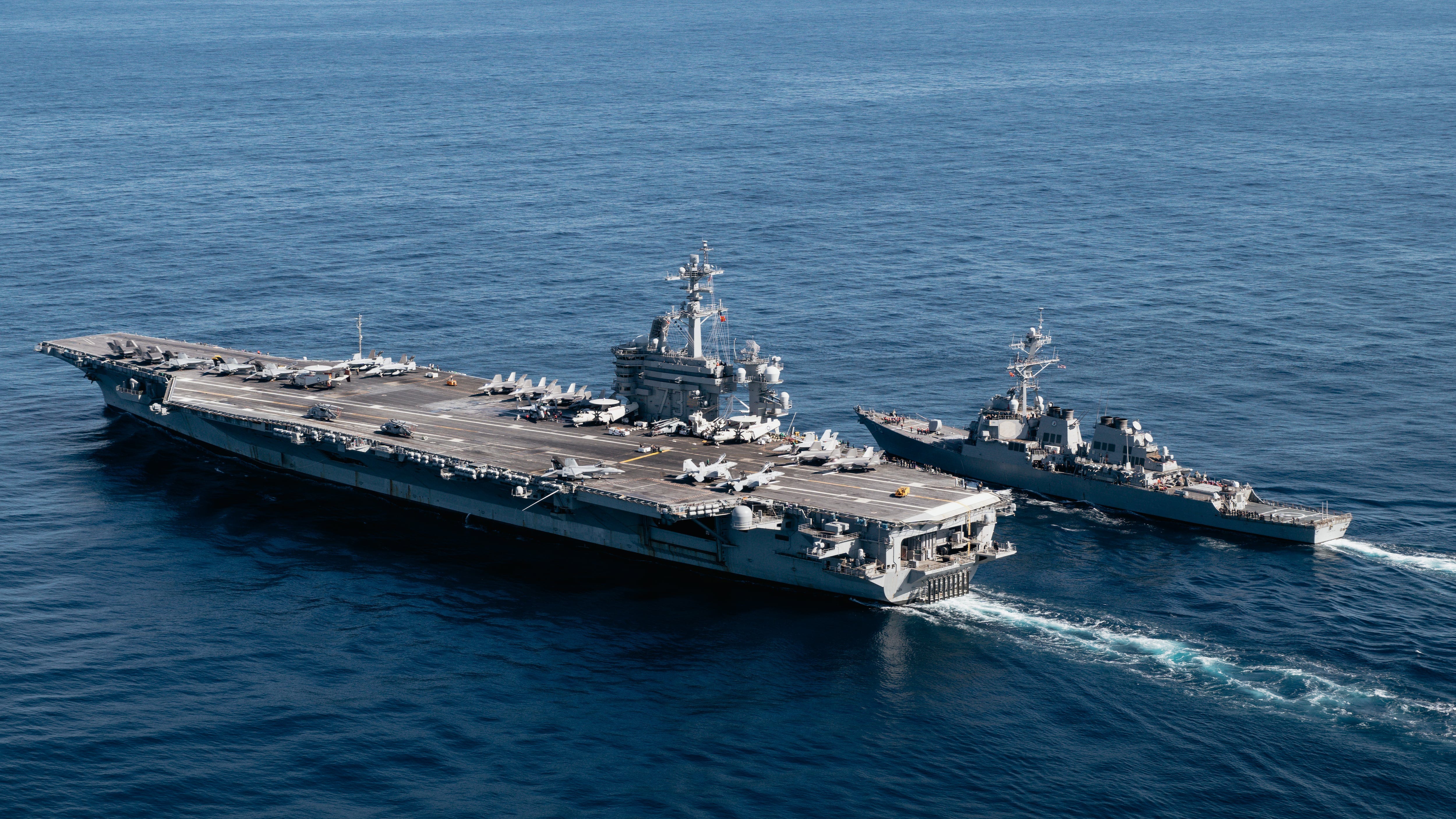
The U.S. Navy now has two nuclear-powered supercarriers operating in the Western Pacific, a deployment shift that underscores heightened strategic competition with China and adds weight to U.S. Indo-Pacific deterrence efforts. Forbes reported Thursday that a second carrier has been sent to the region, joining existing forward-deployed assets.
This movement raises questions about U.S. naval posture at a time when China has expanded its own carrier operations in the same waters, including simultaneous deployments of multiple PLAN carriers earlier in 2025. The presence of two American carriers could alter regional naval dynamics and complicate Beijing’s strategic calculations.
Confirmed U.S. Navy public affairs material shows USS George Washington (CVN-73) — the premier forward-deployed carrier based in Yokosuka, Japan — has been active in the Indo-Pacific this year, including port calls in Guam and routine operations across the U.S. 7th Fleet area of responsibility.
Follow The Coffman Chronicle on NewsBreak for daily breaking political coverage.
The Forbes piece includes imagery from Manila Bay but does not publicly disclose the identity of the second supercarrier now reported in theater. U.S. Navy press releases have not yet issued a corresponding announcement, leaving that detail unconfirmed by official sources.
Defense analysts see this deployment pattern as part of a broader deterrence strategy amid intensifying rivalry with China’s maritime forces. “Maintaining a visible, robust carrier presence in the Western Pacific demonstrates U.S. commitment to regional security,” a defense commentator told Forbes.
The dual-carrier presence amplifies U.S. naval capabilities but also invites scrutiny over how China might respond in the coming months. Regional capitals and allies will be watching for scheduled exercises, port calls, and joint operations. What happens next — such as coordinated drills or additional force rotations — will shape how the Indo-Pacific security environment evolves in 2026.
Follow The Coffman Chronicle on NewsBreak for daily breaking political coverage.