


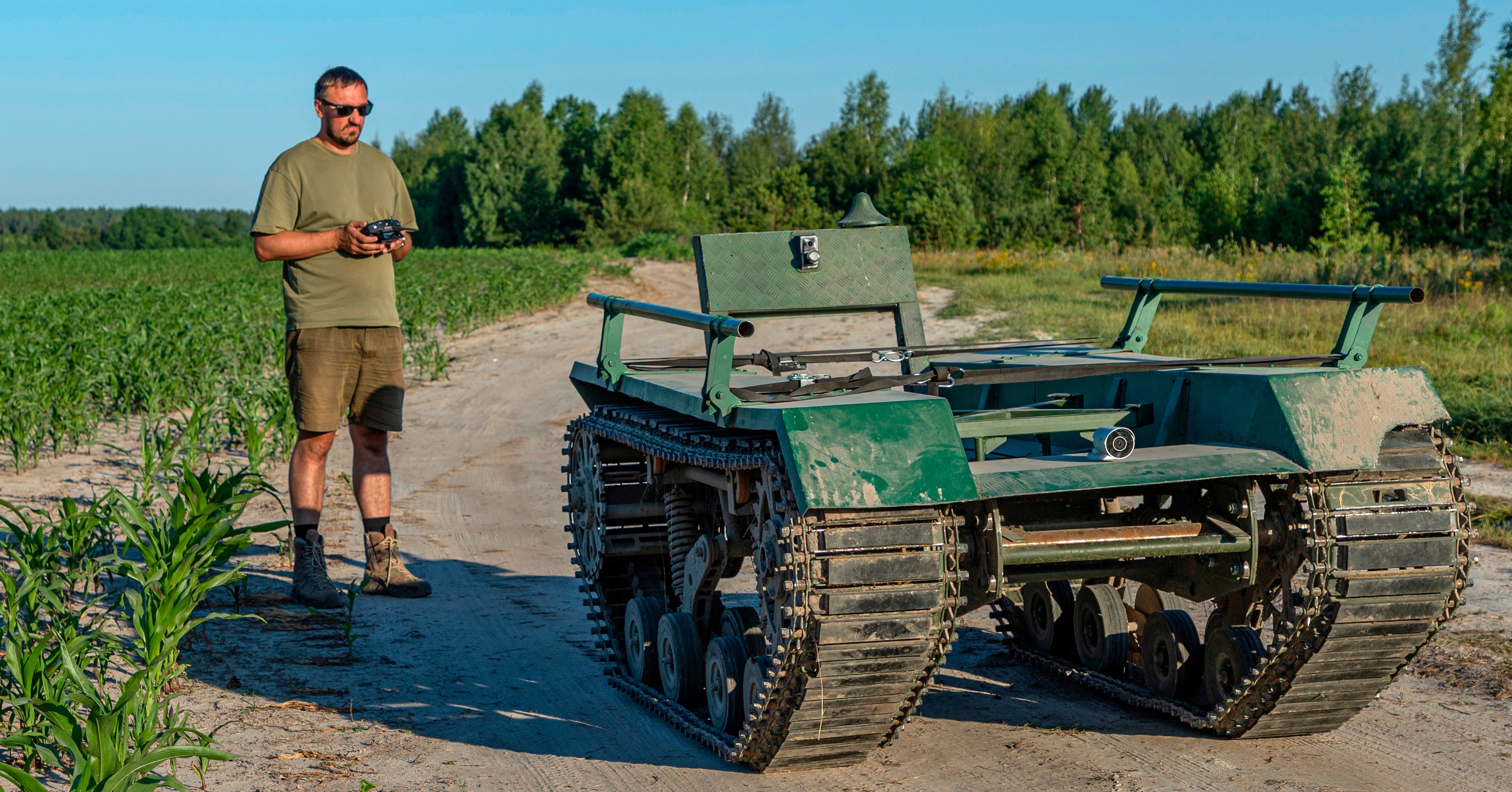
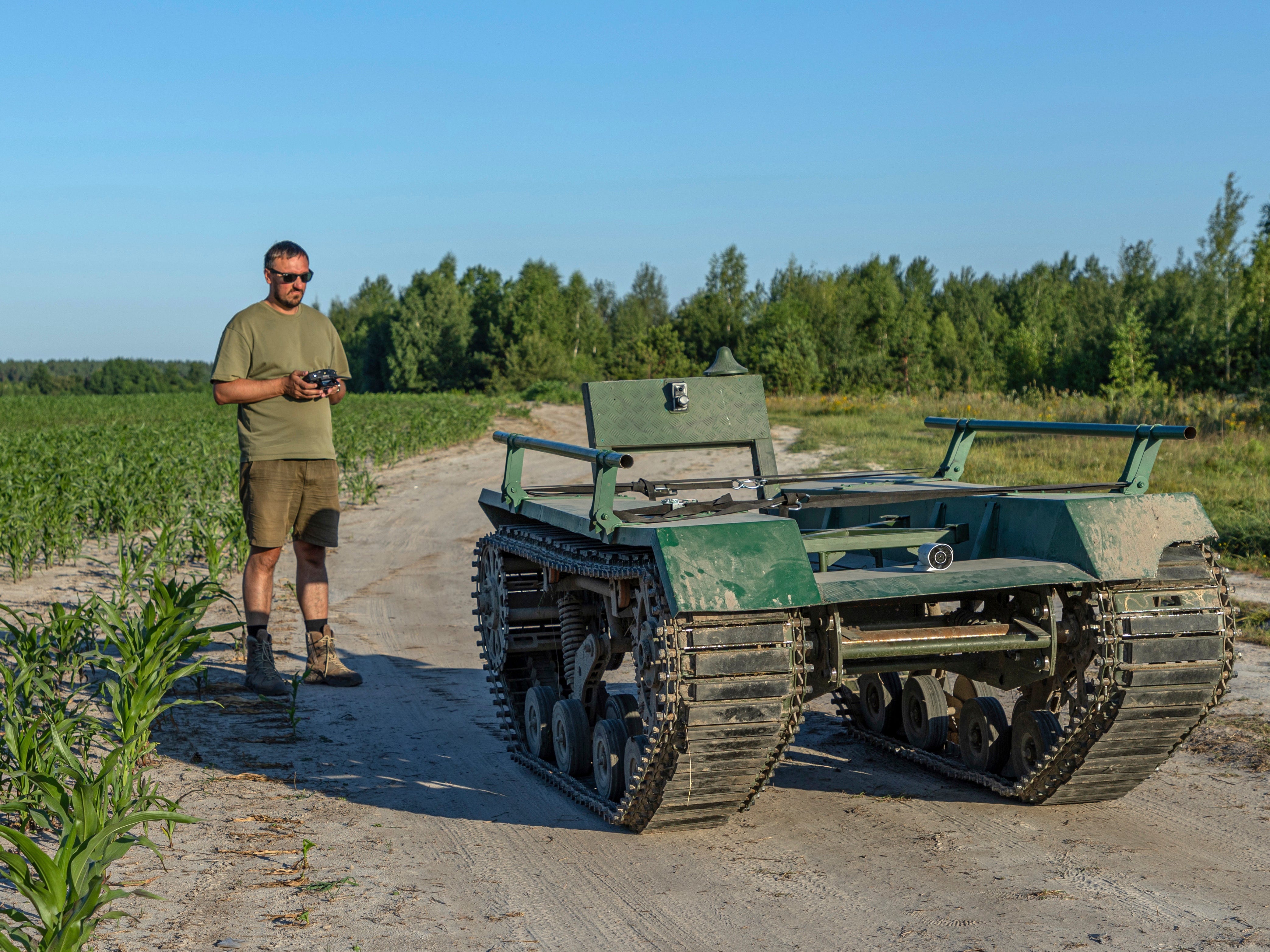
Ukraine’s battlefield is sharpening a warning for Western militaries: future wars may reward cheap robotic mass as much as expensive armor.
The argument is gaining traction as Ukrainian defense innovators push low-cost ground robots into missions once handled by armored vehicles, from supply runs to combat support.
The tension is economic as much as military.
In a long attritional war, losing tanks, IFVs and precision munitions can strain industrial capacity. Smaller expendable robots can be built faster, upgraded faster and sent into danger more often.
That logic extends beyond ground robots.
Subscribe free for daily political analysis they won’t broadcast. Join 110K+ readers →
FPV drones costing hundreds or thousands can threaten systems worth millions. Fiber-optic drones have complicated electronic jamming. Sea drones have challenged naval assumptions. AI-assisted targeting and autonomous swarms are raising new questions about battlefield scale.
“The future battlefield will favor adaptable mass,” Fedoryshyn argued in reporting cited by Business Insider.
That matters because the story is bigger than Ukraine.
Modern warfare is increasingly blending robotics, electronic warfare, loitering munitions, autonomous logistics, sensor fusion and software-driven weapons that evolve in weeks, not decades. Even tanks are now being judged alongside drone defenses, counter-EW systems and robotic support layers.
The unanswered question is whether NATO and other militaries can shift procurement fast enough.
Ukraine’s battlefield suggests tomorrow’s dominant force may not be the side with the most armored steel, but the side able to field cheap, intelligent and replaceable systems at scale.
And that debate is only beginning.
Download a FREE Pocket Constitution NOW →
