


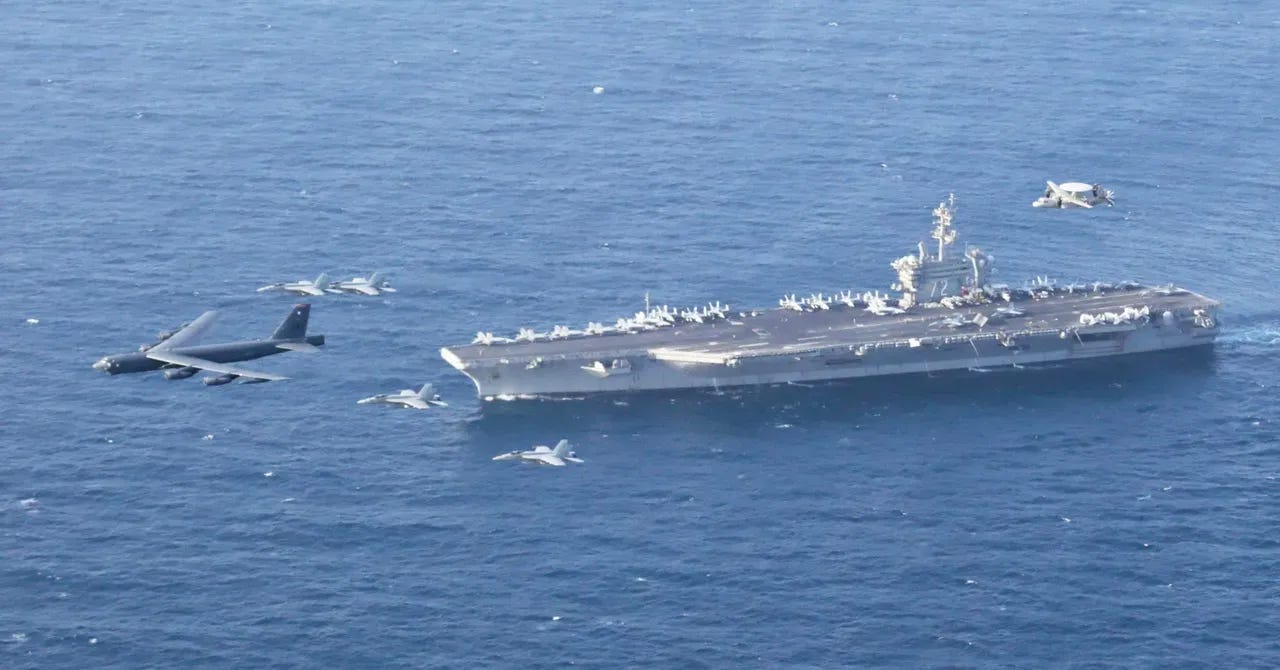
A U.S. aircraft carrier is expected to leave the Middle East as tensions between Israel and Hezbollah intensify, raising questions about whether the move reflects a shift in American military strategy or a routine repositioning.
The development comes as Hezbollah reportedly introduces new drone technology capable of evading traditional electronic detection systems. The use of fiber-optic–guided drones represents a potential evolution in asymmetric warfare, increasing pressure on Israeli defenses and complicating the broader security landscape.
At the same time, estimates tied to the ongoing conflict suggest costs could climb to $25 billion, underscoring the financial stakes for the United States and its allies. While the U.S. is not directly engaged in combat, its military presence in the region has served as a deterrent against wider escalation, particularly involving Iran-backed forces.
Subscribe free for daily political analysis they won’t broadcast. Join 110K+ readers →
The potential withdrawal of a carrier could be interpreted in multiple ways. Some analysts may view it as a signal of de-escalation or resource reallocation, while others could see it as reducing deterrence at a critical moment.
For the U.S. economy, prolonged instability in the Middle East carries risks beyond defense spending. Energy markets remain sensitive to regional conflict, and any disruption could impact global oil prices, inflation, and supply chains.
Internationally, the situation raises the possibility of broader alignment shifts, with allies and adversaries recalibrating their positions. The combination of evolving military technology, rising costs, and strategic uncertainty suggests the conflict may be entering a more complex and unpredictable phase.