


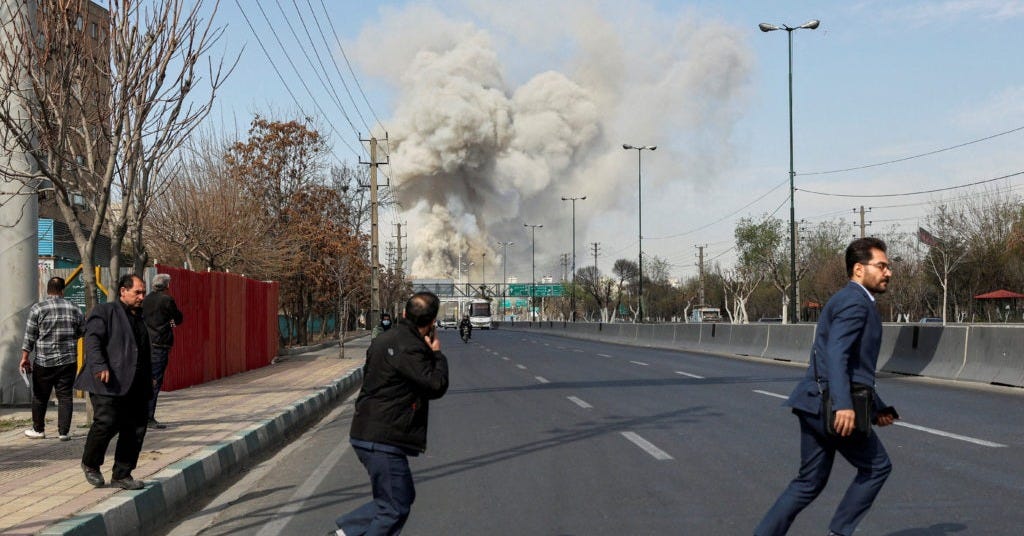
The United States launched a second consecutive round of airstrikes against Iranian military infrastructure early Thursday, while Iran answered with missile attacks targeting Bahrain, Kuwait, and Jordan in the latest escalation of a rapidly expanding regional conflict.
According to U.S. Central Command, American forces struck Iranian surveillance systems, communications infrastructure, and air defense sites. Officials described the operation as a response to what they called continued Iranian aggression. Iran subsequently launched attacks toward several Gulf states that host U.S. military personnel, forcing defensive responses across the region.
Kuwait temporarily closed its airspace during the attacks. Jordan reported intercepting incoming missiles, while Bahrain activated emergency warning systems as the threat unfolded.
Subscribe free for daily political analysis they won’t broadcast. Join 110K+ readers →
The latest exchange marks another stage in a conflict that has increasingly tied military action to diplomatic negotiations. While U.S. officials continue to insist diplomacy remains possible, repeated strikes have undermined hopes for a near-term breakthrough. Iran has continued to emphasize its leverage over the Strait of Hormuz, one of the world’s most important oil transit routes.
For global markets, the conflict extends beyond military considerations. Energy traders, shipping companies, and governments are closely watching developments because disruptions in the Strait of Hormuz can affect global oil supplies and fuel prices. Recent volatility in energy markets has already renewed concerns about inflation and economic stability.
The next key question is whether the current cycle of retaliation remains limited or expands into a broader regional confrontation involving additional state and non-state actors.
Subscribe free for daily political analysis they won’t broadcast. Join 110K+ readers →