


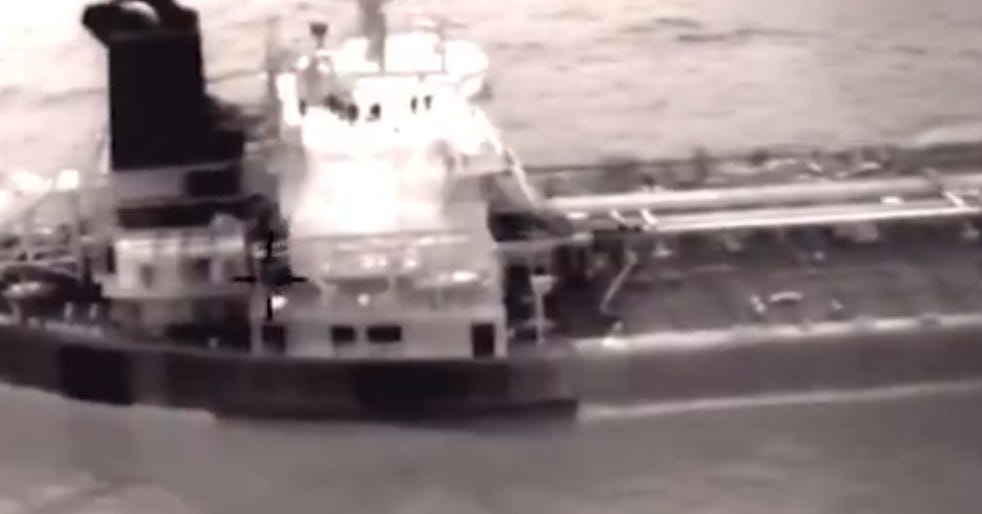
The U.S. has seized a fifth Venezuelan-linked oil tanker, part of an unprecedented campaign to enforce sanctions on Venezuelan crude and curb illicit maritime oil trade. The latest vessel, the Olina, was intercepted in the Caribbean with hundreds of thousands of barrels aboard, marking a continuation of enhanced U.S. maritime pressure.
The operation reflects rising tensions over control of Venezuela’s energy exports and risks escalating disputes with other powers invested in the region’s oil markets. Critics question the legality and precedent such seizures set under international law.
According to U.S. Southern Command, Marines and sailors from the USS Gerald R. Ford and U.S. Coast Guard forces boarded the Olina without incident on Jan. 9, acting on sanctions designations and maritime interdiction authority. The Aframax tanker had been sanctioned for transporting oil and was reportedly attempting to evade detection by sailing without a transponder.
Despite the operation’s success, questions persist over maritime law, the scope of U.S. blockade authority, and how long such enforcement can be sustained without broader international cooperation.
Follow The Coffman Chronicle on NewsBreak for daily breaking political coverage.
“Operations like this send a strong message that sanctions evasion will not find safe harbor,” a U.S. official said about the campaign.
The seizures have already disrupted the so-called “shadow fleet” that has moved sanctioned Venezuelan crude, causing several tankers to change course or avoid international waters.
More tanker pursuits are expected as U.S. authorities maintain pressure and monitor remaining sanctioned vessels still at sea.
Analysts will be watching for diplomatic and legal responses from other nations whose flagged ships have been affected.
If further interdictions occur, maritime trade routes around Venezuela could see prolonged uncertainty.
Follow The Coffman Chronicle on NewsBreak for daily breaking political coverage.