


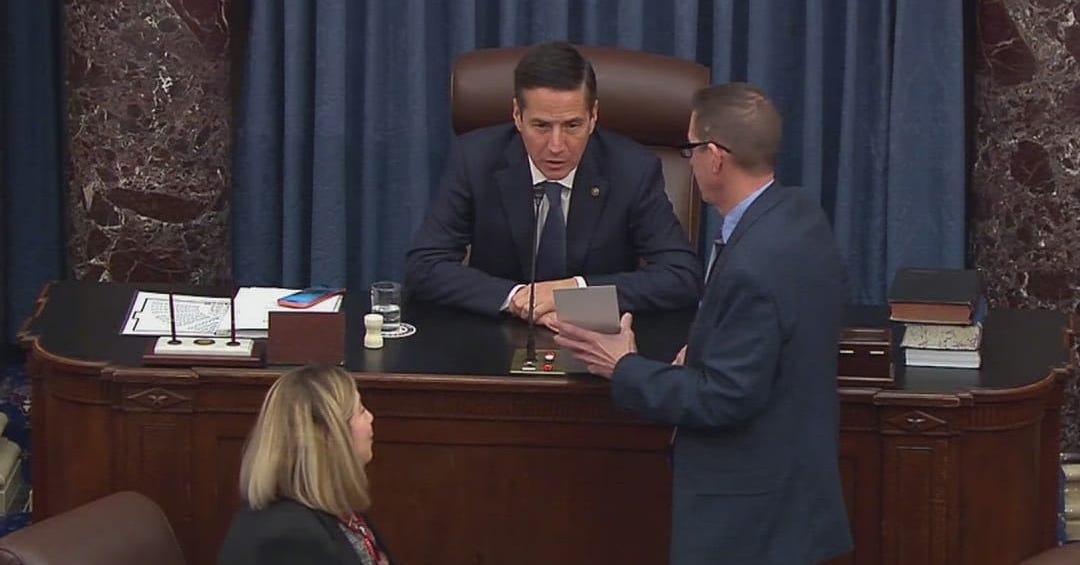
The U.S. Senate voted 53–47 to reject a resolution that would have limited presidential authority to conduct military action against Iran. The vote keeps existing executive war powers in place for now.
The proposal aimed to force the White House to obtain congressional authorization before expanding or continuing hostilities involving Iran. Supporters argued it would restore Congress’ constitutional role in decisions about war.
According to congressional reporting and coverage referenced by the Pittsburgh Jewish Chronicle, the measure failed to secure enough support in the Senate, effectively stopping the effort to impose immediate limits on potential military action.
The result exposes a familiar divide in Washington: whether Congress or the president should control rapid military responses when tensions with Iran rise.
Download a FREE Pocket Constitution NOW
Supporters of the resolution argued Congress must approve sustained military conflict.
The War Powers framework has been repeatedly tested during modern conflicts, including previous disputes over Iran policy and U.S. military strikes in the region. Lawmakers from both parties have periodically attempted to use the law to rein in presidential authority.
Because the Senate rejected the measure, there will be no new statutory restriction on military action tied to Iran unless another bill or resolution moves through Congress.
For now, the debate over who controls the path to war remains unresolved.
Follow The Coffman Chronicle on NewsBreak for daily breaking political coverage.