


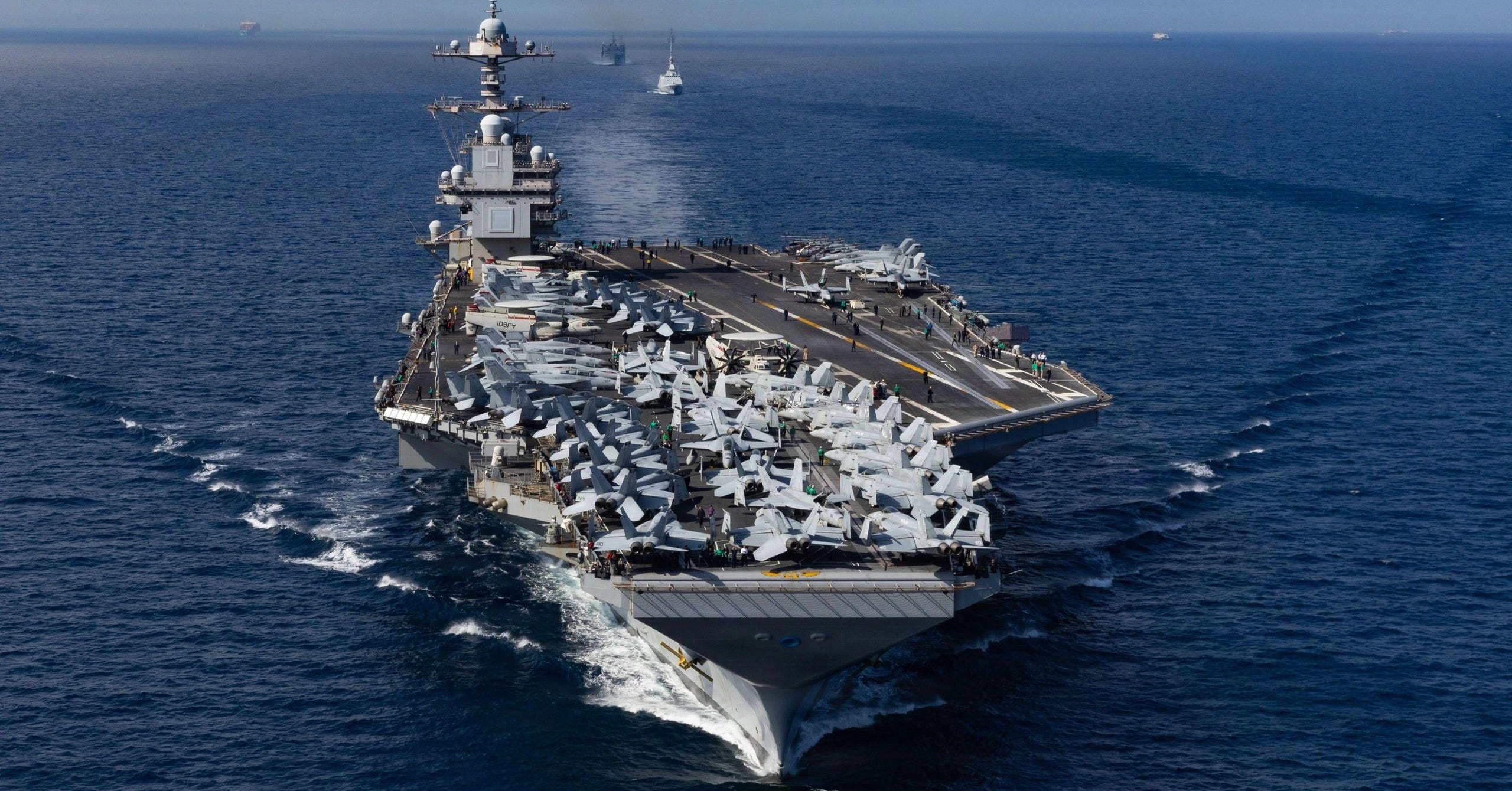
The USS Gerald R. Ford returned to Naval Station Norfolk on Saturday after a historic 326-day deployment that placed the aircraft carrier at the center of expanding U.S. military operations tied to the Iran war and other overseas missions.
The deployment became the longest post-Vietnam War deployment for a modern U.S. aircraft carrier and reflected the Pentagon’s increasingly aggressive force posture across multiple regions simultaneously. During the mission, the Ford operated in the Mediterranean Sea, Caribbean Sea, Red Sea, and broader Middle East.
The carrier initially deployed to the Mediterranean before being redirected toward the Caribbean during heightened operations involving Venezuela. It later moved into the Middle East as tensions with Iran escalated into direct conflict involving U.S. forces and regional military assets.
Subscribe free for daily political analysis they won’t broadcast. Join 110K+ readers →
Defense Secretary Pete Hegseth praised sailors during the ship’s return ceremony, calling the deployment historic because of both its duration and operational tempo.
The deployment also exposed mounting readiness concerns inside the Navy. A major onboard fire forced extensive repairs during the mission and displaced hundreds of sailors. The extended deployment length has renewed debate about whether the Navy can sustain long-duration carrier operations without damaging long-term readiness, maintenance schedules, and sailor retention.
The Ford’s return comes as the United States continues maintaining a large naval presence near Iran despite ongoing diplomatic uncertainty and regional instability. Analysts say the deployment may become a case study for how future conflicts reshape U.S. naval operations and force deployment strategy.
Subscribe free for daily political analysis they won’t broadcast. Join 110K+ readers →