


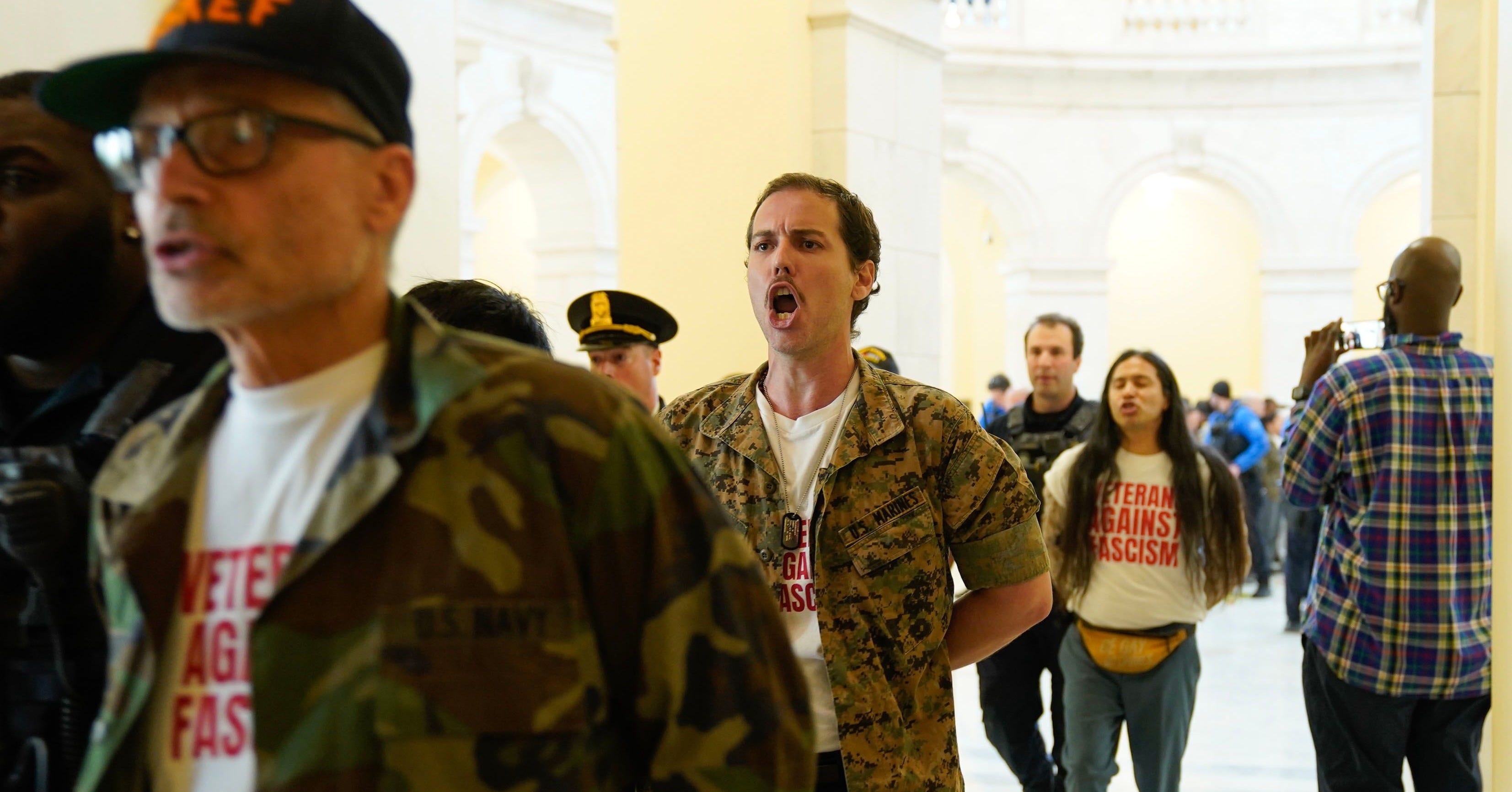
As Defense Secretary Pete Hegseth defended the Iran war before Congress for a second straight day, a parallel debate is emerging beyond Capitol Hill—one shaped by veterans and military observers who see echoes of past U.S. conflicts.
The war, launched in February and now costing an estimated $25 billion, has entered a fragile ceasefire phase with no clear resolution. Lawmakers pressed Hegseth on strategy, civilian casualties, and legal authority, while he rejected claims the conflict is becoming a prolonged entanglement.
Hegseth himself invoked comparisons to Iraq, Afghanistan, and Vietnam, arguing the U.S. remains early in the fight and is pursuing a decisive outcome. But that comparison is exactly what concerns some veterans and military analysts.
Experts have pointed to familiar warning signs: unclear long-term objectives, questions about congressional authorization, and early reports of civilian casualties. Advocacy groups tracking military sentiment have also reported opposition tied to the purpose and scope of the conflict, particularly following high-profile civilian incidents.
Subscribe free for daily political analysis they won’t broadcast. Join 110K+ readers →
Public opinion appears similarly divided, with polling indicating widespread skepticism about the war’s necessity and direction.
The concern among many veterans is not necessarily about the initial military action, but about what comes next. Past conflicts often began with limited objectives and strong political backing before expanding into long-term engagements with rising costs and unclear exit strategies.
For now, the Iran war remains in a holding pattern, active but paused. The ceasefire has slowed fighting, but with negotiations stalled and military options still under review, the trajectory remains uncertain.
As Congress debates funding and authority, the broader question, raised increasingly by those with direct experience in past wars, is whether the U.S. is witnessing the early stages of another extended conflict, or a contained operation that will end on its original terms.