


As of late Thursday night, leaders in the U.S. Senate and the White House signaled what they described as a breakthrough in negotiations over government funding, with a framework to avert a partial shutdown that has been thrown into question by a deepening political crisis over immigration enforcement. However, even as both sides claimed progress, a formal vote had not yet taken place by press time, and with the House of Representatives in recess until Monday, the path forward remains uncertain.
Under the emerging agreement, funding for the Department of Homeland Security (DHS) would be carved out from a broader package of six appropriations bills and extended temporarily — likely through mid‑February — while lawmakers continue to negotiate changes to immigration enforcement policies. The other five bills in that package, covering most of the federal government, would move forward with full‑year funding. The deal came after Senate Democrats blocked a procedural vote earlier Thursday, saying they would withhold support for the full funding bill unless substantive reforms were tied to DHS appropriations.
This Community Is Powered by You
What started as a small circle has grown into something much bigger, and it’s all because of readers like you.
Every time you forward this email, post it on socials, or bring someone new into the fold, you’re helping build one of the most passionate, independent political communities out there.
Want to keep the momentum going?
Share this newsletter with someone who should be part of this conversation.
Thank you for being here. It means everything.
From Bundle to Breakdown: How the Budget Fight Evolved
After the House passed its six‑bill funding package on January 22, 2026, the Chamber entered a recess for the balance of that week and into the next, with members not scheduled to return until February 2, 2026. This left the Senate to consider the package while the House is out of session as the January 30 funding deadline approaches, setting up the current tension over DHS funding and the potential need for a reconvened House once a new compromise is reached. That 6‑bill “minibus” included DHS alongside departments such as Defense, Transportation, and Health and Human Services, and was intended to keep the government funded through the end of the fiscal year.
However, Senate Democrats quickly found themselves in an impossible position. The minibus contains increased funding for DHS and its enforcement arms, particularly Immigration and Customs Enforcement (ICE), with no notable guardrails or oversight requirements. Democrats worry that voting for it would mean approving “business as usual” at an agency increasingly seen as unaccountable, while voting against it would expose them to criticism for triggering a partial government shutdown, even though essential agencies, including DHS, would remain funded.
See our recent reporting on this situation for more context:

That Catch‑22 began to unravel on January 24, when federal agents fatally shot Alex Pretti, a 37‑year‑old U.S. citizen and intensive care nurse, during an enforcement operation in Minneapolis. His death, at least the third in a series of fatal shootings by federal immigration agents in the region, sparked widespread outrage, intensified protests, and thrust questions about federal enforcement practices into the center of national attention.
Following the recent deaths, protesters took to the streets in Minneapolis and other cities, and local leaders denounced the tactics used by DHS agencies. These events, together with a string of other reported abuses in recent months, gave Democratic lawmakers what many describe as a “moral opening” to push for fundamental changes as a condition of their support for DHS funding.
DHS shots and the resulting outcry defused the bomb waiting for Congress in the minibus bill.
What Senate Democrats Are Asking For
In closed‑door caucus meetings on Wednesday and in public remarks, Senate Democratic leadership outlined a set of reforms they insist must be included as part of DHS funding negotiations. These are not sweeping ideological demands but rather measures that most Americans already expect from modern law enforcement:
Immigration enforcement agents should be required to remove face coverings and clearly identify themselves.
Agents should be equipped with and required to use body cameras when engaging with the public.
Enforcement actions in residential settings should be governed by judicial warrants, not solely internal DHS authorization.
A uniform code of conduct should be adopted for all federal immigration enforcement officers, aligning their use‑of‑force standards with those of state and local police.
Senate Majority Leader Chuck Schumer and other Democratic leaders have emphasized that these reforms are common‑sense and long overdue, noting that similar requirements are standard for other federal law enforcement agencies. The insistence on structural accountability reflects deep concern that DHS’s enforcement arms have operated with impunity, to the detriment of both immigrants and U.S. citizens.
Why Reform Is Overdue
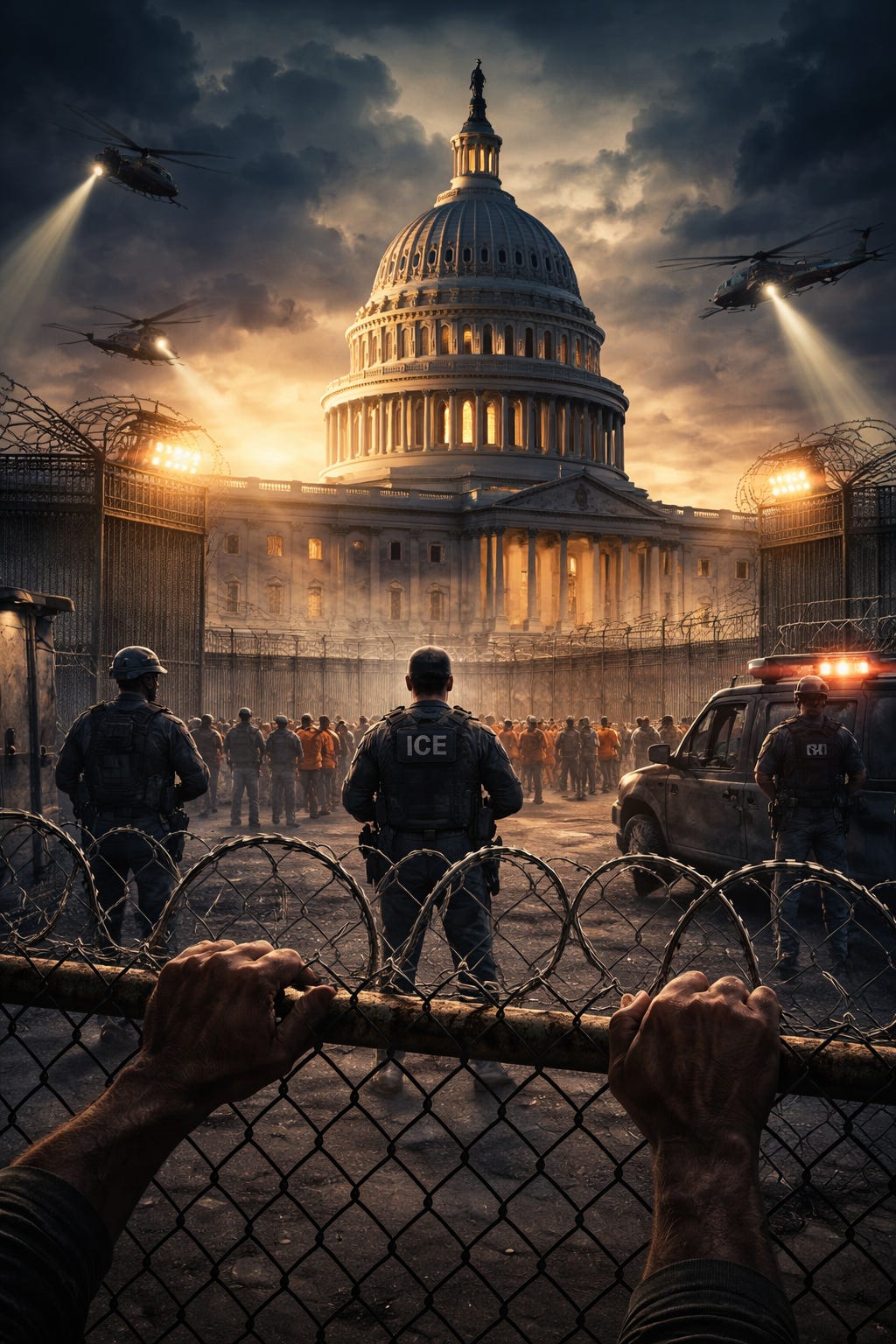
The demands for change did not emerge in a vacuum. Over the past year, a host of incidents involving DHS enforcement actions and immigration detention have brought renewed and widespread attention to longstanding issues of abuse, neglect, and lack of oversight across the system. 2025 has the dubious distinction of being the deadliest in DHS history, and 2026 is on track to overtake this cursed crown.
We’ve reported extensively about ICE. Below are a few notable recent examples.


Perhaps the most stark example is Camp East Montana, a sprawling immigration detention facility at Fort Bliss in El Paso, Texas, that opened on August 17, 2025. Built rapidly on federal land under a multibillion‑dollar contract, Camp East Montana was touted as a short‑term processing site. Yet within its first months of operation, detainees reported widespread violations of federal detention standards — more than 60 separate violations by ICE’s own oversight unit — including allegations of physical and sexual abuse, medical neglect, and threats aimed at intimidation. Two detainees reported having their testicles crushed by guards, and at least three people died there in a span of six weeks. One death, that of Geraldo Lunas Campos, was ruled a homicide by asphyxia by local officials.
Camp East Montana’s conditions reflect broader systemic issues that advocates and journalists have chronicled for years, including inadequate sanitation and medical care, as well as policies that obstruct outside scrutiny. It’s telling that a facility barely five months old, operated under direct federal authority and on federal land, could so quickly devolve into a site of repeated abuses. If this much has gone wrong so quickly in a new facility, it raises the unavoidable question of what remains hidden in older, long‑standing detention sites that have operated with even less transparency or media attention.
See our previous reporting on Camp East Montana/Fort Bliss from August here:
Note: Articles roll into our archive after 45 days. Consider becoming a paid subscriber for full access to our extensive archive.

Compounding concerns about the treatment of people in custody are the operations of ICE and Customs and Border Protection (CBP) in communities across the country. A broader enforcement effort, Operation Metro Surge, launched in late 2025, expanded immigration enforcement operations in Minnesota and beyond. During that campaign, more than 3,000 arrests were made, and agents were accused of aggressive tactics, including warrantless entries, the detention of U.S. citizens, and confrontations with observers. Multiple citizens were fatally shot during those operations, touching off protests and official condemnation.
Federal Responsibility and the Limits of Oversight
A central reason reform advocates have pressed the urgency of change is that many of these facilities and enforcement actions fall under direct federal control, not the operations of third‑party contractors. While private detention centers have often been a focus of criticism, Camp East Montana stands out because it is funded with federal dollars on federal land, with contracts to companies that run daily operations. That means there is no corporate firewall shielding the government from responsibility when abuses occur. If a contractor is paid with taxpayer money to deliver a federal service, it must be bound by the same federal standards of conduct and accountability as any other arm of the government.
Critically, reforms must include mechanisms that ensure credible allegations of abuse are met with meaningful consequences, including immediate suspension of implicated staff during investigation, criminal referrals when appropriate, and transparent reporting. It should not take public outcry and apparent tragedies to prompt reforms that should have been written into federal law enforcement’s earliest mandates.
A Broader Crisis of Legitimacy and Accountability
The urgency of the moment has pushed discussions that were once on the margins, such as support for abolishing ICE as an agency, into mainstream debates. This emerging conversation isn’t about abandoning immigration laws or borders. Rather, it reflects a deeper loss of public consent for an enforcement apparatus that many believe has become politicized, opaque, and disconnected from community norms and expectations. Polling in recent days shows support for abolishing ICE rising, not as a rejection of immigration enforcement, but as an expression of frustration that decades of incremental reforms have failed to yield substantive accountability.
See our recent article here:

Incredibly, even as these abuses come to light, the House’s proposed DHS budget would zero out funding for the Office of Immigration Detention Oversight (OIDO), the agency’s internal watchdog tasked with investigating misconduct and ensuring compliance with humane detention standards. If passed, this move would effectively dismantle the only formal oversight mechanism within DHS dedicated solely to monitoring detention conditions, just as the need for transparency has never been greater.
For many lawmakers and activists, the current budget negotiations represent a test. If basic accountability measures such as body cameras, identification requirements, and enforceable use‑of‑force standards cannot be included as conditions of DHS funding, then more fundamental questions about the agency’s structure and role will continue to gain traction.
What Comes Next
As Congress races toward an 11:59 p.m. Friday deadline for DHS funding, lawmakers in the Senate must still take formal votes to advance the reworked package. Even if the Senate approves the five non‑DHS funding bills and a temporary DHS extension, the House will need to reconvene to take up the revised legislation. That dynamic creates the possibility of a short lapsing of funding over the weekend or early next week, even as most of the government remains funded.
In the midst of these negotiations, both sides portray their positions as urgent. Senate Democrats argue that now is the time to demand accountability in an agency whose actions have shaken public confidence. Republicans, while now expressing openness to separating DHS funding, have largely resisted changes to enforcement policy and have warned against using budget votes to push reform. The White House, for its part, has acknowledged negotiations are ongoing, with President Donald Trump urging bipartisan cooperation to finalize the funding bills.
A Moment of Truth
This standoff over funding isn’t merely about dollars and cents. It is, as some lawmakers describe it, a moral moment, a referendum on whether the nation’s immigration enforcement apparatus will be governed by basic rules of accountability that apply to every other law enforcement agency or continue to operate with a degree of autonomy that has, critics argue, made abuses predictable and systemic.
Lawmakers and the public alike are watching closely. If Congress comes out of this moment without enshrining the reforms that many see as the minimum standard of humane treatment and oversight, the debate over the future of DHS, ICE, and federal enforcement more broadly will only intensify.
Stay informed, not overwhelmed.
Our reporting connects policy, power, and the people caught in between. Subscribe for honest, human-centered political journalism that doesn’t look away.
Sources:
Senate Democrats strip DHS from funding package to avert partial shutdown (Reuters) — January 29, 2026
US Senate Democrats demand immigration reforms to avert shutdown (Reuters) — January 28, 2026
Democrats and Trump strike government funding deal as shutdown looms (Washington Post) — January 29, 2026
Democratic demands harden as shutdown impasse grows over DHS (Semafor) — January 28, 2026
‘State‑sanctioned thuggery’ — Senate Dems reject DHS funding over ICE killings (TRT World) — January 29, 2026
US shutdown avoided despite stand‑off over immigration enforcement (Financial Times) — January 29, 2026
Detained Immigrants Detail Physical Abuse and Inhumane Conditions at Largest Immigration Detention Center in the U.S. (ACLU) — December 8, 2025 (updated January 26, 2026)
Migrants held at Fort Bliss suffering physical abuse, unsafe conditions, human rights groups claim (The Texas Tribune) — December 10, 2025
ACLU Renews Calls for Closure of Camp East Montana (ACLU press release) — January 16, 2026
The "moral opening" was always there. Public outrage just finally pushed the spineless democrats into it. Much praise to those who always had the courage and didn't require pushing.
Newsflash...It's Not disarmed.