


This week, something happened that would normally dominate headlines for days. It barely made it through the news cycle.
On October 14, dozens of Pentagon reporters from major outlets—CNN, ABC, CBS, NBC, Fox News, the Associated Press, Reuters—turned in their badges and vacated their offices inside the Pentagon. Why? Because the Department of Defense issued a new press policy demanding that journalists agree not to publish “unauthorized” information—even if it’s unclassified. Refusal meant losing access. And they refused.
In a rare show of solidarity, the entire press corps said no.
They left. The offices were shuttered. The press room went quiet.
Of the more than 100 journalists covering the Pentagon, only 15 signed, and those who did were largely affiliated with far-right outlets, including One America News, The Federalist, and Epoch News.
That’s the kind of story that should shake a democracy.
But what if that silence is the point?
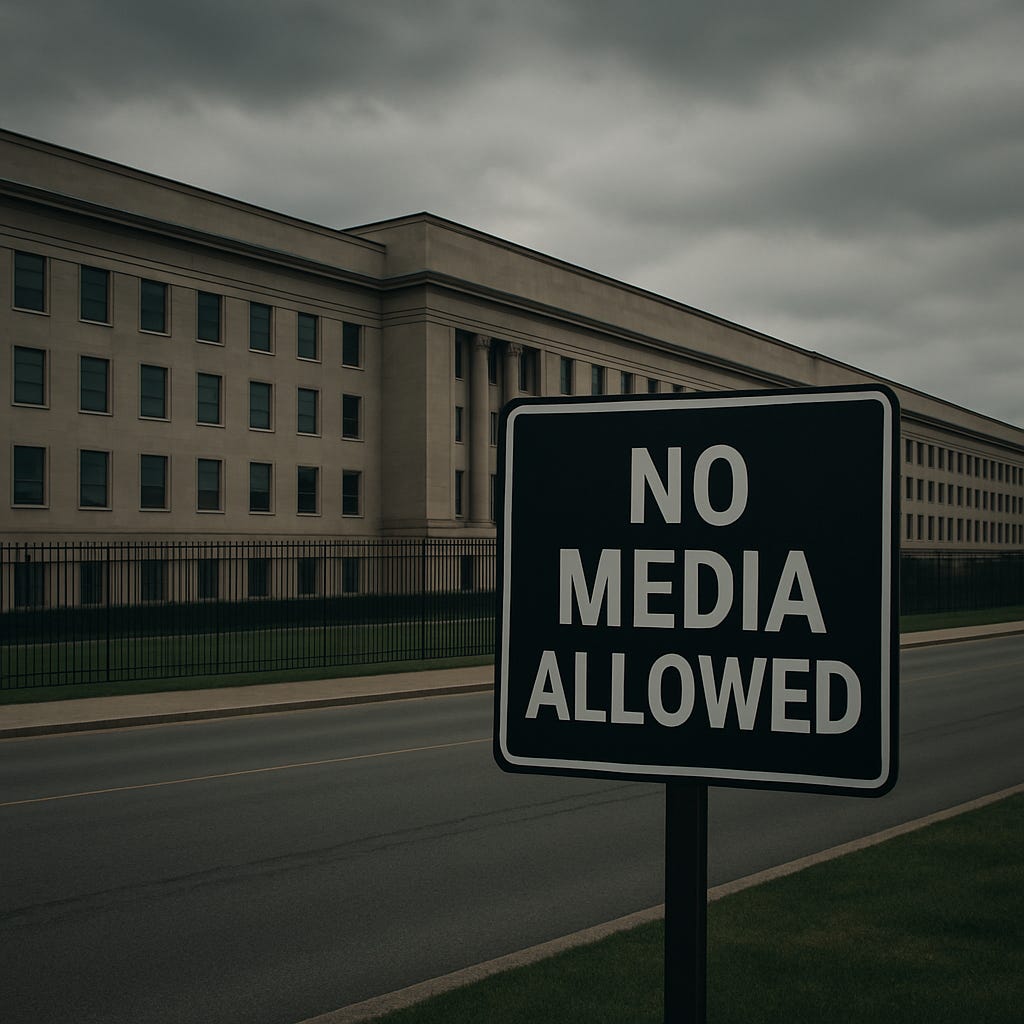
Ai-generated
Independent media and news have never been more essential. With the major players muzzled, truth is clouded, but here at the Coffman Chronicle, we are committed to decoding the distractions, highlighting what the commercial media misses or ignores, and exposing the power structures behind it all.
And for a limited time, as our thanks to you, we are offering 20% paid memberships in honor of recent milestones. Join the resistance. Support truth.
What Are They Trying to Hide?
The question isn’t just about control. It’s about why the press is being locked out right now.
The timing may suggest more than one motive, but one development in particular stands out: the abrupt resignation of Admiral Alvin Holsey, head of the U.S. Southern Command, which oversees naval operations in the region near Venezuela. No clear reason was offered. The announcement was buried.
This wasn’t a low-level commander. It was the top military official overseeing a theater that, in recent weeks, has become a flashpoint. On the same day the Pentagon restrictions kicked in, President Trump confirmed that the CIA is conducting covert operations inside Venezuela, and acknowledged that land strikes are being considered.
In a televised Q&A, Trump said the administration was “doing what needs to be done to eliminate threats to American sovereignty” and referenced both CIA and “joint operational assets” being deployed in and around Venezuela.
Admiral Holsey’s departure, CIA operations, and the Pentagon’s press blackout — all within 48 hours — raise serious questions.
What if someone inside the military resisted this escalation? What if documentation exists showing unauthorized engagement, contested orders, or even rejected intelligence? If so, this press policy wouldn’t just be about controlling messaging. It would be about blocking a leak before it happens.
That’s one possibility.
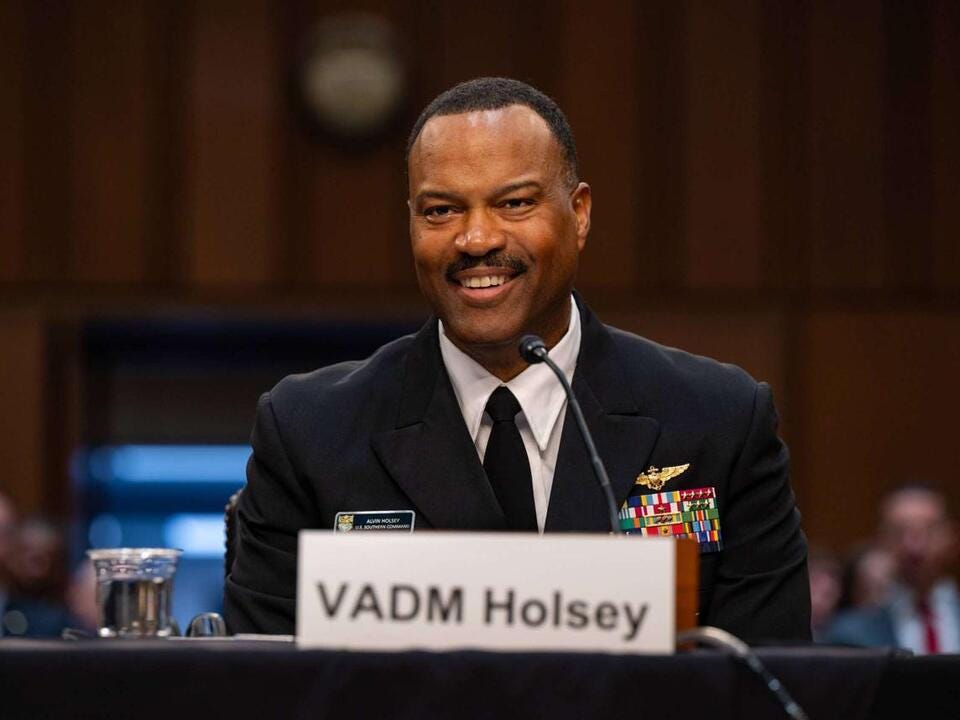
Admiral Alvin Holsey
The Press Is Out. The Troops Are In.
Around the same time the Pentagon began drafting its press policy, National Guard troops began mobilizing to American cities. Not just one or two, but to Portland, Chicago, and Memphis —all historically active sites of protest, all known for their political tension.
These aren’t small moves, nor are they being made quietly. Governors have objected. Lawsuits have been filed. Civil liberties groups are alarmed.
But here’s the critical point: the National Guard doesn’t normally fall under Pentagon control. It answers to governors. Or it does unless the President invokes federalization powers and places them under Title 10 status.
That’s already happened in several deployments. These are now federal troops in U.S. cities, under the command of a president who has repeatedly framed political protest as insurrection.
It raises the question: what exactly are they preparing for?
“The Enemy Is Within”
On September 30, President Trump and Secretary of Defense Pete Hegseth gathered hundreds of military generals and commanders at Quantico. The meeting was unusual in scale and tone. It wasn’t a policy update. It was a loyalty test.
Multiple reports confirm that Trump referred to political unrest as an “invasion from within.” Cities were described as “training grounds.” And generals were told, in not-so-coded language, that if they weren’t on board with the new mission, it might be time to leave.
The meeting occurred after the press policy was drafted but before troop deployments intensified, right between a legal muzzle and a military mobilization.
It was a shift in posture, a realignment, and possibly, the moment the curtain began to drop.
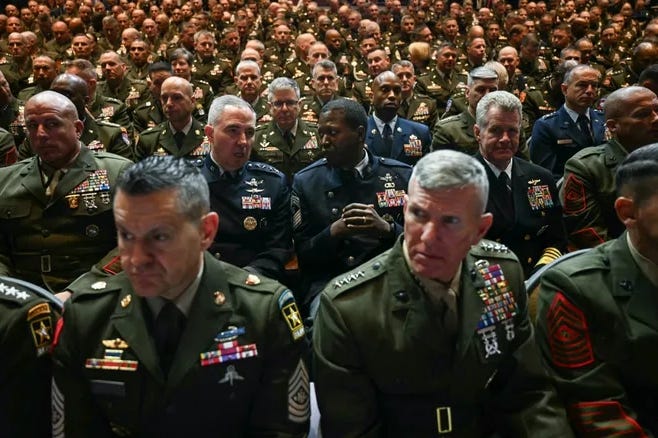
JIM WATSON, AFP Via Getty Images
The Timeline That Tells the Story
Let’s go back to the beginning. In early September, organizers of the No Kings movement—peaceful, decentralized, pro-democracy activists—announced a second wave of nationwide protests for October 18.
It was big news in activist circles. The first No Kings protest drew — depending on who you believe — millions. The second, organizers said, could reach the critical 3.5% mark —the threshold that political scientists say is needed to shift regimes.
We reported on the 3.5% rule in April before the first No Kings protest. See that reporting here:
Note: This article is more than 45 days old and now lives in our archive. Consider becoming a paid subscriber for exclusive perks including full access to our 1100+ articles.

Within weeks, the following unfolded:
September 20: The Pentagon quietly releases its new press restrictions.
September 25: Trump signs NSPM-7, a presidential memo reclassifying “organized political violence” and certain forms of protest as national security threats.
September 30: The Quantico generals’ meeting is held.
Early October: Troops begin moving into American cities.
October 14: The press is evicted from the Pentagon.
October 18: No Kings II is set to flood the streets.
See our previous reporting on these headlines for additional context.
Note: Some of these articles may be over 45 days old and now live in our archive. Consider becoming a paid subscriber for exclusive perks including full access to our 1100+ articles.


When laid out in this way, the pattern becomes harder to ignore.
This wasn’t a reaction. It was a ramp-up.
The Real Question
What if this isn’t about what might happen next, but about what’s already underway?
What if the press restrictions weren’t just about controlling future coverage, but about containing a potential leak? A deployment order? A rule of engagement document? An internal dissent? A flashpoint memo linking troop movements to a political crackdown?
We don’t know. That’s the whole point. We’re not allowed to know.
And in a democracy, that’s a problem.
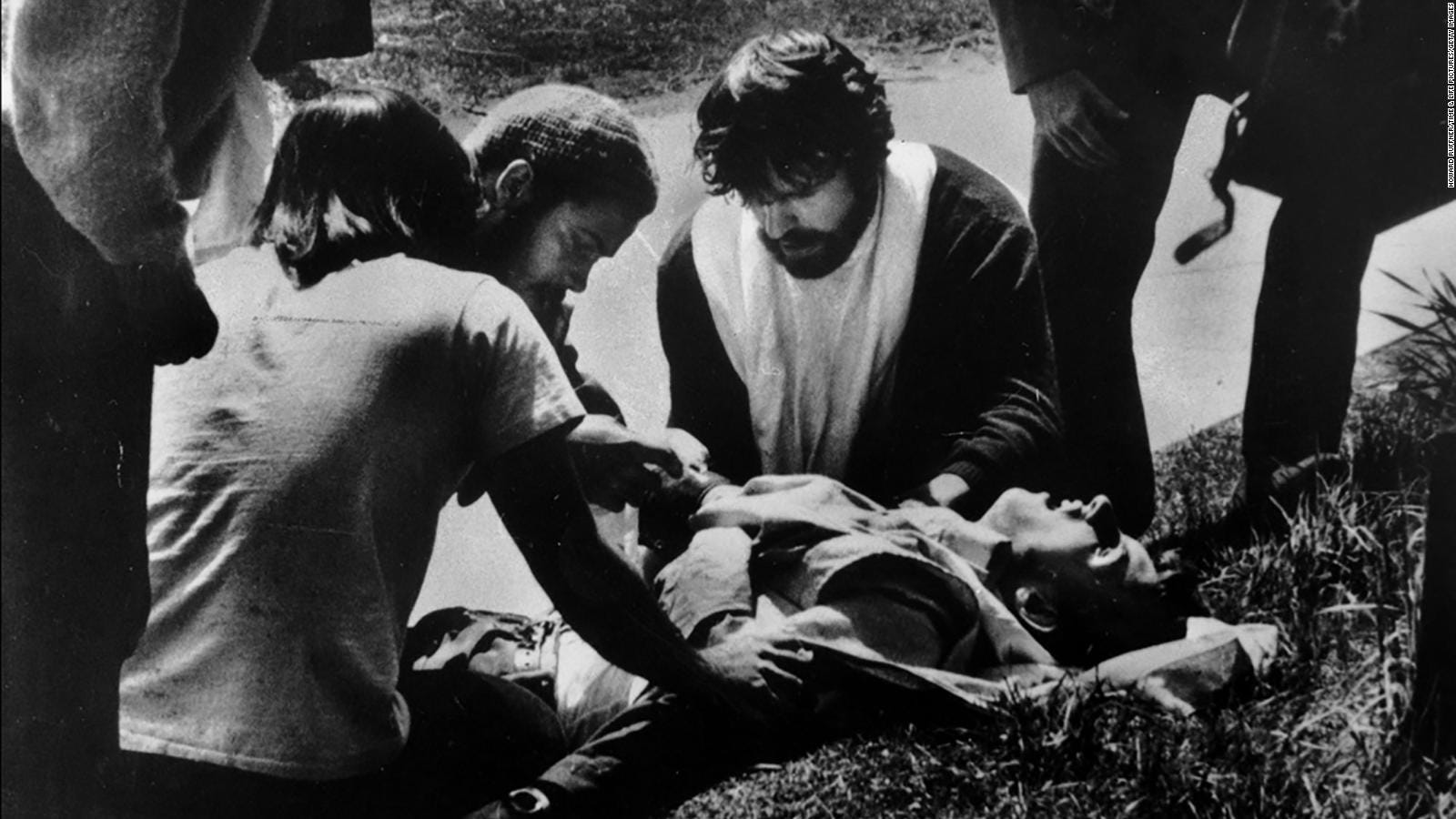
Kent State, May 4, 1970
The Narrative War
This week, Speaker Mike Johnson publicly described No Kings as “hate-America” and “pro-Hamas.” Other GOP leaders have called it “Antifa-linked.” Texas’s governor has deployed the National Guard in advance, calling the movement a threat to “stability.”
This isn’t just messaging. It’s pretext, a rhetorical strike meant to shape the battlefield — not overseas, but here at home.
Because if you can convince Americans that a peaceful protest movement is the enemy, any response becomes justifiable — including one already in motion.
Before the Curtain Falls
Let’s be clear: this isn’t a prediction of martial law. There are still laws, lawsuits, whistleblowers, and people willing to push back.
But what we’re seeing right now—tightened control of information, federal troops in the streets, the criminalization of protest, the silencing of the press—isn’t normal.
And it’s not isolated.
It’s coordinated, coherent, and playing out in real time.
Maybe this weekend passes peacefully. Maybe the protests are massive and calm. Maybe the cameras that remain show a country still capable of dissent.
But if they don’t—if something shifts, or breaks, or burns—we’ll know that the stage was set well in advance.
We just weren’t allowed to see it happen.
Stay Informed. Stay Loud.
Subscribe to The Coffman Chronicle for no-BS political analysis, action guides, and daily truth bombs you won’t get from corporate media.
Sources:
“Pentagon journalists vacate workspace as new restrictions take effect” — Reuters
“Media including Fox News overwhelmingly reject Pentagon press policy” — The Washington Post
“Hundreds of people cover the Pentagon. These are the 15 who signed its new press policy.” — The Washington Post
“US news outlets refuse to sign new Pentagon rules to report only official information” — The Guardian
“What the new Pentagon media rules actually say” — Axios
“Pentagon demands journalists pledge to not obtain unauthorized material” — The Washington Post
“Trump and Hegseth declare end to ‘politically correct’ leadership in U.S. military” — Fox5DC (AP)
“The Last Days of the Pentagon Press Corps” — The Atlantic
“2025 United States naval deployment in the Caribbean” — Wikipedia
“US carries out strike against ‘narco‑trafficking vessel’ off coast of Venezuela” — Anadolu Agency
“Venezuela’s Maduro says he’s ready to declare state of emergency after U.S. military strikes…” — CBS News / AFP
“Trump confirms the CIA is conducting covert operations inside Venezuela, looking into land strikes” — ABC News
“Trump authorizes CIA operations in Venezuela, raising pressure on Maduro” — Reuters
“Top admiral steps down abruptly amid drug boat strikes” — Politico
“Johnson describes planned No Kings rally as ‘hate America,’ ‘pro‑Hamas’ gathering” — Politico
“Texas governor sending National Guard to ‘No Kings’ protest” — Courthouse News
I am hopeful that the military paid attention to the oath they too.
Voldemort's chess pieces poised to strike at the heart of American democracy, social media platforms and legacy media on-side, A.I. in the wings, ready to spread concocted images of No Kings 'violent insurrection'...? But Venezuela is a mystery. I think someone needs to find that Admiral - and fast. Chilling writing, but well done on joining the dots for the rest of us.