


At first, it was just your morning coffee. It cost a few cents more then a few dollars. Then the rice aisle started looking emptier. The spice rack, once a palette of affordable flavor, became a luxury shelf. Seafood? Forget it. The weekly grocery bill didn’t just climb. It mutated. And you didn’t do anything differently.
The truth is, your grocery cart has become a political battlefield, and you’re footing the bill for a war you didn’t declare.
Tariffs, the trade tools often waved around as symbols of “tough” American policy, have become silent taxes on everyday staples, especially for families trying to cook at home. They don’t just hit convenience foods or imported snacks. They strike at the heart of culturally rooted meals, healthful ingredients, and basic pantry essentials like coffee, spices, rice, and seafood.
Layered with climate disruption, rising transportation costs, and corporate consolidation, these tariffs are making it harder than ever to cook affordable, healthy, familiar meals, especially for immigrant households, low-income families, and anyone outside the industrial food mainstream.
This isn’t a food trend. It’s a trade crisis, and it’s reshaping what it means to eat well in America.
Stay Informed. Stay Loud.
Subscribe to The Coffman Chronicle for no-BS political analysis, action guides, and daily truth bombs you won’t get from corporate media.
Commodity Chaos: The Everyday Essentials Under Siege
Behind the growing inaccessibility of culturally significant and healthy foods are the unseen costs of trade wars, climate volatility, and profit-driven policy decisions. The ingredients most essential to millions of American tables, especially for working-class and immigrant households, are now the most unstable.
Coffee: From Morning Ritual to Luxury Item
Coffee isn’t a luxury in most American households. It’s a lifeline. However, now it’s one that comes with a surcharge.
Roughly 99% of U.S. coffee is imported, and recent tariffs have hit it hard. Brazilian beans, which dominate global Arabica production, now face tariffs as high as 50%. This, combined with severe climate-driven crop failures and droughts in South America, has doubled wholesale prices in some cases.
Cafés are raising prices by $0.50 to $1.00 per cup, and home brewers aren’t immune. For small specialty roasters, these shifts are existential, and for consumers, coffee is fast becoming a daily pain point that reveals how global trade reaches directly into your mug.
Spices: A Silent Flavor Recession
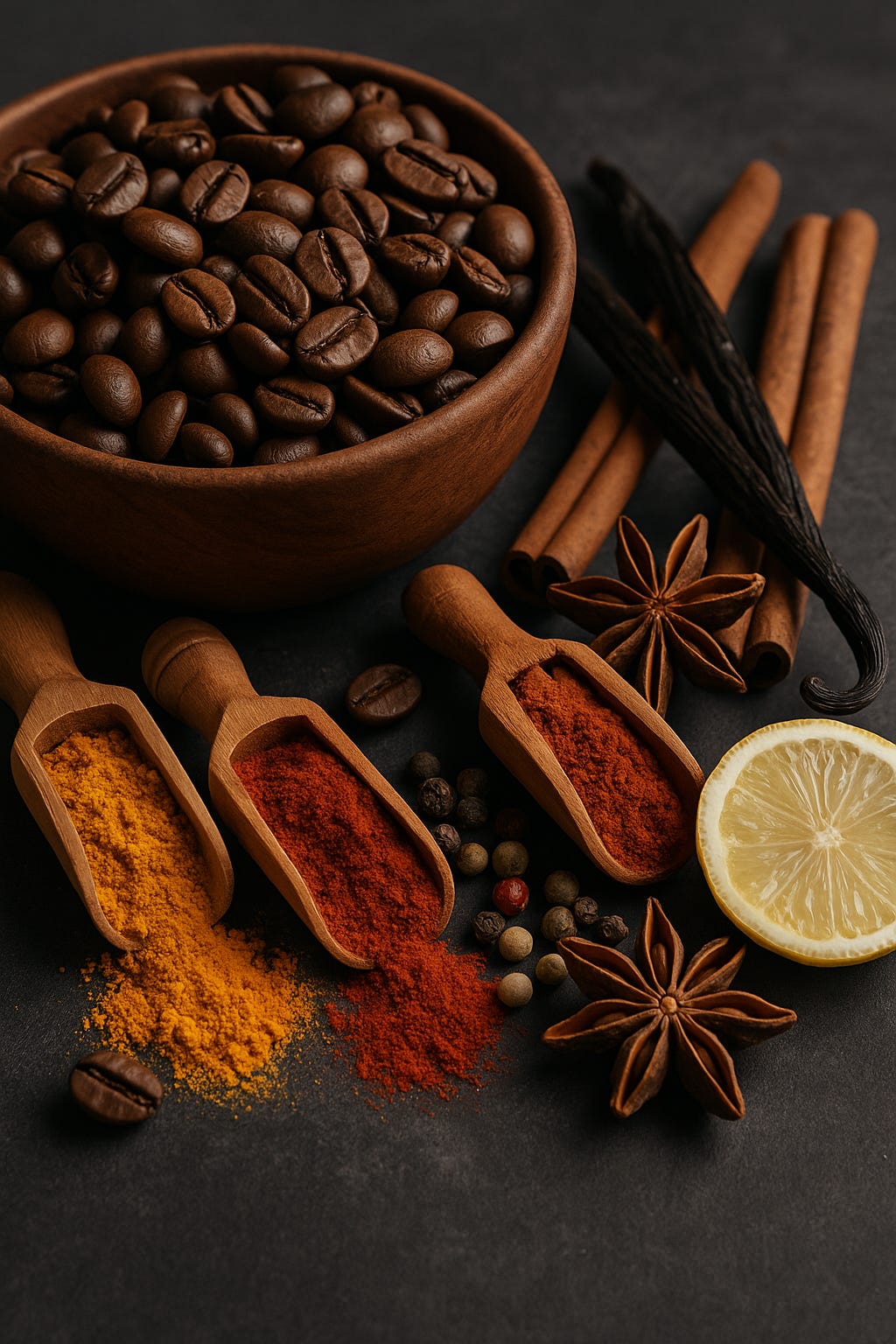
Once a cornerstone of affordable home cooking, spices like turmeric, cinnamon, cardamom, black pepper, and nutmeg are now climbing in price due to tariffs up to 50% on key imports.
The impact is disproportionate. South Asian, Middle Eastern, African, and Caribbean cuisines rely heavily on spices that are now priced like specialty goods. Ethnic grocery stores and small wholesalers are being squeezed, and low-income households are forced to make stark culinary sacrifices.
The result is not just economic. It’s cultural erosion by policy. When spices become a luxury, tradition becomes inaccessible.
Rice: The Staple That Can No Longer Stretch
Basmati and jasmine rice, dietary anchors across South and Southeast Asia, the Caribbean, and the Gulf South, now carry tariffs between 26–36%. In some stores, the price of imported rice has increased by 20–30% over the last two years.
This strikes a direct blow to household affordability. Rice was once the most cost-effective way to feed a large family, but is now being replaced by lower-quality, starchy substitutes. Cultural meals are distorted, and a key source of caloric and cultural stability is being lost.
Seafood: Healthy Protein, Heavily Penalized
Roughly 85% of all seafood consumed in the U.S. is imported, and with new tariffs on major sources like China, Vietnam, and India, prices have spiked dramatically.
Shrimp, crab, and whitefish have risen by 30–40% in retail and restaurant settings. Seafood, once promoted as a lean, heart-healthy alternative to red meat, is now priced out of reach for many families, especially in coastal and urban regions with deep cultural ties to it.
Yet, frozen processed meats remain artificially cheap.
Tropical Fruits and Oils: The Disappearing Flavors of Home
Tariffs of 10–30% on tropical produce, such as mangoes, avocados, plantains, and papayas, and key cooking oils like olive oil, ghee, sesame oil, and palm oil have reshaped food access in immigrant communities and food deserts alike.
These aren’t luxury items. They are essential building blocks of diasporic and ancestral cooking, from West African stews to Filipino adobo to Dominican mofongo.
However, when public assistance programs don't stretch far enough, and ethnic markets can’t keep prices down, these foods are erased from daily life.
This is the real cost of protectionist policy in a global food economy — not just higher prices, but lost culture, lost health, and lost autonomy.
Cultural Erosion by Policy
Food isn’t just sustenance. It’s memory, identity, and resistance. In immigrant kitchens, rural homes, and working-class apartments, the act of cooking is often the last remaining connection to heritage. It’s where children learn who they are, not just what to eat.
But today, that continuity is being severed by policy.
The foods most essential to cultural identity, such as basmati rice, turmeric, cardamom, plantains, ghee, and sesame oil, are precisely the items now most burdened by tariffs and price hikes. These aren’t luxuries. They’re a necessity in South Asian curries, West African stews, Caribbean rice dishes, and Southern soul food. And when prices climb beyond reach, substitutions creep in. Basmati becomes processed white rice. Ghee becomes margarine. Spices get skipped altogether. A meal still appears on the table, but something critical is lost.
Over time, this doesn’t just change diets. It erodes cultural knowledge.
Children grow up with less connection to the meals their grandparents once cooked. Elders adjust recipes to fit what's available on sale. Neighborhood markets close. What was once communal pride becomes private loss.
Meanwhile, what remains affordable isn’t traditional food, but rather the processed, shelf-stable convenience items shaped by industrial agriculture and corporate marketing. White bread instead of flatbread. American cheese instead of queso fresco. Frozen meals over home-cooked stews. The system doesn’t support culinary diversity. It funnels everyone toward sameness.
This isn’t accidental. It’s the result of a food and trade policy ecosystem designed around profit and control, not culture or nourishment. And for many families, the kitchen, once a space of cultural survival, becomes a place of compromise.
When people lose the ability to cook their culture, they lose the ability to pass it on. That loss doesn’t happen overnight. It happens one substitution, one skipped spice, one forgotten recipe at a time, until the plate is full, but the story is gone.
There’s No Such Thing as “American” Food
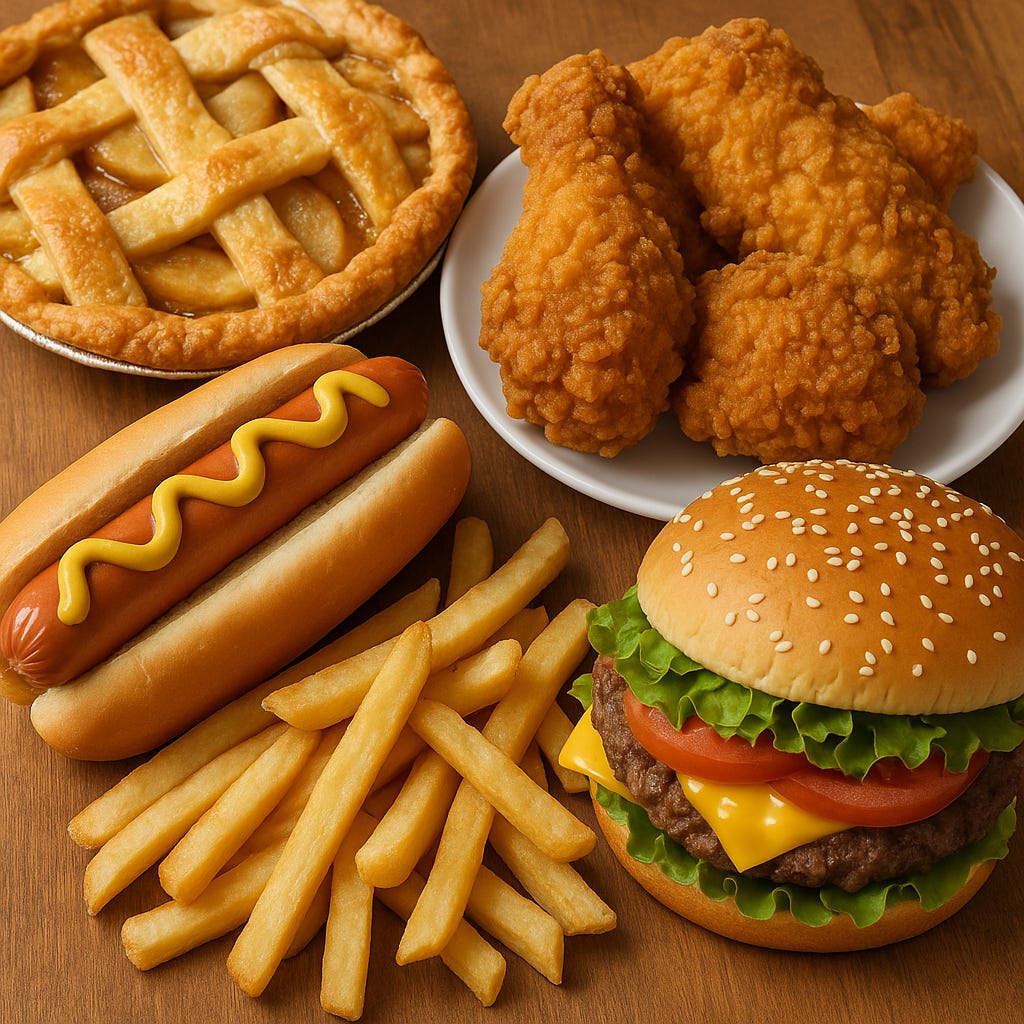
Walk down the grocery aisle or sit at a 4th of July barbecue, and you’ll see it, the foods we’re told define American identity. Apple pie. Hot dogs. Fried chicken. Mac and cheese. Biscuits and gravy.
But here’s the truth. None of it started here. Every iconic American dish is an immigrant story, an adaptation, or a product of colonial entanglement.
Apple pie came from England, spiced with cinnamon and nutmeg imported through colonial trade routes
Hamburgers are descendants of minced meat dishes brought by German immigrants
Fried chicken combined Scottish frying techniques with West African seasonings, refined by enslaved Black cooks
Macaroni and cheese came through Italy and France, popularized in America by Thomas Jefferson’s enslaved chef
Cornbread is Indigenous maize, made Southern by Black and Appalachian adaptations
Biscuits and gravy evolved from British scones and military rationing
Even the Thanksgiving table, supposedly the most “American” of meals, is built from Native crops, European preparation methods, and 19th-century nationalist mythology.
So when tariffs and trade policy drive up the cost of rice, spices, tropical produce, and cooking oils, it doesn’t just harm “ethnic” cuisine. It undermines the very idea of American food.
These aren’t luxury imports. They’re ancestral building blocks, and by pricing them out of reach, our policies don’t just change what people eat. They erase who we are.
To understand American food is to understand immigration, enslavement, adaptation, and survival. And when we lose access to the ingredients that built our kitchens, we lose the truth of our history, bite by bite.
The Hidden Hand That Shapes the Plate
While tariffs are typically framed as economic tools to protect domestic industries, they function in practice as backdoor nutrition policy. They decide what’s affordable, what’s accessible, and what disappears from the grocery cart altogether.
However, unlike public health guidelines or dietary recommendations, tariffs are shaped not by doctors or nutritionists but by trade lobbyists, agribusiness executives, and politicians looking for leverage. That means the economic priorities of industrial food giants — not the health or heritage of the people — determine what we eat.
Consider this contrast. Junk food ingredients like high-fructose corn syrup, white flour, and processed soy are heavily subsidized. They flood the market at low prices and fill the shelves of dollar stores, school cafeterias, and convenience chains. Meanwhile, foods that nourish, such as imported spices, whole grains, seafood, and tropical produce, are penalized with import taxes, regulatory hurdles, and rising transportation costs.
This isn’t accidental. It’s strategic. The system rewards shelf-stable, corporately controlled, highly processed goods because those are the products with the highest margins and greatest market scalability. Nutrient-dense, culturally specific, and perishable foods don’t fit the model, and so they’re priced out or pushed aside.
Who Benefits?
The winners of this system are clear:
Multinational food corporations, which maintain pricing control and brand dominance
Domestic commodity producers, who gain a competitive advantage through protectionism
Politicians, who sell “strong” trade policy while outsourcing the real cost to working families
The losers are equally obvious:
Consumers, who pay more for less nourishment
Immigrant communities, whose foodways are economically erased
Small grocers, farmers, and restaurateurs, who can’t compete with corporate pricing or absorb tariff-related losses
Policy Without Accountability
Because these outcomes are framed as economic, not nutritional, they escape public scrutiny. There’s no nutrition label on a tariff, no FDA review of the health outcomes of trade law, and no USDA panel on what happens to a culture when its core ingredients become luxury goods.
And yet, the impact is profound. There are fewer healthy choices, more processed defaults, and a national diet shaped by international dealmaking, not domestic need.
The Invisible Tax on the Working Class
For working families, food is one of the last parts of the budget where flexibility remains, and one of the first places where crisis shows up. When tariffs raise prices on staple foods, it’s not executives or policymakers who feel the pinch. It’s the single parent with two jobs, the elder on SNAP, the immigrant mom trying to recreate the flavors of home on a tight budget.
Tariffs don’t show up on a receipt. They’re not listed like a line item or labeled with a warning. They do add dollars and stress to every grocery run. And they land hardest on those who already spend the highest share of their income on food.
Cooking Shouldn’t Be a Privilege
There’s a cruel irony to the national messaging about “cooking at home” as a moral and financial good. It assumes families have time to cook, possess a functional kitchen, enjoy the energy after shifts, commutes, and caregiving, and can access affordable, quality ingredients.
However, the truth is, even “cheap” meals like meatloaf, goulash, or beans and rice aren’t cheap anymore, not when ground beef is up, spices are tariffed, and utilities cost more to run the oven. Home cooking has been quietly rebranded as a luxury of time, knowledge, and equipment, not a default.
Meanwhile, families are pushed toward fast food that’s no longer fast or cheap. What used to be a $5 meal is now a $12 burden. Drive-thru prices rise while nutritional value plummets. With them, so do health outcomes.
A Tax Without Consent, A Cost Without Representation
These are taxes we never voted for. Tariffs are policy choices made behind closed doors under the influence of trade lobbyists and corporate donors that are reshaping how families eat, spend, and survive.
Tariffs may be passed off as foreign policy, but for the working class, they’re domestic punishment— for cooking from scratch, for eating outside the processed mainstream, and for simply trying to nourish your family with dignity and culture intact.
Food Sovereignty Over Trade Games
Tariffs may be negotiated in boardrooms and press conferences, but their consequences play out in kitchens, grocery aisles, and emergency rooms. Framed as economic weapons or levers of global competition, they’ve quietly become a shadow nutrition policy, deciding what we eat, how we cook, and what gets lost in the process.
When key spices become too expensive, meals lose not just flavor, but tradition. When rice, beans, and seafood spike in price, families stretch their budgets with cheap carbs, processed meats, and ultra-processed frozen meals. Olive oil becomes a luxury, while corn syrup remains subsidized. And slowly, the diet shifts — not by preference, but by necessity.
This is how culture disappears. This is how health declines. This is how policy becomes personal.
The System Is Rigged Against Health
We tell Americans to “eat better,” to “cook at home,” to “make healthy choices.” But those choices are being actively undermined by a system that:
Subsidizes the ingredients of illness, such as refined sugar, corn, and processed grains
Penalizes the building blocks of wellness, including spices, whole grains, seafood, and produce
Funnels families into ultra-processed defaults, because they’re what’s left on the shelf
This isn’t nutritional negligence. It’s political design. It’s producing exactly what it was built to: cheap calories, corporate profits, and chronic illness.
A Different Future Is Entirely Possible
Imagine a system where:
Trade and tariff policy is informed by nutrition science and cultural equity
Families on SNAP get more for choosing whole, fresh, and ancestral foods
Farmers’ markets and ethnic grocers thrive through public investment
Local food systems are resilient against global shocks, and don’t leave communities hungry during political disputes
Food shouldn’t be a battlefield. It should be a right to health, to heritage, and to survival. The longer we let profit dictate what we can afford to eat, the further we drift from the promise of a healthier, more just America.
Stay Informed. Stay Loud.
Subscribe to The Coffman Chronicle for no-BS political analysis, action guides, and daily truth bombs you won’t get from corporate media.
Bibliography:
“Where We Stand: The Fiscal, Economic, and Distributional Effects of All U.S. Tariffs Enacted Through April 2025.” Yale Budget Lab, April 2, 2025.
“Trouble Brewing: Why a Brazilian Tariff Might Cause Coffee Prices to Soar.” Wall Street Journal, July 6, 2025.
“Trump’s 50% Brazil Coffee Tariff Expected to Rejig Trade.” Reuters, August 1, 2025.
“The Fate of Spices Under Trump’s Tariffs Is Still Unclear – but the Risks Are Real.” Food & Wine, August 1, 2025.
“Spice Giant McCormick Warns Tariffs Could Cost $90 M a Year.” Supply Chain Dive, July 2, 2025.
“New U.S. Tariffs and Their Impact on the Spice Industry.” Majestic Spice News, February 3, 2025.
“Tariffs Shake Up Global Spice Market.” FoodDive, July 10, 2025.
“Tariffs to Drive Up Seafood Prices in the U.S., UN Trade Agency Says.” Reuters, June 4, 2025.
“The Hidden Health Penalty of Seafood Tariffs.” Think Global Health, April 18, 2025.
“New U.S. Tariffs Hit Top Seafood Trading Partners.” SeafoodSource, August 1, 2025.
“Tariffs Could Reshape U.S. Rice Prices.” Food Business News, April 4, 2025.
“U.S. Tariffs on Rice Imports Could Impact Prices and Trade.” Milling & Grain, April 7, 2025.
“Trump’s Tariff Deadline Is August 1 – Here’s What Could Immediately Cost More from Food to Electronics.” Forbes, July 30, 2025.
“Tariffs in the Second Trump Administration.” Wikipedia.

I have a CSA. The work you is crucial. It is US government and the corporate media have been broken.
How true, How sad