


On Tuesday morning, six U.S. lawmakers—each a veteran or intelligence professional—released a ninety‑second video addressed directly to uniformed service members and intelligence officers. In the clip, they spoke of duty to the Constitution and the imperative that “no one has to carry out orders that violate the law or our Constitution.” Among them were Senators Elissa Slotkin and Mark Kelly, and Representatives Jason Crow, Chris Deluzio, Maggie Goodlander, and Chrissy Houlahan.
Follow The Coffman Chronicle on NewsBreak for daily breaking political coverage.
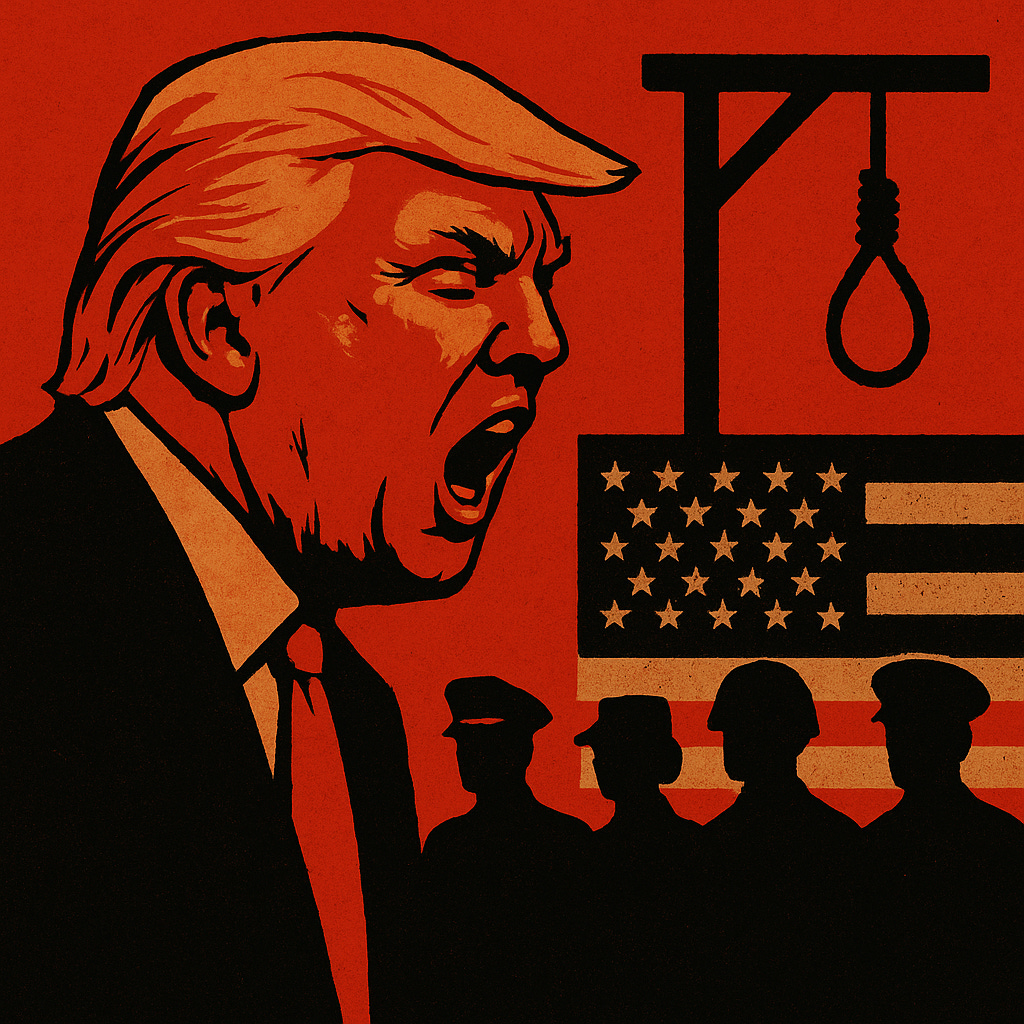
The note was clear, calm, and grounded in established military law. However, by Thursday, the president’s response made it clear this was no routine moment of political signaling. President Donald J. Trump posted on Truth Social that the lawmakers had engaged in “SEDITIOUS BEHAVIOR … punishable by DEATH.” He called them “traitors,” insisted their words “cannot be allowed to stand,” and reposted comments from his supporters urging hanging.
When the White House Press Secretary, Karoline Leavitt, was asked whether the president was calling for the execution of members of Congress, she replied simply: “No.”
Alas, the tenor of the remarks had already shattered norms.
Want to Know Your Rights?
Download a free digital copy of the U.S. Constitution—the same document Trump is trying to bulldoze. Learn exactly what he’s breaking… and how to fight back.
50,000 strong — and counting.
This Early Black Friday, become a paid subscriber for just $1 a week and help us keep the truth alive.
Join The Coffman Chronicle — $1/Week Early Access
The Video the President Couldn’t Ignore
What made this video different wasn’t who released it. It was what they didn’t do. The lawmakers did not name a specific “illegal order” from the president. They did not claim to have inside knowledge of a directive on the verge of being carried out. Instead, they reiterated a foundational principle of the Uniform Code of Military Justice: service members must refuse manifestly unlawful orders.
“We are veterans and national‑security professionals,” Representative Maggie Goodlander said in a public statement, “honoring the same oath our service members take … Upholding that oath means upholding the obligation to obey lawful orders and only lawful orders.”
In the video, Senator Mark Kelly declared, “Our laws are clear: you can refuse illegal orders.” And Senator Slotkin closed with the phrase: “Don’t give up the ship.”
In context, it came amid heightened tension: the administration’s domestic use of the National Guard, naval strikes in the Caribbean region, the resignations of senior military commanders—all part of what many analysts say is an uptick in the politicization of the military and the militarization of civil life.
The President Reacts
Rather than respond to the video’s content, the president effectively responded to its implication. That alone suggests the video’s authors hit a nerve.
Speaker of the House Mike Johnson defended the president by saying that what he saw was “defining the crime of sedition.” However, the notion that a mild, professionally delivered video triggered extraordinary rhetoric raises deeper questions. If the message is simply: “Follow the law,” why does the commander-in-chief treat it as treason?
The pattern is telling. While the lawmakers spoke in legalistic terms, the president’s response swiftly moved to punishment, threats, and violence. The message became not one of debate, but of discipline. He reposted supporter comments that said “HANG THEM,” escalating the tone beyond partisanship into menace.
House Minority Leader Hakeem Jeffries described it this way: “What’s most telling is that the president considers it punishable by death for us to restate the law.” The Democrats say they have contacted the U.S. Capitol Police and the Sergeant‑at‑Arms about the safety of the lawmakers involved, a reminder that rhetoric has real‑world consequences.
When Duty Meets Power: Legality vs. Loyalty
The heart of the conflict lies in a simple question: Who does the military serve? The Constitution or the person who signed the orders?
In the military justice world, the question of refusing orders isn’t academic. “It is certainly true that members of the armed forces must not obey illegal orders,” reads one legal commentary, “but the law also recognizes the inherent difficulty of recognizing illegality in some military circumstances …” Service members are trained to obey while being taught the limits, but the balance is fragile.
When a sitting president retaliates against lawmakers for simply reminding troops of the law, it signals something far larger. In effect, the message is that any suggestion that an order might be illegal is itself illegal. The institution of the military must not only follow orders. It must not even consider whether an order can be questioned.
That is the paradox of this moment. These lawmakers weren’t telling troops what to do; they were reminding them why they serve. For a president who reacted with threats of death, the reminder was evidently a challenge.
The Institutional Rift: Politicization and Militarization
Over the past year, the boundaries between military tasks and political objectives have blurred. The National Guard—once used primarily for disaster response—has been deployed domestically for law-enforcement-style missions. Naval vessels have struck drug‑trafficking boats in Caribbean waters under new rules of engagement. Senior commanders have resigned, citing pressure over politically charged operations.
Into that landscape entered the 90‑second video. It was simple. It was urgent. But for the president, it was intolerable. In a world where the military is becoming an instrument of political strategy, reminding service members of their higher loyalty threatens the very model.
A Deeper Look: What This Means for Trump
Donald Trump is not an ex‑leader offering rhetorical flourishes. That would be bad enough. Instead, he has been the sworn Commander-in-Chief since January. His words carry institutional weight. When he brands sitting members of Congress as traitors and suggests death as punishment for reminding troops of the law, it speaks to his view of power. Loyalty, not legality, is the ultimate standard.
If the president reacts so strongly to a legalistic video that names no offense, names no person, and asks no specific act of refusal, what then is the threshold for his wrath? What kind of orders does he feel should go unquestioned? And what message does that send to the officers and enlisted men and women who carry his will?
The Chilling Effect and the Road Ahead
Lawmakers now face a calculus: speak the law and risk being accused of sedition; stay silent and allow institutional norms to erode. That is the chilling effect at work. Retired generals and military legal officers warn that this kind of rhetoric undermines discipline not by command, but by fear.
If reminding the armed forces of their highest duty is met with threats of death, the precedent is clear: questioning power becomes, in itself, unpatriotic.
A Moment That Reveals More Than It Shouts
The six lawmakers spoke softly. They referenced codes. They reminded service members of their oath. They did not name names. They did not allege wrongdoing.
Yet the president’s response—loud, violent, punitive—revealed the real fear: not of treason, but of accountability. That a statement about law could provoke such fury tells us everything we need to know about power in this moment.
If reminding troops to follow the law becomes sedition, what kind of orders are expected to be unquestioned?
We are witnessing a moment where constitutional duty collides with personal authority, and the outcome will shape the future of the American military, the presidency, and the rule of law.
Don’t let the bastards sneak anything past you. Subscribe and get your daily dose of rage and receipts delivered fresh, before the spin doctors can scrub it.
Sources:
“Trump says Democrats’ video message to military is ‘seditious behavior’ punishable by death” — AP News
“Outrage after Trump accuses Democrats of ‘seditious behavior, punishable by death’” — The Guardian
“Trump Calls for Arrests of Democrats Who Urged Troops to Refuse Illegal Orders: ‘Seditious Behavior, Punishable by Death’” — Time
“Trump: Democrats ‘traitors’ for telling military not to follow unlawful orders” — The Washington Post
“Rep. Deluzio, lawmakers respond to Trump threat” — Axios
It's obvious that Trump plans to try to use the military to squash any resistance to his tyranny. This is straight out of the Idiot's Guide to Forming a Dictatorship. Therefore, OUR military is the primary means of PREVENTING a dictatorial takeover of our country.
If only we could have used this over Jan 6.