


This Isn’t a Reorganization
Washington loves a bloodless word. Reorganization. It sounds managerial. Harmless. Like boxes on an org chart being nudged around to improve efficiency.
That word is doing a lot of work right now.
Buried beneath it is a proposal that would fundamentally change how U.S. military power is exercised, how dissent travels up the chain of command, and how much real oversight Congress retains over decisions that can mean war, peace, or something dangerously in between. It would permit action not debated on the House floor, not subjected to public hearings, not voted on, just quietly advanced.
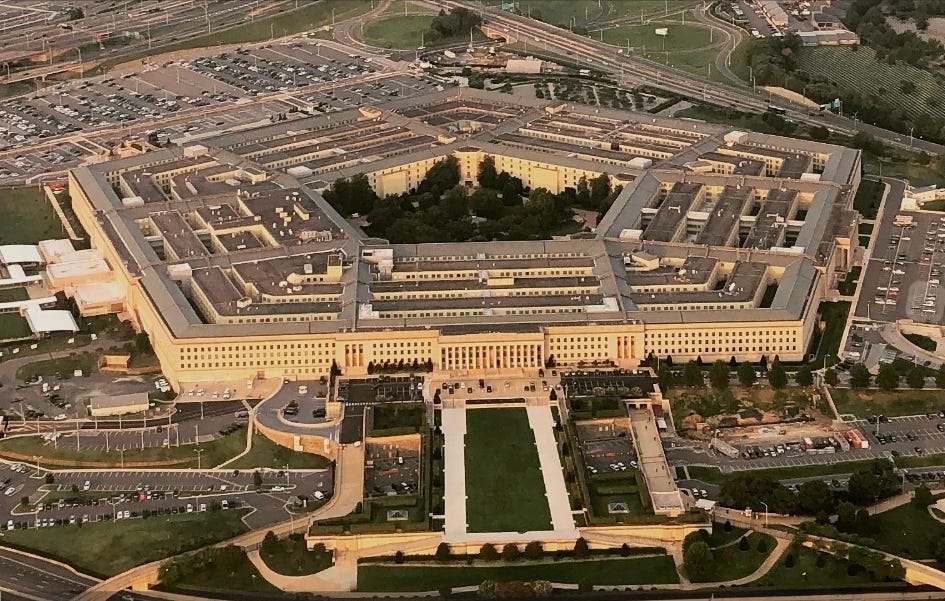
According to reporting by The Washington Post, the Pentagon under Defense Secretary Pete Hegseth is considering a sweeping consolidation of U.S. combatant commands, potentially eliminating or merging regional commands that have existed for decades, reducing the number of four-star commanders, and centralizing more authority directly under the secretary of defense.
If that sounds abstract, here’s the plain-language version: fewer independent military voices, less friction inside the system, and more power flowing upward, all without Congress ever being asked to approve the shift.
This isn’t about whether you trust the current leadership. That’s the wrong frame. This is about whether decisions that reshape America’s war-making structure should happen without democratic consent. Once that structure changes, it doesn’t matter who occupies the office next. The power stays put long after the people who moved it are gone.
And history is very clear about one thing: when power moves quietly, it rarely moves back.
Want to Know Your Rights?
Download a free digital copy of the U.S. Constitution, the same document Trump is trying to bulldoze. Learn exactly what he’s breaking, and how to fight back.
80,000+ strong — and counting.
This holiday, become a paid subscriber for just $1 a week and help us keep the truth alive.
Join The Coffman Chronicle — $1/Week
What Was Reported and Why It Matters
Let’s start with what we know.
In mid-December, The Washington Post reported that senior Pentagon officials are weighing a top-down restructuring of U.S. military combatant commands. This includes the geographic and functional commands responsible for everything from Europe and Africa to cyber operations and special forces. The proposal, still under consideration, would consolidate or eliminate some commands, folding their responsibilities into fewer, larger entities.
The stated justification is familiar: efficiency. Fewer headquarters, fewer overlapping missions, and streamlined decision-making are the goals. Supporters argue the current system is too sprawling, too slow, too expensive.
However, buried inside that efficiency pitch is a structural reality with far-reaching consequences. Combatant commands aren’t just administrative units. They are independent centers of strategic judgment. A four-star commander leads each with direct access to civilian leadership, Congress, and the National Security Council. They generate assessments, raise red flags, and disagree with one another. That disagreement is not a bug. It’s a safeguard.
Under the proposed changes, that web of independent command voices would shrink. Fewer four-star commanders would report upward. More authority would be concentrated within the Pentagon itself, closer to political leadership, with fewer institutional choke points where uncomfortable advice can slow a bad decision.
Members of Congress have already signaled concern. Lawmakers have complained privately and, in some cases, publicly that they have not received detailed cost analyses, risk assessments, or strategic justifications for a change of this magnitude. In response, Congress recently inserted language into the National Defense Authorization Act (NDAA) requiring more information before decisions, such as any restructuring, can proceed.
See our recent reporting on the NDAA here:

That alone should tell you this isn’t routine housekeeping.
If this were a weapons system, Congress would debate it. If it were a troop deployment, Congress would demand briefings. Yet because this is structural and buried inside the machinery, it risks slipping through on inertia alone.
And that’s exactly how democratic oversight erodes: not with a bang, but with a shrug.
Why Combatant Commands Exist in the First Place
To understand why this proposed consolidation matters, you have to understand what combatant commands are for, not just what they do.
They are not bureaucratic clutter. They are not legacy leftovers. They are the product of hard lessons learned the long way.
Modern U.S. combatant commands took their current shape after the Goldwater–Nichols Act of 1986, a sweeping reform passed by Congress after a series of military failures and near-misses revealed a dangerous problem: too much siloed power, too little coordination, and not enough accountability between civilian leadership and military commanders in the field.
Goldwater–Nichols did two critical things at once. It strengthened civilian control of the military while deliberately distributing operational authority across regional and functional commands. Each combatant commander was given a defined area of responsibility, a direct reporting line, and — crucially — the institutional standing to offer independent assessments that might conflict with one another.
That friction was intentional.
Congress understood something Washington often forgets: disagreement inside the system is a feature, not a flaw. When commanders responsible for Europe, the Indo-Pacific, Africa, or cyber operations present competing analyses, civilian leaders are forced to confront trade-offs rather than coast on consensus. Risks get surfaced. Assumptions get challenged. Bad ideas get slowed down.
Combatant commands also serve as a check against politicization. A four-star commander embedded in a region for years develops deep situational awareness, not just of threats, but of allies, cultures, logistics, and consequences. That perspective doesn’t always align neatly with Washington’s short-term political incentives. And that’s exactly why it matters.
Reduce the number of those voices, and you don’t just simplify an org chart. You narrow the range of advice reaching the top. You compress debate and make it easier for a single narrative — political or bureaucratic — to dominate.
Once that narrowing becomes structural, it doesn’t require anyone to explicitly silence dissent. The system does it for them.
That’s the quiet danger of consolidation. It doesn’t announce itself as control. It presents itself as clarity.
What “Consolidation” Really Changes
On paper, consolidation sounds neutral, clean, almost responsible. Fewer commands, fewer headquarters, fewer layers could mean faster decisions.
But in a system designed to manage violence at a global scale, faster is not automatically better, and fewer almost never means simpler.
When combatant commands are consolidated, the most immediate change isn’t logistical, but informational. Fewer commands mean fewer independent streams of analysis feeding into the decision-making process. Instead of multiple commanders assessing risks from different regional, cultural, and operational perspectives, more judgments get filtered through a narrower funnel inside the Pentagon.
That funnel matters.
Combatant commanders don’t just execute orders. They generate threat assessments, flag second- and third-order consequences, and warn when political timelines collide with operational reality. They are often the ones saying, “This will take longer,” “This will cost more,” or “This will destabilize something you’re not seeing from Washington.”
When those voices are reduced, the system doesn’t just lose redundancy. It loses resistance.
Centralization also changes incentives. A commander overseeing a vast, merged area of responsibility has less bandwidth to push back on every questionable assumption. A smaller number of senior commanders means each is more politically exposed and more dependent on maintaining favor with the centralized leadership to retain influence.
The more authority concentrates upward, the more dissent becomes risky by default.
This is where consolidation stops being an abstract management choice and starts becoming a governance issue. Military advice reaching civilian leadership becomes more uniform, not because reality is simpler, but because the structure discourages divergence.
Consensus becomes easier to manufacture. Warnings become easier to smooth over.
Fewer independent commanders also means fewer people with the institutional standing to go to Congress directly and say, “This plan is flawed.”
That doesn’t eliminate oversight overnight. It thins it.
Congress Gets a Heads-Up, Not a Say
One of the quiet tricks of modern governance is treating notification as participation.
That’s what’s happening here.
Lawmakers were not brought into a full, transparent process about this proposed restructuring. They weren’t presented with comprehensive cost estimates or given detailed risk assessments. They weren’t asked to debate whether this shift in command authority aligns with Congress’s constitutional responsibilities over war powers and military funding.
Instead, they were informed — after the fact — that the Pentagon was considering it.
That distinction matters.
Congress does not exist to be briefed once decisions are already in motion. Its role is not ceremonial. It holds the power of the purse. It authorizes force. It is constitutionally responsible for overseeing the structure of the armed forces themselves.
Being told something is happening is not the same as being asked whether it should.
Once restructuring begins, inertia takes over. Staff get reassigned. Budgets get realigned. Chains of command shift informally before they ever do formally. By the time Congress intervenes, it’s often told it’s too late to reverse course.
That’s not oversight. That’s damage control.
If this restructuring is as beneficial as its proponents claim, there’s a simple test: submit it to full congressional review. Lay out the costs. Lay out the risks. Make the case in public.
Debate slows things down. Votes create records. Oversight introduces friction.
And friction appears to be exactly what this proposal is designed to reduce.
“Efficiency” as Washington’s Oldest Power Play
If you want to move power in Washington without drawing attention, there is no safer word than efficiency.
It sounds responsible, technocratic, and above politics. Who could possibly object?
However, efficiency has long been used to bypass democratic safeguards. Time and again, power has been consolidated under the banner of urgency — temporary fixes that quietly became permanent structures.
The creation of the Department of Homeland Security followed this path. So did emergency surveillance authorities. Both were framed as efficiency measures. Both proved nearly impossible to unwind.
Military reorganizations are especially vulnerable to this logic. They’re complex enough to discourage scrutiny, shielded by national security language, and implemented incrementally, so no single step looks worth fighting until the architecture has already changed.
Supporters of consolidation argue that modern warfare demands speed. There’s a conversation to be had there. However, serious conversations require transparency, not slogans.
Efficiency without accountability isn’t reform. It’s acceleration.
And acceleration, paired with concentrated authority, has a habit of outrunning the guardrails meant to keep it in check.
Remember DOGE? The Coffman Chronicle does. See our extensive coverage in our archive.
Why the Timing Makes This Riskier
This proposal isn’t emerging during a period of strategic calm.
The United States is navigating overlapping global pressures: Ukraine, China, the Middle East, the Caribbean, cyber conflict, and space-based escalation risks. In moments like this, internal friction isn’t inefficiency. It is insurance.
Independent commanders are often the first to see when political timelines collide with operational reality. Consolidation reduces that margin for correction.
Once restructuring begins, it becomes harder to pause during crisis. Oversight gets framed as a distraction, and the argument becomes now isn’t the time.
That’s precisely why now is the time.
Moments of volatility are when guardrails matter most.
Who Gains Power When Commands Shrink
Power doesn’t disappear when institutions consolidate. It concentrates.
Authority flows upward, toward centralized Pentagon leadership and closer to political power. Fewer commands mean fewer independent assessments, fewer opportunities for Congress to hear divergent views, and fewer institutional checks on consensus thinking.
Civilian control depends on professional dissent reaching decision-makers. Consolidation narrows those channels.
That doesn’t require anyone to give improper orders. It operates quietly, through incentives, access, and career risk.
Oversight becomes harder. Accountability becomes abstract.
That’s not efficiency. It’s fragility disguised as order.
When Lawful Dissent Is Treated as a Threat
Earlier this month, six Democratic members of Congress released a video reminding service members of their obligation under the Uniform Code of Military Justice to refuse unlawful orders.
The video did not call for insubordination. It affirmed existing law.
The backlash was swift. Critics framed the reminder as destabilizing, calling it an invitation to chaos.
See our reporting here:
Note: Over time, articles roll over into our archive. Consider becoming a paid subscriber for exclusive perks including occasional early access, unique content, and full access to the archive.


That response is revealing.
Civilian control does not mean blind obedience. It means obedience to lawful authority exercised within constitutional limits. When reminders of that principle are treated as dangerous, institutions are signaling discomfort with friction itself.
Placed alongside the Pentagon’s restructuring, the message is consistent: dissent — even lawful dissent — is increasingly treated as a problem to be managed rather than a safeguard to be protected.
These developments don’t require coordination to be connected. They reinforce the same outcome.
Silence becomes stability. Obedience becomes reassurance.
That’s not strength. It’s vulnerability.
When Military Dissent Disappears, Mistakes Multiply
History shows that major military failures are rarely caused by disobedience. They are caused by suppressed dissent.
Vietnam. Iraq. Afghanistan. In each case, warnings existed. They just didn’t carry enough weight to slow momentum.
Combatant commands provide institutional resistance, places where skepticism can interrupt groupthink. Reduce those voices, and confirmation bias fills the gap.
The most dangerous phrase in national security isn’t “I disagree.”
It’s “Everyone agrees.”
Kitchen-Table Consequences of Centralized Command
Power shifts don’t show up at the kitchen table. Their consequences do.
They appear as longer deployments, compressed rotations, strained families, deferred maintenance, and decisions that feel increasingly opaque.
When friction is removed at the top, pressure travels downward. Service members absorb it. Families live with it.
Missed birthdays. Uncertain timelines. Lives are rearranged around decisions made without visible debate.
Those costs don’t show up in briefings, but they are real, and they compound.
Someone always pays for quiet power shifts. Too often, it’s the people who were never asked.
This Is Where Oversight Is Supposed to Happen
This doesn’t require assuming bad intentions. It requires asking a procedural question: who decides when power shifts?
Restructuring military command authority reshapes how advice reaches leaders, how dissent survives, and how Congress fulfills its constitutional role.
Those changes demand public debate, hearings, and votes — not because Congress is infallible, but because accountability requires visibility.
Democracy rarely erodes dramatically. It erodes through precedent, silence, and decisions labeled “efficient” because they bypass consent.
This is one of those moments where paying attention matters, because once power moves quietly, it rarely moves back.
And silence, in the face of that shift, is not neutrality. It’s permission.
Sources:
“Pentagon Plan Calls for Major Power Shifts within U.S. Military.” December 15, 2025. The Washington Post
“Trump Admin to Radically Reshape Military: Report.” December 16, 2025. Newsweek
“Pentagon Considers Major Overhaul to Merge Military Commands, Cut Generals: Report.” December 16, 2025. Straight Arrow News
“Pentagon Pete Plots Cull of Top Generals in Major Power Grab.” December 16, 2025. The Daily Beast
“Sen. Mark Kelly Calls Pentagon Investigation into His Remarks a Move to Chill Military Dissent.” December 16, 2025. AP News
“Lawmakers Urge Troops to Refuse Illegal Orders in Video.” November 20, 2025. Navy Times
“Senior US Democrats Urge Release of Venezuela Boat Strike Video.” December 12, 2025. Reuters
“Pete Hegseth.” Wikipedia
“United States Army Western Hemisphere Command.” Wikipedia
I think many forget that these types of changes - as noted here - tend to last forever. There will be a different President one day, a new Secretary of Defense - do we want to create a structure that empowers anyone with that top job to have less checks on life/death authority?