


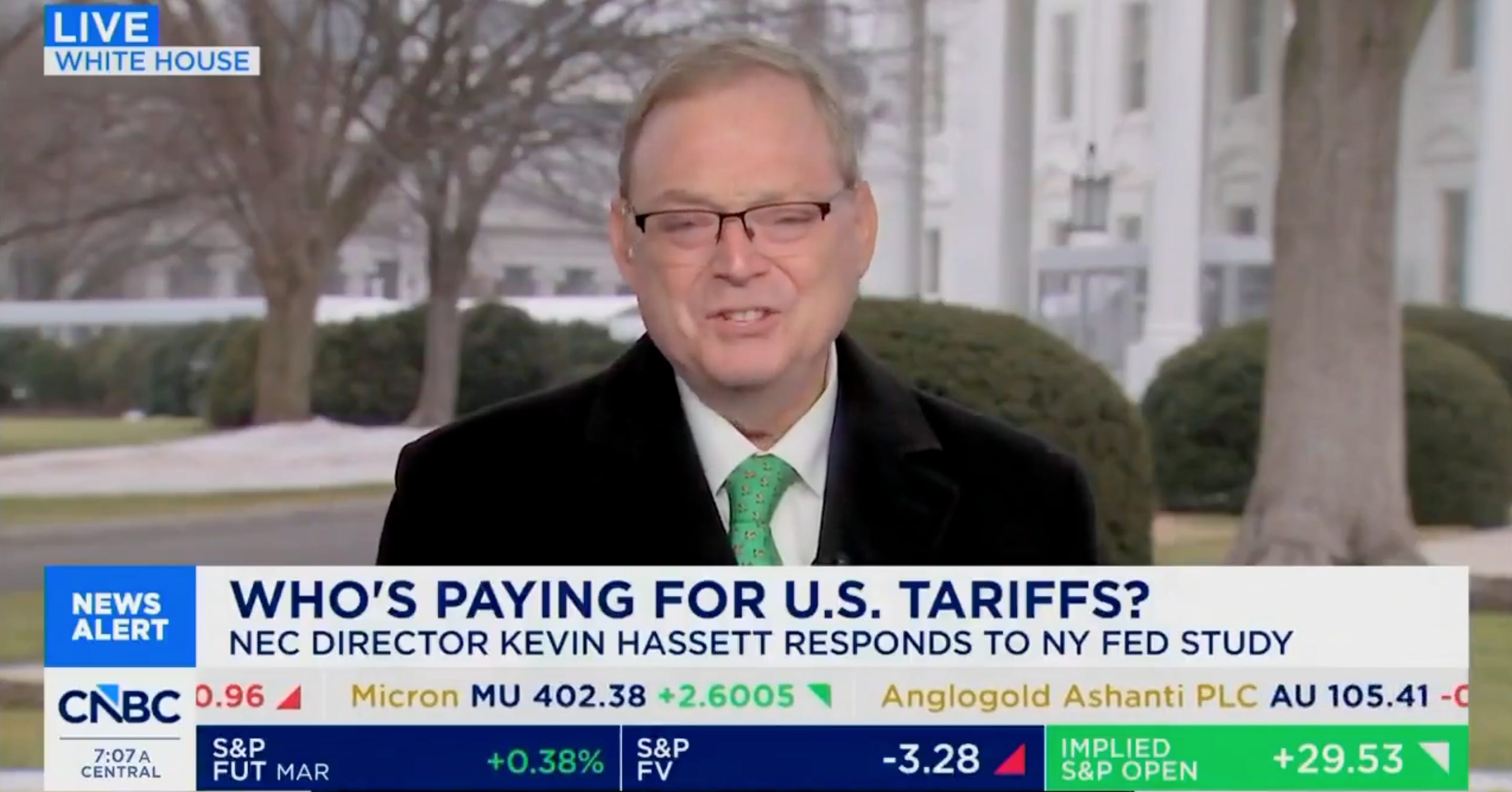
Kevin Hassett used a CNBC appearance from the White House to argue that the economy is improving for everyday Americans, claiming that “incomes are up way more than the cost of living” while defending the Trump administration’s trade approach.
The tension is that Hassett’s message landed the same day he attacked a New York Fed research paper that undercuts a core tariff talking point, turning a policy debate into a fight over the numbers behind it.
On the income claim, the Bureau of Labor Statistics shows inflation at 2.4% over the past 12 months through January 2026, a common benchmark for “cost of living” in national economic coverage.
Related: Trump’s Manufacturing “Boom” Has Reversed — Jobs Shrink Despite Tariffs
BLS also reports average hourly earnings up 3.7% over the past year, meaning paychecks are rising faster than headline inflation in nominal terms.
But BLS’s real-earnings release puts the inflation-adjusted gain at 1.2% year over year, which supports the direction of Hassett’s claim while making the “way more” phrasing hard to substantiate from federal data.
Meanwhile, Hassett’s broader CNBC segment included sharp criticism of a New York Fed paper that found U.S. consumers and businesses bore costs in 2025, contradicting the idea that foreign exporters primarily pay.
Related: NY Fed Data Shows Americans Foot 90% of Trump’s Tariff Bill, Contrary to Claims
“He called the study an embarrassment and suggested the people associated with it should be disciplined,” Reuters reported of his comments about the New York Fed researchers.
Why it matters now is that “real wages up” and “tariffs paid by others” are politically powerful claims, but they hinge on which official measures are used and how big the effects actually are.
The next test point will be whether the administration produces its own data rebuttal to the New York Fed findings while continuing to cite wage gains as proof households are coming out ahead.
For viewers, the takeaway is simple: the trend Hassett cited exists in federal data, but the scale is far smaller than his wording implies.
Related: Trump Tariffs Drive Record $3.6B Customs Bond Funding Gap, U.S. Importers Strain