


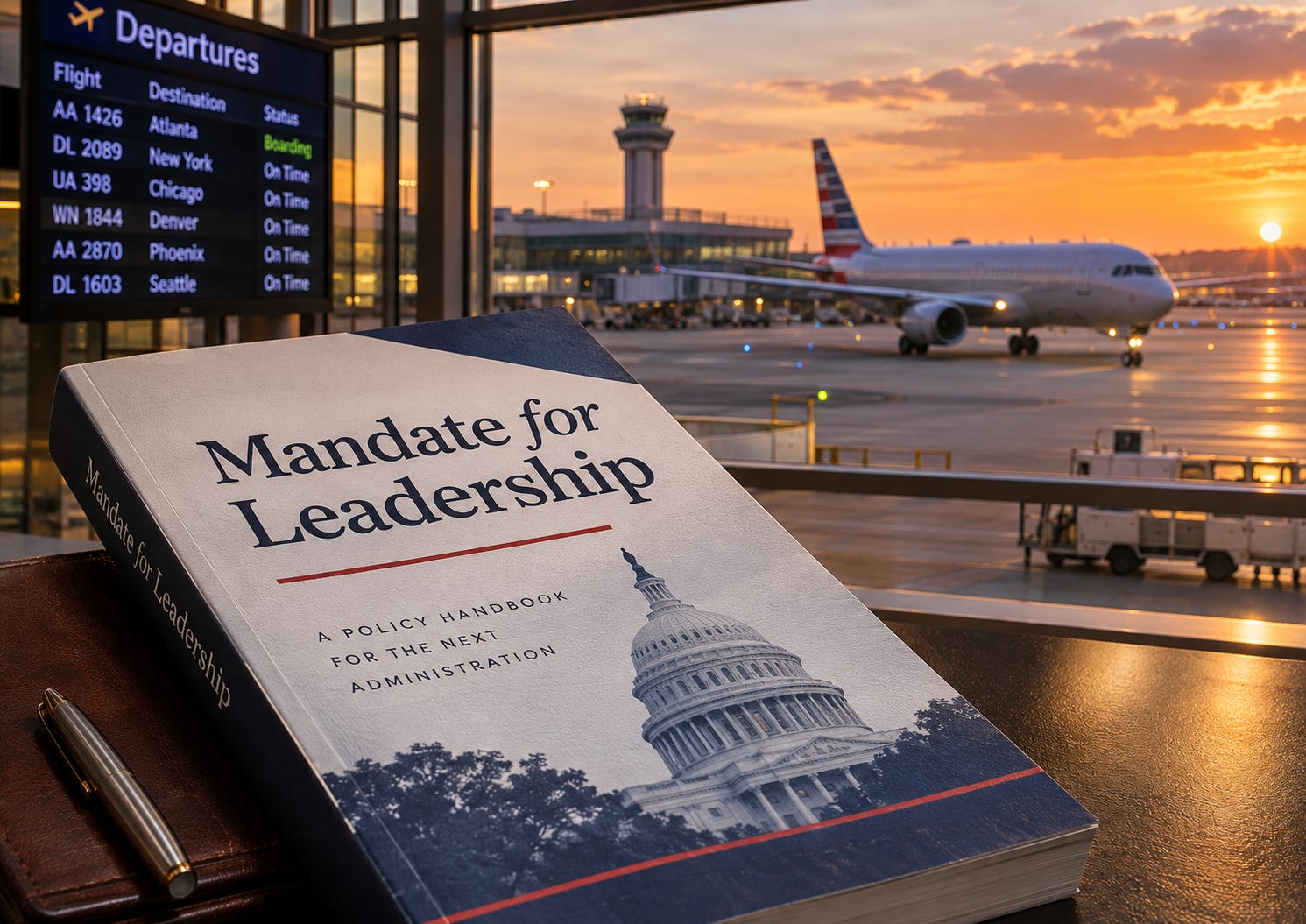
An airport departure board tells passengers where their planes are going and when they are supposed to leave. Behind those numbers are families trying to get home, workers traveling to their jobs, and people who have saved for months to take a vacation.
On Friday afternoon, November 13th, those departure boards began telling a different story. Flights were delayed, passengers waited for explanations, and airline employees struggled to provide answers. Across the country, aircraft preparing to depart were being told to remain on the ground.
At approximately 3:30 p.m. Eastern, the Federal Aviation Administration (FAA) began experiencing serious technical problems. Communications and radar information used by air traffic controllers had become unstable, prompting the agency to order a nationwide ground stop on departing flights.
For approximately four hours and forty-five minutes, normal departures across the United States were suspended. Aircraft already in the air continued operating under established safety procedures, while thousands of travelers remained stranded at airports.
By 8:15 that evening, the FAA had stabilized its systems and allowed departures to resume. The immediate emergency was over, but cancellations and delays continued throughout the weekend as airlines struggled to restore their schedules.
The investigation would lead federal officials to telecommunications equipment at two facilities hundreds of miles apart. It would also raise questions about the relationship between the federal government and the private companies operating infrastructure essential to American aviation.
This Community Is Powered by You
What started as a small circle has grown into something much bigger, and it’s all because of readers like you.
Every time you forward this email, post it on socials, or bring someone new into the fold, you’re helping build one of the most passionate, independent communities out there.
Want to keep the momentum going?
Share this newsletter with someone who should be part of this conversation.
Thank you for being here. It means everything.
How One Technical Problem Spread Across the Country
Air traffic controllers depend on far more than radar screens and radio communications. Behind their work is an interconnected network carrying information between towers, regional control centers, radar facilities, and other aviation equipment.
Think of it as the communications system connecting a city's traffic lights, emergency dispatch centers, and road-monitoring equipment. The people managing traffic may know exactly what they are doing, but they still need reliable information reaching them at the right moment. Air traffic control operates on a vastly larger scale, with considerably greater consequences when information becomes unreliable.
According to the FAA's November 15th statement, older telecommunications equipment became unstable when data flooded the FAA's network at about 1,000 connection attempts every four to five seconds. The resulting disruption interfered with some communications and radar feeds.
The problems affected 17 of the nation's 22 major air route traffic control centers and spread into several facilities responsible for aircraft approaching and departing airports.
Investigators initially identified two possible sources: a radar facility in Amarillo, Texas, and a radio communications facility in El Dorado, Arkansas. A contractor had recently installed a router at the Arkansas location while upgrading telecommunications equipment.
When network traffic from the affected locations was blocked, the system stabilized. Officials also disabled a broadcasting function on newly installed routers as a precaution.
The FAA emphasized that this was not a complete loss of communications or radar capability. Controllers maintained enough information and communications to guide aircraft safely, and approximately 3,500 aircraft already airborne landed without incident.
However, subsequent reporting revealed another troubling aspect of the disruption.
On November 18th, CBS News reported that L3Harris Technologies, the contractor operating the telecommunications network, had struggled for several hours to identify the source of the problem. According to a person familiar with the investigation, the company's network operations center in Melbourne, Florida, could not immediately determine which network address was generating the disruptive traffic.
Transportation Secretary Sean Duffy subsequently acknowledged that the problem should have been identified and isolated more quickly. A faster response might have shortened the ground stop.
Investigators must therefore answer two related questions. Why did the equipment generate or transmit traffic that overwhelmed older systems, and why did a network supporting essential national infrastructure take so long to identify and contain the disruption?
The professionalism of controllers and pilots helped prevent a more dangerous outcome. Their success, however, does not eliminate the need to understand why the network was vulnerable in the first place.
The Private Company Behind the Communications Network
On November 14th, Transportation Secretary Duffy identified L3Harris Technologies as the contractor performing the telecommunications work. L3Harris is a major American defense and aerospace company that has provided telecommunications services to the FAA for more than two decades.
Duffy also disclosed something significant: L3Harris owns the telecommunications network the FAA uses to support its air traffic control operations. That does not mean L3Harris decides which aircraft may fly or makes federal aviation safety decisions. Those remain government responsibilities. It does, however, mean essential communications infrastructure supporting those decisions is provided through a privately owned network.
The company has been replacing aging copper telecommunications connections with modern fiber-optic technology. In its November 14th statement, L3Harris reported that more than 70% of the planned conversion was complete and said it was cooperating with investigators.
The telecommunications transition began years before the current administration. The router installation involved in Friday's disruption belonged to that longstanding effort, rather than an installation shown to have been directly financed by the new $12.5 billion modernization appropriation. The broader modernization program nevertheless includes related telecommunications improvements.
New reporting has raised questions about how the FAA supervised the contractor's work. On November 18th, CNN reported that a March 2025 FAA policy memorandum changed procedures governing certain maintenance performed by telecommunications vendors.
Under the revised process, contractors could notify the FAA of intended work rather than submit individual requests requiring advance approval. The memorandum allowed work to proceed without separate FAA approval, although an FAA liaison was still responsible for evaluating its purpose, importance, and potential operational impact.
CNN reported that L3Harris notified the FAA on November 9th that work would occur at the Arkansas facility on November 13th. FAA Administrator Bryan Bedford initially described the installation as having been monitored by an FAA technician. However, sources familiar with the work and the union representing FAA technicians disputed that assertion.
The Professional Aviation Safety Specialists union told CNN that the FAA employee's assigned responsibility was to provide access to the building, not supervise the contractor's installation. The FAA subsequently clarified that the escort was not present while the contractor performed the work because the equipment belonged to L3Harris.
Agency officials maintain that the March 2025 policy did not reduce oversight. Other people familiar with the maintenance process disagree, raising questions about whether the revised procedures weakened the government's ability to evaluate operational risks.
Those competing accounts do not prove that reduced supervision caused the shutdown, but they do establish a specific disagreement that investigators and Congress should resolve. What supervision did the FAA actually provide, what risk assessment occurred before the installation, and were those precautions sufficient for work affecting a national air traffic communications network?
The investigation has not determined whether the disruption resulted from defective equipment, installation procedures, software configuration, or another technical failure. Hewlett Packard Enterprise, which owns router manufacturer Juniper Networks, has said that, based on information available to it, the equipment was operating as configured.
Private ownership is not proof of negligence, and federal supervision is not proof that government fulfilled its responsibilities properly. Instead, the important issue is whether the FAA possessed and exercised sufficient contractual authority, technical expertise, and independent oversight to protect an essential public service.
Washington Was Warned About the Aging System
Friday's shutdown did not occur in a country unaware that its air traffic infrastructure needed modernization. In September 2026, two months before the nationwide ground stop, the Government Accountability Office (GAO) published an examination of the FAA's modernization program. Its findings described significant weaknesses in the government's planning.
The GAO referenced its September 2024 determination that more than 75% of the FAA's 138 air traffic control systems were unsustainable or potentially unsustainable. Some depended on aging technology, hard-to-obtain replacement parts, and technical expertise that was becoming increasingly scarce.
The FAA had launched an ambitious modernization program intended to replace outdated communications equipment, improve radar and surveillance systems, and introduce newer technology into air traffic operations. Congress approved $12.5 billion toward that effort in July 2025, including approximately $9 billion for air traffic control systems modernization.
The GAO, however, identified serious weaknesses in how the program was being planned. The FAA lacked a reliable estimate of what the modernization would cost over its full lifetime. It also had 11,389 individual project schedules that had not been combined into a coordinated master schedule.
Imagine hiring contractors to renovate an entire hospital while doctors, nurses, and patients continue using it. Thousands of separate jobs must be completed without disrupting essential services. If the work is not carefully coordinated, one project can interfere with another. The FAA is undertaking a similarly complicated task across a national network that cannot simply close for renovations.
The GAO warned that inadequate cost planning and scheduling increased the risks of delays, higher expenses, and continued dependence on outdated equipment. It recommended developing a reliable lifecycle cost estimate and an integrated master schedule.
While that report did not predict Friday's particular router problem, nor does it prove that poor scheduling caused the shutdown, it does establish that federal auditors had already identified significant weaknesses in the government's ability to manage a modernization effort of this scale.
Congress has ample evidence that the air traffic system needs modernization. It must now determine whether the government has an effective plan to replace aging infrastructure while protecting the operations that depend upon it.
What Project 2025 Actually Proposes
A separate document published before Friday's shutdown deserves examination. Project 2025, the policy blueprint published by the Heritage Foundation, recommends substantially restructuring the Federal Aviation Administration.
In Chapter 19, beginning on page 632, author Diana Furchgott-Roth argues that the FAA performs two different functions that should operate separately. The first is managing air traffic. The second is regulating aviation safety. The chapter argues that the organization providing air traffic services should not operate within the same structure as the agency that regulates those services.
On page 633, Project 2025 recommends separating the FAA from the Department of Transportation or, at a minimum, separating the Air Traffic Organization from the FAA. It also recommends changing the agency's funding system to reduce dependence on annual congressional appropriations and requiring the FAA to operate more like a business.
Page 634 becomes more specific. It proposes establishing separate headquarters for the Air Traffic Organization, replacing aviation user taxes with fees paid directly to that organization, and allowing it to issue long-term revenue bonds to finance major improvements.
Today, Congress exercises substantial influence over FAA operations through federal laws, aviation taxes, appropriations, and oversight. Project 2025 proposes changing the organizational and financing arrangements to give air traffic operations a more independent structure and dedicated revenue. Supporters argue that these changes could produce more predictable funding, faster modernization, and fewer delays caused by annual budget negotiations.
Those are legitimate concerns. An aviation system cannot function effectively if essential improvements are repeatedly postponed because lawmakers cannot agree on funding.
However, the broader Project 2025 document provides additional context. On page 83, a separate chapter concerning federal personnel argues that the national government should reduce its responsibilities by decentralizing and privatizing as much as possible. That establishes a broader preference within Project 2025 for shifting responsibilities away from direct federal administration.
It would nevertheless be inaccurate to claim that the FAA chapter explicitly calls for selling the entire agency to private investors. Separating air traffic operations from federal safety regulation does not automatically constitute privatization, at least not entirely.
The FAA chapter acknowledges that its major organizational changes require congressional legislation. Congress would therefore have to determine what legal status a separate Air Traffic Organization would possess, how its leadership would be selected, how its finances would be supervised, and what authority federal officials would retain over essential infrastructure.
The proposal deserves examination on its merits, including whether it would improve operational reliability and public accountability. A new organizational structure or financing model cannot guarantee either outcome on its own.
Project 2025 Recognizes the Contractor Problem
There is an especially interesting observation on page 634. Project 2025 cites research identifying excessive dependence on aerospace and defense contractors as one of the Air Traffic Organization's existing weaknesses. It also argues that insufficient engineering and managerial expertise within the organization has increased its dependence on outside companies.
That assessment deserves consideration alongside Friday's shutdown. The document proposing structural reform acknowledges that the current system relies heavily on contractors. Yet separating air traffic operations from the FAA does not automatically reduce that reliance. A separately financed organization could still purchase telecommunications services from private companies. It could continue relying on contractors to maintain equipment, develop software, and manage complex technology.
And if federal officials already disagree about the oversight provided during a routine equipment replacement, Congress should examine how the proposed restructuring would address that weakness. Would a separate organization possess greater engineering expertise and stronger contractual rights to inspect privately owned infrastructure? Would it conduct independent testing before equipment entered service, and could it verify that backup systems would function during a failure? Or would the same contractor relationships continue under different management and financing arrangements?
A restructured system might improve modernization if it attracted technical talent, established dependable funding, and imposed clear performance requirements. It could also create additional accountability problems if Congress failed to define authority over contractors and critical equipment.
Friday's incident does not establish which outcome would occur, but it does provide a reason to demand specific answers before making permanent structural changes to the nation's aviation system.
Congress Has More to Do Than Write Another Check
Transportation Secretary Duffy is calling for substantially more money to modernize American aviation infrastructure. On November 12th, immediately before the nationwide shutdown, the administration sought approximately $30 billion in additional funding. Following the disruption, the request increased to approximately $50 billion. That is a $20 billion increase in a matter of days.
The request is broader than replacing communications equipment. According to Associated Press reporting, approximately $10 billion would go toward air traffic control technology, with the remainder supporting facilities and other infrastructure improvements, including control centers, towers, and runways.
Congress will need to examine the request seriously. A functioning aviation system is essential to national commerce, employment, public safety, and the daily lives of millions of Americans. However, lawmakers also have a responsibility to understand how existing funding is being used and whether new expenditures will address documented vulnerabilities.
The distinction between ongoing telecommunications maintenance and the broader modernization program is important. The router replacement was part of an effort that began before the latest funding initiative, although related telecommunications improvements remain part of the larger modernization strategy. A larger appropriation will not necessarily correct weaknesses in contractor supervision, testing, or emergency response unless those weaknesses are first identified.
Congress has begun asking questions. On November 16th, thirteen Democratic members of the Senate Commerce Committee sent a letter to Transportation Secretary Duffy and FAA Administrator Bedford demanding detailed information about the nationwide shutdown.
The senators reported that L3Harris provided information indicating the telecommunications transition would involve approximately 3,648 router conversions. About 400 replacement devices had been installed, but only 69 were operational, according to the information provided to the lawmakers.
The senators questioned whether pre-installation testing adequately reflected the conditions the equipment would encounter once connected to the operating network. They called for independent validation, verified backup capabilities, and procedures to reverse installations if equipment began causing problems. The committee requested a joint technical briefing involving the FAA, L3Harris, and Juniper, along with additional information by November 23rd.
Other lawmakers have also questioned the scale and financing of the administration's request. Some Republicans have argued that the aviation industry should shoulder more of the cost, while others have raised concerns about how much previously appropriated money remains available.
Meanwhile, the FAA has paused additional installations of the new Juniper routers while investigators continue testing the equipment. As of November 19th, the agency had not publicly announced the definitive root cause. Administrator Bedford said investigators were close to identifying it and expected to release findings during the week.
These are meaningful developments, but obtaining information is only the beginning of congressional oversight. Lawmakers must determine whether the FAA's maintenance procedures adequately protected the network, whether the contractor met its obligations, and whether federal officials exercised sufficient supervision.
Congress should also require a coordinated modernization schedule and a credible accounting of future costs before treating additional funding as the complete solution.
Article I of the Constitution gives Congress legislative authority, including powers over interstate commerce and federal appropriations. Congress also possesses investigative and oversight powers necessary to carry out its constitutional responsibilities.
The executive branch remains responsible for administering the law and supervising federal operations. Congress must ensure that the legal framework, funding requirements, and oversight mechanisms are sufficient to hold those administering public responsibilities accountable. Those obligations do not disappear when an agency hires a private contractor or when Congress reorganizes an agency.
The Square New Deal: Public Responsibility Cannot Be Outsourced
The Square New Deal approaches this problem through government stewardship. We believe private enterprise has an essential role in the American economy. Businesses develop technology, invest capital, employ workers, and provide services that benefit the public.
Good Steward Capitalism does not require government to own every piece of equipment or perform every technical task, but it does require that essential public responsibilities remain accountable to the people.
When the federal government contracts with a private company to provide infrastructure necessary for national aviation, it must retain the authority, knowledge, and resources needed to supervise that relationship effectively.
A company's right to earn a profit does not eliminate its contractual obligations. The government's decision to hire that company does not eliminate its obligation to protect the public.
The Square New Deal also insists that the Constitution sit above ideology. Whether someone favors a larger federal workforce, privately operated infrastructure, or a combination of both, the standard should remain the same.
The questions remain the same. Does the arrangement serve the public? Can responsible officials explain how it works and demonstrate that the safeguards are enforceable? When something goes wrong, can the people determine who was responsible and whether corrective action followed? Those questions belong to citizens across the political spectrum.
Working Americans who depend on aviation do not benefit when government and contractors point fingers at one another. They benefit when the system functions safely, reliably, and at a cost the country can justify. Citizen stewardship means refusing to treat these issues as disputes that only politicians, corporations, and technical experts are entitled to discuss.
We do not need every passenger to understand computer networking. We need elected representatives willing to obtain the facts, explain them clearly, and establish requirements that protect the public.
A public service does not become less important because a private company provides part of it, and a federal agency does not become more accountable simply because Congress gives it a new organizational structure. The public is entitled to expect that the institutions responsible for essential services possess both the means and the willingness to fulfill their responsibilities.
The System Must Answer to the People
On November 13th, America's air traffic controllers and pilots demonstrated why established safety procedures matter. They handled an extraordinary disruption and brought the aircraft already in the air down safely. However, their professionalism cannot substitute for reliable infrastructure.
The investigation into the shutdown continues. We do not yet know the precise root cause, whether contractor error was involved, or whether the existing contract provided every protection the government needed. We do know that much of the country's air traffic infrastructure is aging, that essential telecommunications services depend on a privately owned network, and that federal auditors have identified serious weaknesses in modernization planning.
New reporting has also raised questions about the FAA's oversight procedures and the contractor's ability to quickly identify a widespread network failure. As many pundits have pointed out, Project 2025 has proposed substantial changes to how air traffic operations are organized and financed. Congress must evaluate those proposals against the documented weaknesses in the existing system, rather than assuming that a particular organizational model will automatically produce better results.
Members of Congress are now demanding information about the failure, the safeguards meant to prevent it, and the government's plans to correct those weaknesses. The next test is whether those demands produce verifiable answers and enforceable improvements.
Americans should be able to purchase an airline ticket without wondering whether the national air traffic system can withstand a malfunctioning piece of telecommunications equipment. They should also be able to trust that when Congress authorizes billions of dollars for improvement, someone is responsible for ensuring the work is properly planned, completed, and verified.
The government does not have to own every cable, router, or communications facility, but it must retain the ability to ensure the system works, failures are corrected, and those entrusted with public responsibilities answer to the public.
Congress has the authority to establish those obligations and investigate whether they are being fulfilled. The FAA has the responsibility to carry them out. The American people deserve a system in which both are held accountable.
Support Independent Journalism
The Coffman Chronicle examines the institutions, decisions, and policies shaping the lives of working Americans. If you believe government must remain accountable to the people it serves, consider subscribing, sharing this article, or supporting our reporting with a paid subscription.
Sources
Associated Press. “U.S. Transportation Secretary Says L3Harris Should Have Found Ground Stop Problem Sooner.” November 18, 2026.
Federal Aviation Administration. “Nationwide Ground Stop: Questions and Answers.” November 15, 2026.
Furchtgott-Roth, Diana. “Department of Transportation.” In *Mandate for Leadership: The Conservative Promise*, 619–640. Washington, DC: Heritage Foundation, 2023.
L3Harris Technologies. “L3Harris Statement on the Nov. 13 Ground Stop.” November 14, 2026.
Marsh, René. “Exclusive: ‘There Was No Monitoring.’ Sources Say FAA Had Little Oversight of Work That Led to Nationwide Ground Stop.” CNN, November 18, 2026.
Rinaldi, Olivia. “During Nationwide Ground Stop, L3Harris Struggled to Find Location of System Outage.” CBS News, November 18, 2026.
Reuters. “US Plans to Announce Cause of Outage That Led to Nationwide Ground Stop, FAA Says.” November 19, 2026.
U.S. Congressional Research Service. “Nationwide Aircraft Ground Stop Raises Concerns over Aviation System Modernization.” November 18, 2026.
U.S. Government Accountability Office. “Air Traffic Control Systems: Ambitious New Modernization Effort Needs to Improve Cost and Schedule Planning.” GAO-26-107992. September 14, 2026.
U.S. Senate Committee on Commerce, Science, and Transportation. “Commerce Committee Democrats Demand Clear & Fact-Based Answers From DOT, FAA on Root Cause of Nov. 13th Nationwide Ground Stop.” November 17, 2026.