


Stay Informed. Stay Loud.
Subscribe to The Coffman Chronicle for no-BS political analysis, action guides, and daily truth bombs you won’t get from corporate media.
MAGA’s Cancel Culture Hypocrisy
MAGA built its brand on mocking the left for “cancel culture.” They laughed at boycotts, railed against college speech codes, and turned “snowflake” into a slur. But now that they control the levers of power, Trump’s Attorney General is running the very playbook they once despised.
After the killing of Charlie Kirk, Trump’s AG promised to crack down on “hate speech.” At the same time, MAGA operatives began compiling lists of people to punish for what they said online. These aren’t fringe actors. This is the top law enforcement officer in the country, talking openly about prosecuting speech.
It’s worth pausing on the hypocrisy. When the left protested racist mascots or corporate sponsorships, MAGA leaders called it censorship. When social media platforms took down violent content, they cried about free speech. But now? They are cheering as their own government threatens people for speaking out.
This isn’t about principle. It never was. MAGA doesn’t oppose cancel culture; they want to own it. What they condemned as tyranny from the left, they’re perfectly comfortable weaponizing against their critics. It’s authoritarianism dressed up as law and order.
And here’s the deeper danger: when cancel culture comes from the government, it’s not just about losing your Twitter account or your job. It’s about losing your freedom. The moment speech becomes prosecutable based on politics, democracy ceases to be democracy and becomes something else entirely.
The Farmers MAGA Forgot
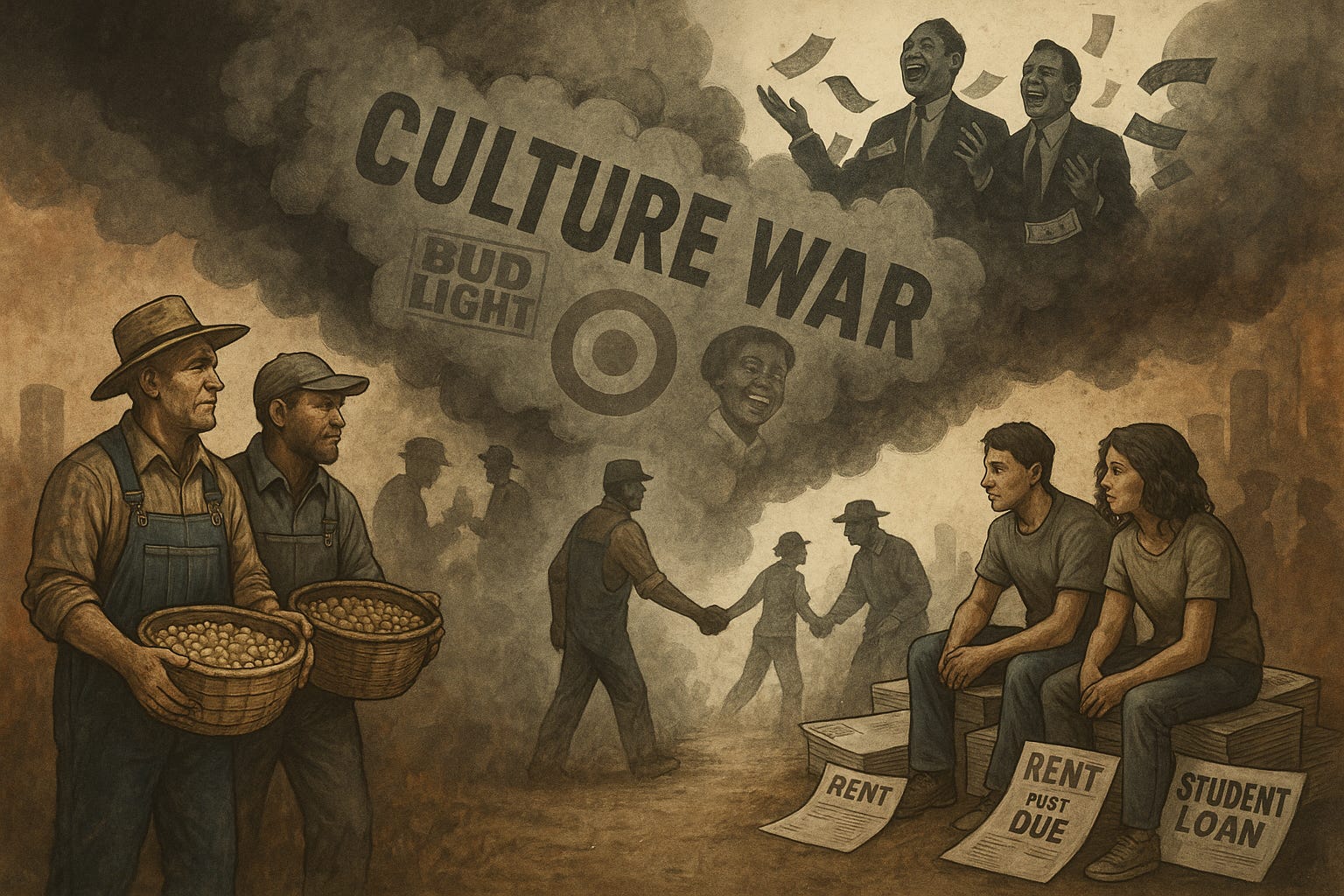
While MAGA leaders rage about “woke beer cans” and “DEI conspiracies,” the people they claim to represent are being left behind. Nowhere is that clearer than on America’s farms.
Take soybeans. China consumes 61% of the world’s soybeans, and before Trump’s trade wars, the U.S. was one of its biggest suppliers. However, when tariffs were imposed, Beijing redirected its purchases to Brazil. The fallout was brutal. In 2019, American soybean exports to China plunged by more than 75% compared to pre-trade war levels (USDA). That market has never fully recovered. With Trump’s implementation of further tariffs in April 2025, the trouble deepened.
For farmers in places like Arkansas, Iowa, and Missouri, that collapse isn’t an abstraction. It’s an empty ledger. In White County, Arkansas, a third-generation farmer told Reuters, “We’re sitting on bins full of beans we can’t move. The bills don’t stop just because the market does.” That’s the human cost of Trump’s “America First” policies.
These aren’t radical leftists asking for government grocery stores. They’re family farmers who now find themselves — reluctantly, desperately — praying for the same collective relief MAGA politicians deride as “socialism.” Crop insurance, price supports, debt forgiveness: call it what you want, but it’s the only lifeline keeping farms afloat.
The irony couldn’t be sharper. MAGA rails against socialism on the campaign trail, but in the fields of the Midwest, their own voters are living proof that unregulated markets don’t protect working people. Farmers don’t need culture war slogans. They need buyers for their crops, a fair market, and a government that has their back.
And here’s the truth: the so-called rural–urban divide is a distraction. A farmer in Arkansas who can’t sell soybeans and a renter in New York City staring at a $2,500 lease renewal are living the same story. Both are trapped in an economy where survival requires collective solutions, and both are ignored by leaders who profit from keeping them divided.
A Generation on the Edge
The despair running through this country isn’t just about politics. It’s about economics. Nowhere is that clearer than among the younger generations, who feel that the American Dream has been yanked out of reach.
In 2024, the median age of first-time homebuyers reached 38, the highest recorded to date. In the early 2000s, first-time buyers were typically in their mid-30s. That shift may sound small, but it represents years of delay. A milestone that once coincided with starting a family or building stability has now been pushed to the late 30s. For many, homeownership arrives only after their children are nearly grown, if it arrives at all.
That delay has ripple effects across generations. Gen X came of age in the Reagan years, when wages stagnated and Wall Street was lionized. Millennials inherited the aftermath of the 2008 financial crisis, often starting families just as the housing market was collapsing. And Gen Z, just entering adulthood, has been dealt a double blow: the fallout from the pandemic and a cost-of-living crisis that makes independence feel out of reach. Each generation has been told to wait longer, settle for less, and expect decline rather than prosperity.
Meanwhile, students continue to take on record debt. U.S. student loan balances now total nearly $1.8 trillion, with the average borrower carrying close to $39,000. Take Jordan, a 27-year-old nurse in Ohio: she owes $65,000 in loans, works 50-hour weeks, and still has to split rent with roommates. She’s not unusual. More than 60% of young households are “cost-burdened,” spending over 30% of their income just to keep a roof over their heads.
The result is a generation squeezed from all sides: priced out of homes, burdened by debt, and trapped in an economy where paychecks fail to keep pace with the rising cost of living. It’s no wonder so many turn away from politics altogether. Hopeless people don’t rally at town halls. They retreat into video games, drift into conspiracy theories, or, at the margins, lash out in violence.
The Real Fight: Class, Not Culture
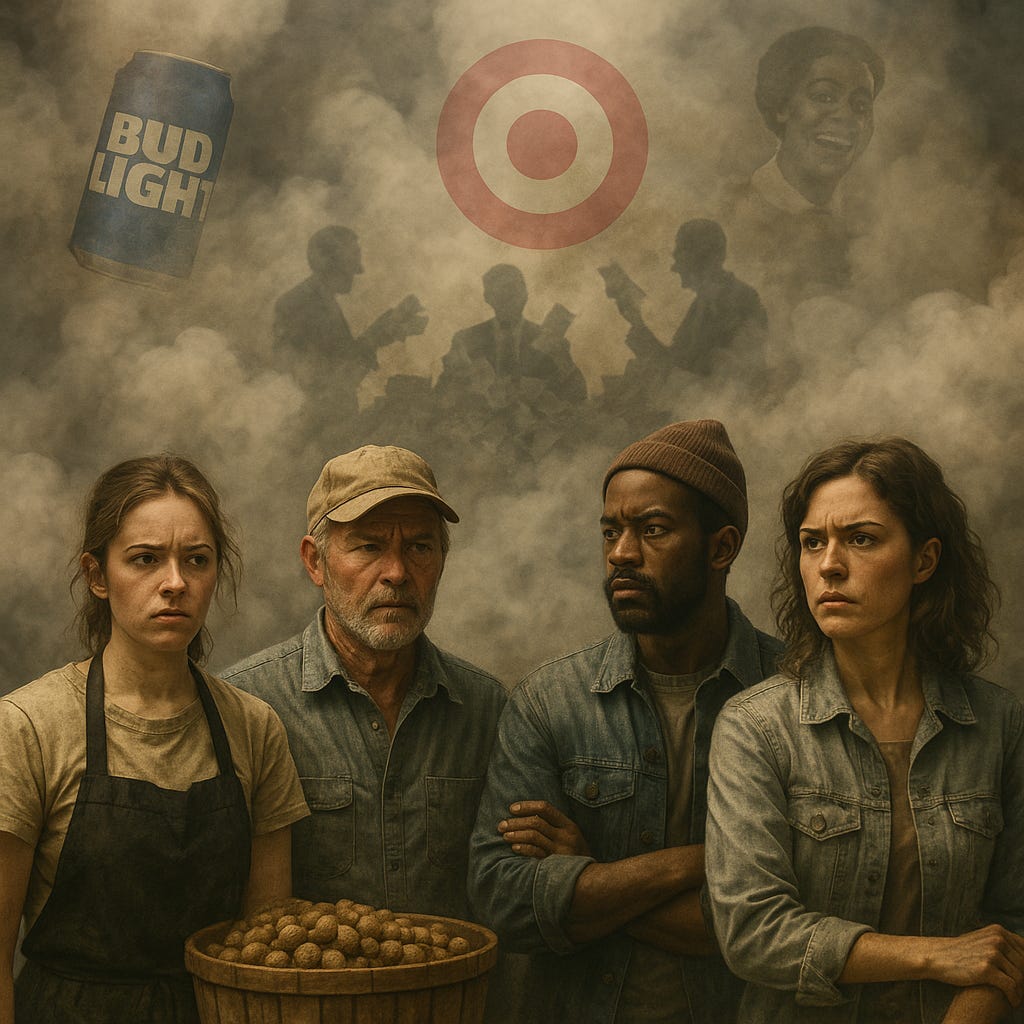
Every day, Americans are told the real battle is cultural. We’re asked to pick sides over Bud Light cans, Target displays, and whether Aunt Jemima’s logo should still be on the shelf. The outrage cycles come fast and loud, but here’s the truth: none of it pays the rent, lowers the grocery bill, or gets anyone closer to buying a home.
The culture war is a smokescreen. The real fight is class, and it’s one every generation is losing.
Algorithms thrive on division. Social media doesn’t care if you’re watching Charlie Kirk or dunking on him; it just feeds you more of whatever keeps you angry. The more distracted we are, the more the billionaire class can keep wages flat, raise prices, and walk away richer than ever.
And each generation has been distracted in its own way:
Gen X was told to worship the market, to grit their teeth through wage stagnation while Wall Street cashed in.
Millennials were told to wait out the 2008 crash, to weather “temporary” hardship that became permanent precarity.
Gen Z is bombarded daily with culture-war noise online while their shot at independence slips further away.
This is not an accident. The ruling class wins when we’re too busy fighting over cultural grievances to notice that they’ve been waging — and winning — the class war for decades. They’ve captured both parties, gamed the economy, and sold us division as democracy.
If we don’t name the real fight, we lose it by default. And right now, the billionaire class is laughing at how easily we are distracted.
Coalitions That Scare the Powerful
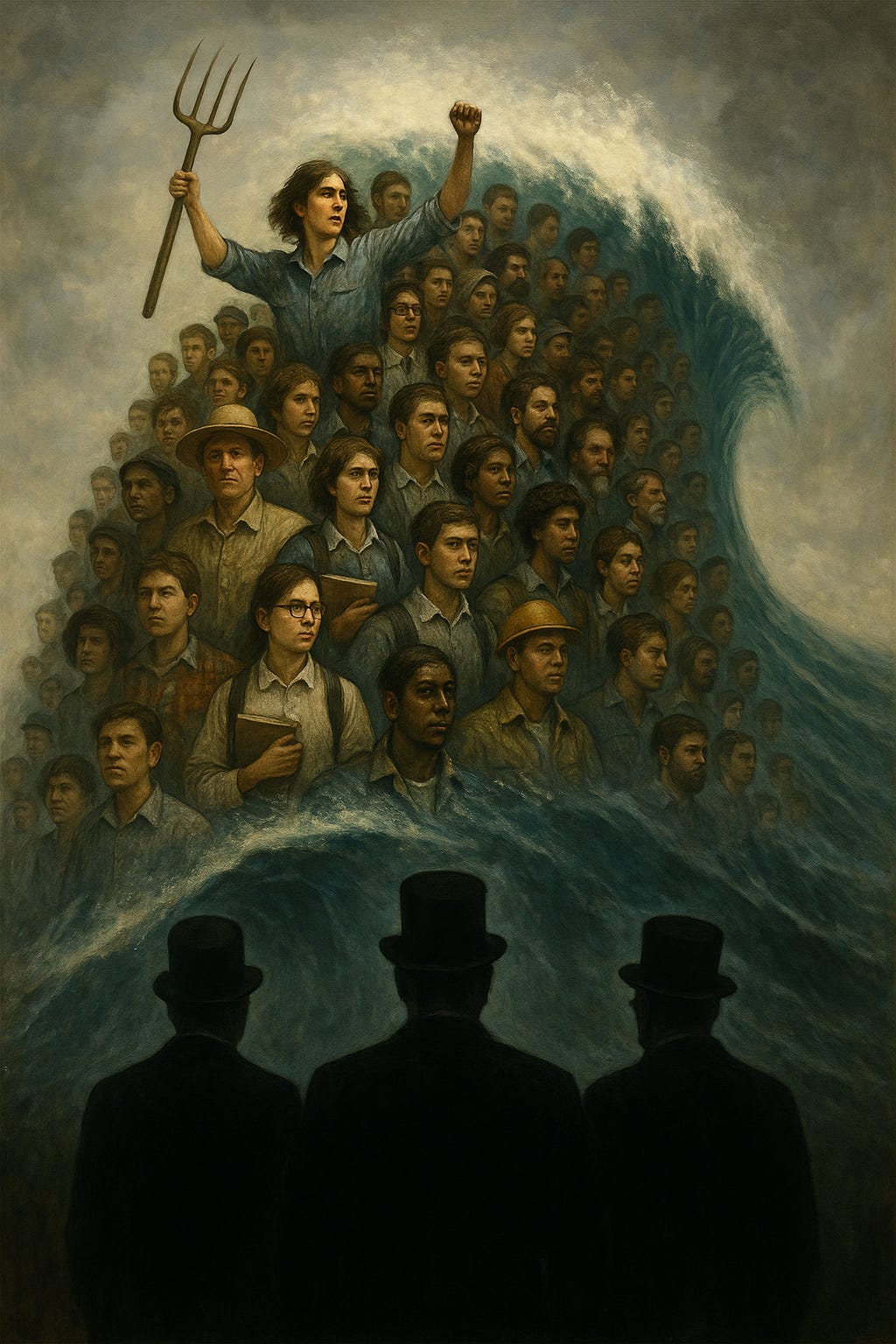
The billionaire class has one reliable trick: keep us divided. Pit city against country, white against Black, young against old. Feed us endless culture wars while they quietly rig the economy in their favor. It works until we stop playing their game.
Real change happens when working people link arms across the divides that politicians and pundits obsess over. Imagine this: soybean farmers in Iowa sitting down with renters in New York. One side is sitting on bins of unsold crops, the other is staring at rent hikes that swallow half a paycheck. Both are victims of the same economic system, and both are demanding the same thing — fairness.
Meet Angela, a 24-year-old barista in Brooklyn. She makes $18 an hour, pays $2,300 in rent for a one-bedroom she shares, and jokes that she’ll never own a home unless she wins the lottery. Her story isn’t so different from the farmer in Arkansas with bins of unsold soybeans. Different settings, same struggle: the system doesn’t work for either of them.
That’s the coalition MAGA and the billionaire class fear most. Because if people start to see their common interest, the smokescreen burns away. Farmers don’t need culture war slogans. Renters don’t need Twitter flame wars. They both need:
Affordable housing that isn’t eaten up by Wall Street landlords.
Debt relief that frees them to build a future.
Healthcare that doesn’t bankrupt them.
Wages that keep pace with inflation and productivity.
And this isn’t just about geography. It’s about generations, too. Gen X wants retirement security. Millennials seek debt relief and an opportunity for homeownership. Gen Z wants to know they can move out of their parents’ house without drowning in bills. Different demands, same struggle.
Unity doesn’t mean we’ll agree on everything. It doesn’t mean every cultural dispute goes away. However, when we unite on economic issues, the ruling class loses its favorite weapon: division. That’s why billionaires bankroll outrage cycles. They know that if the rest of us ever stop fighting each other and start fighting them, their reign will end.
So here’s the choice: keep losing culture wars, or start winning the class war. Stop fighting each other. Start fighting the people who profit from keeping us divided.
Stay Informed. Stay Loud.
Subscribe to The Coffman Chronicle for no-BS political analysis, action guides, and daily truth bombs you won’t get from corporate media.
Bibliography:
“Soybeans Without a Buyer: The Export Gap Hurting U.S. Farms.” American Soybean Association, 2024.
“Average Student Loan Debt [2025]: by Year, Age & More.” Education Data Initiative, 2025.
“Student Loan Debt Statistics [2025].” Education Data Initiative, 2025.
“The Average Age of First-time U.S. Homebuyers Is 38, an All-Time High.” NAR via CNBC, 2024.
“Young Buyers Continue to Be Fenced Out of Homeownership.” Economist’s Outlook Blog, 2024.
“Gen Z’s Mental Health, Economic Distress and Technology.” Federal Reserve Bank of St. Louis, May 2024.
I agree we’re in a class war and it’s an economic war. I would think we all could unite on these Trump tariff import sales taxes and tariff wars are needlessly fueling inflation and taking a lot of money out of our wallets. Why no one is bitching and protesting about these needless inflationary prices boggles my mind. It’s what affects us all the most!
Sounds a lot like the "company store" of the 1930's.