


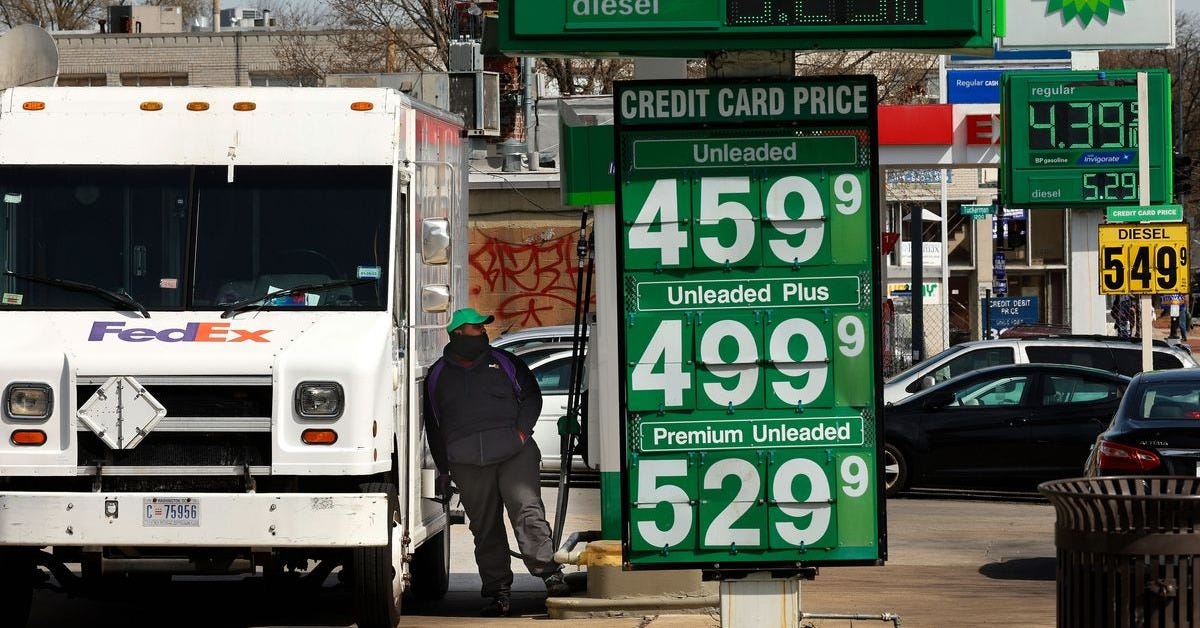
The latest inflation data may suggest stability, but for many Americans, the financial pressure has not eased.
Core inflation measured by the personal consumption expenditures index rose 3.2% in March, while overall inflation came in around 3.5%. Both figures remain above the Federal Reserve’s 2% target, even as the broader economy continues to grow at a steady pace.
That combination is shaping a difficult reality for households.
While inflation is no longer rising as rapidly as it did in previous years, prices remain elevated across essential categories. Housing, food, and services continue to cost significantly more than they did before the inflation surge, and those increases have not reversed.
Subscribe free for daily political analysis they won’t broadcast. Join 110K+ readers →
At the same time, interest rates remain high, affecting everything from mortgages and car loans to credit card debt. Because inflation has not cooled enough, the Federal Reserve has little incentive to cut rates quickly, extending the period of expensive borrowing.
This creates a dual pressure point for consumers: higher everyday costs combined with higher financing costs.
Wage growth has provided some relief, but not uniformly. In many cases, increases in income have been offset by the cumulative rise in prices over the past several years.
The result is a persistent strain that is not fully captured in headline economic growth figures. While the economy continues to expand, the benefits are uneven, and the cost-of-living challenge remains central to how many Americans experience the current economy.