


Note: Previously, we reported that the shooter was 16. That is incorrect. Robin Westman was 23. We apologize for the error and thank our eagle-eyed readers for bringing the mistake to our attention.
Last week, a teenager walked into a Catholic school in Wisconsin during morning Mass and opened fire. The shooter, 23-year-old Robin Westman, had posted disturbing videos and a manifesto online in the days before the attack, filled with violent imagery, hate symbols, and nods to past mass shooters. The warning signs were public. Visible. Chilling.
No one stopped her.
Not because they didn’t care, but because the systems meant to catch her—systems that once quietly connected schools, local law enforcement, and federal agencies—had already been defunded, dismantled, or buried under political pressure.
Just days earlier, FEMA—the federal agency most Americans associate with hurricanes and disaster relief—had quietly instructed state and local grant recipients to pause or reclassify any projects specifically aimed at domestic violent extremism. For four years, FEMA had been one of the only federal agencies funding community-based efforts to prevent hate-fueled violence before it reached the point of no return. That’s over now.
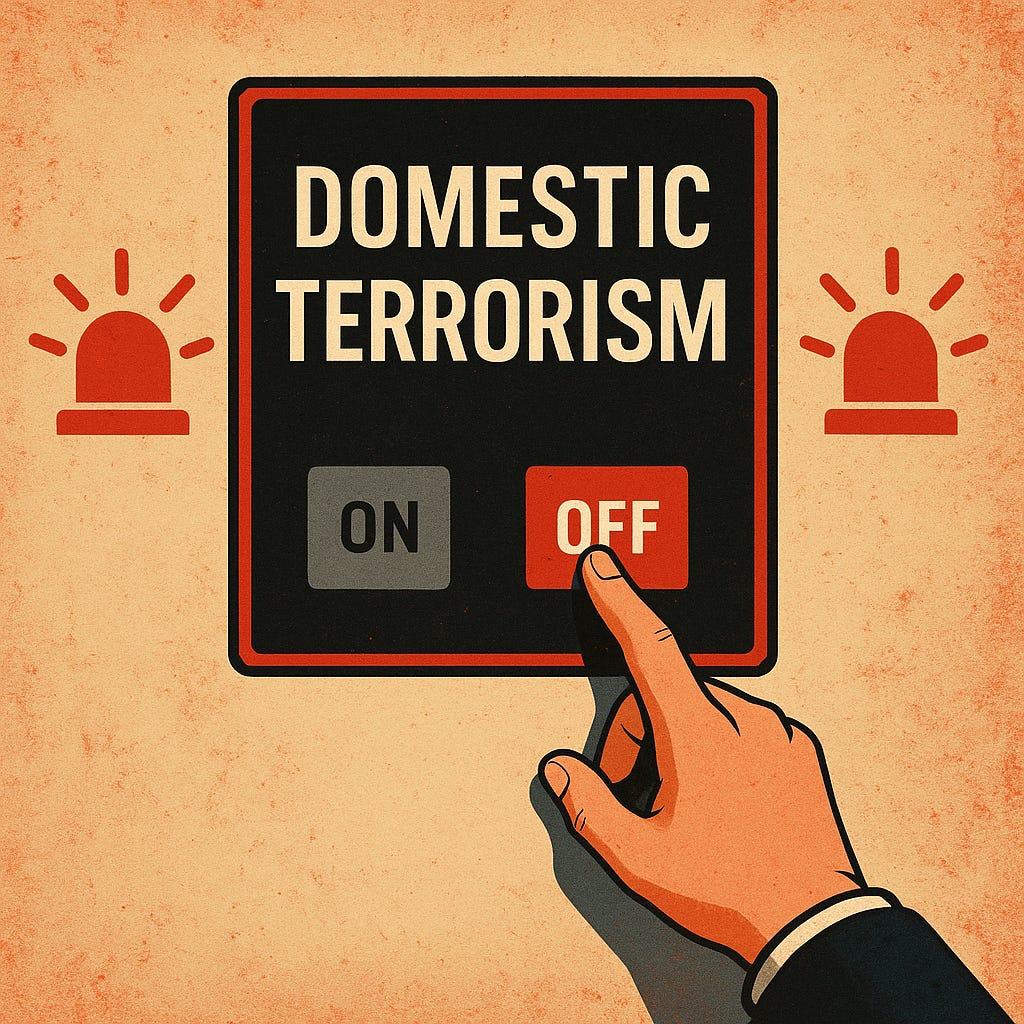
This wasn’t just a case of federal neglect. It was a test case for what happens when the alarm system is turned off intentionally.
Most Americans don’t know FEMA had anything to do with preventing domestic terrorism in the first place. However, under the Homeland Security Grant Program, local governments and nonprofits used FEMA funding to:
Train teachers and law enforcement in digital threat detection
Build community networks to identify radicalization early
Coordinate responses to school threats, hate crimes, and faith-based violence
These were unglamorous, nonpartisan programs. They were working.
And they are now—under the Trump administration—being told to stop.
The language is subtle. Officials are told to "pause" or "reclassify" efforts targeting extremism. But the message is clear: this government no longer wants to call domestic terrorism by its name. And by refusing to name it, they’ve chosen to ignore it.
The result is what happened in Wisconsin, what has happened in countless other schools, churches, and public spaces.
A teenager radicalized online. A threat posted in plain sight. And a system that no longer has the tools—or the political will—to act.
Stay Informed. Stay Loud.
Subscribe to The Coffman Chronicle for no-BS political analysis, action guides, and daily truth bombs you won’t get from corporate media.
What FEMA Actually Does And Why It Matters
When most Americans hear FEMA, they think of floods, fires, and hurricane relief. And that’s not wrong. FEMA—the Federal Emergency Management Agency—was established in 1979 to respond to natural disasters and assist states in recovering from physical catastrophes.
However, over the last two decades, FEMA’s mission has undergone significant evolution.
After 9/11, FEMA was folded into the newly created Department of Homeland Security and began playing a role in national security planning. That didn’t mean FEMA became the FBI, but it did mean FEMA became a key node in community-based threat prevention. If something posed a catastrophic risk to public safety, whether it was a Category 5 hurricane or a mass shooting in a school, FEMA had a role to play.
That role became more defined after January 6, 2021.
For the first time, domestic violent extremism (DVE) was recognized as a central threat to U.S. homeland security. FEMA responded by incorporating DVE into its Homeland Security Grant Program (HSGP), a multi-billion-dollar annual fund that supports state and local emergency preparedness.
These grants didn’t go to spy agencies or black-ops teams. They went to:
Public school systems looking to identify students being radicalized online
Faith-based groups organizing synagogue or church security plans
Local police departments training to respond to threats from white supremacist or militia groups
Nonprofits building early-intervention programs for at-risk youth in ideological pipelines
These were tools for prevention—before the bomb, before the shooting, before the blood on the ground. They were quiet, they were smart, and they worked in tandem with community trust, not against it.
And now, they’re being erased.
In 2025, under Trump’s second term, FEMA directed all grant recipients to halt or reframe any work explicitly focused on domestic violent extremism. In effect, projects designed to stop white nationalist or militia-driven attacks must now be relabeled or abandoned. If you want to fund a program about “cybersecurity” or “community resilience,” fine, but say “domestic terrorism,” and the money stops.
This isn’t just bureaucratic reclassification. It’s the intentional unlearning of January 6.
The Quiet Defunding of Domestic Safety
The policy change at FEMA wasn’t announced in a press conference. There was no public debate, no hearings, just a line in a grant guidance update, and then a wave of emails to local program leaders instructing them to halt any activities tied to “domestic extremism.”
The impact is already visible.
In 2023 alone, FEMA allocated more than $82 million in grants to projects related to domestic violent extremism. Those funds supported training, technology, intelligence sharing, and, perhaps most critically, local partnerships between schools, churches, nonprofits, and law enforcement. These programs didn’t just respond to violence. They prevented it.
Now, many of those initiatives are paused indefinitely or being rewritten to avoid using disallowed language. Communities that have built early warning systems, such as social media monitoring, radicalization awareness programs, and interfaith security coalitions, are being told to either rebrand or shut down.
Why? Because acknowledging the real threat—white supremacist violence, Christian nationalism, militia extremism—would mean confronting the political machinery that fuels it.
And this is where the defunding becomes strategy.
If you stop calling something a threat, you don’t have to fund the fight against it. And if you don’t fund it, the situation worsens. And when it gets worse, people get scared. And when people are scared, they give you power.
That’s the feedback loop being built in real time: let the extremists radicalize and arm themselves. Let the public suffer the consequences. Then step in—not with help, but with control.
The Quiet Defunding of FEMA Itself
The defunding of domestic extremism grants is just one part of a larger trend: the systematic erosion of FEMA's overall capabilities.
While climate disasters grow more severe and more frequent, and mass shootings spread like contagion, the agency that’s supposed to be coordinating response and preparedness is being stripped for parts.
As of mid-2025, FEMA’s Disaster Relief Fund—its core budget for handling hurricanes, wildfires, floods, and other emergencies—is on pace to run out of money by October. Congress has yet to pass a replenishment bill, and the White House hasn’t prioritized it.
At the same time, staffing cuts, administrative delays, and redirected priorities mean:
Emergency housing programs are underfunded
Community resilience projects are stalled
Disaster mapping and mitigation work is years behind
Recovery efforts from past storms and fires are still incomplete
And yet, amid all this, the administration still found time to issue new restrictions, not on pollution, not on zoning, but on talking about domestic terrorism.
We’re not funding flood defenses. We’re not funding wildfire preparation. And we’re not funding efforts to stop the next white supremacist attack. What exactly are we funding?
This is more than just bureaucratic neglect. It’s a strategy. A government that cannot, or will not, protect you from disaster, violence, or extremism is a government that can justify doing something else: increasing its power in the name of “keeping order.”
“Well, So What If FEMA Isn’t Doing It? The FBI Is… Oh. Wait.”
If FEMA stepping back from domestic terrorism seems concerning, the obvious fallback might be: “Well, surely the FBI is still on it.” After all, counterterrorism is one of their core missions, right?
That would be comforting if it were still true.
In 2025, under new Director Kash Patel, the FBI has undergone a quiet but radical transformation. The agency’s Domestic Terrorism Operations Section has been downsized, and its tracking tool for monitoring DVE cases was dismantled earlier this year.
Instead of doubling down on the most statistically dangerous terror threat in the country, the Bureau has shifted focus to immigration, drug trafficking, and “street crime.”
At the same time:
Agents assigned to white supremacist and anti-government extremist cases have been reassigned.
Ongoing investigations into militia violence and hate crimes have been slowed or deprioritized.
High-profile cases are being closed without prosecution or rerouted to state agencies with fewer resources.
The message is clear: domestic terrorism, especially right-wing domestic terrorism, is no longer a national priority.
And the consequences are measurable.
Domestic terrorism convictions are down roughly 25% in 2025, despite a clear rise in incidents, including mass shootings, church attacks, and politically motivated arsons.
This is not because the threat has shrunk. It’s because the mechanisms for enforcement have been intentionally disabled.
You can’t convict what you don’t investigate. You can’t investigate what you don’t prioritize. And you don’t prioritize what makes your political allies uncomfortable.
See our previous reporting on the FBI move away from domestic terrorism here:
Note: These articles are more than 45 days old and now live in our archive. Consider becoming a paid subscriber for exclusive perks including full access to our 900+ articles.


The Threat Is Rising. The Response Is Shrinking.
Let’s be clear: this isn’t a hypothetical danger. This isn’t fearmongering. It’s fact.
According to reports compiled by DHS, FBI, and independent research centers:
Between January 2023 and May 2025, the U.S. experienced 2,270 terrorism and targeted violence–related incidents.
These attacks took place in over 1,100 cities, injuring more than 1,000 people and killing nearly 500.
The majority of these incidents were perpetrated by domestic extremists, not foreign actors.
And within that category, the vast majority of lethal incidents were carried out by white supremacists, anti-government militias, Christian nationalists, and conspiracy-driven lone actors
This tracks with long-standing federal analysis. For years, DHS and the FBI acknowledged that racially or ethnically motivated violent extremists (REMVEs) and militia violent extremists (MVEs) pose the most persistent and lethal domestic threat.
Meanwhile:
Domestic terrorism convictions are down ~25% in 2025, despite the surge in attacks.
Federal programs that once supported threat detection, radicalization prevention, and community-level response have been either rebranded, paused, or defunded entirely.
Key institutions (FEMA, FBI, ATF) have been redirected to focus on other priorities, like immigration enforcement or violent street crime.
The numbers don’t lie, but the people in power are pretending they don’t exist.
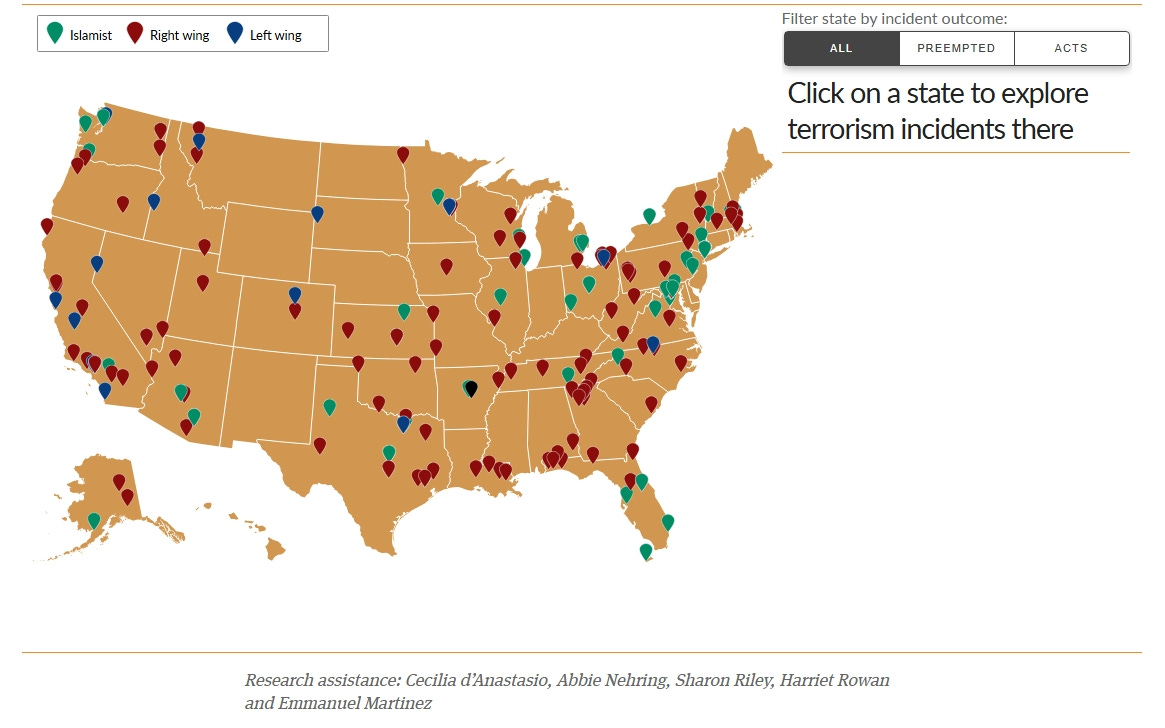
Source: Reveal News “Homegrown Terrorism”
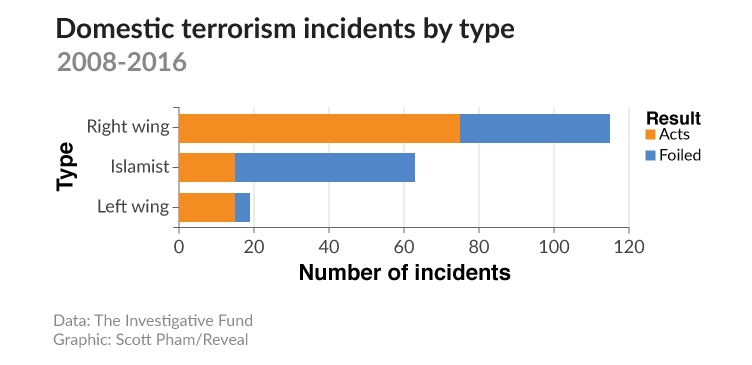
Source: Reveal News “Far-right extremists have hatched far more terror plots than anyone else in recent years” 2017
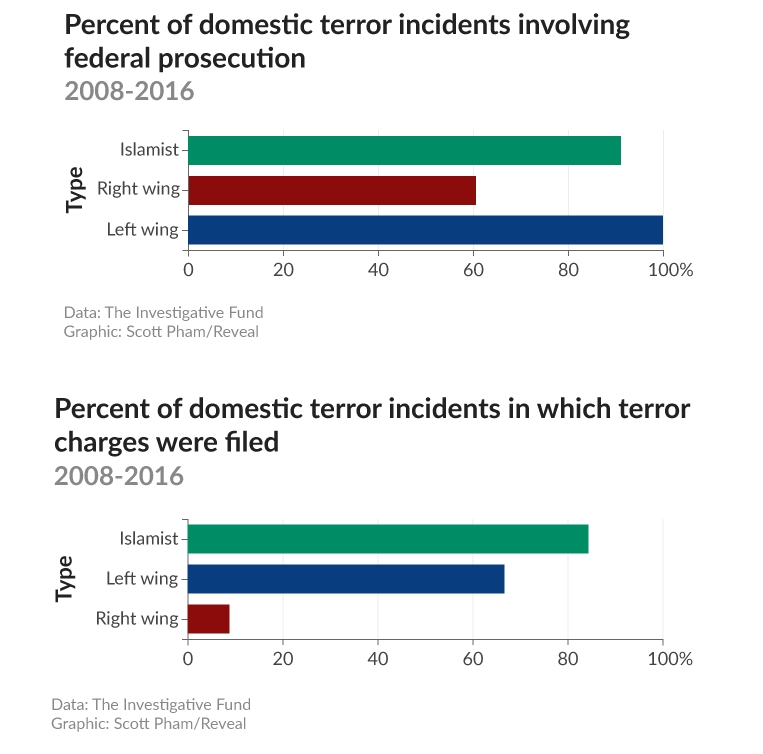
Source: Reveal News, “Far-right extremists have hatched far more terror plots than anyone else in recent years” 2017
This is not a situation where the threat is under control and therefore fading from view. It’s a situation where the threat is growing, and the government is choosing not to look.
This Isn’t Just Neglect. It’s Strategy.
By now, it should be clear: this wave of federal retreat—from FEMA to the FBI—isn’t happening by accident. It’s happening on purpose. The question is: why?
The uncomfortable answer is this: The greatest domestic terror threat in the United States today comes from the political right, and the political right is in power.
White nationalists, Christian nationalists, anti-government militias, Proud Boys, accelerationists—these are not foreign cells or fringe agitators. These are now core elements of the American far-right ecosystem. They are voters. They are activists. In some cases, they are lawmakers.
Pursuing them too aggressively risks alienating the Republican base. Investigating them fully would mean exposing the ideological underbelly of MAGA populism. Instead of facing that reckoning, the federal government—under Trump’s leadership—has chosen to look the other way.
You can’t criminalize your base and expect to win elections, so they won’t. They’ll criminalize everyone else instead.
This is also about redefining terrorism itself. Under this administration, “terrorism” doesn’t mean church shootings, synagogue bombings, or mass violence at Pride events. It means immigration. It means protests. It means Antifa. It means dissent.
By shifting the target, the government creates a politically convenient villain while shielding the threats it doesn’t want to confront.
This isn’t theoretical. We are already seeing:
Peaceful protesters charged as terrorists
Whistleblowers punished while militias are armed
Surveillance tools pointed at activists—not arsonists
When the state stops hunting the violent and starts hunting the vocal, you’re no longer in a democracy. You’re in something else.
The Feedback Loop of Authoritarianism
Letting violence grow isn’t just a failure of policy. It’s a deliberate political tactic. It creates the very conditions needed to justify the erosion of rights and the expansion of control.
Here’s how it works:
Let the Threat Fester
Stop funding prevention.
Stop tracking extremist groups.
Look the other way as the shooters, bombers, and arsonists plan in the open.
Wait for the Blood
Let the public feel the violence. Let them see it in schools, churches, and streets.
Let them become afraid, not just of extremists, but of the chaos itself.
Offer Safety on New Terms
Not through community or prevention but through militarization.
More cops. More surveillance. More “emergency powers.”
Crackdowns on protest, on immigration, on dissent, not on the groups causing the violence.
Silence the Critics
If you speak up, you’re “soft on crime.” “Anti-police.” “Defending terrorists.”
The fear you feel becomes a weapon used against your freedom.
This is how authoritarianism works, not by seizing power in a coup, but by letting the people ask for it.
It’s not just that the government is failing to protect us. It’s that the government is allowing the threats to escalate, because the fear that follows makes the public easier to control.
The state refuses to prevent the violence, then exploits it to justify more violence of its own.
The Alarm Isn’t Broken. It Was Unplugged.
Domestic terrorism in America isn’t hypothetical. It isn’t rare. And it isn’t being stopped.
We know who the perpetrators are. We know where they’re radicalized. We know what they believe. We know who they target. We know the tools that work to prevent them—from community grants to federal enforcement—and we are watching those tools be dismantled in real time.
The threat is rising. The response is shrinking. And the silence is not a mistake. It’s a message.
FEMA has been instructed to stop referring to it as extremism. The FBI has been told to stop investigating it. The public is being told to fear protestors and immigrants, while the shooters and bombers walk in the front door with weapons and manifestos and leave behind blood.
We are not safer because the state stopped looking. We are more vulnerable by design.
And when the next attack happens, they will say they need more power, more surveillance, more control, but not against the people who caused it. Against the people who asked why no one stopped it.
This is the playbook. We’ve seen it before.
The only question now is whether we name it for what it is, or wait to be told what we’re allowed to call it next.
Stay Informed. Stay Loud.
Subscribe to The Coffman Chronicle for no-BS political analysis, action guides, and daily truth bombs you won’t get from corporate media.
Sources:
“Combating Domestic Violent Extremism Is No Longer a FEMA Priority” – Wired
“U.S. senator seeks release of delayed security funds from FEMA” – Reuters
“Exclusive: FBI scales back staffing, tracking of domestic terrorism probes, sources say” – Reuters
“Trump’s FBI Poised to Focus Counterterror Strategy on ‘Things Like BLM and Antifa’” – Vanity Fair
GAO Report: “Domestic Terrorism” – U.S. Government Accountability Office (GAO)
EPRS Briefing: “United States: Domestic violent extremism on the rise” – European Parliamentary Research Service
GAO: “FBI & DHS Need Strategies and Goals for Sharing Threat Information with Social Media and Gaming Companies”
“Trump administration cuts national database tracking domestic terrorism” – The Washington Post
“Trump’s counter-terror cuts will harm fight against far right, experts warn” – The Guardian
Homegrown Terrorism - Reveal News
Domestic terrorism: Far-right extremists hatch most plots - Reveal News

I was involved with military intelligence for over half my adult life and this is probably the most concise piece of writing I have ever seen on domestic terrorism. Good work!
Doing this creates opportunities for terrorism.
Domestic terrorism proves that the Bloated Yam needs martial law to "save us."
Guess what happens next....