


The Scandal Washington Didn’t Want to Touch
A young congressional staffer is dead, a family is shattered, and Washington’s first instinct was to look away.
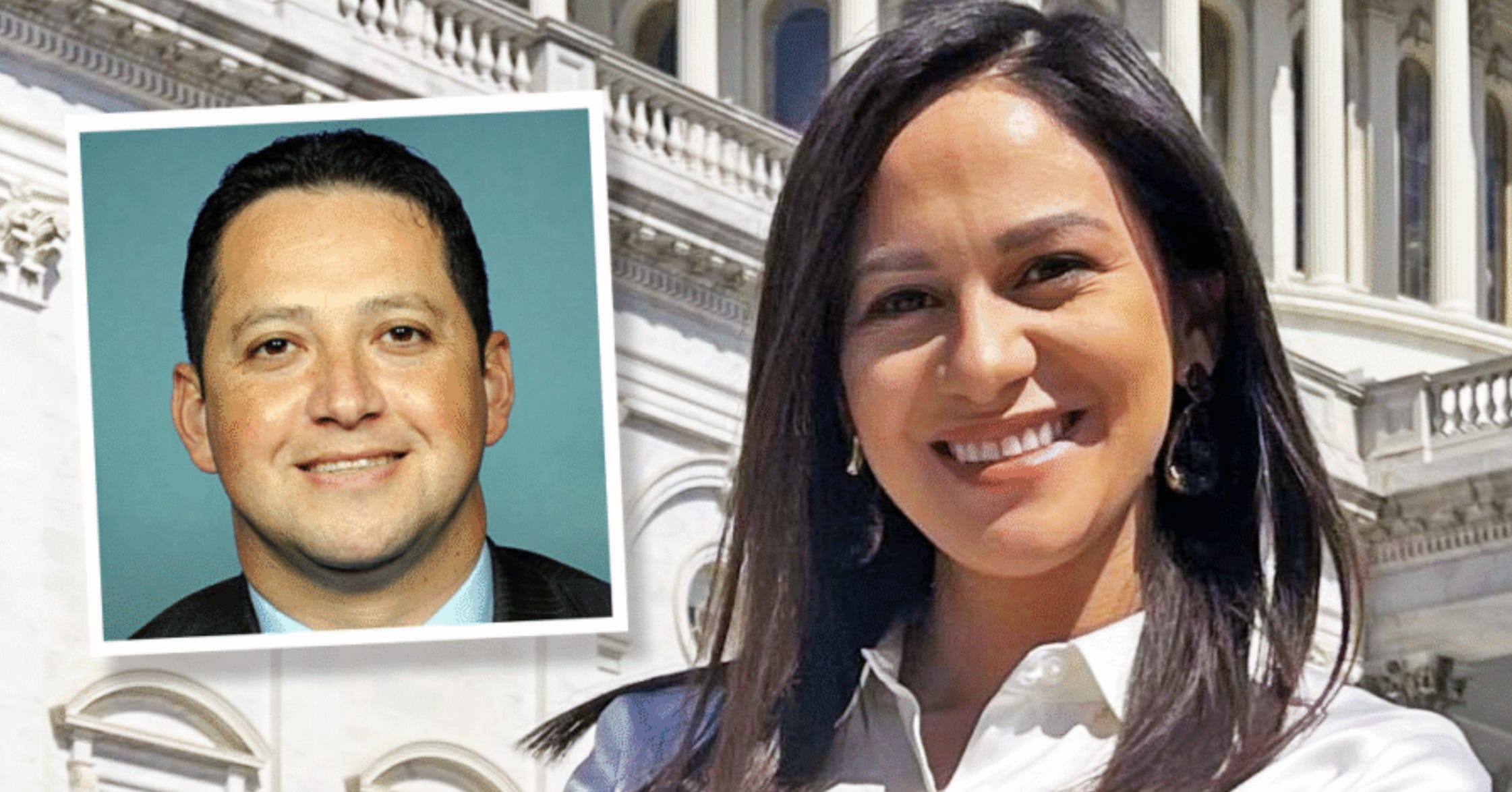
Regina Santos-Aviles didn’t have power. She had a badge, a congressional email address, and a job that depended on keeping a powerful man happy. The man was Tony Gonzales, a sitting U.S. Representative from Texas, a married father of six, and—if the text messages released by her husband are accurate—a boss who blurred every line a member of Congress isn’t supposed to cross.
The allegations are stark: late-night messages, sexual advances, emotional pressure, and an affair she confided to a colleague. Weeks later, Regina was dead by suicide. Her pain drew almost no public response from the institution that employed her.
Then something changed—not in the facts, but in the math.
Suddenly, as calls for Gonzales's resignation grew louder, House leadership began to stir. Not because a staffer may have been exploited by a man with vastly more power. Not because Congress’s own workplace-protection system failed her. However, the resignation of one vulnerable Republican in a razor-thin majority could throw the entire House into chaos.
Regina’s suffering hadn’t moved Washington. A threatened majority did.
This is the story of what happened behind a closed office door, the system built to shield the powerful who work there, and why one man’s alleged misconduct has become a national crisis, not because Congress finally found its conscience, but because it finally felt its own power slipping.
This Community Is Powered by You
What started as a small circle has grown into something much bigger, and it’s all because of readers like you.
Every time you forward this email, post it on socials, or bring someone new into the fold, you’re helping build one of the most passionate, independent political communities out there.
Want to keep the momentum going?
Share this newsletter with someone who should be part of this conversation.
Thank you for being here. It means everything.
Inside the Office: The Allegations and the Power Dynamic
Before her name became a headline, Regina Santos-Aviles was like countless young staffers who come to Congress believing in public service. She worked as a regional director in Tony Gonzales’s district office, answering constituent calls and navigating federal agencies on their behalf.
However, behind the scenes, according to messages released by her husband, the relationship between Regina and her boss was shifting into something she never should have had to navigate. Gonzales’s texts were explicit, personal, and persistent. He asked for intimate photos. He pushed past the professional boundaries that separate a member of Congress from the staff who depend on him for their livelihood.
Regina did what many staffers in her position do: she tried to manage the situation quietly. She didn’t file a formal complaint. She didn’t escalate it through Congress’s notoriously slow and opaque reporting channels. She confided in a colleague that she was having an affair with Gonzales, a confession less of betrayal than of resignation. Inside Congress, power dynamics don’t just shape behavior. They trap people in silence.
At home, the fallout was swift. Her husband confronted her after discovering the messages. They separated. Regina spiraled emotionally, carrying the weight of a personal crisis and the immense pressure of a professional one.
In September 2025, she died by suicide—self-immolation, a death so violent and so rare that it should have forced Congress to ask urgent questions about what had gone wrong inside one of its own offices.
Instead, Washington absorbed the shock quietly and moved on.
Why Congressional Staffers Are So Vulnerable
Every office in Congress runs on a truth no one likes to say aloud. The member holds all the power, and everyone else’s future depends on staying in their good graces.
A staffer may have a title, a badge, and a government email. But their job, salary, references, and future in politics all hinge on the goodwill of the person whose name sits on the door.
This was the imbalance Regina lived with every day.
Tony Gonzales wasn’t just a boss. He was a U.S. Representative with the authority to fire her, freeze her out, or quietly end her career. In that context, even a suggestive message isn’t just inappropriate. It’s coercive. It forces a staffer into a lose-lose calculation: protect your job, or protect yourself.
Congressional offices lack a traditional HR structure. Complaints don’t go to an independent body; they go into the same institution responsible for shielding incumbents. Reporting misconduct can mean retaliation, unemployment, or blacklisting.
Staffers learn the unspoken rule: Endure it. Manage it. Stay quiet.
Regina wasn’t vulnerable because she was weak. She was vulnerable because Congress built a system that guarantees she would be.
A System Built to Protect Members, Not Their Staff
After the #MeToo reckoning of 2017, Congress promised reform. They held press conferences, pledged cultural change, and vowed to protect workers.
Then they did almost nothing.
The Office of Congressional Workplace Rights—Congress’s closest approximation of HR—cannot fire, suspend, or meaningfully punish a member. Investigations take months or years. Outcomes are often hidden. The only body empowered to discipline a representative is Congress itself, the same group that relies on incumbents to maintain majority control.
It is the most profound conflict of interest in American governance.
A staffer filing a complaint risks everything. A member facing a complaint risks almost nothing.
Regina’s death did not prompt hearings. Her suffering did not prompt urgency.
The system operated exactly as designed: quietly, slowly, and with a bias toward protecting the powerful.
Gonzales Denies, Deflects, and His Party Panics
When the messages became public, Tony Gonzales denied everything. He called the allegations “blackmail.” He framed himself as the victim. He suggested the scandal was a political hit job.
His response was predictable. The reaction around him was revealing.
For months, party leaders remained silent. No statements. No ethics demands. No public concern for Regina.
Only when the scandal began to threaten the House majority did the tone shift.
Texas’s 23rd District is not a safe Republican seat. It’s a swing district with a volatile electorate. A special election there could erase the GOP’s fragile majority.
Suddenly, members who had stayed quiet were calling for Gonzales to resign. Suddenly, leadership was circulating talking points. Suddenly, reporters were hearing concerns that had been absent when only a young staffer had been harmed.
This wasn’t conscience awakening. It was a strategy recalibration.
Washington wasn’t responding to the scandal. It was responding to the risk of losing power.
The Stakes: How a Gonzales Resignation Could Reshape the House
In a House operating with a razor-thin majority, one resignation isn’t a story. It’s a seismic event.
1. Republicans lose a crucial vote.
Gonzales' resignation would immediately weaken the GOP’s governing capacity. Every major vote, from budgets to aid packages to committee rules, becomes closer.
2. A special election could flip the seat.
TX-23 is a classic swing district. A resignation triggers a special election. Democrats see opportunity. Republicans see danger. A flipped seat could collapse the GOP majority entirely.
3. The Freedom Caucus becomes more powerful.
Gonzales has criticized the far-right flank. His absence empowers them. Threats grow sharper. The Speaker’s stability weakens.
4. Real-world consequences hit ordinary Americans.
When Congress fractures:
SNAP and childcare benefits stall
VA claims slow
Border operations wobble
Federal workers face furloughs
Inflation pressures rise
This isn’t a D.C. problem. It’s a kitchen-table problem.
5. Washington’s urgency reveals its priorities.
A staffer’s suffering didn’t move the institution. A threatened majority did.
The Pattern: Silence for Victims, Alarm Bells for Power
This scandal fits a long, bipartisan pattern. Congress protects members until protecting them becomes politically dangerous.
Whether it was Farenthold, Meehan, Conyers, or now Gonzales, the reflex is the same:
Minimize the allegations.
Protect the member.
Wait for the news cycle to fade.
Only act when the majority is at risk.
Regina’s death did not change that, but the prospect of a flipped seat did.
Washington does not fear moral failure. Washington fears losing control.
The Kitchen-Table Consequences
To the political class, this is a recruitment problem, a whip-count problem, a communications problem.
To the American public, it’s far simpler:
Will the government fund itself?
Will veterans get their benefits?
Will my tax refund arrive?
Will grocery prices stabilize?
Will my childcare subsidy be interrupted?
A one-vote majority can derail it all.
What happened inside Tony Gonzales’s office has spilled into the daily economic lives of millions. In a Congress held together by the thinnest of margins, private misconduct becomes public instability.
The human tragedy becomes national uncertainty.
What Congress Chooses to Care About
Regina Santos-Aviles deserved better from her boss, from her institution, and from a government that claims to value public service.
However, Congress made its priorities clear.
Her suffering drew silence. His potential resignation drew panic. The possibility of losing a single seat drew urgency that her life never did.
This is the real scandal: a government that responds to danger only when that danger threatens itself.
Until that changes, Washington will continue to protect power first
and everyone else second.
Coffman Chronicle: Support Independent Media
If you want journalism that names the power, not the distraction, that follows the story past the press releases and down into the systems that actually run this country, then you’re in the right place.
Most outlets will treat this as a scandal. We treat it as a blueprint of how power really works.
Become a free subscriber or consider a paid subscription today. Let’s keep the spotlight exactly where Washington doesn’t want it.
Sources:
“‘This is Going Too Far’: Texas Rep. Appears to Pursue Staffer Who Died in Explicit Text Messages.” ABC11, February 24, 2026.
“Texas Rep. Gonzales Resists Calls to Resign Over Allegations of an Affair With an Ex-Staffer.” Associated Press, February 24, 2026.
“Texts Show Rep. Tony Gonzales Sent Explicit Messages to Staffer Who Later Died by Suicide: ‘This Is Going Too Far Boss.’” CBS News, February 24, 2026.
“Texas Rep. Tony Gonzales Facing Pressure to Resign Over Text Messages to Staffer Who Died By Suicide.” People, February 24, 2026.
“Too Far, Boss: Texts Show Tony Gonzales Pressed Female Staffer for ‘Sexy Pic.’” San Antonio Express-News, February 23, 2026.
“Tony Gonzales Says He Won’t Resign Despite Texts With Staffer.” Texas Tribune, February 24, 2026.
“‘This Is Too Far’: Texts Show Late-Night Exchanges Between Rep. Gonzales, Staffer.” News4SanAntonio.com, February 23, 2026.
“More GOP Lawmakers Call for Congressman to Resign Over Allegations of Affair With Ex-Staffer.” HawaiiNewsNow.com, February 24, 2026.
“Tony Gonzales Faces GOP Calls to Resign Over Alleged Affair.” Axios, February 23, 2026.
Wikipedia. “Tony Gonzales.”
There should be zero question about Rep. Gonzales immediate resignation. The only question in my mind is whether there are criminal charges that can be lodged against his egregious behavior and weaponization of his power and authority over a subordinate. Then again, we're not charging the other creepy sex offenders and pedophiles in the Administration, so I guess he just joined the club. Condolences to the family of Regina Santos-Aviles. I can't imagine the pain they must be enduring.
This is a very sad truthful story. That guy needs to resign , for sure.