


He Mocked the Alliance Until He Needed It
Donald Trump spent years teaching his supporters to sneer at NATO, mock America’s allies, and treat longstanding partnerships like a global protection racket. He told Americans that allies were freeloaders, that Europe was weak, and that the United States was being played for a fool. He turned alliance politics into grievance politics, reducing decades of diplomacy, trust, and shared sacrifice into a crude shakedown: pay up, praise me, or get lost.
Now the Strait of Hormuz has turned that swagger into a test. After years of publicly degrading allies, Trump is demanding that those same governments help secure one of the most dangerous and economically vital waterways on earth. Reuters reported on March 16 that Trump warned NATO of a “very bad” future if allies failed to help the United States reopen the strait.
That is more than hypocrisy. It is a case study in how performative strongman politics collapses when the world demands actual leadership. Alliances are not vending machines. You do not spend years kicking them, threatening them, and calling them useless, then act shocked when they hesitate to rush into danger on your behalf. And when that failure of statecraft hits a place like Hormuz, the consequences do not stay in briefing rooms or on cable news. They roll straight into oil markets, shipping lanes, gas prices, and the budgets of ordinary people already stretched thin. The U.S. Energy Information Administration identifies the Strait of Hormuz as one of the world’s most important oil transit chokepoints, with few practical alternatives if traffic is disrupted.
This is the real story of Trump and NATO in the Hormuz crisis: a president who mistook contempt for strength, burned trust for applause, and is now discovering that when you treat allies like suckers, they do not always line up to help you clean up your mess.
This Community Is Powered by You
What started as a small circle has grown into something much bigger, and it’s all because of readers like you.
Every time you forward this email, post it on socials, or bring someone new into the fold, you’re helping build one of the most passionate, independent political communities out there.
Want to keep the momentum going?
Share this newsletter with someone who should be part of this conversation.
Thank you for being here. It means everything.
The Record: He Spent Years Devaluing the Alliance
This crisis did not expose a sudden inconsistency. It exposed a long-running pattern.
Trump has spent years describing NATO less as an alliance than as a bad deal for the United States. He repeatedly framed allies as moochers, Europe as ungrateful, and mutual defense as a kind of extortion Americans were foolish enough to tolerate. That message was not a side note to his politics. It was central to the brand. He sold contempt as realism and humiliation as toughness.
He also made those insults personal. In 2018, he publicly accused Germany of being “captive” to Russia at a NATO summit, turning one of Washington’s most important European relationships into a public humiliation ritual. More recently, Reuters reported that his January 2026 remarks falsely suggesting non-American NATO troops stayed off the front lines in Afghanistan triggered outrage across Britain and Europe, where leaders and veterans pointed to the deaths of British, Canadian, French, and Danish troops who fought alongside the United States.
Alliance trust is cumulative. It is built over decades and can be damaged in public, one insult at a time. Countries remember. Militaries remember. Voters remember. If you spend years telling your own public that allies are freeloaders while telling allied publics that their sacrifices barely counted, you are not just venting. You are corroding the trust that makes coalitions work when a real crisis arrives.
Now, Trump wants to cash in on what he spent years devaluing.
Hormuz is the Kind of Crisis Swagger Cannot Solve
The Strait of Hormuz is not an abstract foreign-policy talking point. It is a narrow maritime bottleneck between Iran and Oman through which a huge share of global oil and petroleum products moves. The IEA says it remains one of the world’s most important oil chokepoints, and that about 20 million barrels per day moved through it in 2025, roughly a quarter of the world’s seaborne oil trade.
That is why instability there does not stay local. It moves through tanker routes, insurance rates, crude prices, refinery costs, and shipping chains. Reuters reported that the current war has effectively closed the strait and raised inflation fears, while EIA’s latest outlook warns that an extended closure of Hormuz is the primary risk that could keep oil prices rising.
This is exactly the kind of crisis that exposes the limits of Trump’s entire performance model. It is easy to posture at a summit microphone. It is easy to turn alliance management into a domestic applause line. It is much harder to stabilize a real chokepoint with slogans. In moments like this, alliances stop being props and start being infrastructure. Naval escorts, minesweepers, intelligence sharing, overflight rights, diplomatic backing, and shared legitimacy are not signs of weakness. They are how serious governments keep a dangerous situation from spiraling further.
That is the trap he built for himself. He spent years ridiculing the architecture of cooperation and now finds himself needing exactly what that architecture provides.
The Humiliation Boomerang
This is the part Trump’s defenders always want to skip. They treat alliances as if they are mechanical, as if you can insult countries for years and still expect seamless cooperation the moment Washington snaps its fingers. However, alliances do not work like that. They run on trust, memory, domestic politics, and the belief that the burdens being shared are real and mutual.
That is why allied hesitation now is not mysterious, but predictable. Reuters reported on March 16 that several U.S. allies rebuffed Trump’s call to send warships to escort shipping through the Strait of Hormuz, with Japan and Australia saying they had no plans to send forces.
And why would enthusiasm be high? In January, Trump said the United States had “never needed” NATO and falsely suggested allied troops had stayed “a little off the front lines” in Afghanistan. The backlash was immediate. British minister Stephen Kinnock called the remarks “deeply disappointing,” and Prime Minister Keir Starmer called them “insulting and frankly appalling.”
This is what burned trust looks like in practice. It is not abstract. It is operational. Governments have to justify risk to their own citizens, legislatures, and militaries. Respect is not decorative in that process. Legitimacy is not optional. If a president spends years turning alliance politics into humiliation theater, he is spending down the political capital a coalition needs when the stakes stop being rhetorical and start being lethal.
That is the boomerang. Trump sold contempt as toughness. Now that contempt is returning as hesitation, doubt, and a weaker American hand at exactly the moment he wants others to help stabilize one of the most dangerous waterways on earth.
America First Meets Reality
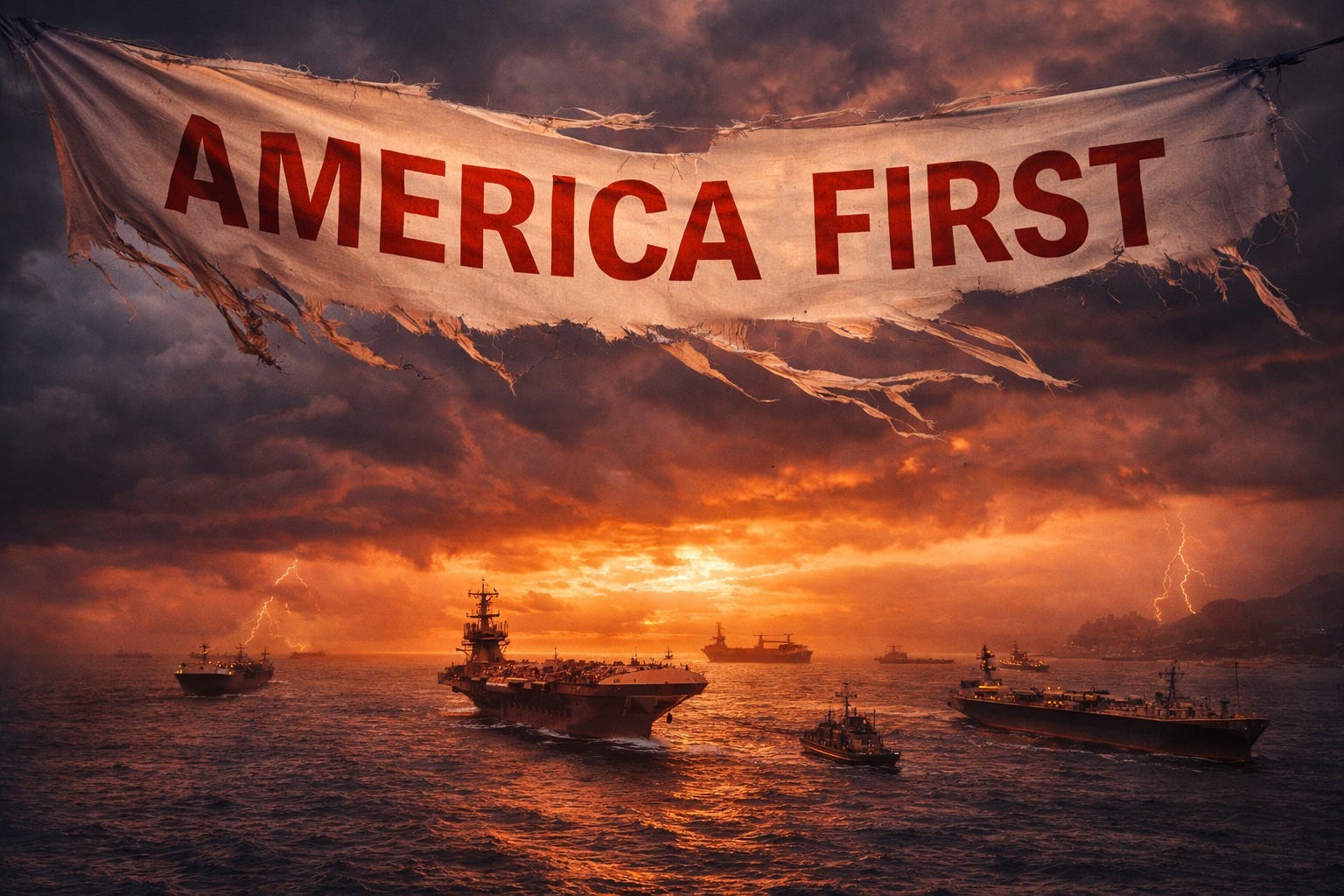
Trump has always sold “America First” as a doctrine of independence. In that story, allies are a burden, multilateralism is weakness, and respect is for suckers. Yet real crises reveal something different: the United States is still stronger with functioning alliances than without them.
Even a superpower does not operate in a vacuum. Real power depends on access, logistics, coordination, intelligence, diplomatic support, and shared legitimacy. In a place like Hormuz, coalition help is not a cosmetic add-on. It spreads risk, broadens political cover, and makes any security operation more sustainable.
That is the contradiction at the center of Trump’s worldview. He markets alliances as proof of American weakness, but the moment a crisis gets real, he still needs the things only healthy alliances can provide. Reuters reported that he warned NATO of a “very bad” future if allies did not help. That warning was really an admission. The man who spent years telling Americans that allies were dead weight was suddenly demanding ships, assets, and cooperation from the very system he had spent years trying to discredit.
So “America First” ends up looking less like independence than strategic dependence after self-sabotage. First, the trust gets burned for domestic applause. Then the damage to the relationship is dismissed as irrelevant. When a crisis arrives, Washington needs exactly the people it pushed away.
Trump’s rhetoric treats alliances like accessories. Reality treats them like infrastructure.
Who Pays for This? Regular People Do
This is where foreign-policy vanity becomes a kitchen-table problem.
When Hormuz is threatened, the first shock moves through oil markets, tanker insurance, and shipping costs. EIA says nearly 20% of global oil supply flows through the strait, and bypass options are limited. Reuters’ graphics team reported five days ago that the war had effectively shut the waterway, interrupting a route that normally carries around a fifth of the world’s daily oil and liquefied natural gas supply.
That means the economic pain does not stay in the Gulf. It shows up at the pump, in diesel costs for truckers, in freight bills for farmers and small businesses, and in shipping, groceries, utilities, and everything else that moves through an economy already straining under high prices.
This is where Trump’s alliance sabotage stops being a diplomatic embarrassment and becomes a material cost. If the United States enters a chokepoint crisis with less allied help, less legitimacy, and more friction because the president spent years treating partners like punching bags, that extra instability does not disappear. It gets passed down. Regular people eat it.
That is the lie at the center of performative strongman politics: it promises to protect ordinary people while repeatedly making them absorb the costs of elite ego, diplomatic arson, and preventable instability.
You Cannot Insult Your Way to Leadership
The larger lesson is simple. Leadership is not the same thing as dominance theater.
A president can sneer at allies, posture for cameras, and turn alliance disputes into made-for-TV shakedowns. That may look like strength to people who confuse cruelty with competence, but it is still performance, and performance collapses when a crisis demands actual trust, actual credibility, and actual cooperation.
That is what makes the Hormuz moment so revealing. It strips away the branding and shows the gap between the fantasy Trump sells and the world a president actually has to govern. In the fantasy, America can humiliate allies, dismiss alliances as scams, and still command instant obedience when trouble starts. In reality, countries remember how they were treated. Their public remembers. Their parliaments remember. Their militaries remember.
Contempt is not a substitute for statecraft. Humiliation is not a substitute for alliance management. A foreign policy built on public disrespect may satisfy a domestic audience hungry for grievance, but it leaves the United States with fewer willing partners and less room to maneuver when a genuine emergency hits.
Trump has always sold the performance of toughness. Hormuz is a reminder that real toughness is not about who can talk the loudest at a summit podium. It is about whether, when the stakes are high and the risks are real, other countries still trust you enough to stand with you.
The Bill Comes Due
Trump spent years telling Americans that NATO was a burden and America’s allies were weak, ungrateful freeloaders. He treated one of the central pillars of U.S. power like a campaign prop. Now he wants that same alliance system to help him stabilize one of the most dangerous maritime chokepoints on earth.
That is the meaning of this moment, not just hypocrisy, though there is plenty of that. It is the cost of spending years weakening the very relationships you may one day need in a crisis. Trump sold contempt as strength and is discovering, once again, that contempt does not escort tankers, calm oil markets, or build legitimacy. It just leaves the United States more isolated and more likely to push the costs of elite recklessness onto ordinary people.
You cannot spend years spitting on allies and then act stunned when they do not rush to sail into danger for you. You cannot turn alliance politics into a shakedown and then complain when solidarity no longer arrives on command.
Trump mocked the alliance until he needed it. That is not strength. That is the bill coming due.
Support Independent Media - The Coffman Chronicle
If this piece hit home, do not leave it here. Share it. Talk about it. And if you are able, become a paid subscriber to The Coffman Chronicle. Your support helps me keep producing independent, kitchen-table journalism that connects the dots between what powerful people do in Washington and what it costs the rest of us at home. That is how we keep this work independent, fearless, and accountable to readers rather than to advertisers or party gatekeepers.
Sources:
International Energy Agency. “Strait of Hormuz.”
Reuters. “The Global Chokepoint in the Strait of Hormuz.” March 2, 2026.
Reuters. “Trump Upset as Key US Partners Shun Call for Hormuz Warship Escorts.” March 16, 2026.
Reuters. “Trump Warns NATO, Presses China to Help Reopen Strait of Hormuz, FT Reports.” March 16, 2026.
Reuters. “UK’s Starmer Calls Trump’s Remarks on Allies in Afghanistan ‘Frankly Appalling.’” January 23, 2026.
U.S. Energy Information Administration. “Amid Regional Conflict, the Strait of Hormuz Remains Critical to Global Oil Supply.” Today in Energy, June 16, 2025.
U.S. Energy Information Administration. “World Oil Transit Chokepoints.”
President Bone Spurs continues to showcase his incompetence to our peril. This from a transactional narcissistic buffoon. God help the reasonable people...
The Fapweasel (Trump) is a HUGE hypocrite. He doesn’t know how to be an ally.