


Editor’s Note: This article reflects information publicly available as of the evening of July 15, 2026. Court proceedings, agency actions, and details regarding President Trump’s scheduled address may change after publication.
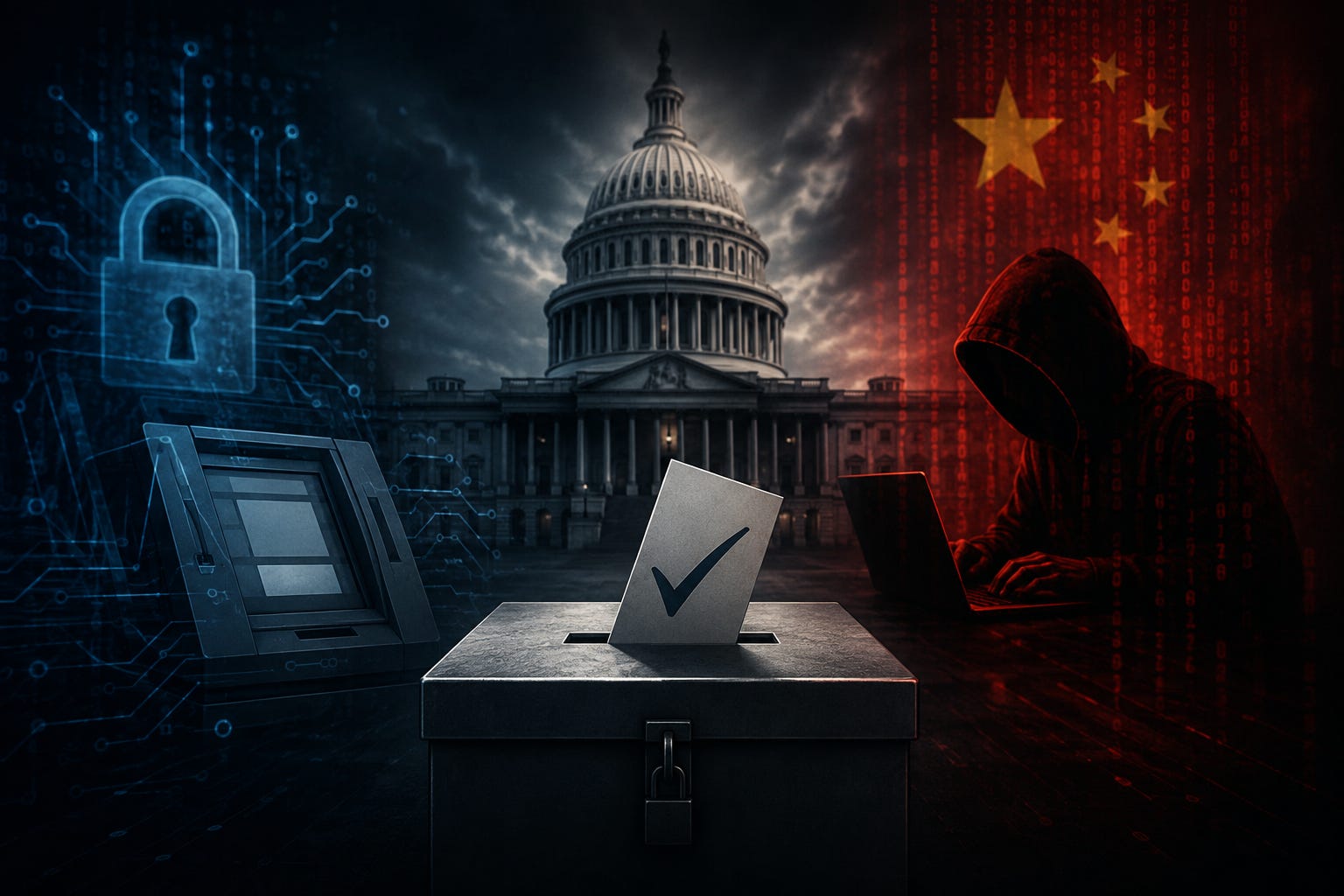
President Donald Trump is expected to address the nation Thursday evening in a speech the White House says will focus on election security, foreign interference, and the 2020 presidential election.
Ordinarily, such an address would stand on its own as a major political event. This one arrives amid one of the most consequential periods for election administration since the 2020 election. The institutions responsible for administering, regulating, and adjudicating American elections are all under unusual pressure at the same moment the president is preparing to argue that the nation faces an extraordinary threat to election integrity.
That timing makes tomorrow night’s speech about far more than whatever evidence President Trump ultimately presents. Before evaluating those claims, it is worth understanding the current legal and institutional landscape. Some questions remain unresolved. Others have already been answered by courts, election officials, and years of investigation. Distinguishing between the two is essential to understanding not only the address but also the broader debate over election security heading into the 2026 midterms.
This Community Is Powered by You
What started as a small circle has grown into something much bigger, and it’s all because of readers like you.
Every time you forward this email, post it on socials, or bring someone new into the fold, you’re helping build one of the most passionate, independent political communities out there.
📢 Want to keep the momentum going?
Share this newsletter with someone who should be part of this conversation.
Thank you for being here. It means everything.
What We Know About the Speech
President Trump is scheduled to deliver his address on Thursday, July 16, at 9 p.m. Eastern Time. The White House has said the speech will focus on “free and fair elections,” foreign interference, voting system security, and the 2020 presidential election. Trump has described the event as containing “really big news” and has repeatedly suggested he intends to reveal new information concerning alleged Chinese interference in American elections.
Administration officials have offered relatively few specifics beyond those broad themes. Reuters has reported that the White House has considered releasing newly declassified intelligence concerning China, although current and former officials familiar with the material have cautioned that the intelligence reportedly relates to Chinese capabilities, strategic interests, or potential influence activities rather than established evidence that votes were altered or election systems were successfully compromised. The precise nature of the information expected to be released Thursday has not been made public.
The speech follows several weeks of increasingly forceful rhetoric from both the president and senior administration officials regarding election integrity. Earlier this month, Trump repeatedly warned that communism represents a growing threat to the United States, framing election security as part of a broader struggle involving both foreign adversaries and domestic institutions. During the same period, the administration intensified legal and administrative efforts to reshape how federal agencies participate in election administration.
Whether those parallel developments represent a coordinated strategy or simply a series of related policy initiatives remains a matter of interpretation. What is beyond dispute is their timing. Trump’s speech will not occur against a stable political backdrop. It comes as multiple branches of government are simultaneously confronting fundamental questions about the administration of American elections, the constitutional limits of presidential authority, and the rules governing voting in November and beyond.
The Landscape Before the Speech
As noted above, the speech centered on election integrity is not occurring in a vacuum. Instead, multiple points of tension are playing out at once and inform the context and potential intent of the planned address.
The Executive Order and the Courts
When President Trump signed Executive Order 14399 on March 31st, the administration described it as one of the most significant federal election integrity initiatives in recent history. The order reshapes several aspects of federal election administration, including new citizenship verification procedures, expanded access to voter registration information, and changes affecting the handling of mail ballots.
Supporters argued the order would strengthen election security by ensuring only eligible citizens participate in federal elections and by improving coordination between states and federal agencies. Almost immediately, however, states, voting rights organizations, and civil liberties groups challenged the order in federal court, arguing that the president had exceeded constitutional and statutory authority.
Those lawsuits have produced a series of significant rulings over the past several months. Most notably, on June 25, U.S. District Judge Indira Talwani in Massachusetts permanently blocked several central provisions of the executive order, concluding that key sections likely exceeded the president's constitutional authority and conflicted with existing federal election law. The administration has appealed portions of that ruling, so the broader legal questions remain unresolved.
An appeal does not erase an injunction. Unless a higher court stays or overturns the decision, the blocked provisions remain unenforceable while the litigation continues.
For election officials preparing for November, that means today’s rules are determined not by the executive order itself, but by the court orders currently governing its implementation.
The U.S. Postal Service and Mail Ballots
President Trump’s March 31st executive order directed the United States Postal Service (USPS) to adopt new procedures governing the handling of mail ballots in federal elections. Among other things, the administration required states to provide the Postal Service with lists identifying voters eligible to receive mail ballots so that election mail could be processed under the new framework.
Before those directives could be fully implemented, several states and voting rights organizations challenged the executive order in federal court. Judges blocked the relevant provisions, preventing the Postal Service from carrying them out while the litigation proceeds.
On July 13th, the Postal Service confirmed in a letter that it will comply with those court orders. As a result, election officials will continue preparing for November under the existing mail ballot procedures rather than the system implemented by the executive order.
The broader litigation remains on appeal. For now, however, the operational question has been answered. Unless a higher court changes the current injunctions, the Postal Service will continue handling election mail under the rules in place prior to the executive order.
The Justice Department’s Expanding Role
The administration’s actions extend well beyond the executive order itself. Over the past several weeks, the Department of Justice has pursued a series of actions aimed at increasing federal involvement in state election administration. The department has sent letters to election officials across the country warning that knowingly permitting ineligible voters to remain on voter rolls could expose officials to potential criminal liability. At the same time, the administration announced that states seeking portions of certain Homeland Security grant funding would be expected to adopt specified election security measures, including expanded use of federal citizenship verification tools.
The Justice Department has also continued its effort to obtain unredacted statewide voter registration databases from numerous states. Those efforts have met consistent resistance in federal court.
As of this writing, the administration has not succeeded in obtaining a judicial order compelling a state to surrender its complete statewide voter registration database. Recent rulings involving West Virginia, Virginia, and New Mexico brought the administration’s record in those cases to 15 losses and no victories. Judges appointed by both Republican and Democratic presidents have concluded that the Justice Department failed to establish the legal authority necessary to compel disclosure under the statutes it relied upon.
Readers interested in the details of that litigation can find our earlier reporting linked below.

The Election Assistance Commission
Few federal agencies are less familiar to the public than the U.S. Election Assistance Commission (EAC). Unlike state election offices, the commission does not conduct elections, count ballots, or certify winners. Most Americans never encounter it directly.
Created by Congress following the disputed 2000 presidential election, the bipartisan commission develops voluntary voting system standards, oversees the federal testing and certification program for voting equipment, maintains the national mail voter registration form, and provides technical guidance and grant administration to state and local election officials. While states decide which voting systems they use and remain responsible for administering elections, the commission serves as the federal government’s principal technical resource on election administration.
The commission had already lost one of its four members when Republican Commissioner Donald Palmer departed on April 30th. Then, on July 9th, President Trump fired the two Democratic commissioners, Thomas Hicks and Benjamin Hovland. The commission’s remaining Republican member, Christy McCormick, resigned as the White House moved against the agency’s leadership.
Reuters reported that the removals left the commission without any sitting commissioners, although its career staff remain in place and continue carrying out the agency’s day-to-day work.
The timing is difficult to ignore. The administration has repeatedly argued that election security, including voting machines, demands urgent federal attention. However, only days before the president’s nationally televised address on those very topics, the bipartisan leadership of the federal agency responsible for voting system standards and certification was removed.
The White House has not publicly identified any technical failures by the commission or alleged that its existing voting system standards were inadequate. Instead, officials said the commissioners were not sufficiently aligned with the administration’s priorities. What that means in practice remains unclear. Existing certifications remain valid, and the agency’s technical staff continues their work. Some formal actions that require commissioner approval, however, may not proceed until new commissioners are confirmed.
This is not the first action impacting election safeguards within the federal government. See our earlier reporting here:

Congressional Maps and an Election Already Underway
Election rules rarely change in isolation. They intersect with filing deadlines, ballot printing, overseas voting, poll worker training, and dozens of other administrative decisions that begin months before Election Day. Those interdependencies have become especially apparent over the past year as courts have continued to decide election cases even after preparations for the 2026 cycle were well underway.
One of the most closely watched examples came in Louisiana. In April, the Supreme Court ruled in Louisiana v. Callais, a redistricting case challenging the state’s congressional map. By the time the decision arrived, military and overseas ballots had already been mailed, candidate qualifying had concluded and early voting was only days away. Louisiana ultimately postponed its congressional primaries while allowing other elections to proceed under the existing schedule.
See our reporting from that time here:


The case highlights an important issue with election litigation. Courts generally try to avoid changing election rules close to an election because doing so can confuse voters and disrupt election administration. Lawyers often refer to this principle by the name of a 2006 Supreme Court case, Purcell v. Gonzalez. It is not a hard deadline, nor does it prevent courts from acting when they conclude the law requires it. Instead, it recognizes that every late judicial decision forces election officials to choose between implementing new rules and preserving an election already in progress.
That tension continues to shape several of the cases involving President Trump’s executive order. The closer the country moves toward November, the more difficult it becomes for courts to weigh constitutional questions against the practical realities of conducting an election already underway.
What We Already Know
Political debates often blur the line between settled facts and unresolved legal questions. Election law is no exception. The litigation surrounding President Trump’s executive order has produced a flood of headlines, many of them focused on court rulings, appeals, and agency actions. That volume of news can create the impression that nearly every aspect of American election administration is uncertain.
That is not the case. Several foundational questions are already answered by federal law, the Constitution, and years of investigation. Others remain the subject of active litigation. Let’s review, shall we?
Who Can Vote in Federal Elections?
Federal law is clear. Only United States citizens may vote in federal elections. That point is not seriously in dispute in the current litigation. States challenging the executive order are not arguing that non-citizens have a constitutional right to vote for president or members of Congress. The administration is also not asking courts to determine whether citizenship is a legitimate qualification for voting. Everyone involved begins from the same legal premise.
The disagreement concerns how that requirement is tested, ensured, and enforced, and, just as importantly, who has the constitutional authority to establish those procedures. Some municipalities permit certain non-citizens to vote in local elections involving local offices or ballot questions. Those policies do not extend to federal elections and have no bearing on who may cast a ballot for president or Congress.
Who Runs American Elections?
The Constitution intentionally divides responsibility for elections among several institutions. States administer elections. They register voters, maintain voter rolls, print ballots, operate polling places, count votes, and certify results. Congress has authority under the Constitution’s Elections Clause to establish or change rules governing federal elections. Courts resolve disputes over whether those laws and procedures comply with the Constitution.
The president occupies a different role. Executive agencies enforce federal law and carry out responsibilities assigned by Congress. What they cannot do, according to the states challenging the executive order, is create new nationwide election rules that Congress has not authorized. That constitutional question sits at the center of much of the current litigation.
This helps explain why the administration has pursued two parallel paths. One is the president’s executive order directing federal agencies to implement new election procedures. The other is congressional legislation, including the SAVE Act, which would establish proof-of-citizenship requirements through the legislative process if enacted. As previously reported, Congress has consistently failed to pass the SAVE Act, despite repeated pressure from Trump.
What Does the Evidence Show About Non-Citizen Voting?
Illegal voting by non-citizens does occur. Election officials have identified individual cases over the years, and prosecutors have brought charges when evidence supported doing so. Michigan recently referred 15 apparent non-citizen voting cases for possible prosecution following its review of the 2024 election. Similar isolated cases have surfaced elsewhere.
The number of non-citizens voting is not zero. At the same time, decades of research, state reviews, and independent investigations, including those by the Heritage Foundation, have reached a remarkably consistent conclusion. Illegal voting by non-citizens is rare and has not been shown to occur on a scale sufficient to change the outcome of modern federal elections.
That distinction often disappears in political debate. A problem can exist without existing on the scale sometimes suggested in campaign rhetoric.
What Do We Know About Voting Machines?
Voting systems are technology, and thus can fail or contain weaknesses. Security researchers, federal agencies, and election officials have identified vulnerabilities in particular machines, software, and administrative practices. Those findings support regular software updates, restricted access, voter-verifiable paper records, and meaningful post-election audits.
Even the Trump administration’s own intelligence review reportedly reached that distinction. According to Reuters, an unreleased report from the Office of the Director of National Intelligence identified significant vulnerabilities in voting machines and recommended security improvements. The report reportedly did not conclude that those vulnerabilities resulted in altered votes or manipulated election outcomes. A separate contractor study examining voting machines from Puerto Rico similarly found no evidence the machines had been hacked, despite identifying security weaknesses that warranted remediation.
Georgia’s election systems have also faced extensive scrutiny. Researchers and courts have recognized real security concerns, including weaknesses that should be corrected, yet the investigations and litigation have not produced evidence that those vulnerabilities were exploited to alter the result of the 2020 election.
That is the distinction political rhetoric often erases. A vulnerability describes something that could potentially be exploited. It does not establish that someone exploited it, changed votes, or affected an election outcome.
What Do We Know About Foreign Interference?
Foreign governments have attempted to influence American elections. That is neither new nor controversial.
Russia’s interference campaign during the 2016 election is among the most thoroughly investigated intelligence operations in modern American history. Intelligence agencies, the bipartisan Senate Intelligence Committee, and the Special Counsel’s investigation (Mueller) all concluded that Russia conducted an extensive influence campaign involving social media operations, hacking, and the release of stolen information.
Those investigations did not conclude that Russia altered vote totals or changed ballots through voting machines. That is important to remember as attention turns to China.
Foreign influence, propaganda, cyber reconnaissance, attempted intrusions, and successful manipulation of election systems are related concepts, but they are not interchangeable. Evidence supporting one does not automatically establish another.
Why This? Why Now?
While Trump has the right to address the nation, if his administration has uncovered new intelligence concerning foreign interference in American elections, the public deserves to know about it in a nonpartisan manner.
As such, the timing deserves scrutiny. The address comes less than four months before the midterm elections, and primaries are already underway in several states. Election officials across the country are preparing ballots, training poll workers, and implementing procedures that, in many cases, have already been shaped by months of litigation over the administration’s executive order.
During that same period, the administration has pursued an unusually broad effort to reshape the federal government’s role in election administration through executive order, pressure on Congress, recent rhetoric around the threat of communism, and the reshaping of federal election infrastructure.
Is the administration responding to an urgent national security concern, or is it attempting to accelerate judicial review before the midterms? Is it seeking to build public support for broader federal involvement in election administration, or is it preparing the political ground should November’s results prove unfavorable? Is it a combination of two or more of these motives?
At this point, no one outside the administration can answer those questions with certainty, but the pattern suggests some more than others.
What are the Incentives?
Politics is shaped by incentives as much as ideology. If Democrats regain control of one or both chambers of Congress this November, committee leadership, subpoena authority, and oversight priorities will change. Bloomberg Law recently reported that major law firms are already preparing clients for the possibility of a significant increase in congressional investigations should Democrats reclaim the House of Representatives.
That possibility is not unusual. Every change in congressional control brings different investigative priorities. It does, however, raise the stakes of the election, especially for a twice-impeached executive.
President Trump himself has repeatedly warned that a Democratic Congress would investigate his administration and his allies. Those statements provide an important part of the political context surrounding the speech.
While context is not proof of motive, nor is timing, together, they help explain why observers across the political spectrum are paying such close attention to the speech.
Consistency Please
President Trump has spent years challenging the legitimacy of the presidential election he lost. He has not applied the same skepticism to the presidential elections he won. The pattern is clear. When his favored result is achieved, the election was “perfect.” When it disappoints, fraud and interference are evident.
Additional foreign governments have attempted to influence elections practically forever. President Trump has repeatedly endorsed preferred candidates in foreign elections and, on several occasions, suggested that American support could depend on electoral outcomes abroad.
While public endorsements differ from covert influence operations, which differ from cyber intrusions, which differ from altering votes, the lack of consistency is obvious.
If the administration presents evidence that China attempted to influence American public opinion, that would be alarming. If it presents evidence that China probed election infrastructure, that would justify greater oversight. If it presents evidence that China altered votes or voting systems, that would represent a fundamentally different claim requiring a fundamentally different level of evidence.
Regardless of which foreign government is involved or which political party benefits, if the evidence of the degree of infiltration is adequate, action may be necessary. Who has the authority, however, to initiate and lead that action cannot be determined by misplaced or overstated accusations of an emergency.
Institutions Matter More Than Individuals
The questions raised by Trump’s speech extend well beyond him. They concern the long-term relationship between the presidency, Congress, the courts, and the states. They relate to the extent of authority future presidents should have over election administration, and whether independent agencies should be expected to reach conclusions based on technical evidence or political alignment. They raise questions about how courts should balance constitutional disputes with the practical realities of elections already underway.
Most of all, they impact public trust. Democratic institutions depend on citizens believing elections are conducted fairly and according to rules established through constitutional processes. That confidence is strengthened when institutions act transparently, remain within the authority assigned to them, and base extraordinary claims on extraordinary evidence.
That standard should not depend on who holds power.
If you value thoughtful, evidence-based political commentary that looks beyond the daily headlines to examine the systems shaping American democracy, consider subscribing.
Our work is reader-supported and focuses on the institutions, incentives and constitutional questions that often receive less attention than the politics of the moment. Your support helps us continue producing independent analysis without paywalls or partisan talking points.
Sources:
“Trump to Assert Voting Machine Vulnerabilities in Thursday Speech,” Reuters, July 13, 2026.
“White House Weighs Releasing Controversial Intel on China and US Elections, Sources Say,” Reuters, July 15, 2026.
“Trump to Allege Chinese Meddling in U.S. Elections in Primetime Speech, Sources Say,” CBS News, July 15, 2026.
“Ensuring Citizenship Verification and Integrity in Federal Elections,” The White House, March 31, 2026.
“Federal Judge Halts Trump’s Election Executive Order Seeking to Create a Federal Voter List,” Associated Press, June 25, 2026.
“Ballot Mail for Federal Elections,” Federal Register, June 2, 2026.
“Postal Service Takes Another Step Toward Implementing Trump’s Anti-Mail Voting Order,” Democracy Docket, June 18, 2026.
“Donald Trump Ousts Election Commission Members in Latest Push to Reshape US Voting Process,” Associated Press, July 10, 2026.
“Trump Fires Election Assistance Commission Members Ahead of Midterms,” Reuters, July 10, 2026.
“Trump Officials Sought Ways to Sidestep Election Agency Before Firings, Sources Say,” Reuters, July 11, 2026.
“U.S. Election Assistance Commission,” U.S. Election Assistance Commission, accessed July 15, 2026.
“Trump Administration Ties States’ Anti-Terrorism Grants to Election Security,” Reuters, July 10, 2026.
“DOJ Is 0-15 After GOP-Appointed Judges Toss Voter Roll Lawsuits Against Virginia, New Mexico,” Democracy Docket, July 15, 2026.
“How Trump Is Moving to Control U.S. Elections, One State at a Time,” Reuters, April 28, 2026.
“Judge Blocks Use of Federal Database to Check Citizenship, Saying It Could Wrongly Purge Voters,” Associated Press, June 22, 2026.
“Noncitizen Voters a Rarity in US Elections, State and Private Reviews Show,” Reuters, October 3, 2024.
“The SAVE America Act,” The White House, accessed July 15, 2026.
“Joint Statement from Elections Infrastructure Government Coordinating Council and Election Infrastructure Sector Coordinating Executive Committees,” Cybersecurity and Infrastructure Security Agency, November 12, 2020.
“Trump, Aides Chase Vote-Rigging Claims Even After Latest Probe Finds Nothing,” Reuters, April 23, 2026.
“White House Delays Release of US Voting Machine Study as Midterms Near,” Reuters, June 19, 2026.
“Foreign Threats to the 2020 US Federal Elections,” Office of the Director of National Intelligence, March 16, 2021.
“Trump Invokes Communism 81 Times in Two Weeks as Aides Test Midterms Message,” Reuters, July 8, 2026.
I am finding something else to watch on Thursday evening. I don’t need to listen to demented fool, mentally deteriorate on national television!
He's aware that if the GOP loses congress and the senate he, his family and the Epstein class billionaires are all going to jail. And he has no plans on leaving the white house Which explains the bunker and fortifying the WH entrance.
The desperation is palpable. This will backfire spectacularly.