


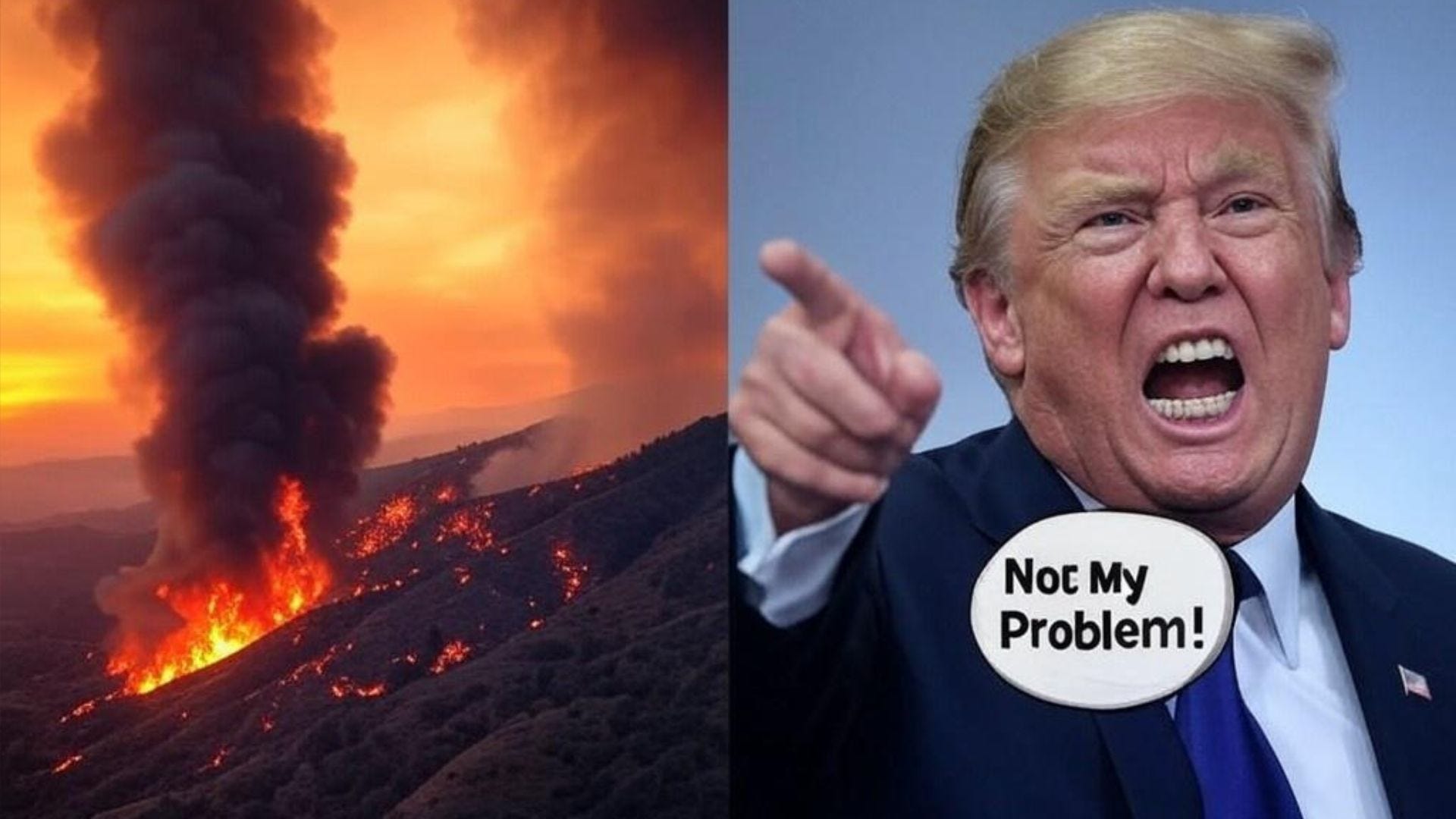
The images of raging wildfires engulfing vast swathes of California are haunting reminders of the ongoing climate crisis. The devastation brought by the recent fires serves as a wake-up call for immediate action. It highlights the urgent need for a cohesive national response, transcending political divisions.
Recently, President Biden announced that the federal government would provide extensive support for wildfire response measures in California over the next six months. This includes funding for essential services such as debris removal and the salaries of first responders. "We’re going to make sure you get every resource you need,” Biden declared in a briefing, embodying the urgency to combat these environmental disasters effectively. However, his administration faces uncertainty regarding the continuity of support as the incoming Trump administration threatens to revoke aid and reevaluate disaster-relief policies.
Trump's reaction to the wildfires is predictably charged with hyperbole and misinformation. Amid the fiery chaos, he publicly called for California Governor Gavin Newsom to resign, asserting that Newsom's policies were to blame for the calamities ravaging the state. Trump's claims that Newsom is withholding water to protect fish while ignoring critical fire management are misleading and distract from the systemic issues contributing to the wildfires. Newsom clarified that there is no truth to Trump's claims, emphasizing the complex nature of water management in California and highlighting that the water supply is separate from its conveyance.
Throughout the years, Trump has taken the opportunity to politicize California’s wildfire tragedies, leveraging them to attack political opponents rather than developing constructive policies. Past comments have suggested he may withhold funds as a tactic against those he perceives as adversaries. During a press conference at his Los Angeles golf course, as recently as September, Trump threatened: "We won’t give him money to put out all his fires. And if we don’t give him the money to put out his fires, he’s got problems.” This historical context raises alarms: as wildfires rage, the political capital spent on blame-shifting leaves little room for collaborative strategies that could mitigate these increasingly frequent disasters.
The climatic changes fueling California’s wildfire crisis are stark and scientifically validated. According to the Intergovernmental Panel on Climate Change (IPCC), rising global temperatures lead to increased evaporation rates, drying out the vegetation and fueling wildfires. As temperatures in California continue to climb—projected to rise by 2 to 6 degrees Fahrenheit by mid-century—heat waves will become more frequent and prolonged, exacerbating dry conditions. Furthermore, climate models predict that as the planet warms, the West's extended droughts and prolonged fire seasons will likely become the norm rather than an exception.
Experts assert that more than 85 percent of wildfires stem from human activity, with only 15 percent arising from natural causes. Be it through negligence, poor management practices, or infrastructure failures, our impact on these ecosystems is undeniable. As populations have surged in vulnerable areas, so too has the infrastructure—meaning more people, more homes, and inevitably, more potential failures. It’s imperative to recognize that our environmental disaster is also a human failure.
California's unique geography—marked by a Mediterranean climate with wet winters and hot, dry summers—has always fostered wildfire conditions. However, climate change has shifted this delicate balance, making even historically stable fire seasons unpredictable and dangerous. The infamous Santa Ana winds—dry and fierce—combined with unprecedented drought conditions fuel a cycle of devastation, creating a "perfect storm" for the rapid-fire spread that chars forests, property, and lives. This year is particularly unusual as two wet winters fed explosive growth of greenery that the subsequent drought turned into fuel according to University of California Merced climate and fire scientist John Abatzoglou and climate scientist for the California Institute for Water Resources Daniel Swain.
As National Oceanic and Atmospheric Administration studies indicate, increased heat and drought conditions drive the frequency and severity of wildfires across the Western United States. The rise in greenhouse gas emissions, mainly from fossil fuel combustion, has catalyzed climate changes that manifest palpably in these disastrous events. Climate data reveals that the frequency of large wildfires has tripled over the past 30 years, and we must confront the unsettling truth that this trend is set to escalate. The scientific consensus is clear: if we do not make substantial emissions reductions globally, the horrific consequences of climate change—wildfires included—will only worsen.
In moments like these, political leaders must focus on unity rather than division. The fires do not follow political boundaries, and neither should the response. Our public officials must prioritize the safety and well-being of citizens over the petty squabbles that have characterized American politics in recent times.
As Californians contend with the realities of destruction and evacuation, it is time for leaders at all levels to commit to transparency, cooperation, and joint action. Collaborative efforts to address climate change—such as shifting to renewable energy sources, investing in sustainable infrastructure, and enhancing forest management practices—are essential to mitigating the impact of wildfires' long-term impact.
The stakes have never been higher: wildfire season now stretches year-round, and our tools to combat it hang precariously on the decisions made in the political arena. Only by pushing past divisive rhetoric and committing to tangible climate action can we hope to find lasting solutions to the wildfires that threaten not just California but our collective future. The time for a united front against climate change is now—before the flames consume more than just our forests and homes.
Great article
If he wants to point out the politics of the fires, then we need to point out that the global warming that is responsible for it was denied by Trump and Trump stopped all efforts to avoid the warming and withdrew from the Paris Accords. Yelp, he did this purely for political reasons, just like he is spreading lies now purely for political reasons, nothing to do with facts, the truth or anything to do with solving the problem. It must have been Obama, Clinton, Pilosi, and Biden fault, not to mention Hunter's laptop.