


According to AP News, The Department of Government Efficiency (DOGE), led by Elon Musk, has announced significant budget cuts totaling nearly $900 million in contracts to the Education Department's Institute of Education Sciences (IES). This move has resulted in the termination of 169 contracts, raising concerns about the future of educational research and data collection in the U.S.
The Coffman Chronicle is powered by YOU—no billionaires, no corporate overlords. Help us keep exposing the BS, delivering sharp insights, and keeping you informed.
For just $8 a month or $80 a year, you can fuel the fight and be part of the movement.
Not ready to subscribe? No worries, chaos loves company, and you're always welcome. But if you’re fired up to keep us loud, proud, and unfiltered, smash that subscribe button now!
Why It’s “Odd”
I use the term “odd” because if you genuinely want to improve government efficiency, why would you eliminate the ability to measure success? As someone in higher education, I know that measuring a program's success is critical to its continued funding and determining whether students meet the learning outcomes.
The recent $881 million cut to the Institute of Education Sciences (IES) by the Department of Government Efficiency (DOGE) is more than just a budget decision—it’s a calculated move that could reshape the future of public education. IES is responsible for tracking student progress, evaluating federal education programs, and funding research that determines what works and doesn’t. By slashing its budget, the government isn’t just cutting costs; it’s cutting oversight, accountability, and transparency in education policy.
How They Will Discredit Education
This creates a dangerous feedback loop. Without research and data, policymakers can more easily claim that specific education programs are ineffective. Then, using the lack of evidence as justification, they can defund or eliminate those programs. The irony? The very research that could prove these programs work has been defunded.
The tactic of defunding and discrediting is a classic example of strategic ignorance. By gutting research institutions, policymakers can weaken public education not by directly attacking it but by making it impossible to measure success or failure. Without data, there’s no accountability. Without accountability, public education becomes an easy target for ideological agendas, whether shifting funding toward privatization, eliminating federal oversight, or simply reducing government involvement in education altogether.
Key Elements of the Cuts
Scope of Cuts: DOGE terminated 89 contracts worth $881 million and 29 diversity, equity, and inclusion (DEI) training grants totaling $101 million. The specific agreements affected have not been fully disclosed.
Impact on IES: The IES tracks student progress, evaluates federal programs, and funds educational research. The cuts have led to concerns about reduced educational accountability and research capacity. However, core functions like the National Assessment of Educational Progress (NAEP) and the College Scorecard are reported to remain unaffected.
Reactions: Advocacy groups and researchers have expressed alarm, emphasizing that the cuts could hinder efforts to identify and address educational disparities. The American Educational Research Association and the Council of Professional Associations on Federal Statistics have called for the reinstatement of the terminated contracts, highlighting the importance of IES's work mandated by Congress. Democratic Senator Patty Murray criticized the move, stating it undermines essential research and data to improve public schools.
Administrative Context: These cuts align with a broader agenda to reduce federal involvement in education. The administration is reportedly preparing an executive order to dismantle the Education Department further, and Education Secretary nominee Linda McMahon will testify before Congress.
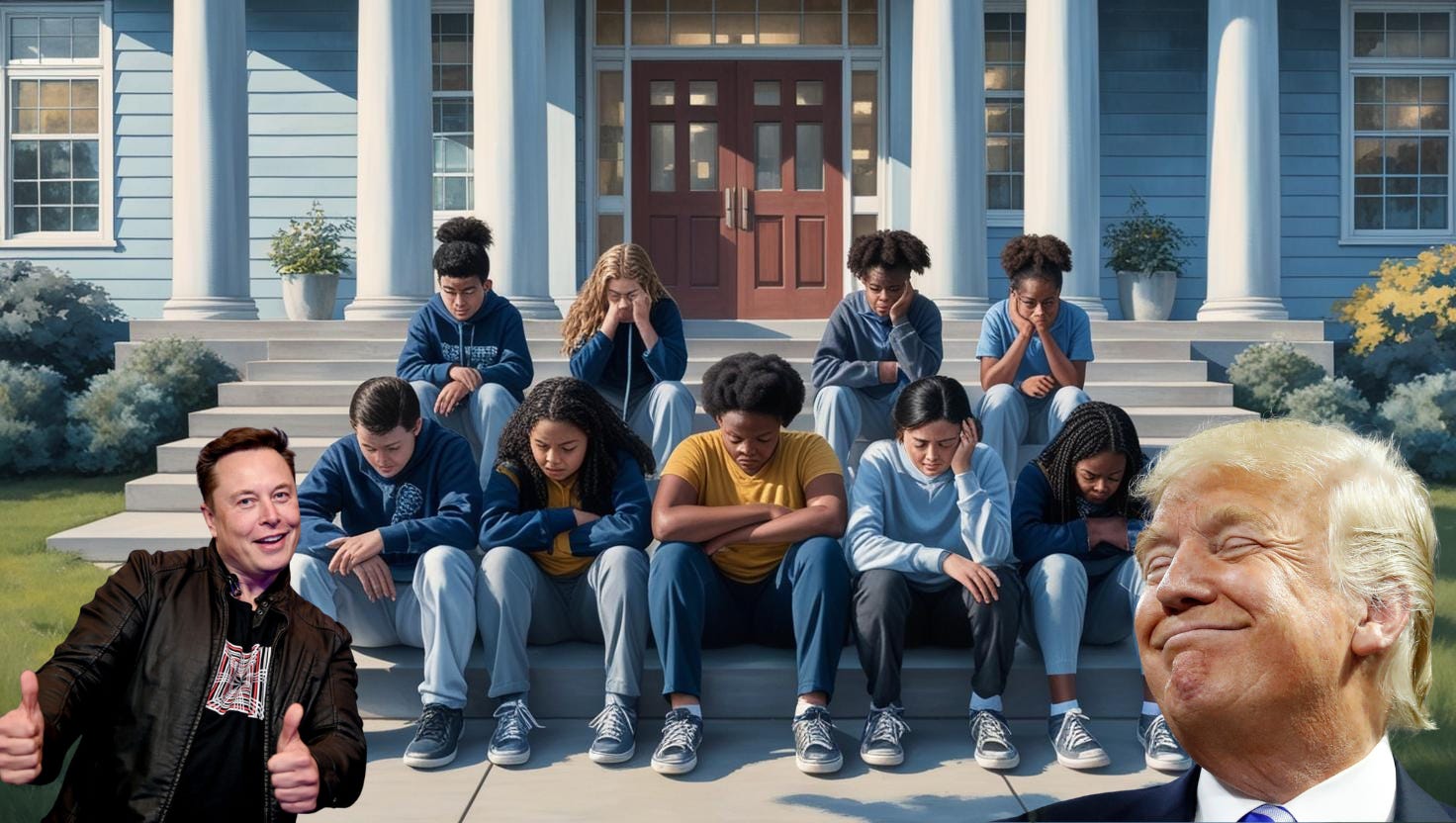
The biggest losers in this game? Students, teachers, and communities rely on well-researched, data-driven policies to ensure quality education. If research-driven evaluation disappears, so does the ability to advocate for effective, evidence-based solutions.
Education isn’t just about funding—it’s about knowing what works. We lose the power to demand better answers if we stop asking the question.

Truly horrifying - this is, I fear, just the beginning.
Does the loss of equality in education take us back to segregated schools and missed opportunities. Is the quality of curriculum, teachers, school buildings be based on ethnicity?
How will these and future cuts affect special needs education?