


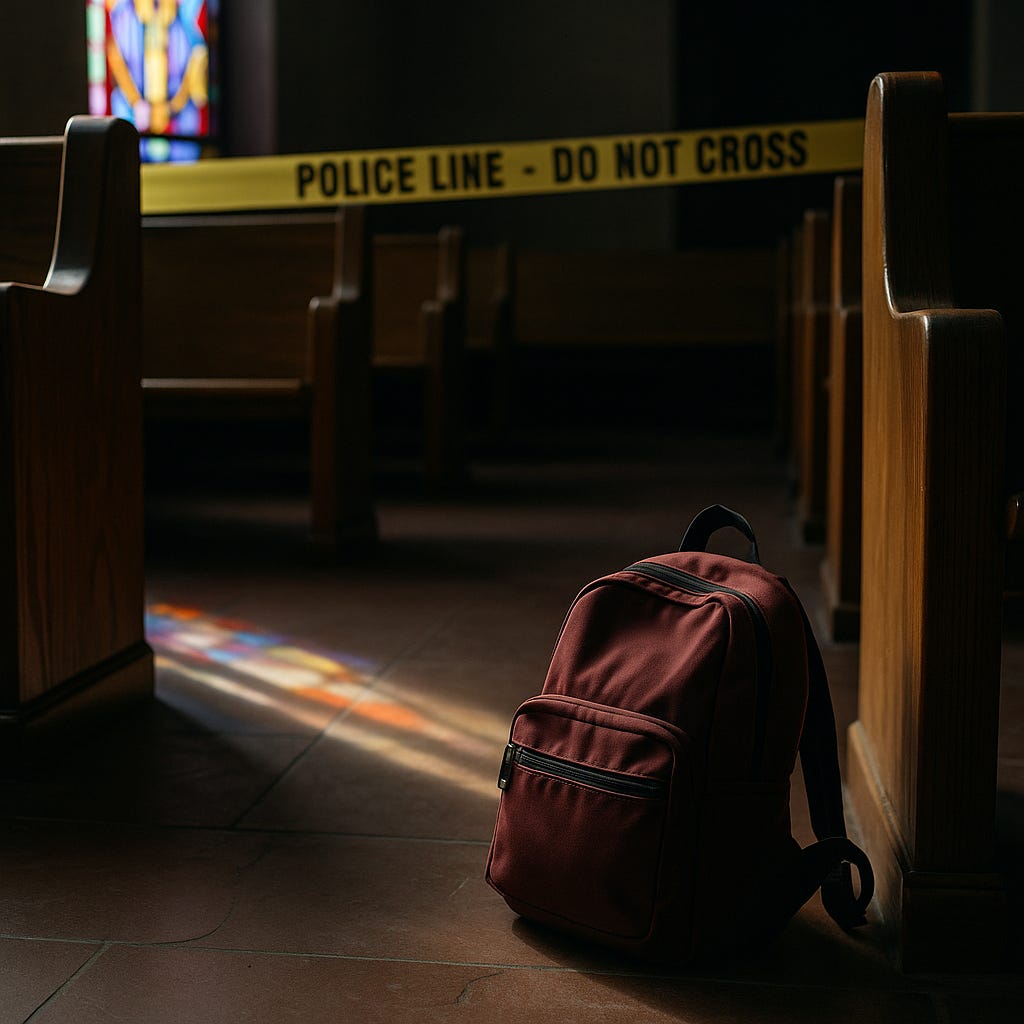
The Horror in Minnesota
On the first week of school, families gathered at Annunciation Catholic School in south Minneapolis to celebrate Mass, a ritual of safety, reverence, and renewal. Children in clean uniforms, parents in pews, a community marking the hopeful start of another school year.
And then: the sound of shattering glass, the crack of gunfire.
By the time the police declared the “threat over,” two children — just eight and ten years old — were gone. Seventeen more people were wounded, most of them kids, their young lives now permanently divided into before the shooting and after the shooting. The shooter, a lone man firing from outside the church, ended his own life after unleashing chaos.
For parents, there was no comfort, no closure. They waited in parking lots for news of their children’s survival, clutching each other, calling phones that would never be answered again. The school’s sanctuary had been transformed into a crime scene, a cathedral of grief.
Minnesota is reeling. But America is not surprised.
Because by now, we know this script by heart. The politicians’ tweets of “thoughts and prayers.” The briefings where officials call the event “senseless.” The grieving vigils lit by candlelight. The same hollow question repeated: How could this happen here?
The truth is, it happens here because America has made it so.
This is not random. It is not unforeseeable. And it is not senseless. It makes perfect sense in a nation that has allowed gun violence to become routine, where the deaths of children are tolerated as the background cost of politics as usual.
The horror in Minneapolis is not an aberration. It’s the product of a system that refuses to change, because the carnage itself serves a purpose.
For decades, our leaders have known how to stop this. Other nations, faced with far less gun violence, have passed strict legislation and never looked back. Yet here, we remain frozen, repeating tragedy after tragedy, not because Congress is paralyzed, but because inaction itself has become policy.
That’s the deeper story buried beneath the grief of Minnesota: every school shooting is also a lesson in power. It reveals who is protected, who is expendable, and why the government never passes laws that might prevent the next massacre.
This Labor Day, invest in democracy, not distractions. Subscribe to The Coffman Chronicle today and save 40% on your yearly plan. Stay ahead of the chaos with urgent rundowns, fearless analysis, and independent commentary that refuses to stay silent.
📅 Hurry — this Labor Day sale won’t last long.
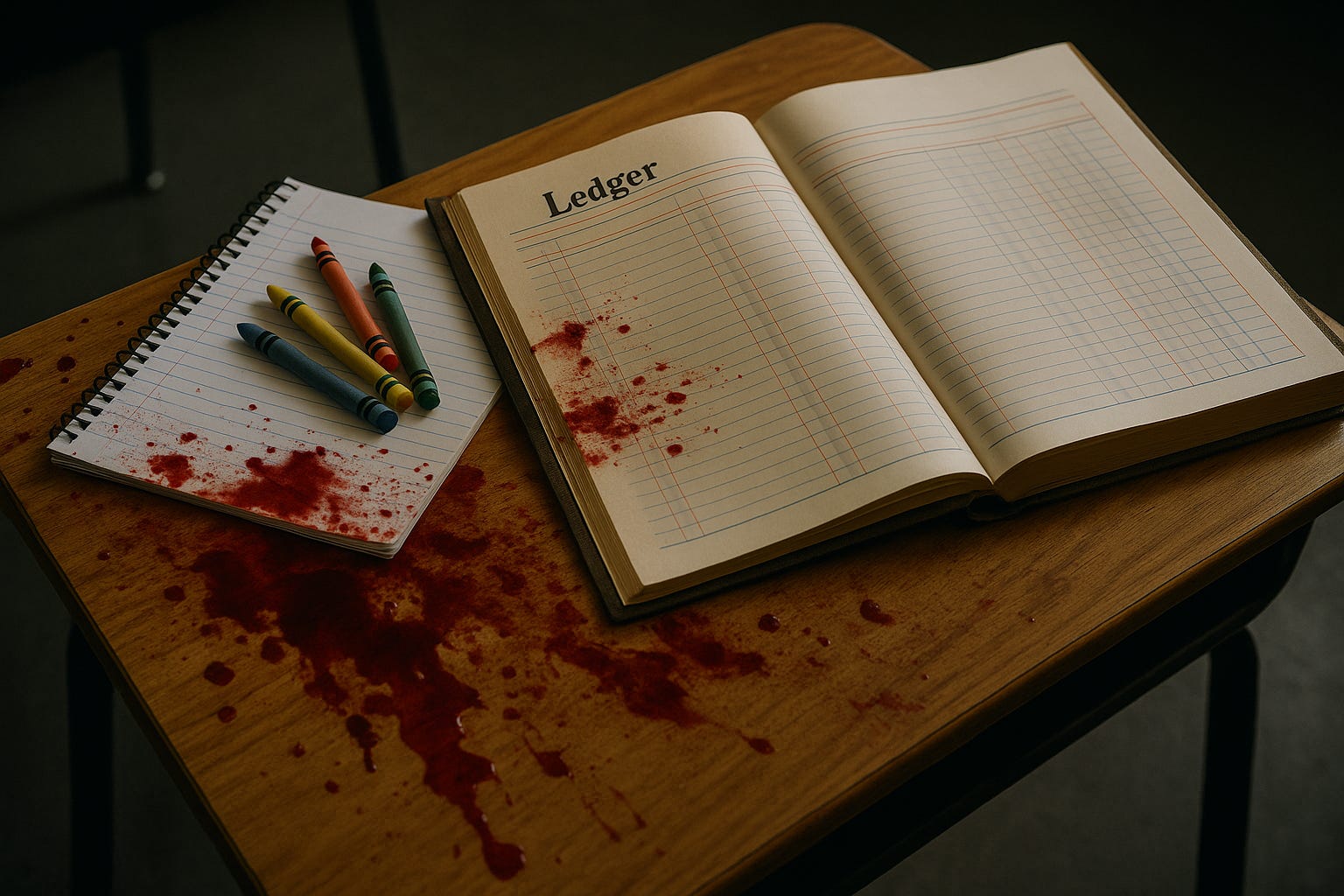
America’s Grim Milestone: Guns as the #1 Killer of Kids
The Minnesota shooting is not just another tragedy. It is part of a national epidemic so severe that it has redefined what it means to grow up in America. For the first time in modern history, firearms have become the leading cause of death among children and teenagers in the United States, surpassing car accidents, cancer, and congenital diseases.
That fact alone should bring the country to a standstill. But it hasn’t.
According to the Centers for Disease Control and Prevention, nearly 4,700 children and teens were killed by guns in 2021, a number that has only climbed since. By contrast, auto accidents — once the biggest killer of young people — have declined steadily thanks to decades of safety regulation: seat belt laws, airbag mandates, stricter licensing, and better road design. The government acted, and lives were saved.
But with guns, the opposite is true. Even as shootings climb, Congress does nothing. The result: America stands alone. In other developed nations, the leading causes of youth death are cancer, accidents, or chronic illness. Here, it is bullets. A child in the United States is 25 times more likely to be killed by a firearm than a child in any other wealthy country.
And yet our leaders behave as if this is normal. They shrug, they mourn, they tweet condolences, but they do not legislate. The “thoughts and prayers” are not just empty gestures. They are cover fire for a system that has decided children are acceptable collateral.
What’s worse, the numbers hide even more pain. For every child killed, at least five more are shot and survive, living with shattered bones, paralysis, or permanent trauma. Entire classrooms become testaments to violence: students who never return, survivors who will never sleep without nightmares, teachers who carry the scars of protecting kids with their own bodies.
See our previous reporting on the administration’s erosion of gun safety and controls here:
Note: These articles are more than 45 days old and now live in our archive. Become a paid subscriber for exclusive perks including unlimited access to our full 900+ articles.


When politicians say “there’s nothing we can do,” what they really mean is: there’s nothing we’re willing to do. The United States has shown that when death touches the powerful, it acts decisively. After 9/11, trillions were spent on security and surveillance. After COVID, entire economies shut down. But when it’s children killed by guns, the response is silence.
The grim milestone — guns as the number one killer of kids — is not a failure of policy. It is the policy.
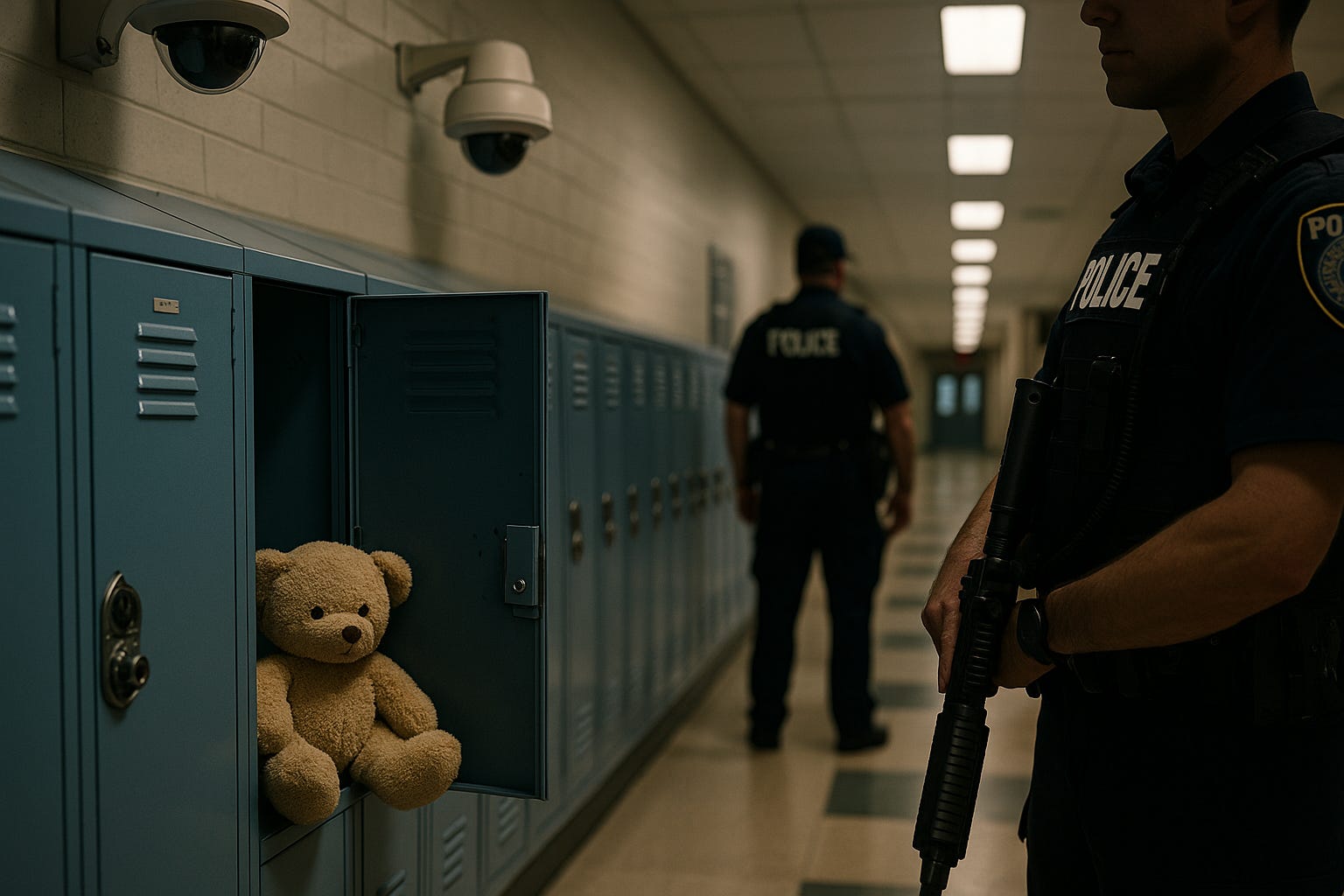
Fear as a Tool of Control
Every school shooting leaves behind more than shattered lives. It leaves behind a population willing to accept almost anything in the name of safety. And that willingness is the State’s most valuable currency.
Gun violence doesn’t just terrorize families; it reshapes entire communities. Parents who once trusted schools now demand armed officers in the hallways. Administrators spend education budgets not on teachers, but on surveillance cameras, panic buttons, and metal detectors. Police departments use the bloodshed as leverage to expand their budgets, staffing, and authority.
The result is a slow militarization of everyday life. The school becomes a fortress. The neighborhood becomes a zone of suspicion. And the public — traumatized and afraid — is told this is the only possible response.
This is the hidden dividend of gun violence: fear consolidates power.
The cycle is predictable. A massacre shocks the country. Lawmakers perform outrage. Instead of regulating firearms, they propose “hardening” schools. Billions of federal dollars are spent on police in schools, surveillance contracts, and private security firms. Each tragedy justifies another expansion of the state’s ability to watch, patrol, and control.
And notice what never changes: the gun laws.
If the goal were truly to protect children, the obvious path would be prevention, reducing access to the weapons that make massacres possible in the first place. But prevention does not expand police power. Prevention does not create new contracts for defense companies. Prevention does not justify the constant expansion of surveillance systems that will long outlast the crisis.
Fear does.
When a community is in shock, when parents are desperate for anything that promises safety, they will accept measures they would otherwise resist. And so, in the wake of tragedy, the State offers not solutions but control. And control is gladly taken, even though it never stops the next massacre.
In this way, every school shooting is not just a story of loss. It is a transaction. Children pay with their lives, and the State collects power in return.
The Political Economy of Gun Violence
If fear is the State’s most valuable currency, money is its most reliable accomplice. And in America, every mass shooting sets off a grim but predictable boom for the firearms industry.
The pattern has been documented again and again: after Sandy Hook, after Parkland, after Uvalde — gun sales spiked. In the weeks following each massacre, Americans rushed to buy weapons, often out of fear of future bans that never came. What should have been moments of reckoning for the gun industry instead became windfalls.
This is not incidental. It is the business model.
The U.S. firearms industry generates over $28 billion in annual revenue, with gunmakers selling nearly 20 million firearms a year in the civilian market. The industry doesn’t just profit from steady demand; it thrives on surges created by tragedy. The more horrific the event, the greater the fear, the higher the sales. Gun deaths are not bad for business. They are good for it.
And the profits do not end at the checkout counter. They are reinvested in politics. The gun lobby, from the NRA to newer industry-backed groups like the National Shooting Sports Foundation, pours millions into campaign contributions, dark-money groups, and lobbying. In 2022 alone, gun rights organizations spent over $15 million lobbying Congress, while gun control groups, despite surges in donations after shootings, spent less than half that.
The returns on this investment are enormous. Lawmakers parrot the industry’s talking points: that the Second Amendment is absolute, that “good guys with guns” are the only solution, and that regulating firearms is tyranny. The result is legislative paralysis, a paralysis that is anything but accidental.
Meanwhile, the media cycle amplifies division. Networks thrive on the outrage, the endless debates between “pro-gun” and “anti-gun” camps. Each argument keeps viewers engaged, distracted from asking the larger question: who benefits from this endless cycle of violence?
The answer is clear. Gun manufacturers get rich. Politicians get campaign cash. Media companies get ratings. And the government gets to expand its reach in the name of safety.
The victims are not just the children in Minneapolis, or Uvalde, or Sandy Hook. The victims are all of us, living in a country where violence is profitable and where profit trumps prevention every time.
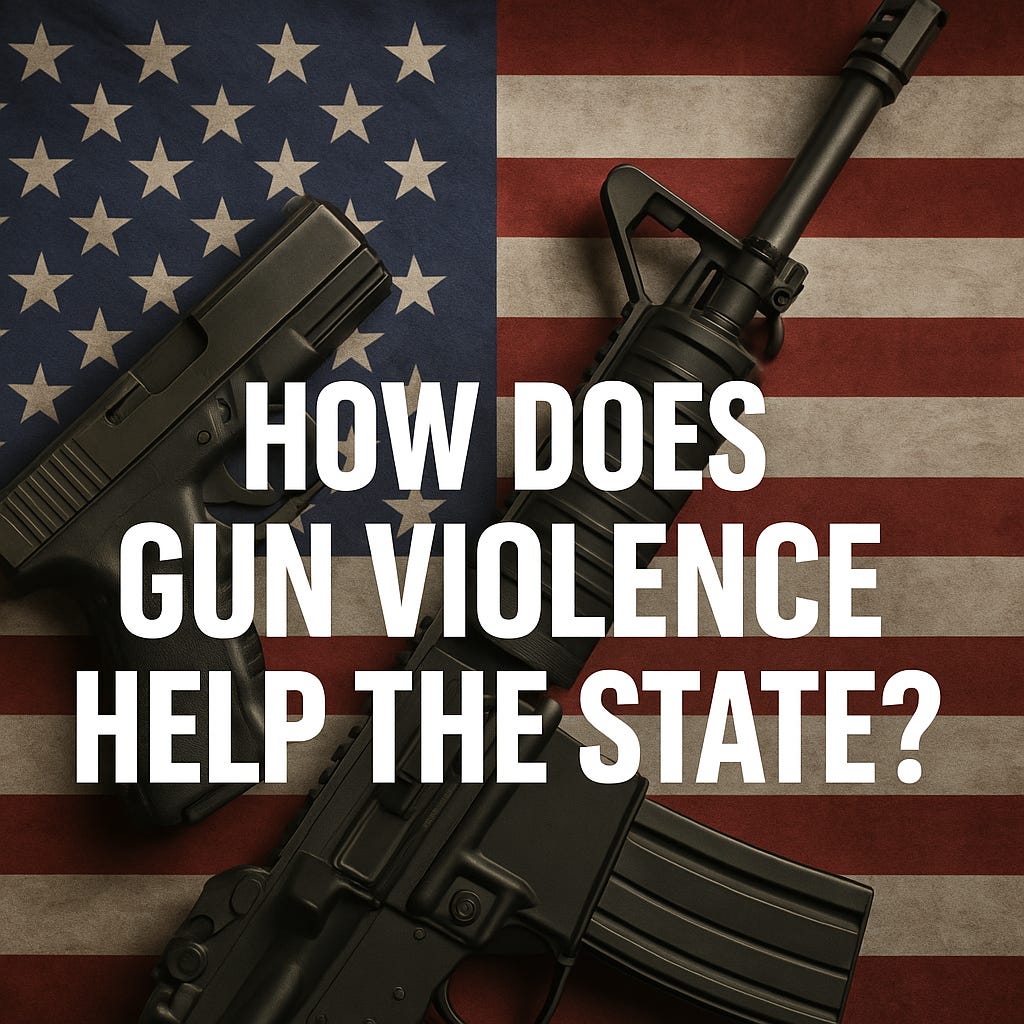
Why the State Won’t Legislate
Whenever another massacre unfolds, the same question echoes across the country: Why won’t Congress do something?
The answer is simpler — and darker — than most people want to believe. The government doesn’t pass meaningful gun legislation because gun violence itself is useful.
First, profit rules policy. Gunmakers and their lobbyists bankroll campaigns, write legislation, and threaten lawmakers with electoral defeat. To go against them is political suicide, and so politicians learn to repeat the same hollow refrains: “Now is not the time to politicize this tragedy,” “We need to enforce existing laws,” “It’s not guns, it’s mental health.” Each statement is carefully calibrated to preserve the status quo while appearing compassionate.
Second, division is strategy. Guns are the ultimate wedge issue, splitting Americans into bitterly opposed camps. While citizens fight each other in endless “Second Amendment” arguments, they are too distracted to fight the system that exploits them both. Culture wars keep the working class divided; gun politics are one of the sharpest blades in that arsenal.
Third, fear consolidates control. As we saw after Minnesota, and every massacre before it, the State never wastes a tragedy. It uses the fear to justify more surveillance, more police funding, and more “emergency powers.” Laws that would reduce shootings don’t pass, because those laws would shrink the very fear that feeds the State’s expansion.
And so the cycle continues: children die, profits flow, politicians posture, and the public remains trapped in fear. This is not paralysis. It is not gridlock.
It is not dysfunction. It is a design.
The refusal to legislate is itself a policy, one that ensures the flow of money to industry, divides the public, and consolidates power within the State.
Every time we ask, “Why won’t they do something?” we give them too much credit. They are doing something. They are protecting the system that protects them.
The Hidden Bargain
The truth is that America has struck a bargain with gun violence. It is not written in law or spoken aloud on the Senate floor, but it shapes every massacre, every vigil, every moment of silence.
The bargain is this: children will die, communities will be terrorized, and families will be shattered in exchange for profit, political cover, and state power.
The firearms industry gets to keep selling weapons, turning tragedy into quarterly gains. Politicians get reelection checks and a permanent wedge issue to divide the electorate. The media gets endless spectacle to fill the news cycle. And the State itself collects what it prizes most: fear. Fear that justifies armed police in schools, military equipment on city streets, surveillance cameras in classrooms, and the steady expansion of authority in the name of protection.
And what do ordinary people get in return? Empty condolences. Security theater. The right to bury their children while their leaders repeat the lie that nothing could have been done.
This is the hidden bargain, and it is why the blood never dries before the cycle begins again. Because in the calculus of American power, gun violence is not a crisis to be solved. It is a resource to be managed.
If the killings stopped, the fear would subside, the political donations might shrink, and the surveillance budgets might contract. Gun violence, horrific as it is, guarantees that none of this will happen. It ensures the system continues to operate autonomously.
The dead are the cost of doing business. And business is thriving.
Minnesota in Context
The massacre at Annunciation Catholic School in Minneapolis is not an outlier. It is not a shocking exception to American life — it is the rule.
Already, the outlines of the cycle are visible. Politicians have offered condolences, but no legislation. Media networks have filled airtime with grief and outrage, but not with serious demands for reform. Local leaders are already talking about the need for more security in schools, more police resources, and more “preparedness” for the next time.
What we will not hear is any plan to keep a man with a gun from firing into a church filled with children in the first place. That solution is off the table because it would require challenging the very bargain that makes these shootings possible.
So Minnesota will bury its children, hold vigils, and try to move forward. Contracts for security firms will be signed. Police budgets will expand. School doors will get heavier locks. And then, somewhere else in America, it will happen again.
Annunciation is not a tragedy we learn from. It is another entry in the ledger of American gun violence, a debt that will never be paid because too many are profiting from the interest.
Who Does Gun Violence Really Serve?
Every time a child is killed in a classroom, America proves again that this country is not incapable of change. It is unwilling. Gun violence is not an accident of history or a failure of politics. It is the inevitable outcome of a system that profits from fear, divides its citizens, and expands its own power on the backs of the dead.
Minnesota’s children will not be the last. That is the unspoken truth every lawmaker knows. The government has chosen its side. It has chosen profit over prevention, control over compassion, division over unity.
The bodies of children are the price of that choice. And until we stop mistaking silence for weakness — until we see inaction as the policy it truly is — the killings will not end.
Because for the State, gun violence doesn’t weaken power. It sustains it.
This Labor Day, invest in democracy, not distractions. Subscribe to The Coffman Chronicle today and save 40% on your yearly plan. Stay ahead of the chaos with urgent rundowns, fearless analysis, and independent commentary that refuses to stay silent.
📅 Hurry — this Labor Day sale won’t last long.
Bibliography:
Centers for Disease Control and Prevention (CDC). Preventing Firearm Violence and Injuries Impacting Children and Teens.
Centers for Disease Control and Prevention (CDC). Fast Facts: Firearm Injury and Death. July 5, 2024.
Johns Hopkins Center for Gun Violence Solutions. “Gun Violence in the U.S. 2022: Examining the Burden Among Children and Teens.” Annual Gun Violence Data 2022.
Everytown for Gun Safety Research. The Gun Industry’s Power Broker: NSSF. January 12, 2023.
“The Gun Industry Makes Billions. But How Many Exactly?” The Trace, May 2, 2025.
Children’s Defense Fund. Gun Violence — The State of America’s Children. 2021 data.
Public Health (Johns Hopkins University). “Guns Remain Leading Cause of Death for Children and Teens,” September 12, 2024.
Pew Research Center. “Gun Deaths Among U.S. Kids Rose 50% in Two Years.” April 6, 2023.
The Guardian. “These Deaths Are Not Inevitable: State Gun Control Laws Reduce Children’s Firearm Deaths, Study Shows.” June 20, 2025.
I wish the thoughts and prayers worked for me. It seems so easy to be stupid. I really like the pictures that you have in this article. Thank you for sticking up for the children of America. They really need it.
RFK Jr is ok with children being gunned down.