


The debate over banning TikTok in the U.S. has been framed as a national security imperative, driven by concerns over data privacy, foreign influence, and potential ties to the Chinese government. Is that the full story?
Protecting Americans from Foreign Adversary Controlled Applications Act, introduced as H.R. 7521 on March 5, 2024, by Representative Mike Gallagher (R-WI), ultimately passed both the House and Senate and was signed into law by President Biden on April 24, 2024. In the House, the bill passed with a 352-65 vote (50 Democrats and 15 Republicans voted against the bill, 1 Democrat voted present). The Senate passed the law on April 23rd, included in the 21st Century Peace through Strength Act, along with three other bills. Several Senators, including Senate Majority Leader Chuck Schumer, argued that the importance of the foreign aid bill lumped in with it made it too time-sensitive to fight against, suggesting that many opposed the bill's passage.
The Coffman Chronicle runs on your support—no billionaires, no corporate strings, just pure, unfiltered truth.
For $8 a month or $80 a year, you’re not just subscribing—you’re fueling the fight, empowering sharp insights, and helping us call out the BS.
Not ready to commit? No problem. Stick around and enjoy the chaos—we love having you here. But if you’re ready to keep us loud, proud, and unapologetically bold, hit that subscribe button and join the movement today!
It is no wonder why. Critics have pointed to a failure to regulate other social media platforms, the purely hypothetical nature of the concerns raised, and the rising fervor over pro-Palestinian hashtags. Some liken it to dictator-esque limits to political discourse, as seen in China and other nations. A TikTok ban risks being perceived as politically motivated or even repressive unless preceded by comprehensive social media regulation that addresses systemic issues across all platforms—domestic and foreign alike.
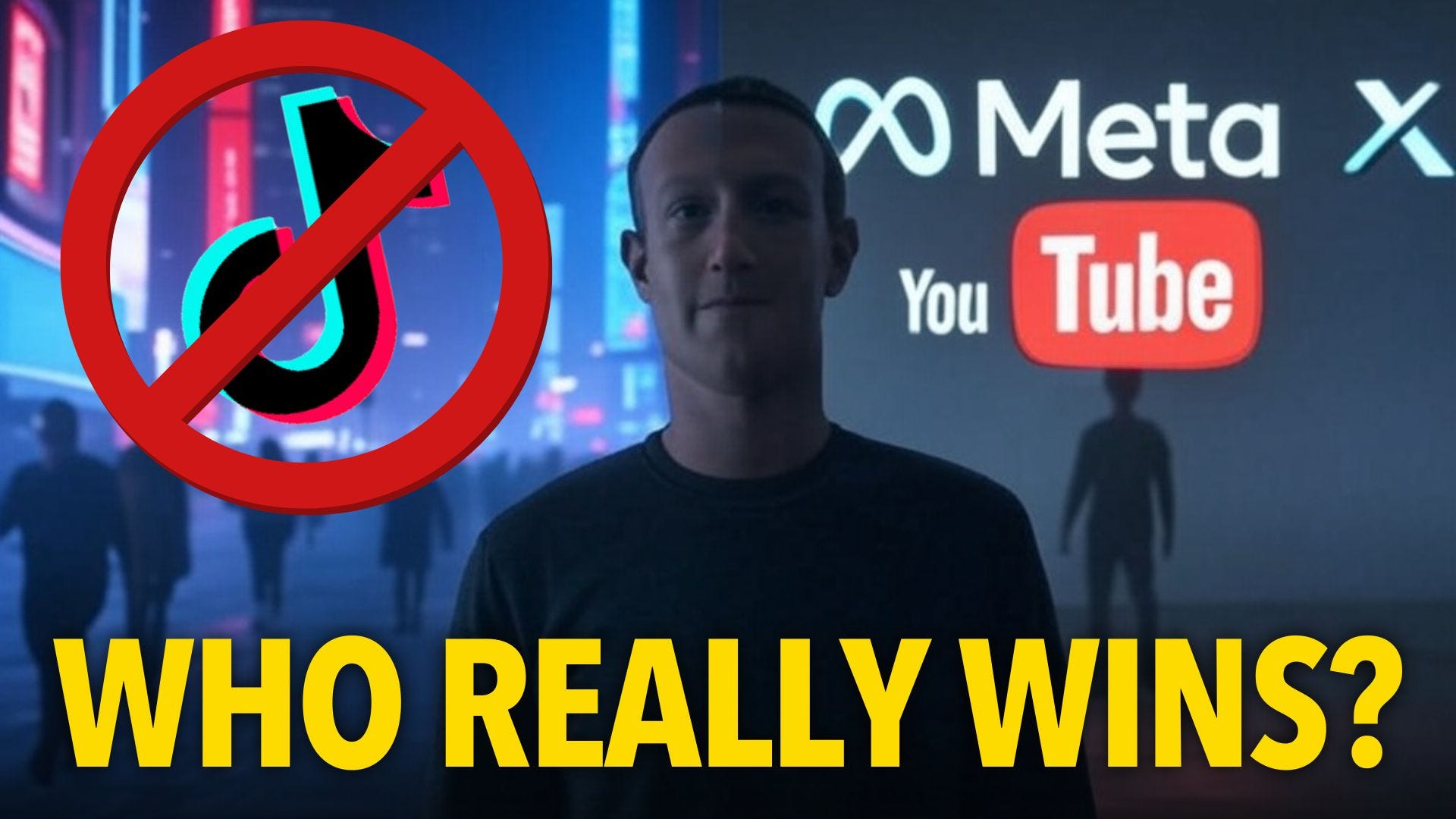
American social media platforms like Meta, YouTube, and X (formerly Twitter) have long faced criticism for similar issues: invasive data collection, opaque algorithms, unchecked monopolistic power, and the outsized influence of billionaire owners. These platforms dominate the digital landscape, stifle competition, and profit from user data, all while lobbying to resist meaningful regulation. Their billionaire owners have donated heavily to political campaigns and have been invited to exclusive seats at the Trump inauguration. Have their outsized voices influenced this legislation that would undoubtedly benefit them financially?
Singling out TikTok without addressing these broader problems undermines the legitimacy of a ban and fails to protect consumers or improve the online ecosystem. To tackle these challenges effectively, Congress must enact comprehensive social media regulations that address systemic issues like privacy, algorithmic accountability, monopolistic practices, and the excessive power of individual platform owners. Such reforms would ensure that the U.S. is not merely targeting a single foreign-owned platform but establishing a fair and transparent digital environment for all users.
Essential Regulations for Social Media Platforms
Privacy and Data Protection:
Limit the collection of personal data to what is necessary for platform functionality.
Require explicit, informed user consent for data collection and sharing.
Enforce data localization laws mandating that U.S. user data be stored domestically and kept out of foreign jurisdiction.
Impose strict penalties for data breaches and misuse of user information.
Algorithm Transparency and Accountability:
Require platforms to disclose how their algorithms prioritize, suppress, or amplify content.
Mandate regular, independent audits of algorithms to assess fairness, bias, and potential harms.
Allow users to opt out of algorithmic recommendations and choose chronological or customized content feeds.
Content Moderation Oversight:
Establish clear guidelines for content moderation policies and enforcement practices.
Ensure users are notified when content is removed or suppressed, with clear explanations and appeals processes.
Create third-party oversight bodies to monitor content moderation practices for consistency and fairness.
Monopoly Reduction and Competition:
Break up monopolistic companies to decentralize power and foster competition (e.g., requiring Meta to divest Instagram or WhatsApp).
Block anticompetitive mergers and acquisitions, particularly those aimed at eliminating nascent competitors.
Promote interoperability between platforms to allow seamless data transfer and user choice.
Monetization and Creator Protections:
Ensure fair revenue-sharing models for creators, with transparency in payout systems.
Allow creators more control over their monetization options and protect against exploitative terms from dominant platforms.
Incentivize platforms to develop robust tools for creators to engage and monetize directly with audiences.
Cybersecurity and National Security Safeguards:
Implement strict cybersecurity standards to prevent unauthorized data access and hacking.
Require regular national security reviews for foreign-owned platforms to ensure compliance with U.S. regulations.
The Problem of Billionaire Influence in Social Media
A key factor complicating the regulatory landscape is the outsized power of billionaire owners like Elon Musk (X/Twitter) and Mark Zuckerberg (Meta), who control platforms that shape public discourse, elections, and economic opportunities. These individuals use their influence not only to drive the strategic direction of their platforms but also to lobby against regulations that might curb their power.
Lobbying and Resistance to Regulation:
Major platforms like Meta and X invest heavily in lobbying efforts to shape legislation in their favor. In 2022, Meta alone spent over $20 million on lobbying to influence privacy, antitrust, and content moderation laws.Shaping Public Discourse:
Platform owners have direct control over content priorities, narrative amplification, and public opinion shaping.Market Concentration:
The dominance of a few powerful players—often controlled by individual billionaires—reduces competition and limits consumer choice, effectively forcing users into ecosystems where privacy and data practices are opaque and profit-driven.
The Case for Broader Regulation
TikTok’s dominance highlights the need for fair competition and equitable monetization opportunities for creators. Its innovative algorithm and monetization tools have forced U.S. platforms to adapt, benefiting the broader creator economy. A TikTok ban, absent systemic reform, risks driving creators back to monopolistic platforms without addressing their underlying flaws, such as opaque moderation and exploitative data practices.
Moreover, many countries have implemented comprehensive social media regulations before considering platform-specific bans. The European Union, for example, established robust frameworks like the General Data Protection Regulation (GDPR) and Digital Services Act (DSA) to ensure that all platforms—foreign and domestic—adhere to strict privacy, content moderation, and transparency standards. This approach contrasts sharply with countries like India, where TikTok was banned outright before broader regulations were in place, creating inconsistencies in enforcement.
For the U.S., regulating the entire industry would demonstrate fairness and consistency while ensuring that actions like a TikTok ban are grounded in a broader commitment to safeguarding users and promoting accountability across all platforms.
Conclusion
A national TikTok ban may ultimately be necessary to address security concerns, but it should follow—not precede—comprehensive reforms that apply to all platforms. The U.S. has already seen the impact of unregulated social media platforms on social discourse and elections. Regulating the entire industry, breaking up monopolies, and curbing the outsized influence of billionaire owners would level the playing field and ensure that the U.S. leads by example, prioritizing transparency, fairness, and innovation over political expediency. Such an approach would demonstrate that the real goal is safeguarding users and fostering a healthier digital ecosystem—not suppressing competition under the guise of national security.
Well done 👏
Not just TikTok, but other tools used by creators... https://www.justjared.com/2025/01/18/capcut-suspends-u-s-service-alongside-tiktok-amid-ban/