


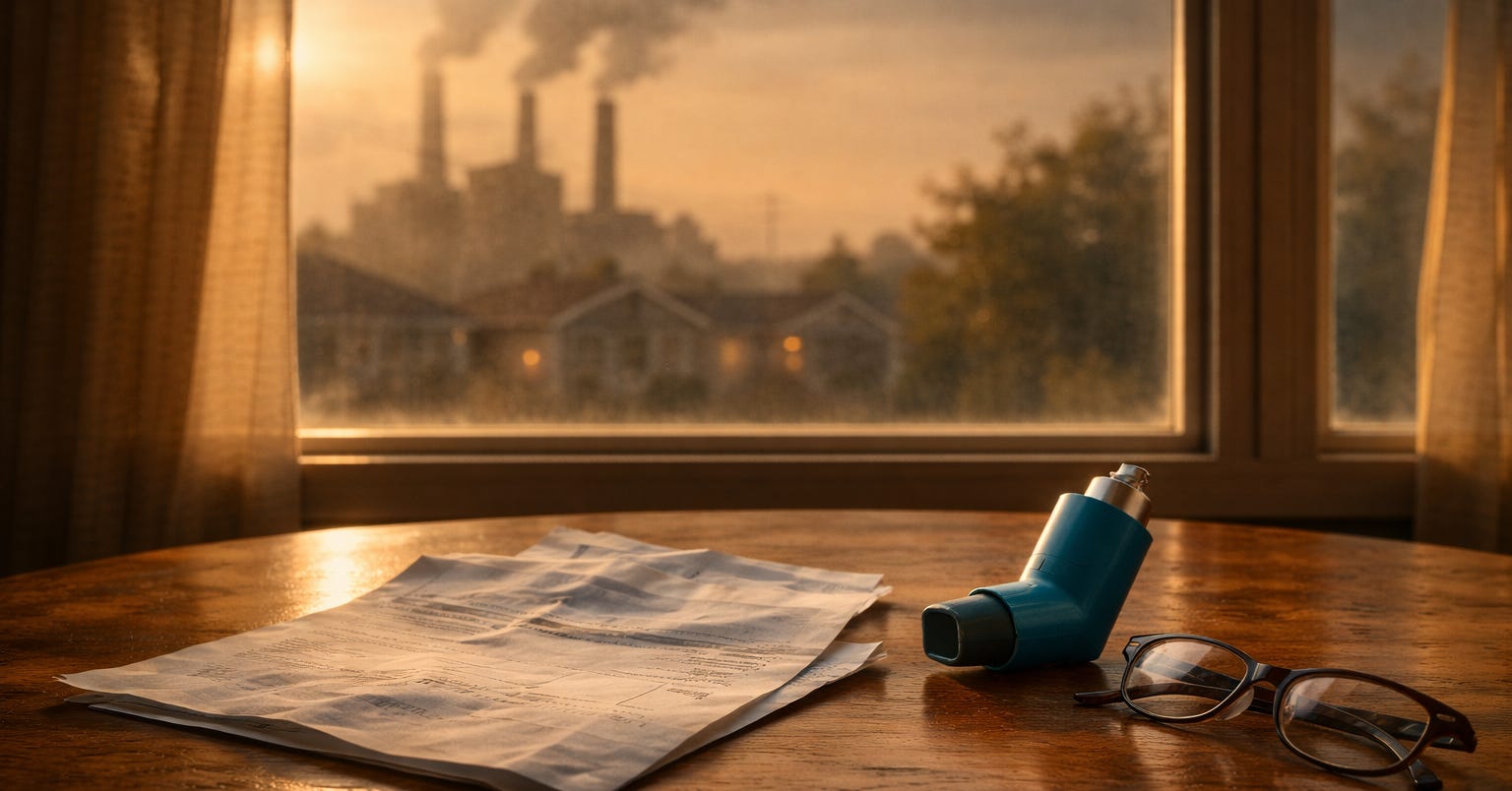
On a bad air day in the Midwest, the weather map does not care about state lines. Smoke from western wildfires and summer ozone curl over the Great Lakes and seep into living rooms from Indiana to Michigan. Parents in both places shut their windows, check inhalers, and stare at the same red and purple air-quality swirls.
Same smoke, different rules
What they do not see on that map are the rules that decide how much of that pollution they are expected to live with.
In one state, lawmakers are moving to strip their own environmental agency of the power to go beyond federal minimums, even as the Trump administration dismantles the protections that used to set the floor. In another, Great Lakes officials are scrambling in the opposite direction, trying to build “firewalls” to keep their air and water standards from sinking with Washington.
The people breathing that shared air never voted on any of this. They did not get a say on whether the 2009 federal finding that greenhouse gases endanger public health should be revoked, or whether vehicle greenhouse-gas standards should be erased. Yet in the span of days, the administration did both, and health and environmental groups rushed to court to stop it.
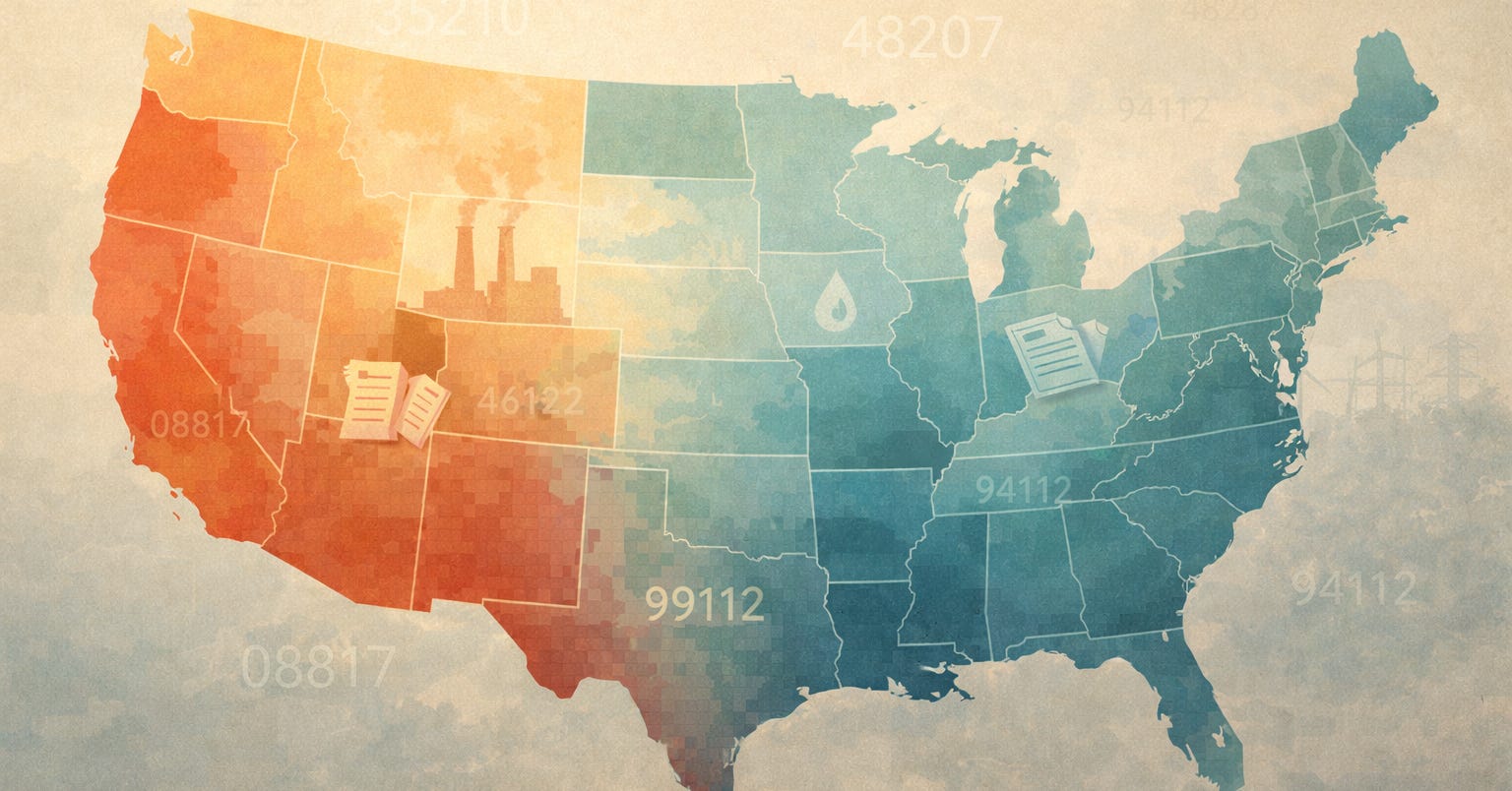
Those moves are not isolated. Together with a wave of state bills, they are turning climate protection into a ZIP-code lottery. Whether your kid’s school sits downwind of a coal plant with strong limits, or under a regulator legally forbidden to demand anything better, increasingly depends less on science and more on which map you live on.
This Community Is Powered by You
What started as a small circle has grown into something much bigger, and it’s all because of readers like you.
Every time you forward this email, post it on socials, or bring someone new into the fold, you’re helping build one of the most passionate, independent political communities out there.
Want to keep the momentum going?
Share this newsletter with someone who should be part of this conversation.
Thank you for being here. It means everything.
The Keystone They Are Trying to Pull: What the Endangerment Finding Really Is
The one sentence holding up most U.S. climate rules
In 2007, the Supreme Court of the United States told the Environmental Protection Agency that if greenhouse gases are pollutants under the Clean Air Act and they endanger public health or welfare, then the agency has a duty to act. After years of scientific review, EPA issued the 2009 “endangerment finding,” formally stating that climate pollution is already harming people in the United States and will cause worse damage if unchecked.
That one finding became the legal keystone for a whole arch of protections. It underpinned vehicle rules that pushed automakers toward more efficient engines, hybrids, and electric vehicles. It provided the hook for efforts to limit greenhouse gases from power plants and industrial facilities. It turned climate protection from a policy preference into a legal obligation.
Now the administration has moved to revoke that finding for vehicles and scrap the greenhouse gas standards that flowed from it. Donald Trump calls it one of the largest deregulatory actions in U.S. history. A broad coalition of health and environmental organizations calls it illegal and argues that EPA cannot simply declare climate pollution no longer dangerous when its own record says otherwise.
If that revocation stands, the EPA is no longer the floor every state can count on. It becomes just another political actor that may or may not regulate, depending on who holds the White House. Pull out the keystone, and the rest of the arch starts to wobble. Some states will rush to brace it with their own laws. Others, under pressure from industry, are moving just as quickly to tear down whatever remains.
When Washington Walks Away: The Vacuum States Have to Fill
Federal retreat does not erase pollution
For years, states could assume that federal climate rules would slowly tighten. That did not solve everything, but it at least established a national floor for vehicle emissions, power-plant pollution, and basic water protection.
With the endangerment finding revoked and vehicle rules rolled back, that assumption is gone. The EPA is signaling that climate pollution is no longer something it is required to address. At the same time, the administration is weakening clean-water rules and pulling back protections for wetlands and small streams.
Pollution does not disappear when Washington steps away. It migrates into a gray zone where 50 state governments must decide whether to fill the gap or leave it open. In one state, a coal plant that would have faced increasing pressure to clean up now gets a longer, easier life. In another, regulators can still push for earlier retirement or tougher controls. The atmosphere does not care who chooses which path. The children downwind do.
The incentives change overnight
This federal retreat reshapes the math for industries that plan years ahead. Automakers who once assumed that cleaner fleets were the safest bet now see the administration rescinding a rule that rewarded electric vehicles inside fuel-economy standards. Utilities and data-center developers see a government unwilling to call climate pollution dangerous. The rational move is to lean on older, cheaper, dirtier infrastructure as long as possible and steer new projects toward states with the weakest rules.
Communities that depend on federal environmental programs feel the floor falling away. Cuts to research labs and enforcement staff, combined with rollbacks of air and water protections, leave them reliant on state agencies that may or may not have the budget, authority, or political backing to step in.
Into that vacuum flows whatever each state chooses to build: stronger protections, copy-and-paste versions of weakened federal rules, or laws that forbid regulators from going beyond Washington at all.
Copy-and-Paste Rollbacks: States Moving to Tie Their Own Hands
“We can’t protect you even if we want to.”
In Alabama, lawmakers have decided that if federal standards drop, the state should be dragged down with them. A new bill would bar state agencies from setting pollution limits stricter than federal rules, even if local communities want stronger protections. Another proposal would allow new rules only when officials can prove a direct, specific causal link between an exposure and documented harm, a hurdle that is hard to clear before people are already sick.
Supporters talk about “regulatory certainty” and “sound science.” Stripped of the language, the effect is simple. If federal limits on coal-plant emissions or chemical discharges are weakened or erased, the state is frozen at that weaker level. If Washington declines to regulate a new contaminant at all, state hands are tied until the damage is undeniable.
Alabama is not alone. Legislators in other states are advancing similar bills that restrict agencies from exceeding federal environmental standards or subjecting tougher rules to extra veto points. These measures are moving at the same time the administration is tearing down national protections on power plants, wetlands, and greenhouse gases.
Preemption by design, not accident
This is a strategy, not a spasm. National conservative networks have spent years pushing “preemption” bills that block local governments from raising the minimum wage, tightening gun laws, or protecting tenants. Environmental rollbacks now run through the same pipeline. Model language gets drafted once, then introduced in multiple states with the same talking points.
Combine weakened federal rules with state laws that forbid going further, and you get exactly what large polluters want: the weakest standard locked in as both floor and ceiling. States with already shrunken environmental agencies are hit hardest. They have fewer scientists and inspectors to sound the alarm and now fewer legal tools to respond when they do.
For communities on the ground, the message is blunt. If your state has chosen never to be tougher than Washington, your ability to demand cleaner air or safer water depends entirely on who controls the federal government. If that government does not see climate pollution as a problem worth regulating, your state is barred from doing much about it.
Firewall States: Great Lakes, Coastal Regulators, and the New Climate Borderlines
Where regulators are told to fight back, not stand down
Not every state is drifting downward. In the Great Lakes basin and along the coasts, lawmakers and regulators are beginning to see themselves as the last line of defense.
Around the Great Lakes, a bipartisan bloc has already fought off attempts to slash funding for the Great Lakes Restoration Initiative, arguing that if Washington will not protect nearly 20% of the world’s surface fresh water, the region must. Now they face a separate threat: federal rollbacks that could strip protections from wetlands and streams feeding the lakes. If those protections vanish, state law and enforcement become the only barriers between industrial pollution and millions of people’s taps.
On the West Coast, California is leaning into the role of regulator rather than bystander. Governor Gavin Newsom has framed utility oversight as consumer protection. His new leadership team at the California Public Utilities Commission is tasked with lowering bills, making wildfire spending actually protect people, and forcing investor-owned utilities to absorb more of the cost of their own risks.
Utility commissions are where climate policy, corporate profit, and household budgets actually meet. They decide who pays for grid upgrades, who eats wildfire liabilities, and on what terms new gas plants or data centers get built. In a world where the EPA is stepping away from climate responsibilities, a commission with a clear consumer mandate becomes a firewall against both federal neglect and corporate overreach.
In New Jersey, environmental advocates are pushing a “common agenda” focused on clean water, affordable energy, and public-land protection as a state-level shield against rollbacks. At the same time, business groups are weaponizing the term “affordability” to oppose stronger climate policies, warning that making polluters pay will drive up rates while ignoring the long-term costs of doing nothing.
A border you will not see on any map
Put these examples together, and a new kind of border emerges. It is not simply blue state versus red state. It runs between places that treat climate and pollution as concrete risks to health, water, and infrastructure, and places that treat them as talking points or short-term cost lines.
On one side, regulators are equipped and instructed to push back when federal standards fall. On the other, they are ordered to mirror whatever Washington does, even as Washington steps away. The result is two Americas that look similar on a weather map but live under very different rules when the air turns hazardous, or the river jumps its banks.
Importantly, air and water are fluids. They cross borders on maps, forcing more enforcement states to pick up the slack to combat their non-regulating neighbors.
Your ZIP Code vs. Your Rights: How This Shows Up in Your Life
From a distance, “revoking an endangerment finding” sounds like a procedure. Up close, it looks like money leaving your account and minutes shaved off your life.
1. Your kids’ lungs and your medical bills
Coal and gas plants emit not only carbon dioxide but also fine particles, nitrogen oxides, sulfur dioxide, and heavy metals such as mercury. Those are the pollutants that trigger asthma attacks, heart disease, and premature death, especially in neighborhoods already hemmed in by highways, refineries, and warehouses.
When standards tighten, hospital visits and early deaths fall. When standards weaken or stall, those gains erode. If you live in a state barred from going beyond federal rules, your regulators cannot respond when new science shows a limit is still too weak. If a mercury rule is loosened, your state cannot say, “That is not good enough for our kids.” If the EPA declines to regulate a contaminant at all, you may be stuck waiting for definitive proof of harm while exposure continues.
Firewall states can answer the same science with stronger permits, tougher controls, and faster diesel-reduction programs. You may never hear the rule names, but you will notice fewer inhalers on the kitchen counter and fewer midnight ER runs.
2. Your power bill and whether the lights stay on
Climate policy is often framed as a choice between affordability and the environment. In reality, the way we regulate utilities determines both what you pay this year and how fragile your grid will be in ten years.
With strong federal rules, utilities have a clear reason to retire older fossil plants and invest in a more efficient, resilient system. With the EPA backing away and EV incentives rolled back, those signals fade. Old plants run longer. Grid upgrades are postponed. Big new loads like data centers plug into whatever cheap capacity exists.
In states that tie regulators to federal minimums, the costs show up on your bill. When a heatwave pushes the system to its limits, utilities buy expensive emergency power and fire up inefficient backup units. Those costs get spread across ratepayers.
In firewall states, commissions can require data centers and other large users to pay for upgrades they need and utilities to invest in efficiency and demand-response programs that help families use less power. Same country, same federal backdrop. Very different versions of “affordable energy,” depending on whether your state chose to handcuff its regulators or equip them.
3. Your neighborhood’s odds over the next decade
Flood maps, fire lines, and insurance decisions may appear to be acts of nature or math, but they are shaped by policy choices.
States that treat climate as a distant issue are less likely to invest early in flood defenses, green infrastructure, or heat-resilient housing. They are more likely to approve development in risky areas to chase short-term tax revenue. When disaster hits, the pattern is familiar: “once in a century” events every few years, low-income neighborhoods hit hardest, local budgets overwhelmed.
States that treat climate as a present risk cannot prevent every disaster. However, stronger wetland and stream protections, tougher building codes, and urban-heat planning can reduce damage and save lives. Robust environmental agencies can catch contamination before it reaches the tap. Insurers notice those differences. They pull out fastest where risk is high and government response is weak, and are more willing to stay where regulators make risk reduction a priority.
Taken together, these three buckets tell one story. When the EPA walks away and states refuse to go further, officials are not just making a point about regulation. They are deciding who breathes what, who pays for which upgrades, and which neighborhoods become sacrifice zones.
This Did Not Happen by Accident: The Strategy Behind the Chaos
If you look at each rollback alone, it can feel like random thrashing. Look at them together, and a clear sequence emerges.
How confusion became a weapon
Fossil-fuel interests spent years trying to knock out the endangerment finding in court. When that failed, they shifted to weakening the EPA from the inside: friendlier appointees, smaller budgets, slower rulemaking. The Trump team went further and tried to remove the finding itself, creating the vacuum industry wanted. No federal duty to regulate, only a political choice.
In the vehicle sector, automakers and oil interests lobbied for flexible standards and credits that blunted the impact of climate rules. Now, rescinding extra credit for electric vehicles inside fuel-economy rules looks technical on paper, but makes it safer to stick with gasoline in practice.
At the state level, preemption bills drafted by groups like the American Legislative Exchange Council move in parallel. Legislators introduce near-identical “regulatory certainty” bills that lock state standards to federal minimums just as those minimums are being cut.
Industry representatives sit on advisory committees and in closed-door meetings where details are hammered out. People living downwind or working in fume-filled warehouses rarely get that access. When leaders talk about “stakeholders,” they tend to mean people who fear lost profits, not lost lung function.
The weakest standard wins by design
Zoomed out, the plan looks like this:
Weaken or remove the federal rule that treats climate pollution as a danger.
Scrap specific regulations and incentives that grew from that rule.
Help states pass laws that stop them from moving in the opposite direction.
Let utilities and large users steer investments toward older, cheaper, dirtier options, knowing the public will absorb the long-term costs.
The winners are coal and gas plant owners, oil companies, data-center operators, and politicians who enjoy campaign checks and short-term talking points about lower costs.
The losers are families in fence-line communities, renters and homeowners staring at rising utility bills, and workers and small businesses in neighborhoods that flood or overheat first. The public pays twice: once in health, once in higher costs.
None of this was sold as a coherent plan. It slipped in through legal filings and legislative language that almost no one reads. That is the point. If people understood that these obscure moves amount to a decision about how much risk their families must bear, they might insist on a different answer.
What Comes Next, and Where Your Voice Still Matters
By the time a rule hits the Federal Register or a bill reaches a governor’s desk, it can feel like the story is over. That feeling is part of the design. The truth is that the map of who breathes what is still being drawn.
The fights no one is televising
The lawsuit over the endangerment finding will take time, but courts still respond to evidence and context. A public that understands “endangerment” as a question about their kids’ lungs and their town’s flood map changes that context.
In state houses, preemption bills that look inevitable can stall when they meet organized, local resistance. Lawmakers who thought they were voting for harmless “regulatory certainty” do not enjoy being confronted by parents holding inhalers and maps of asthma clusters.
Utility commissions and local boards may be the least glamorous venues in American politics, but they are where many of the biggest decisions land. Rate cases, data-center hookups, and gas-plant extensions decide who pays, who profits, and how long we stay locked into fossil fuels. Most hearings take place in nearly empty rooms filled with company reps. When ordinary customers show up with pointed questions, the room changes.
You do not need to master the rulebook to play a part. Whenever a big project or rule comes up, three questions go a long way:
Are we allowed to go stronger than federal minimums, or has someone tied our hands?
Who pays for this over the long run: the companies driving the pollution or demand, or the people who breathe the air and pay the bills?
What is our plan for floods, fires, and heat if federal protections vanish? Is anyone actually responsible for that?
If your officials cannot answer, the problem is not your questions. It is the system.
No one is coming, which is why you matter
The hardest truth here is also the most liberating. No one in Washington is coming to make sure your air is safe, and your grid is ready. The people tearing out the federal keystone and locking in the weakest standards have been clear about that, even if they bury it in jargon.
The flip side is that the places that remain livable will be the ones where ordinary people refuse to treat these fights as boring or inevitable. Towns and states that demand the right to protect themselves, that push regulators to side with households instead of shareholders, will still face heat and storms. Everyone will. However, they will have a say in how much damage they accept and who bears the cost.
That is what this quiet war over climate rules is really about— not parts per million or page counts in the Federal Register. It is about whether breathing air that does not shorten your life is treated as a privilege reserved for a few ZIP codes or a basic expectation in a country that still claims to believe in equal protection.
The decisions that answer that question are being made now, mostly out of sight. They stay out of sight only if we let them.
Coffman Chronicle: Support Independent Media
If this piece helped you see how “boring” rule changes decide the air your family breathes and the number on your power bill, that is the kind of work most daily coverage does not have the time or incentive to do.
The Coffman Chronicle is fully reader-supported. That is what lets us follow power where it actually moves, connect federal and state maneuvering to kitchen table consequences, and publish without permission from parties, advertisers, or the institutions under scrutiny.
If you want more reporting that treats accountability as a civic requirement, not a partisan slogan, consider becoming a paid subscriber. Your support funds deep dives, visual explainers, and organizing tools built to outlast a single news cycle.
Support independent media. Become a paid subscriber.
Sources:
Center for Biological Diversity. “Lawsuit Challenges Trump’s Climate Science, Tailpipe Rule Rollbacks.” February 18, 2026.
Circle of Blue. “Great Lakes Lawmakers Push Back Against Federal Environmental Rollbacks.” February 18, 2026.
Environmental Defense Fund. “EPA Sued Over Illegal Repeal of Climate Protections.” February 18, 2026.
Environmental Integrity Project. “Cuts to State Environmental Agencies Compound Damage from Trump’s Dismantling of EPA.” December 10, 2025.
Great Lakes Environmental Law Center and Midwest Coalition. “Midwest and Great Lakes Coalition Urges EPA to Withdraw Harmful ‘Polluted Waters’ Rule.” January 5, 2026.
Office of Governor Gavin Newsom. “Governor Newsom Names New California Public Utilities Commission President to Launch New Phase in Effort to Protect Consumers from Escalating Utility Costs.” February 18, 2026.
NJLCV. “2026–2027 New Jersey LCV Common Agenda for the Environment: Legislative Priorities.” 2026.
Support Democracy. “ALEC, ‘Model’ Legislation, and Preemption.” March 15, 2023.
Truthout. “States That Cut Environmental Agencies Face Crisis as Trump Deregulation Unfolds.” December 11, 2025.
U.S. Environmental Protection Agency. “EPA Launches Biggest Deregulatory Action in U.S. History.” March 12, 2025.
Associated Press. “Following Trump’s Lead, Some GOP States Seek to Limit Environmental Regulations.” February 18, 2026.
Climatesolutions.org. “States Must Stand Up to Trump’s Reckless Deregulation.” February 12, 2026.
Reuters. “Trump Administration Set to Revoke Basis of U.S. Climate Regulation.” February 12, 2026.
Reuters. “Environmental Groups Challenge Trump Decision to Revoke Basis of U.S. Climate Regulations.” February 18, 2026.
Reuters. “Trump Rescinding Rule Incentivizing EV Production to Meet Fuel Economy Requirements.” February 18, 2026.
The Washington Post. “Trump Repeals U.S. Government’s Power to Regulate Climate.” February 12, 2026.
ALEC (American Legislative Exchange Council). “State Pesticide Preemption Act.” Model policy.
Center for Media and Democracy. “State Regulatory Responsibility Act Exposed.” ALEC Exposed, February 13, 2017.
Those of us who have respiratory issues are at risk for exacerbations but the entire planet is at risk for global warming. But on the other side, large polluters and the politicians they support will benefit from the change. Sounds like a values judgement
The rich took our money and now they even breathe cleaner air than we do. I know life isn't fair, but this is getting ridiculous.