


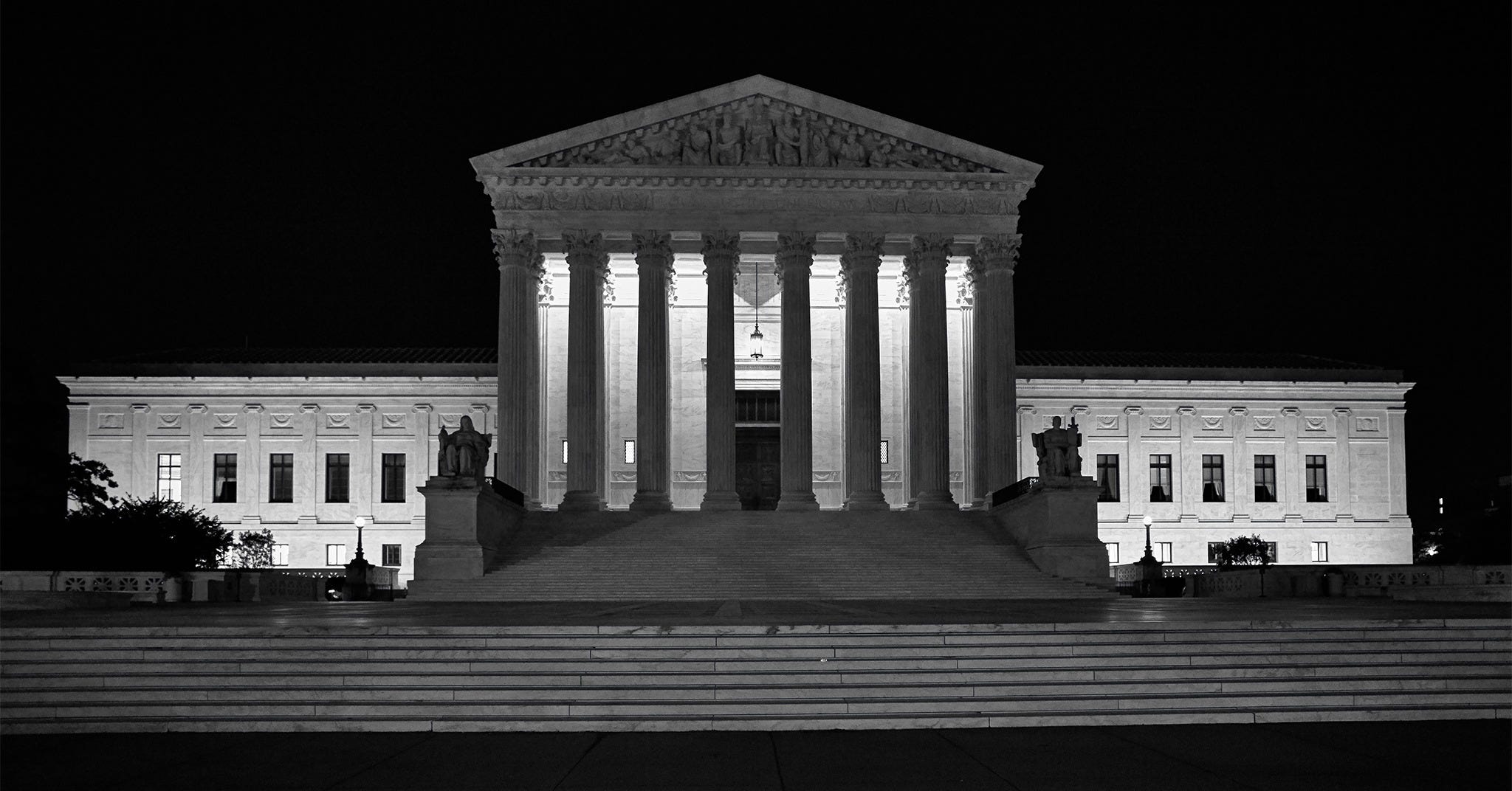
Something Has Quietly Changed
The Supreme Court is everywhere right now— abortion, guns, religion, LGBTQ rights, education, and race. It has been one high-stakes ruling after another, each treated as a separate flashpoint in America’s endless culture war.
However, beneath the noise, something more consequential is happening, something that barely registers in daily coverage.
The Supreme Court of the United States is doing less work than it used to. This year, there have been fewer cases, fewer full arguments, and fewer opportunities for public scrutiny. Yet, the cases it does choose to hear now carry outsized ideological weight, reshaping national policy in abrupt, destabilizing ways.
This isn’t just a conservative court versus a liberal one. It’s a court that has quietly changed how it defines its role. By shrinking its docket while concentrating on ideologically charged disputes — and increasingly resolving them through faster, less transparent procedures — the Court has transformed itself from a referee of legal conflicts into something closer to a cultural traffic controller.
That shift doesn’t announce itself with fireworks. It hums in the background, and because it’s structural — not tied to any single ruling — it’s easy to miss.
Yet its effects show up everywhere: in schools unsure which rules apply, in hospitals navigating legal whiplash, in states rewriting laws only to pause them weeks later. Ordinary Americans feel the instability long before they understand its source.
The story isn’t just what the Court is deciding. It’s how the Court has quietly reorganized its work, and why that matters to everyday life.
Want to Know Your Rights?
Download a free digital copy of the U.S. Constitution, the same document Trump is trying to bulldoze. Learn exactly what he’s breaking, and how to fight back.
100,000+ strong — and counting.
This holiday, become a paid subscriber for just $1 a week and help us keep the truth alive.
Join The Coffman Chronicle — $1/Week
The Shrinking Docket Nobody Talks About
For most of the 20th century, the Supreme Court decided well over 100 cases a year. The docket was crowded, technical, and often obscure, full of regulatory disputes, procedural questions, and narrow statutory interpretations that rarely made headlines but quietly kept the legal system functioning.
That world no longer exists.
Over the past two decades, the number of cases the Court hears and decides each term has dropped sharply. Recent terms have hovered around 60 to 70 full, argued cases, sometimes fewer. This decline isn’t driven by a lack of disputes or legal complexity. In fact, Americans file thousands of petitions asking the Court to intervene every year.
The difference is choice.
The Supreme Court is not required to hear most cases. It decides which disputes deserve its time, and which will be left to stand as decided by lower courts. When the docket shrinks, that discretion becomes more powerful, not less. Every case accepted represents a deliberate allocation of institutional attention.
See our recent reporting on the Supreme Court’s decision not to hear this case regarding book challenges.

Here’s the key point that often gets lost. A smaller docket doesn’t mean a less influential Court. It means a more selective one.
When an institution with near-total discretion chooses to hear fewer cases, each selection carries more weight. Each denial quietly shapes the law by default. Each acceptance signals priority.
What’s changed isn’t just the size of the docket. It’s what has replaced the missing cases, and how that shift concentrates political, cultural, and economic consequences into a narrower slice of judicial activity.
That concentration, and what it’s crowding out, is where the real story begins.
What Replaced the Missing Cases
When the Supreme Court hears fewer cases, the natural question isn’t just how many disappeared, but which kinds of cases took their place.
The answer is not subtle.
As the docket has contracted, a growing share of the Court’s attention has been consumed by a narrow band of ideologically charged disputes, such as abortion, gun rights, religion in public life, LGBTQ rights, race, and education. These cases don’t just arrive at the Court by accident. They are selected, elevated, and concentrated, increasingly defining the institution’s public identity.
Data backs this up. Analyses of recent terms show that so-called “culture war” cases now make up a significantly larger portion of the Court’s work than they did even a decade ago. What once appeared occasionally on the docket has become a recurring feature. It is not because the Court is busier, but because its limited time is being spent differently.
This is a critical distinction. The Court is not reacting to a flood of ideological disputes. It is choosing to resolve them, often at the expense of less visible but deeply consequential cases involving labor law, consumer protections, administrative governance, and regulatory stability.
In other words, the Court isn’t just deciding more controversial issues. It’s allowing those issues to crowd out the connective tissue of everyday law, the kinds of decisions that quietly determine how agencies function, how businesses comply with rules, and how workers and consumers navigate disputes without national headlines.
The result is a denser, sharper docket. There are fewer cases overall, but each one carries heavier cultural and political stakes. Where past Courts spread their authority across a wide range of narrow questions, the modern Court concentrates its power into decisions that reverberate immediately — and often explosively — across the country.
This concentration has consequences beyond ideology.
When legal disputes are filtered so aggressively toward culture-war flashpoints, the Court’s role subtly changes. It stops looking like an institution that manages the legal system as a whole and starts functioning as a selective arbiter of national identity conflicts, deciding which social battles get final answers and which areas of law are left to stagnate or fragment.
That shift doesn’t just affect activists or politicians. It affects anyone who relies on the law to be boring, predictable, and stable.
And it raises an uncomfortable question. If the Court is spending more of its shrinking docket resolving cultural disputes, what isn’t getting resolved at all?
Case Selection Is Power
By the time a Supreme Court case makes headlines, the most important decision has already been made—not the ruling, but the selection.
Unlike Congress, which must debate and vote in public, or the executive branch, which issues visible orders and regulations, the Supreme Court exercises one of its greatest powers almost entirely offstage: deciding which cases it will hear at all.
Each term, the Court receives thousands of petitions asking it to step in. It grants review to only a tiny fraction. Those denials rarely come with an explanation. They don’t trigger press conferences or cable news chyrons. However, they are not neutral acts. They are decisions, ones that determine which legal conflicts will be resolved nationally and which will be left to splinter across states and lower courts.
This is where the shrinking docket matters most.
When the Court heard more cases, its agenda-setting power was spread across a wider range of issues. No single dispute carried disproportionate weight. However, as the docket contracts, each grant of review becomes more consequential, and each denial more revealing.
What the Court chooses not to hear increasingly shapes the law just as much as what it decides.
A refusal to take a case allows lower-court rulings to stand, even when they conflict with one another, such as in the library case referenced above. That can leave entire regions operating under different legal rules, sometimes for years. In practical terms, this means rights, obligations, and protections can vary dramatically depending on geography rather than democratic choice.
Yet these outcomes rarely feel like decisions because they happen silently.
This invisibility creates a powerful illusion that the Court is merely responding to controversy, rather than actively structuring it. In reality, the Court is deciding which social conflicts are ripe for national resolution, and which will be left unresolved, ambiguous, or unstable.
That discretion becomes especially potent when paired with a docket dominated by ideologically charged cases. Selection itself begins to function as a form of governance, steering the direction of national debate without the accountability mechanisms that accompany legislation or regulation.
For the public, this power is hard to see because it doesn’t look like power. There is no vote count to analyze, no opinion to quote, no dissents to debate. There is only silence and the quiet accumulation of consequences.
Understanding this is key to understanding the Court’s current moment.
The Court isn’t just deciding landmark cases. It is curating the conflicts that define the legal landscape, determining which issues demand final answers and which can linger unresolved. As its docket grows smaller and more ideologically concentrated, that curatorial role becomes one of the most consequential — and least examined — sources of judicial power in American life.
The Rise of Speed, the Fall of Sunlight
If docket control determines what the Supreme Court decides, procedure increasingly determines how and how quickly those decisions take effect.
In recent years, the Court has relied more heavily on emergency rulings and expedited decisions that bypass the traditional rhythms of judicial review. These cases arrive late at night, move quickly, and are often resolved without full briefing, oral argument, or detailed explanation. The orders themselves can be brief, unsigned, and opaque, sometimes just a paragraph or two, with enormous consequences attached.
This shift is often described in technical terms, but its effect is simple: speed replaces deliberation.
Historically, major Supreme Court decisions followed a familiar path. Briefs were filed. Arguments were heard. Opinions were written, debated, and published months later. Dissents clarified disagreements. The public had time — imperfect but real — to understand what was happening and why.
Emergency rulings short-circuit that process.
They allow the Court to intervene immediately in active political and legal conflicts, freezing or reshaping policy before lower courts have finished their work. In some cases, these orders effectively decide the outcome long before a full hearing ever occurs. By the time a traditional decision arrives — if it does at all — the practical reality has already been set.
What makes this procedural shift especially significant is not just its speed, but its lack of transparency.
Emergency orders rarely explain the Court’s reasoning in detail. They often provide no guidance for lower courts, lawmakers, or the public about how similar cases should be handled going forward. Dissents, when they appear, sometimes offer more clarity than the orders themselves, but even those arrive too late to prevent immediate consequences.
This matters because procedure shapes power.
When decisions are made quickly and quietly, they are harder to scrutinize, debate, and challenge. Speed favors those already positioned to act, such as governments, agencies, or litigants prepared to move first, while leaving ordinary people, institutions, and communities scrambling to adapt.
In effect, the Court has created a second track of decision-making, one that operates alongside the traditional docket, but with fewer safeguards and far less visibility. Major policy questions can now be resolved in days rather than months, with minimal explanation and limited public awareness.
This isn’t a neutral evolution. It changes the balance between law and democracy.
A legal system depends not just on outcomes, but on predictability, on the ability of people and institutions to understand the rules before they are enforced. When rulings arrive suddenly, without clear reasoning, instability becomes a feature rather than a bug.
The Court may view speed as efficiency, but from the outside — from the kitchen table — it often looks like whiplash.
And when speed and invisibility combine with a shrinking, ideologically concentrated docket, the result is a Court that can reshape national policy faster than the public can process what just happened.
Kitchen-Table Consequences: Instability as Policy
For people who don’t follow Supreme Court procedure — which is most people — the Court’s recent behavior doesn’t feel like a legal evolution. It feels like chaos.
Rules change overnight, then change again. Laws take effect, are blocked, revived, paused, partially enforced, or left in limbo. Guidance shifts without explanation. Institutions are told to comply, then told to wait, then told nothing at all.
This isn’t a side effect. It’s the lived result of how the Court now operates.
When decisions are made through compressed timelines and opaque orders, the burden of uncertainty doesn’t fall on judges or justices. It falls on everyone else.
Schools are told one set of rules applies until it doesn’t. Administrators scramble to interpret rulings that arrive mid-semester, often without clear standards or timelines. Teachers are left enforcing policies they didn’t design and can’t fully explain, while parents argue over rules that may not survive the next emergency order.
Hospitals and clinics face legal whiplash that affects real patients. Providers must decide whether to act, delay, or deny care not on settled law but on the latest court signal, sometimes issued late at night and sometimes without clarity about how long it will last. In medicine, uncertainty isn’t abstract. It’s dangerous.
State and local governments are forced into reactive governance. Laws passed through legislatures are frozen or revived with little warning. Agencies are told to enforce policies one week and suspend them the next. Planning becomes guesswork. Compliance becomes provisional.
And for workers and families, the consequences are quieter but just as real.
Consumer protections, labor rules, housing standards, environmental safeguards — the unglamorous parts of law that quietly shape daily life — increasingly wait at the back of the line. While culture-war cases dominate the docket, these bread-and-butter disputes are delayed, fragmented across jurisdictions, or never resolved.
The result is a legal environment where predictability erodes.
People don’t need to read court opinions to feel this. They feel it when employers cite “pending litigation” to delay changes, when agencies issue guidance filled with caveats, and when local officials shrug and say they’re waiting to see what happens next.
Instability becomes normalized.
That normalization has a cost. Law is supposed to reduce uncertainty, allowing people to plan their lives, run businesses, raise families, and govern communities, with the expectation that the rules won’t change overnight without explanation.
However, when the Court focuses on high-stakes ideological disputes and resolves them through fast, opaque processes, it produces the opposite effect. The law stops feeling like a foundation and becomes a moving target.
This is the quiet paradox of the current moment. A Court that claims to favor restraint and tradition is presiding over one of the most disruptive legal environments ordinary Americans have experienced in decades.
It is not because it is acting too much, but because it is acting selectively, quickly, and without sufficient sunlight.
From the kitchen table, that doesn’t look like constitutional theory. It looks like uncertainty baked into daily life.
Why the Media Keeps Missing the Story
The Supreme Court has never generated more headlines, and rarely been less understood.
On paper, coverage is everywhere. Decisions are live-blogged. Opinions are summarized within minutes. Cable panels debate winners and losers. Push alerts announce outcomes in breathless bursts.
Yet the most important story about the Court’s transformation keeps slipping through the cracks.
That’s because most political journalism is built to cover events, not systems. A Supreme Court ruling is an event. A dissent is an event. A dramatic vote split is an event.
However, docket contraction, agenda control, and procedural acceleration are not events. They don’t arrive on a set date. They don’t offer a clean headline. They unfold gradually, through repetition and normalization, the hardest things for daily news cycles to capture.
As a result, coverage defaults to what’s visible: outcomes.
Each ruling is treated as a discrete battle in a broader culture war, stripped from the institutional context that made it possible. The Court appears reactive rather than directive, responding to controversy rather than shaping it. Readers are told what happened, but rarely why this keeps happening this way.
There’s also a more profound asymmetry at work.
The Supreme Court operates on a calendar and cadence that doesn’t align with modern media incentives. Case selection happens months before arguments. Emergency orders arrive without warning. Denials — often the most consequential acts — come without explanation at all.
Journalists can’t quote what isn’t said. They can’t analyze reasoning that isn’t written. Silence becomes unreportable. That silence is not accidental. It’s structural.
When power is exercised through refusal, speed, and opacity, it resists the tools journalism typically uses to hold institutions accountable. There’s no clear villain, no single moment to interrogate, no dramatic confrontation to anchor a narrative.
As a result, the story fragments. One week, it’s abortion. The next is guns, then religion, then education.
Each story feels urgent. None feels connected.
This fragmentation has consequences. It trains the public to experience the Court as a constant source of turbulence without understanding the mechanisms that produce it. Confusion replaces comprehension. Fatigue replaces scrutiny.
Over time, instability itself becomes normal, just “how things are now.”
That normalization is the Court’s quiet advantage. An institution doesn’t need secrecy to avoid accountability. It only needs complexity, speed, and a media environment trained to chase outcomes rather than interrogate structure.
The result is a paradox. The Supreme Court dominates political conversation, yet escapes sustained examination of how it actually wields power.
Until that changes, the most consequential shift in American law won’t be found in any single ruling. It will remain hidden in the space between headlines, where structure quietly shapes outcomes, and no one is assigned to watch the system itself.
This Isn’t a One-Term Problem
It’s tempting to treat the Supreme Court’s current behavior as a function of personalities, a product of who sits on the bench right now, or which ideological bloc holds the majority.
That explanation is comforting. It suggests the problem is temporary. Unfortunately, it’s wrong.
What has changed is not just the Court’s ideological balance. It’s the operating system the institution now uses to exercise power. Smaller dockets, heavier reliance on emergency procedures, and an agenda dominated by high-stakes cultural disputes are no longer anomalies. They are habits, and habits, once normalized, tend to persist.
Future Courts will inherit this structure whether they want to or not.
A justice appointed years from now won’t arrive to a blank slate. They’ll arrive in a Court where hearing fewer cases is standard, agenda-setting is more potent than deliberation, speed is an accepted substitute for explanation, and instability is treated as collateral damage rather than a warning sign.
Even a dramatic shift in ideology would not automatically reverse these trends. Institutions rarely abandon tools that expand their influence, especially tools that reduce scrutiny and accelerate outcomes. The incentives all point in one direction.
That’s what makes this moment different from earlier periods of judicial controversy.
In the past, fights over the Court were primarily about what it decided. Today, the more consequential fight is over how it decides what deserves a decision at all, and how much process the public gets before the consequences land.
Once power is exercised this way, expectations change. Legislators draft laws with emergency litigation in mind. Advocacy groups design cases for speed, not consensus. Lower courts anticipate intervention before complete records are built. The entire legal ecosystem adapts around the Court’s new tempo.
Reversing that momentum would require more than different outcomes. It would require a collective rethinking of restraint, transparency, and institutional responsibility, conversations that are rarely happening because the focus remains fixed on the subsequent ruling.
That silence is the real risk. A democracy can survive unpopular decisions. It struggles when foundational institutions quietly redefine their role without public understanding or consent.
If the Supreme Court’s transformation were loud, it would provoke debate. If it were sudden, it would spark reform. However, because it has unfolded gradually — case by case, order by order, denial by denial — it risks becoming permanent before most Americans realize anything fundamental has changed.
This isn’t about predicting collapse or assigning motives. It’s about recognizing durability.
The Court doesn’t need to announce a new doctrine to reshape American law. It only needs to keep doing what it’s doing now — quietly, selectively, and faster than the public can follow.
And unless that pattern is seen clearly, it won’t end with this term, this majority, or this generation of justices.
Seeing the Pattern Is the First Defense
The Supreme Court does not need to announce a constitutional revolution to transform American life. It only needs to keep doing what it is doing now— a smaller docket, heavier ideological concentration, faster decisions, less explanation, and minimal sunlight.
None of these moves, on their own, looks catastrophic. Each can be justified as efficient, discreet, or restrained. Yet taken together — repeated term after term — they amount to a quiet redefinition of how judicial power operates in a democracy.
This is how institutional change actually happens— not with declarations or coups, but with routines that slowly stop being questioned.
When people argue over individual rulings, the system keeps moving untouched. When outrage burns hot and fast, it burns out just as quickly. What endures is the structure — the procedures, incentives, and habits that determine which conflicts matter and how they are resolved.
That’s why pattern recognition matters.
Understanding how the Court selects cases, accelerates decisions, and limits explanation is not an academic exercise. It’s the difference between reacting to outcomes and recognizing mechanisms, between fighting the last ruling and understanding why the next one will arrive the same way.
Democracy doesn’t depend on everyone agreeing with the Court. It depends on people being able to see how power is exercised, so it can be debated, constrained, and — when necessary — corrected.
Right now, too much of that power moves in silence.
The danger isn’t that the Supreme Court decides controversial cases. It always has. The danger is that it increasingly decides which controversies deserve final answers, and does so through processes that outrun public understanding and accountability.
From the kitchen table, this doesn’t feel like constitutional theory. It feels like instability, shifting rules, and institutions that demand compliance without clarity.
Over time, it trains people to expect uncertainty as usual, to accept that the law is something that happens to them, not something they can understand or influence.
That is how democratic erosion becomes routine.
The first defense against that erosion isn’t outrage. It isn’t loyalty to one outcome or another. It’s clarity, the ability to step back, connect the dots, and recognize when an institution has changed its behavior in ways that demand scrutiny.
Once you see the pattern, you can’t unsee it, and once enough people see it, silence stops being an option.
Coffman Chronicle — Support Independent Media
This kind of reporting doesn’t come from press releases or talking points. It comes from slowing down, following the structure, and refusing to treat power as a series of disconnected headlines.
If this piece helped you see a pattern that daily coverage skips past, that’s the work.
Become a paid subscriber to support independent journalism that watches how institutions actually operate, and calls it out when the rules quietly change.
Independent media only works if readers decide it matters. If this did, help keep it going.
Sources:
Shadow Docket. Wikipedia
“Supreme Court Shadow Docket Tracker — Challenges to Trump Administration Actions.” October 21, 2025. Brennan Center for Justice
“What is the ‘Shadow Docket?’” February 26, 2024. Vox
“The Culture War Is Consuming the Supreme Court.” December 23, 2025. Vox
“The Supreme Court Just Handed Trump His Biggest Victory …” July 14, 2025. Vox
“Justice Jackson Warns the Supreme Court Is Manipulating …” June 9, 2025. Vox
“US Supreme Court Expands Its Emergency Docket.” October 2, 2025. Reuters
“Justice Jackson Emerges as Sharpest Critic on Supreme Court.” July 5, 2025. The Washington Post
The court is reshaping our country to their vision. A white, Christian, nation. Need term limits or more justices. The super majority makes decisions unfavorable to most Americans.
The current Unsupreme Court is no longer a high court as it was for most of American history. It’s a corrupt political body with a majority composed of grifters, religious extremists and neo-Fascists. The unholy 6 need to be arrested and tried for their crimes. I would relocate the 3 true justices to new quarters and then have the current building imploded.