

In 2025, the Creating a Respectful and Open World for Natural Hair (CROWN) Act was reintroduced in Congress, reigniting a national conversation about racial bias, workplace discrimination, and personal freedom. While many assume hair discrimination is a relic of the past, countless Black Americans still face barriers for simply wearing their natural hair in styles like afros, braids, locs, and twists.
Yet, despite these clear injustices, the bill continues to meet resistance from conservative lawmakers, corporate lobbyists, and even school districts. The question is: Why is protecting Black hair from discrimination so controversial? And why do some still cling to outdated, Eurocentric beauty standards in 2025?
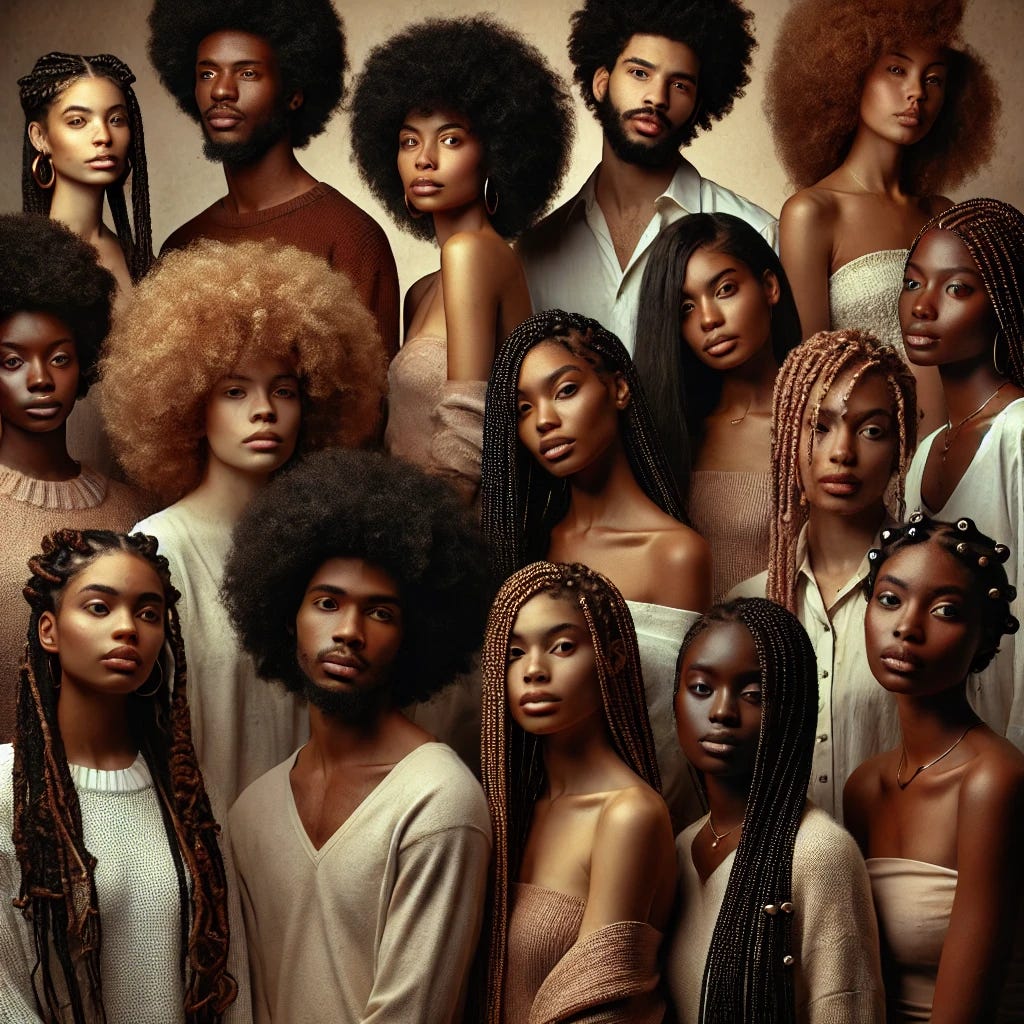
The Ugly History of Hair Discrimination in America
For centuries, Black hair has been policed, politicized, and punished. Enslaved Africans were often forced to shave their heads as a means of stripping them of their cultural identity. The 18th-century Tignon Laws in Louisiana even required Black women to cover their hair in public, an attempt to suppress their self-expression and social status.
Fast forward to today, and this racist policing of Black hair continues under the guise of "professionalism" and "dress codes."
Corporate America has long labeled natural Black hairstyles as unkempt or unprofessional, as if straightened hair somehow makes one more competent.
Schools have punished Black students for wearing their natural hair, barring them from sports teams, graduations, and even classrooms.
The U.S. military only recently updated its policies to allow natural hairstyles after decades of restrictions that disproportionately targeted Black service members.
"I was told in a job interview that my afro was 'too wild' and that I should consider straightening it," recalls Maya Johnson, a graphic designer from Atlanta. "I thought I was there to talk about my skills, not my hair."
This is why the CROWN Act matters. It is not just about hair but civil rights, racial justice, and basic human dignity.
Why We Need the CROWN Act NOW
Federal anti-discrimination laws do not explicitly protect Black Americans from hair-based discrimination. Courts have repeatedly ruled against Black plaintiffs, arguing that hairstyle is a "mutable characteristic" rather than an inherent racial trait. This legal loophole gives businesses and schools the green light to punish people simply for how their hair naturally grows.
The CROWN Act closes this loophole by legally defining race-based hair discrimination as a form of racial bias. While 24 states have already enacted the law, we need federal protections to ensure every Black American is protected, no matter where they live.
The Real-Life Harm of Hair Discrimination
If you think hair discrimination is a minor issue, consider these disturbing cases:
Chastity Jones (2010) – She was offered a job in Alabama, only to be told she had to cut her locs because they were deemed "messy." When she refused, the job offer was rescinded. Her case reached the Supreme Court, but in 2018, the justices declined to hear it—leaving this injustice unchallenged.
Hair discrimination isn’t just about perception—it has real consequences. Black women are 1.5 times more likely to be sent home from work simply because of their hair (Dove/LinkedIn 2023 Study). No one should have to choose between their job and their identity.
Andrew Johnson (2018) – A Black high school wrestler in New Jersey was forced to cut his locs on the spot or forfeit his match. A referee publicly humiliated him in front of a gym full of spectators. The video of him having his hair chopped off in tears sparked national outrage.
This isn’t just an occasional issue—1 in 2 Black children have already experienced hair discrimination by the age of five (CROWN Coalition Study). How can we claim progress when even kindergartners are punished for their natural hair?
DeAndre Arnold (2020) – A Texas high school banned him from walking at graduation unless he cut his locs—despite his hairstyle being essential to his cultural and family heritage.
"I worked hard for my diploma, just like everyone else. But I was told I couldn't walk across the stage because of my hair," DeAndre said. "That’s not fair, and it’s not right."
These are not isolated incidents. They reflect a deeply ingrained system of racial bias that continues to harm Black communities.
Who Opposes the CROWN Act—and Why?
Despite its clear purpose, the CROWN Act faces opposition from Republican lawmakers and corporate interests. Their arguments are both weak and dangerous:
"It's Unnecessary" – Some conservatives argue that existing anti-discrimination laws already provide protection. This is false. Courts have repeatedly ruled against Black plaintiffs in hair discrimination cases, proving current laws are insufficient.
"It's a Distraction" – Representative Jim Jordan (R-OH) dismissed the CROWN Act as a "distraction" from "more important issues." But tell that to Black Americans who have lost jobs, been harassed, and been denied opportunities over their hair.
"Businesses & Schools Should Set Their Own Grooming Standards" – Opponents claim that employers and schools have the right to establish "professional" grooming policies. But let’s be clear: “Professionalism” has long been weaponized against Black workers and students.
Senator John Kennedy (R-LA) even called the bill "unnecessary federal overreach." But when dress codes disproportionately target and exclude Black people, that’s not about professionalism—that’s about racism.
Why We Must Demand Federal Protection
The CROWN Act has passed the House multiple times but continues to stall in the Senate. Advocates insist that a federal law is crucial to:
Ensure consistent protections across all 50 states
Set a legal precedent for future discrimination cases
Send a powerful message that racial bias in grooming policies is unacceptable
The Deeper Psychological & Cultural Impact
For many Black people, hair is more than just hair—it symbolizes identity, pride, and resistance.
"I grew up thinking my natural hair was ugly because of what society taught me," says Aisha Benton, a teacher from Chicago. "The CROWN Act isn’t just about laws—it’s about changing mindsets."
The pressure to conform to Eurocentric beauty standards creates profound psychological harm, leading to self-doubt, cultural disconnection, and mental health struggles.
This is not just a legal fight. This is a human rights issue.
Conclusion: The Fight is Far From Over
At its core, the CROWN Act is about dignity, equality, and the right to exist freely.
As long as Black individuals continue to be punished, humiliated, and denied opportunities to wear their hair naturally, this fight remains essential.
The question now is: Will Congress finally do the right thing? Or will Black Americans continue to face discrimination over something as fundamental as their natural hair?
The CROWN Act is a litmus test for racial justice in America. We must keep pushing, fighting, and demanding that Black hair be treated with the respect and freedom it deserves.
You power the Coffman Chronicle—no billionaires, no corporate overlords. Help us expose the BS, deliver sharp insights, and keep you informed.
You can fuel the fight and join the movement for just $8 a month or $80 a year.
Not ready to subscribe? No worries, chaos loves company, and you're always welcome.
Bibliography:
Dove & LinkedIn. (2023). CROWN 2023 Workplace Research Study. Dove/LinkedIn. https://www.dove.com/us/en/stories/campaigns/the-crown-act.html
Wikipedia. (2022). CROWN Act of 2022. Wikipedia. https://en.wikipedia.org/wiki/CROWN_Act
NPR. (2025, March 12). Congress reignites a bipartisan effort to ban hair discrimination. NPR. https://www.npr.org/2025/03/12/nx-s1-5324544/crown-act-reintroduced-2025
NPR. (2024, May 3). Dems reintroduce CROWN Act legislation to ban nationwide hair discrimination. NPR. https://www.npr.org/2024/05/03/1248709182/crown-act-legislation-congress-hair-discrimination
The Guardian. (2019, September 18). Referee who forced wrestler to cut dreadlocks banned for two years. The Guardian. https://www.theguardian.com/sport/2019/sep/18/wrestling-referee-dreadlocks-suspended-alan-maloney
Vox. (2018, April 18). A Black woman lost a job offer because she wouldn't cut her dreadlocks. The court says that's legal. Vox. https://www.vox.com/2018/4/18/17242788/chastity-jones-dreadlock-job-discrimination
NPR. (2018, December 27). After H.S. wrestler told to cut his dreadlocks or forfeit, adults come under scrutiny. NPR. https://www.npr.org/2018/12/27/680470933/after-h-s-wrestler-told-to-cut-his-dreadlocks-or-forfeit-adults-come-under-scrut
Allure. (2018, May 24). Why the Supreme Court will not be hearing the case about a woman denied a job because of her locs. Allure. https://www.allure.com/story/supreme-court-locs-racial-discrimination-lawsuit
Houston Chronicle. (2025, March 14). NAACP Legal Defense Fund files amicus brief in Darryl George, Barbers Hill case. Houston Chronicle. https://www.houstonchronicle.com/news/houston-texas/article/darryl-george-naacp-legal-defense-barbers-hill-20221534.php
Associated Press. (2024, September 30). A Black man says a trucking company fired him because he wouldn't cut off his dreadlocks. Associated Press. https://apnews.com/article/0591951c92af38afc4c7bcbca71aea15
The chemicals used to straighten our hair are toxic carcinogens.
I agree about the many faces of racism and elitism. A whole lot of white folks would love to turn back the clock to the colonial days when Europoids enslaved or otherwise subjugated the entire world, including the think-they-white Clarence Thomases out there. Unfortunately for these Never-Never-Landers, many of us the world over are very much WOKE, interconnected, educated, colorful, powerful, and pissed. I sincerely believe (pray) that we not goin' back to sleep. Your article is pertinent to this thread. I'm just saying that right now, at this moment, we face an existential threat. For me, hair is not in the top 10 of MY most pressing concerns.