


The cuckoo clock hated Tuesdays. That was the day the Bell siblings learned they would have to share it.
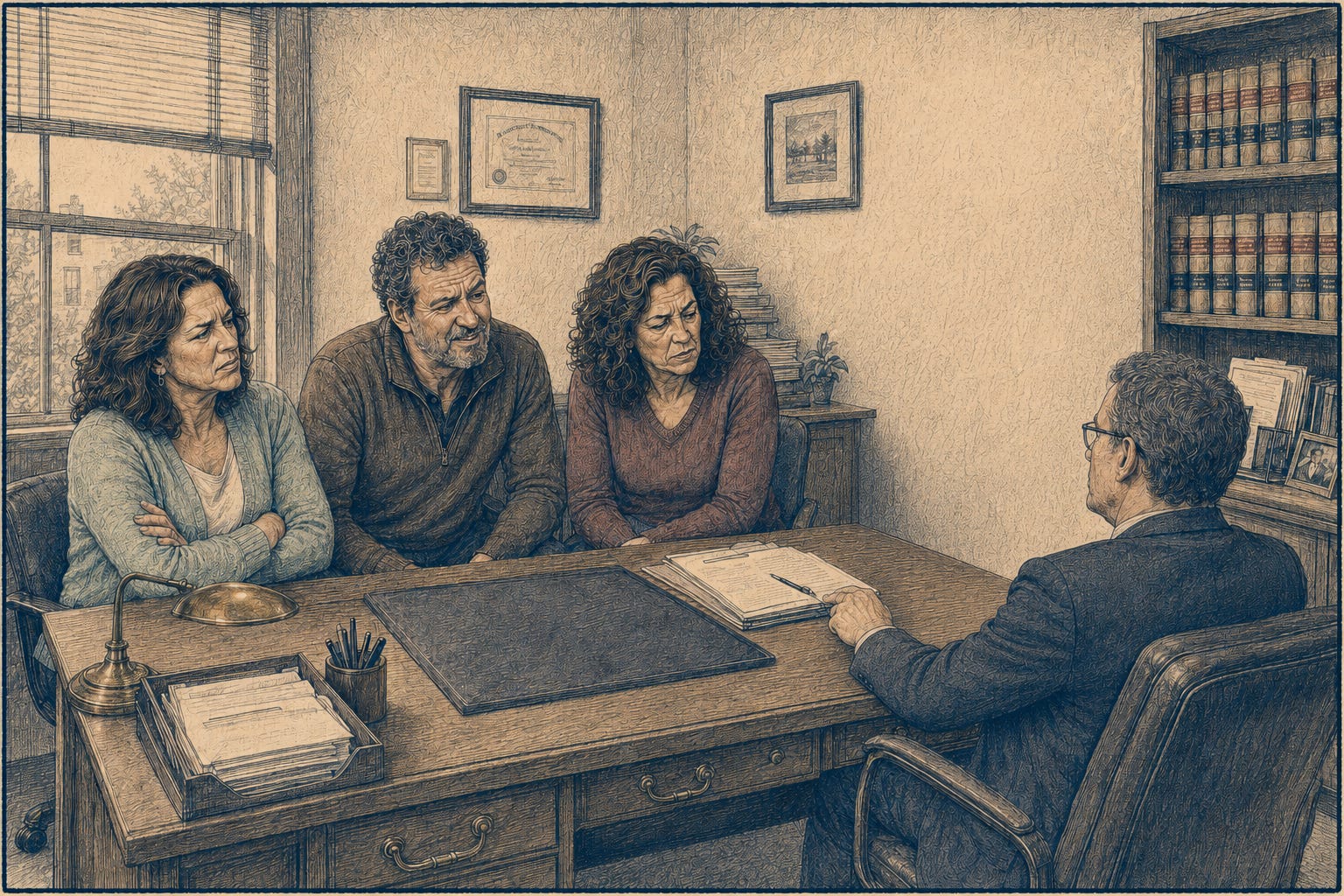
When the Bell siblings gathered to divide their mother’s belongings, the process went surprisingly well.
Mara took the china. Eddie took the tools. Louise took the lake painting everyone politely called “peaceful,” although the clouds looked like they were planning a murder. Then the attorney reached the final item on the inventory, the cuckoo clock.
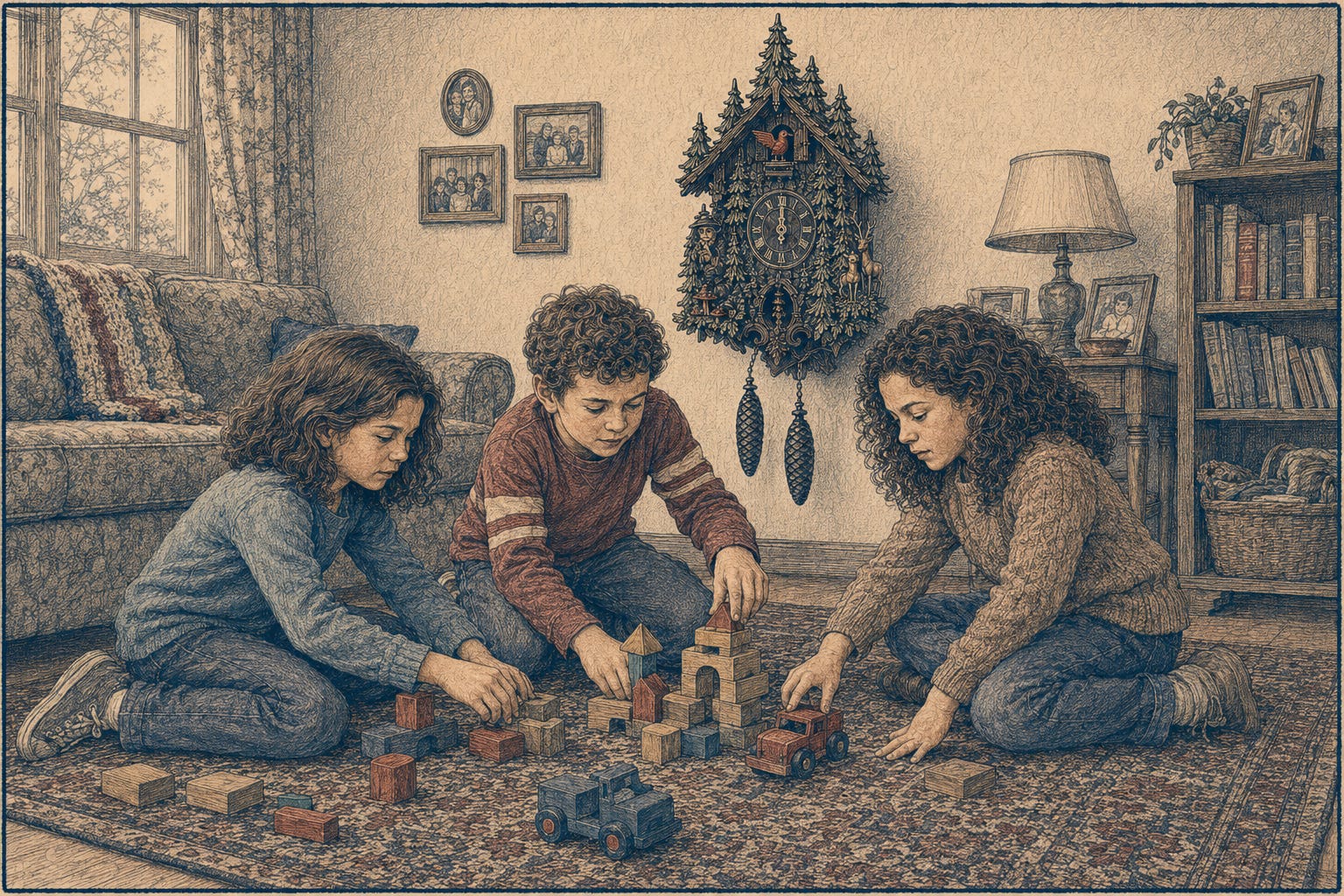
It stood nearly three feet tall and was crowded with carved pine trees, deer, mushrooms, and one deeply unsettling woodsman who appeared to have been hiding something since approximately 1890. Two iron pinecones hung from long chains beneath it. Every hour, a red wooden bird burst through a tiny door and announced the time with the urgency of someone reporting a kitchen fire.
“The clock is to be shared equally,” the attorney said.
Eddie studied it. “Does that mean we each get one foot?”
“No,” Mara replied. “And you’re not touching the saw.”
Their mother had inherited the clock from their grandfather, who had inherited it from somebody nobody could quite remember. It had spent decades hanging in hallways and dining rooms, surviving moves, children, dogs, Christmas parties, and one family reunion during which Uncle Raymond reportedly tried to make the cuckoo announce happy hour.
Nobody particularly liked it, but everybody remembered it.
Listen to The Fence
Put on a pair of headphones if you can. Let the evening light settle across the wire and see where the story carries you.

Listen first. Decide afterward.
Because Mara lived closest, the clock went home with her first. She lasted nine days. The cuckoo startled her awake at midnight, interrupted telephone calls, and once caused her to drop an entire bowl of potato salad.
On the tenth day, Mara placed the clock in a large gift box and drove to Eddie’s house. “I brought you something from Mom’s estate.”
Eddie eyed the box. “Is it the clock?”
“No.” The clock cuckooed from inside. Mara left before he could hand it back.
Two weeks later, Eddie offered to water Louise’s plants while she was out of town. When she returned, the clock was hanging in her kitchen with a handwritten note beneath it. IT REALLY BRINGS THE ROOM TOGETHER.
Louise returned it to Mara inside a vacuum-cleaner box. “You said your vacuum was getting old,” Louise explained. The cuckoo announced four o’clock. “I hate this family,” Mara said.
The Clock Changes Hands
For the next several months, the clock moved from house to house like an ugly wooden exchange student.
Mara left it buckled into Eddie’s passenger seat.
Eddie hid it beneath a blanket in Louise’s guest room.
Louise delivered it to Mara with a tag reading: FAMILY HEIRLOOM—HANDLE WITH GUILT.
Nobody wanted to destroy the clock. Each sibling considered himself or herself a reasonably responsible adult. They simply wanted someone else to be responsible for it, so they cared for the clock just enough to avoid becoming the person blamed if anything happened.
Then Sunday dinner happened.
Louise arrived at Mara’s house carrying the clock under one arm. “No,” Mara said before Louise reached the door.
“It’s your turn.”
“I had it last.”
“You left it in my laundry room.”
“I thought it needed washing.”
Eddie stepped between them. “Let’s handle this like adults.” Louise handed him the clock.
Eddie immediately handed it to Mara. Mara pushed it toward Louise. Louise grabbed the wooden case while Eddie caught one of the dangling weights. Mara reached for the other before it struck her dining table.
For several seconds, all three siblings held a different part of the clock while loudly explaining why somebody else should take it. Then Eddie stepped backward. The chain slipped through his fingers. One iron pinecone swung beneath the clock and struck Mara’s chair. Louise lost her grip. Mara grabbed for the wooden case.
The clock fell facedown onto the hardwood floor. The glass cracked. A wooden deer lost an antler. The little cuckoo door opened slowly. “Coo,” the bird said weakly before it collapsed forward as though it had lost the will to live.
Nobody spoke. “Well,” Eddie finally said, “now we actually can divide it into thirds.”
Mara stared at the wreckage. “We did this.”
“You did most of it,” Louise said.
“All three of us did this,” Mara replied. “We’re getting it repaired.”
The following Saturday, the siblings carried the clock into Alvarez Clock Repair. This time, they wrapped the wooden case carefully in a blanket.
Mr. Alvarez, the clockmaker, examined the damage. “Who transported this with the weights still attached?” All three siblings pointed at one another.
Mr. Alvarez sighed. He removed the back panel and began inspecting the gears. After a moment, he stopped. “There’s something in here.” He reached behind the clockworks and pulled out a small metal box wrapped in a yellowed handkerchief. “This isn’t part of the clock,” he said.
He handed it to Mara. Eddie and Louise moved closer as she opened it.
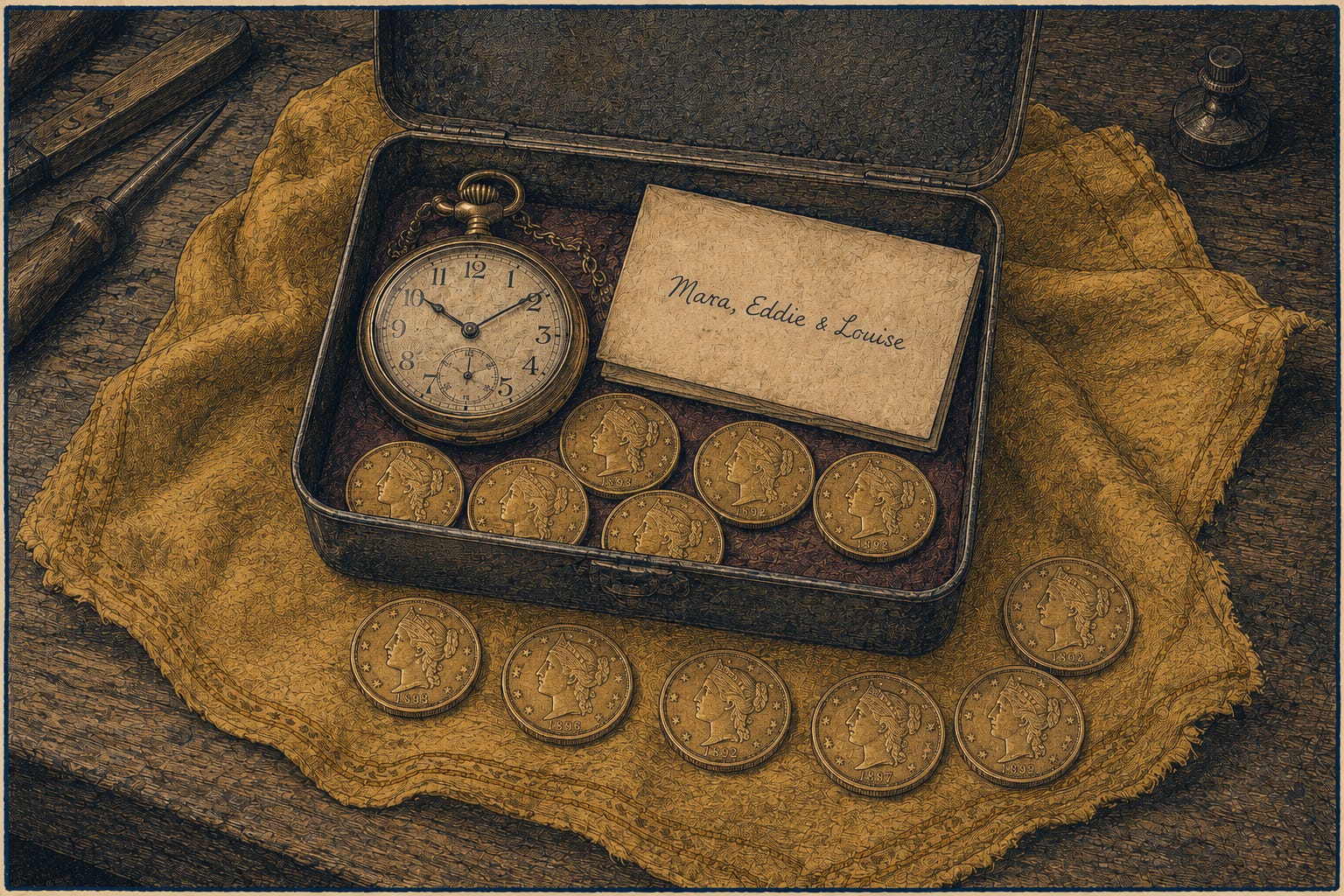
Inside were twelve gold coins, their grandfather’s pocket watch, and a folded note addressed to all three of them. For once, nobody made a joke.
Mara unfolded the note and read aloud. “I hope you found this while cleaning the clock. However, knowing the three of you, I suspect somebody dropped it.” Mr. Alvarez turned away, unsuccessfully hiding a smile.
Mara continued. “The coins and the watch are valuable, but they are not the lesson. We do not always understand the worth of what has been entrusted to us. Care for things before you know what they can give you. That includes old clocks, family stories, and especially one another.”
At the bottom, their grandfather had added one final sentence. “Also, I know the clock is ugly. Your grandmother picked it.”
The three siblings laughed. Then the laughter faded.
For months, they had treated the clock as a burden to be transferred rather than an inheritance to be protected. They had possessed it without really accepting responsibility for it. Each had kept it safe enough to avoid blame but never carefully enough to deserve the word *care*.
The gold made the lesson obvious, but Mara realized the coins were almost beside the point. The clock had been valuable before they opened the box, not because it was beautiful, and certainly not because it was quiet. It was valuable because someone before them had carried it long enough for it to reach them. Someday, if they did their job properly, it would reach somebody else.
They used part of the money to pay for the repairs. Then the siblings sat at Mara’s kitchen table and, for the first time, made an actual plan. The clock would spend one year in each sibling’s home before moving to the next. Whoever had it would be responsible for ordinary maintenance. If it needed repair, they would split the cost. Nobody would secretly relocate it inside a vacuum-cleaner box.
Louise insisted that the last provision was unnecessarily specific. It remained in the agreement.
Mr. Alvarez also gave them written instructions for transporting the clock safely. At the top, in large letters, he had written: REMOVE THE WEIGHTS FIRST.
Years passed. Their children grew old enough to hear the story of the clock, the coins, and the three adults who had nearly destroyed a family heirloom while arguing over who should care for it.
Eventually the clock became less of a possession and more of a family assignment. Every year somebody carried it. Every year somebody complained about it. Every year somebody wound it.
The clock remained ugly, the cuckoo remained loud, and the woodsman remained suspicious, but the Bells cared for it, not because they expected to discover another box of gold, but because they finally understood something their grandfather had apparently learned long before them. Inheritance is not simply receiving what earlier generations leave behind. Sometimes inheritance means accepting responsibility for something you did not build, did not choose, and may not even particularly like.
You repair what is damaged. You preserve what still works. You write down what the next person needs to know, and you try to leave it in better condition than you found it.
Whenever the clock changed houses, the receiving sibling eventually developed the same habit. “I’ll take good care of it,” they would say. Then somebody would point to the wooden deer and add: “Just remember, the antler was already broken.”
Every family has something nobody particularly wanted, but everybody remembers.
What is it in yours?
Tell us in the comments, and if you know which relative would have hidden the clock in a vacuum-cleaner box, send them this story.
New stories arrive every Monday. Subscribe so the next one finds you.
What a lovely story!!!
Very touching story. It makes you realize that you don't know what you've got until it's gone.