


Count the Signs
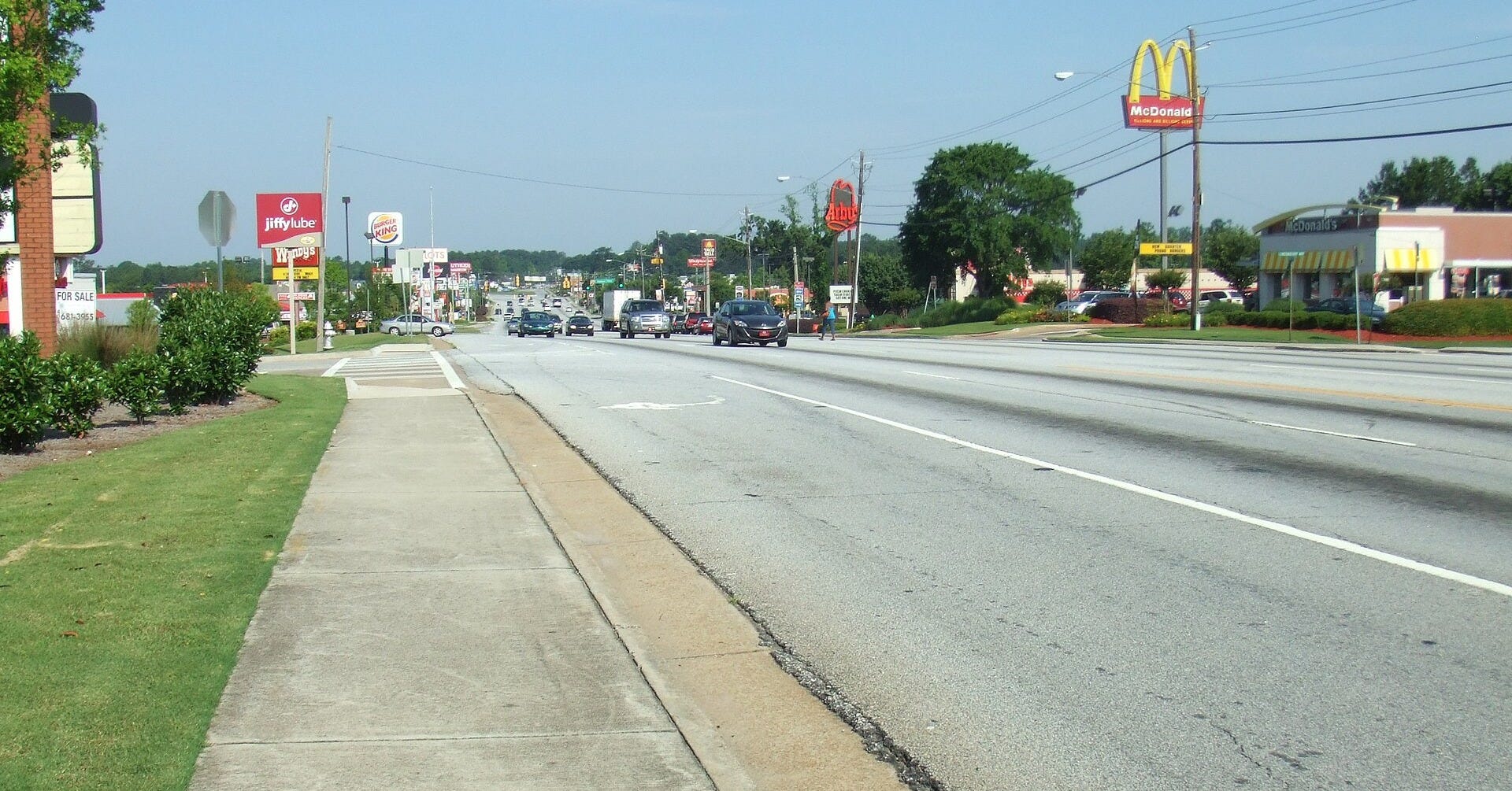
Drive down almost any commercial strip in America and count the restaurants. There is a Dunkin’ near a Subway, an Arby’s across from a Burger King, and a Taco Bell down the road from a KFC. Maybe there is a Buffalo Wild Wings, an Applebee’s, a Jimmy John’s, a Cinnabon in the mall, and a LongHorn Steakhouse near the interstate.
From the driver’s seat, that looks like fierce competition: different signs, different menus, and different companies fighting for the same twenty-dollar bill. Look above the signs, though, and the picture gets smaller.
America still has thousands of independent restaurants and genuinely competing companies, but many familiar chains belong to larger corporate families, some of which sit inside even larger investment portfolios. The food moving into those restaurants can also pass through concentrated processing and distribution industries customers rarely see. The restaurant economy is more interconnected than it looks from the parking lot.
This Community Is Powered by You
What started as a small circle has grown into something much bigger, and it’s all because of readers like you.
Every time you forward this email, post it on socials, or bring someone new into the fold, you’re helping build one of the most passionate, independent communities out there.
Want to keep the momentum going?
Share this newsletter with someone who should be part of this conversation.
Thank you for being here. It means everything.
The Signs Are Different. The Owners Are Fewer.
Roark Capital offers one of the clearest examples. Roark’s portfolio includes Inspire Brands, and Inspire alone includes Dunkin’, Arby’s, Sonic, Buffalo Wild Wings, Jimmy John’s, and Baskin-Robbins. Roark’s portfolio also includes Subway, CKE Restaurants, the company behind Carl’s Jr. and Hardee’s, and GoTo Foods, whose brands include Auntie Anne’s, Carvel, Cinnabon, Jamba, McAlister’s Deli, Moe’s Southwest Grill, and Schlotzsky’s. Roark also lists restaurant investments including Culver’s, Dave’s Hot Chicken, and Miller’s Ale House.
One investment firm can therefore have interests stretching across coffee, sandwiches, burgers, chicken, ice cream, pretzels, smoothies, and casual dining.
Roark is not the only example. Restaurant Brands International owns Burger King, Popeyes, Firehouse Subs, and Tim Hortons. Darden owns Olive Garden, LongHorn Steakhouse, Cheddar’s Scratch Kitchen, Yard House, Ruth’s Chris Steak House, The Capital Grille, Chuy’s, Seasons 52, and Eddie V’s. Dine Brands owns Applebee’s, IHOP, and Fuzzy’s Taco Shop. Yum! Brands completed its sale of Pizza Hut on September 1, leaving KFC, Taco Bell, and Habit Burger & Grill as its restaurant brands.
This is not some obscure corner of the economy. Technomic reported that the 500 largest restaurant chains generated $437 billion in U.S. sales in 2024, accounting for more than 60% of all U.S. restaurant-industry sales.
The market still contains enormous variety. The ownership structure shows that variety of signs is not necessarily the same as variety of ownership.
That Does Not Mean They Are All the Same Company
A Dunkin’ is not suddenly an Arby’s because both sit under Inspire Brands. Burger King and Popeyes still compete for customers. Olive Garden and LongHorn have different menus, managers, and strategies. Different brands under the same parent can compete with one another for locations, franchisees, and consumer spending.
Many chain restaurants are also not owned day to day by the corporation whose name appears farther up the organizational chart. They are franchises.
The person who owns the local restaurant may be an independent business operator who signed the lease, borrowed the money, hired the staff, and worries about whether enough customers come through the door on Friday night. Inspire describes its system as including hundreds of thousands of company and franchise team members, while Subway says its restaurants are owned and operated by thousands of franchisees and small-business owners.
Ten different signs do not secretly represent one restaurant. The point is to see the entire structure behind them.
A local business may be independent in one sense while operating inside a much larger system that controls the brand, menu requirements, technology, advertising, approved products, remodeling standards, and other rules.
Franchising has created enormous opportunities for entrepreneurs and helped successful concepts spread across the country. The question is where the power and the risk actually sit.
The Local Owner Still Carries the Risk
A franchise can give a local owner something extraordinarily valuable: a name customers already recognize. It can also place that owner inside a system he or she did not write.
The franchisee may put substantial personal capital into the restaurant, borrow money, employ dozens of people, and carry the consequences if sales collapse. The brand organization above that owner may control standards that determine how the business operates.
That relationship is not automatically unfair. The brand has an investment to protect as well. If one restaurant serves terrible food under a national name, every other operator under that sign can suffer.
Scale, however, changes bargaining power. A local operator negotiating with a corporation overseeing thousands of restaurants is not negotiating as an equal-sized institution. As more brands are absorbed into larger corporate and investment portfolios, it is reasonable to ask whether independent operators still have enough alternatives to discipline the systems above them.
Then Follow the Food
Now walk through the kitchen door. Corporate concentration above the restaurant is one issue. Concentration in the food system below it is another. They should not be confused, and we should not assume that restaurants sharing an investment owner necessarily share the same chicken processor, lettuce supplier, or distributor.
The second system deserves attention for the same reason as the first: scale can place more economic activity behind fewer decision points.
Consider meatpacking. The U.S. Department of Agriculture reported in 2024 that the four largest meatpackers handled 85 percent of steer and heifer purchases and 67% of hog purchases.
See our recent reporting on beef consolidation here:

Food distribution has raised similar concerns. In 2015, the Federal Trade Commission went to court to stop Sysco from acquiring US Foods. The FTC said the combined company would have controlled about 75% of the national market for broadline distribution services to large national customers. A federal judge blocked the deal, and Sysco abandoned it.
Those numbers do not tell us who supplied the hamburger you ate last Tuesday, but they show that apparent diversity at the counter can rest on narrower systems upstream.
One Bad Ingredient Can Travel a Long Way
Food safety makes the consequences of scale easy to understand, and Americans are watching an example unfold right now.
Federal health officials are investigating a massive 2026 outbreak of Cyclospora infections linked to processed iceberg lettuce sourced from central Mexico and recalled by Taylor Farms de Mexico. FDA traceback identified Taylor Farms de Mexico as the supplier of shredded iceberg lettuce used at Taco Bell locations where sick people had eaten. As of August 27, the FDA had associated 11,458 illnesses in 20 states with the outbreak, including 495 hospitalizations and two deaths. The investigation remains ongoing.
Taylor Farms voluntarily recalled all iceberg lettuce sourced from central Mexico on July 17th. Confirmed distribution of the recalled food-service lettuce reached more than 30 states, and the FDA warned it may have traveled farther. Taco Bell stopped using lettuce from Taylor Farms de Mexico the same day. The FDA now says the recalled lettuce should no longer be available in restaurants or stores.
The FDA has not reported a confirmed positive product sample for Cyclospora. An initially reported positive test was later determined to be a false positive. The agency says its epidemiological evidence and traceback investigation nevertheless continue to converge on the recalled Taylor Farms lettuce.
That uncertainty is part of the larger point. A food-safety investigation involving one supplier can suddenly involve thousands of illnesses, dozens of states, a national restaurant chain, federal regulators, foreign growers, and an enormous recall. The restaurant where someone ate may be the most visible part of the system, but the source of the risk can sit hundreds or thousands of miles away.
The same scale appeared in another 2024 case, when BrucePac recalled about 11.8 million pounds of ready-to-eat meat and poultry products because of possible Listeria contamination. Those products had traveled through other establishments and distributors into restaurants, schools, and institutions nationwide, with some recalled ingredients incorporated into other finished products.
A failure no longer has to remain attached to one recognizable package, one restaurant, or one town. In a national supply network, it can move.
The US is currently over 400 food recalls. See our recent reporting here:

Efficiency Has a Flip Side
Large processors and distributors can make food safer. They can afford testing laboratories, sanitation systems, professional quality-control teams, sophisticated tracking technology, and standardized procedures that smaller operations may struggle to match. They can lower costs, keep thousands of restaurants supplied, and create consistency in a system feeding hundreds of millions of people.
Concentration produces real benefits. The tradeoff is that the same network that lets one supplier reach thousands of restaurants can also let one supplier’s failure reach thousands of restaurants.
Efficiency asks how smoothly a system works when everything goes right. Resilience asks what happens when something goes wrong.
A Free Market Requires Somewhere Else to Go
That is where the restaurant signs, franchise systems, and food suppliers connect. A healthy market needs alternatives.
For a customer, that means another restaurant offering a better meal or price. For a worker, it means another employer competing for labor. For a franchisee, it means another business system worth investing in. For a farmer or food manufacturer, it means another major buyer. For a restaurant chain facing a contamination problem, it means another qualified supplier capable of replacing the one that failed.
Competition is not merely the number of logos visible from the highway. It is the existence of meaningful alternatives when somebody says no. The more concentrated the system becomes, the more important it is to know whether those alternatives still exist.
The Square New Deal Test: Concentration Has to Earn Its Benefits
The Square New Deal does not require government to decide how many burger companies America should have or which distributor should carry the french fries. It also does not begin with the assumption that every large company should be broken apart.
Scale can be productive. Consolidation can reduce costs. Large businesses can invest in technology, safety, and logistics that smaller businesses cannot. Those benefits are real, but concentration has to keep earning them.
Congress and the agencies operating under laws Congress writes should be able to ask whether markets remain genuinely competitive, whether new competitors can still enter, whether franchisees and suppliers retain meaningful bargaining alternatives, whether food-safety inspection capacity has kept pace with the scale of the system, and whether critical supply chains have become so narrow that one failure can create national consequences.
That is sufficient government: not choosing the menu, but preserving the conditions under which private markets can continue doing their job.
The Square New Deal measures concentrated private power for the same reason it measures concentrated public power. Power can be useful, and concentration can sometimes make institutions more capable. The test is whether the people living underneath that power still have protection, accountability, and somewhere else to go.
Want to know more about the Square New Deal? Read here:

Look Again at the Signs
Drive down that same commercial strip again. Dunkin’ is still selling coffee. Subway is still making sandwiches. Burger King and Taco Bell are still fighting for lunch customers. Olive Garden and LongHorn are still different restaurants. The choices are real, but they are not the whole picture.
Behind the signs are franchise owners, corporate parents, and investment firms. Behind the kitchens are distributors, processors, farms, and manufacturers. Some of those systems are enormous while some are concentrated. All of them depend on rules, competition, and food-safety institutions that most customers will never see.
A system capable of feeding millions of people cheaply and consistently should be judged not only by how efficiently it performs on an ordinary Tuesday, but by whether competition survives, smaller participants retain meaningful choices, and the system can absorb a failure without sending the consequences across half the country.
The next time you pass a row of restaurant signs, count them, and then look past them. A competitive market should not merely look competitive from the highway. It should remain competitive and resilient from the investor to the restaurant counter to the farm that supplied the food.
Support the Coffman Chronicle
The Coffman Chronicle exists to look past the signs, slogans, and easy explanations and ask who holds the power, who carries the risk, and whether the rules are still working for the people living underneath them.
If you believe independent journalism like this matters, please subscribe, share this article, and help us keep building the Square New Deal conversation.
And if you can afford it, consider becoming a paid subscriber. Your support helps make this work possible.
Sources:
Darden Restaurants. “Our Company.” Accessed September 2, 2026.
Dine Brands Global. “Dine Brands — Restaurant Companies.” Accessed September 2, 2026.
Federal Trade Commission. “FTC Challenges Proposed Merger of Sysco and US Foods.” February 19, 2015.
Inspire Brands. “People.” Accessed September 2, 2026.
MacDonald, James M. “Concentration in U.S. Meatpacking Industry and How It Affects Competition and Cattle Prices.” Amber Waves. U.S. Department of Agriculture, Economic Research Service. January 25, 2024.
Restaurant Brands International. “Overview.” Accessed September 2, 2026.
Roark Capital. “Current Investments.” Accessed September 2, 2026.
Subway. “Subway Selects PepsiCo as Its Beverage Partner in the U.S.” March 19, 2024.
Technomic. “Top 500 Chain Restaurant Sales Growth Slows to 3% in 2024, per Technomic’s Annual Report.” April 17, 2025.
U.S. Department of Agriculture, Food Safety and Inspection Service. “BrucePac Recalls Ready-to-Eat Meat and Poultry Products Due to Possible Listeria Contamination.” October 9, 2024. Updated November 12, 2024.
U.S. Food and Drug Administration. “Investigation of Multistate Outbreak of Cyclospora Illnesses: Iceberg Lettuce (July 2026).” Updated August 27, 2026.
Yum! Brands, Inc. “Yum! Brands Completes Sale of Pizza Hut to LongRange Capital.” September 1, 2026.
Sounds like America. Uncontrolled capitalism and the creation of monopolies. With a monopoly the corporate heads control our choices. If they control our choices they control our money. And, that goes one way into their greedy pockets.
Thank you for researching and distributing your findings in articles like this. I can't often stop to read and absorb them, but when I do, I always learn a lot and it makes me a better consumer and a better voter.