


Late this year, with the holidays approaching, a new immigration enforcement plan quietly took shape at the U.S. southern border. Its name, Operation Irish Goodbye, is an ironic twist on a slang phrase for slipping out of a party without saying goodbye. This time, the joke is on migrants who believed they could leave the United States of their own accord.
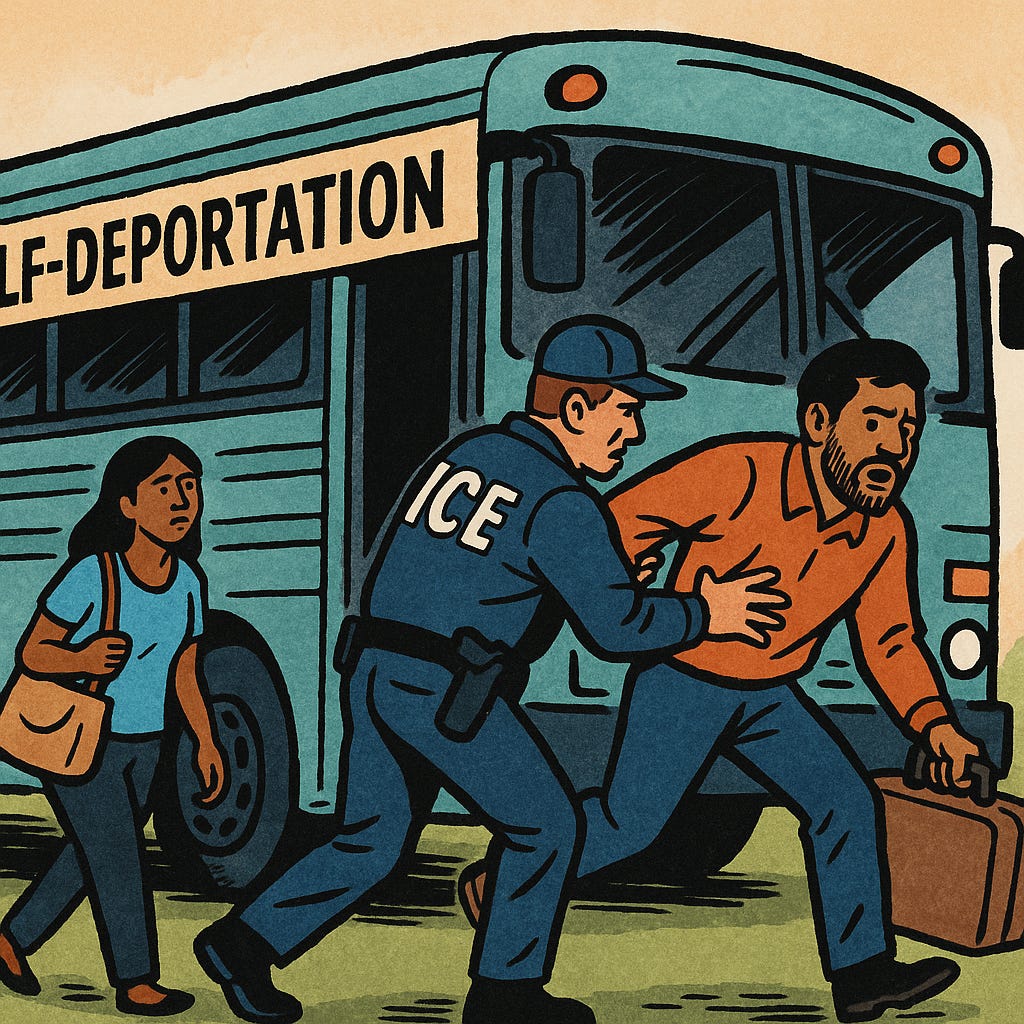
A key report from Migrant Insider outlining the plan, including the ICE memo describing agents targeting migrants attempting to “self‑remove,” was published on December 9, 2025. The core of the plan is simple. Instead of quietly letting migrants depart the country voluntarily, federal immigration agents will be positioned at ports of entry and commercial crossings with one goal in mind: to arrest those migrants as they attempt to exit. An internal memo described a coordinated effort by U.S. Immigration and Customs Enforcement and Customs and Border Protection to intercept buses and individual travelers crossing into Mexico, targeting people who had entered without authorization but were now trying to return home. The operation’s name, far from lighthearted, masks a chilling reality. Even voluntary departure will now be turned into arrest, detention, and formal deportation proceedings.
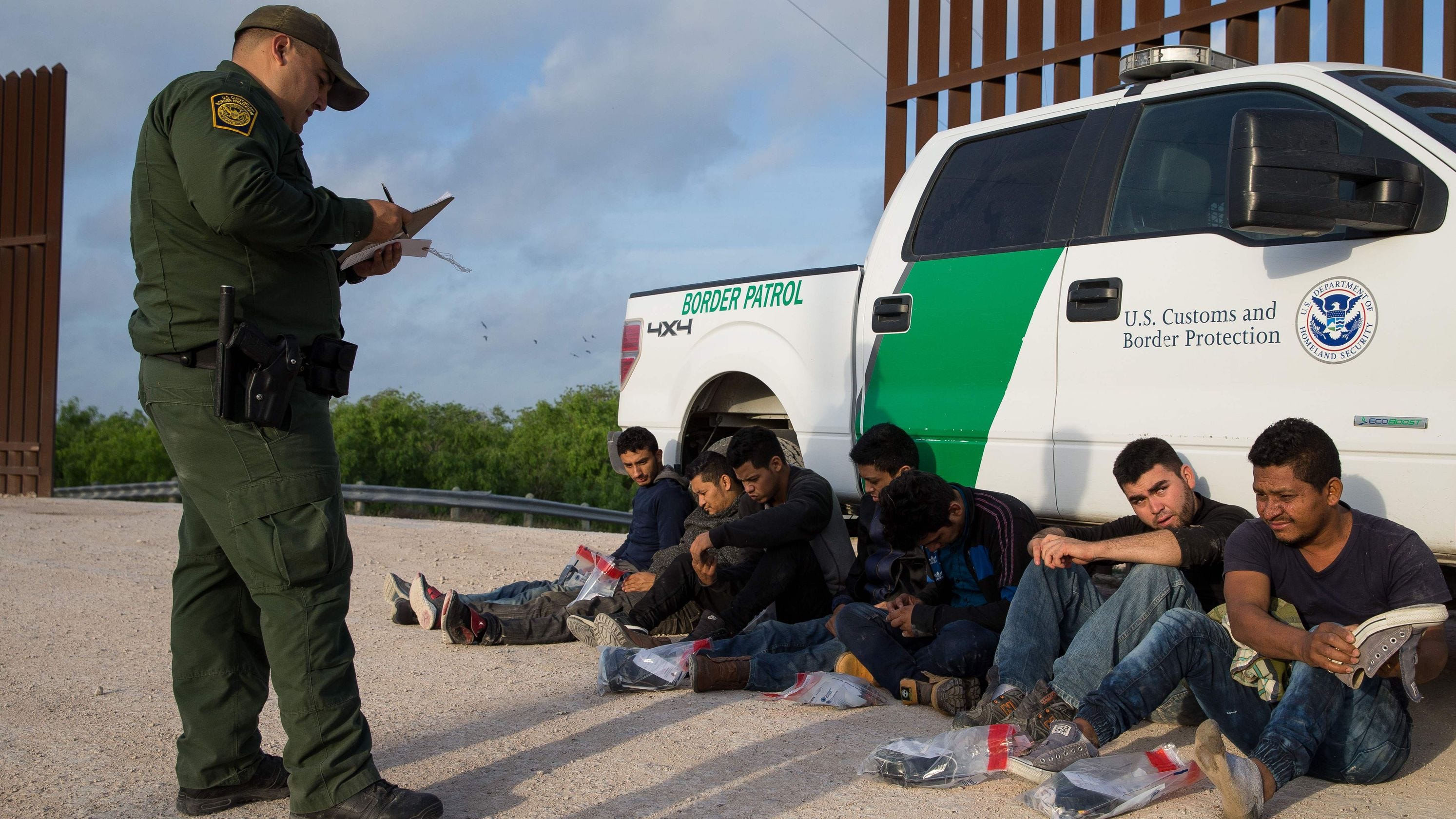
Image from DHS/CBP Website promoting exam. The image is not specific to Operation Irish Goodbye.
Want to Know Your Rights?
Download a free digital copy of the U.S. Constitution, the same document Trump is trying to bulldoze. Learn exactly what he’s breaking, and how to fight back.
80,000+ strong — and counting.
This holiday, become a paid subscriber for just $1 a week and help us keep the truth alive.
Join The Coffman Chronicle — $1/Week
A Border With Fewer Crossings Than in Generations
To understand the incongruity of Operation Irish Goodbye, it helps to first look at the data. Throughout 2025, U.S. border statistics have shown a dramatic reduction in unauthorized crossings at the U.S.–Mexico border. The number of encounters — a surprisingly benign term used by U.S. Customs and Border Protection to count instances when agents meet or apprehend someone crossing without permission — has fallen to historic lows.
In September 2025, Border Patrol agents detected roughly 8,400 attempted unlawful crossings, a figure nearly 85 percent lower than the number recorded in the same month a year earlier. Such low levels of unauthorized entry stand in stark contrast to the crisis narrative of just a few years prior. Throughout fiscal year 2025, government data has reflected tens of thousands of nationwide immigration encounters, fewer than any comparable period in decades. The southwest border alone registered vast reductions in illegal crossings compared with even the previous year, continuing a downward trend that began well before the launch of Operation Irish Goodbye.
It isn’t just temporary fluctuations. Across the board, border figures remain subdued. Even cumulative monthly totals, often used by officials to gauge annual patterns, remain far behind earlier peaks that have defined the national debate on immigration. These aren’t minor declines. They were historic troughs in a trend that reached back generations.
Voluntary Departure
Even as unauthorized crossings diminish, government policy incentivizes voluntary departures, also known as self‑deportations. On May 5th, the Department of Homeland Security launched outreach campaigns and digital platforms aimed at migrants in the United States without documentation, offering streamlined processes and even financial assistance of up to $1000 to help people return home voluntarily. This was supported by a Presidential Proclamation on May 9th.
Known internally as Project Homecoming, the project saw thousands use a DHS portal—the CBP Home Mobile App — to register their intent to leave, receive a plane ticket, and qualify for a modest cash payment upon reaching their home country. Critics noted that this expensive program, which includes airfare and payments, translates to several thousand dollars per person, a significant investment compared with the per‑case cost of traditional deportation processing. Proponents argue it creates an orderly means for migrants to depart without detention or legal limbo. However, the expenditure is nonetheless eye‑opening and points to the lengths to which the administration will go to reduce the undocumented population on its own terms.
According to the Department of Homeland Security, between January and November 2025, approximately 2 million undocumented individuals left the United States, but only 400,000 of them were formally deported. The remaining 1.6 million departed voluntarily, a number the administration has publicly celebrated as proof that its deterrence strategy is working. Where formal deportations require apprehension, detention, and legal processing, self‑departures involve fewer rights restrictions and less immediate hardship.
Yet, under Operation Irish Goodbye, even those who seek to avoid detention by leaving on their own could be halted, arrested, and pulled into the enforcement machinery.
The Numbers Game: Arrests and Optics Over Outcomes
The introduction of Operation Irish Goodbye raises an unavoidable question. If unauthorized border entries are declining and voluntary departures account for the bulk of exits, what is the purpose of intercepting people who were already complying?
To understand this, it helps to consider how immigration enforcement funding and political messaging intersect. Government agencies tasked with immigration control, particularly ICE and CBP, receive substantial budgets that are — at least in part — justified by the scale of their enforcement actions. Apprehension and deportation figures are among the most cited metrics used by the Trump administration in speeches, press releases, and budget requests. High enforcement numbers feed a narrative of action and control, even if the underlying reality is more complex than simple border statistics suggest.
For immigration officials under pressure to show results, intercepting migrants as they voluntarily exit the country is a way to convert non-removals into removals. The Department of Homeland Security has claimed that over 1.6 million undocumented individuals self-deported in 2025, yet those departures don’t count toward formal deportation statistics unless the government processes them. That creates a powerful incentive to turn voluntary exits into arrests, even when there’s no security justification for doing so.
The Human and Financial Costs of a Performance
What makes Operation Irish Goodbye particularly troubling is not just its contradiction with broader migration trends, but the costs — human, social, and financial — that accompany it.
Millions of dollars, drawn from federal appropriations, have been poured into expanding immigration enforcement capacity. Detention centers, often hastily erected and criticized for their conditions, remain in operation at great expense. Private contractors with deep ties to the enforcement apparatus benefit from sustained and increased contracts for detention, transportation, and surveillance. Meanwhile, the broader economy suffers from labor disruptions, especially in sectors dependent on immigrant workers. Yet agencies continue to expand their reach.
Families are torn apart in the process. Stories have emerged of parents detained moments before boarding buses home, children left bewildered and alone. In cities far from the border, interior raids have swept workplaces, targeting people regardless of criminal history and instilling fear in entire communities. The toll on mental health, community cohesion, and trust in government cannot be measured merely by statistics.
See our earlier series on Deportation and Immigration Policy. Here is the first in the series:
Note: Articles roll into the archive over time. Consider becoming a paid subscriber for exclusive perks including occasional early access, unique content, and full access to our full archive.

Moreover, the United States' international reputation is at stake. Human rights advocates have condemned the increasing use of expedited removals and detention without access to full due process. The U.S., once widely regarded as a leader in democratic norms and asylum protections, now faces criticism for measures that many view as defying international standards. Allies and partners watch as well, considering how these actions might foreshadow shifts in how the U.S. handles human rights, migrants, and refugees in other contexts.
A System Fed With Fear and Funding
Taken together, the picture that emerges is of a system that has evolved—or devolved—into an industry unto itself. Operation Irish Goodbye is not a response to a crisis. Instead, it was a response to narrative and numbers. At a time when unauthorized border entries are historically low and voluntary departures are substantial, enforcement actions expand not out of necessity, but out of a perceived need to sustain the very apparatus that carries them out.
This enforcement machine thrives on fear— fear of the border, fear of migrants, fear of an uncontrollable immigration tide. Those fears, stoked in political rhetoric and media narratives, justify continued spending on enforcement agencies, contractors, and the logistical infrastructure that surrounds them. At the same time, the human consequences — shattered families, stripped communities, and tarnished global standing — are treated as collateral, acceptable losses in the pursuit of a political and numerical narrative.
A Nation at Odds With Its Principles
Operation Irish Goodbye stands as a stark example of how immigration policy can stray from both logic and humanity. When people are already leaving on their own, when crossings are at lows not seen in generations, then the decision to arrest them as they go highlights a deeper issue. This is no longer merely a policy problem. It is a moral and political calculus in which optics and outputs outweigh outcomes and dignity.
The real question is not whether such policies work in a narrow enforcement sense, but whether they work for the nation’s values. Do we choose efficiency, compassion, and respect for process? Or do we choose spectacle over substance, numbers over nuance, and politics over people?
In a republic that once championed liberty and justice as universal ideals, these are questions worth asking loudly, insistently, and without compromise.
See our recent related coverage of the threats to birthright and dual citizenship and what this signals:

Don’t let the bastards sneak anything past you. Subscribe and get your daily dose of rage and receipts delivered fresh, before the spin doctors can scrub it.
Sources:
“Trump’s ‘Self‑Deportation’ Trap: Now They’re Arresting You for Leaving.” —Migrant Insider
“ICE agents launch ‘Operation Irish Goodbye’ to arrest migrants leaving U.S. voluntarily.” — Crime World
“ICE Plan Would Arrest Undocumented Immigrants Leaving U.S.” — HuffPost
“1.6 million people in the U.S. illegally have self‑deported, 500K deported: DHS” — ABC News
“Inside Trump’s ‘funny numbers’ on mass deportations” — Axios
“Fact check: Noem says 1.6 million immigrants have ‘voluntarily’ left the U.S.” — WRAL News
“Secretary Noem Announces 1.6 Million Illegal Aliens Have Left U.S.” —Department of Homeland Security
“CBP HOME: Assistance to Voluntarily Self‑Deport” — Department of Homeland Security
“Fact Sheet: President Donald J. Trump Establishes Project Homecoming” — The White House
“DHS Announces Historic Travel Assistance and Stipend for Voluntary Self‑Deportation” — Department of Homeland Security
“Project Homecoming Charter Flight Brings Self‑Deporters to Honduras and Colombia” — Department of Homeland Security
“DHS Adds New Languages to CBP Home Mobile App to Support Voluntary Self‑Deportation Under Project Homecoming” — Department of Homeland Security
“Know Your Rights: CBP Home” — (National Immigration Law Center) NILC
“Massive DHS ‘Self-Deportation’ Contract Challenged as Secretive and ‘Unlawful’” — Pogo
“Border crossings once again at a record low in November 2025” — U.S. Customs and Border Protection
“CBP Releases May 2025 Monthly Update” — U.S. Customs and Border Protection
“How many illegal crossings are attempted at the US‑Mexico border each month?” — USAFacts
“Rep. Pfluger’s Statement on FY25 Southwest Border Apprehensions Hitting Lowest Level in Half a Century” — August Pfluger
“US Border Patrol arrested 29,000 migrants illegally crossing Mexico border in January, lowest since May 2020.” — Reuters
“Trump administration separates thousands of migrant families in the US.” — AP News
Hunting humans for perverted pleasure. America is Less Safe with tyrants in WH. They are destroyers of Democracy. Psychos.
A petition against this horror needs to be created against this horror and sent out.