

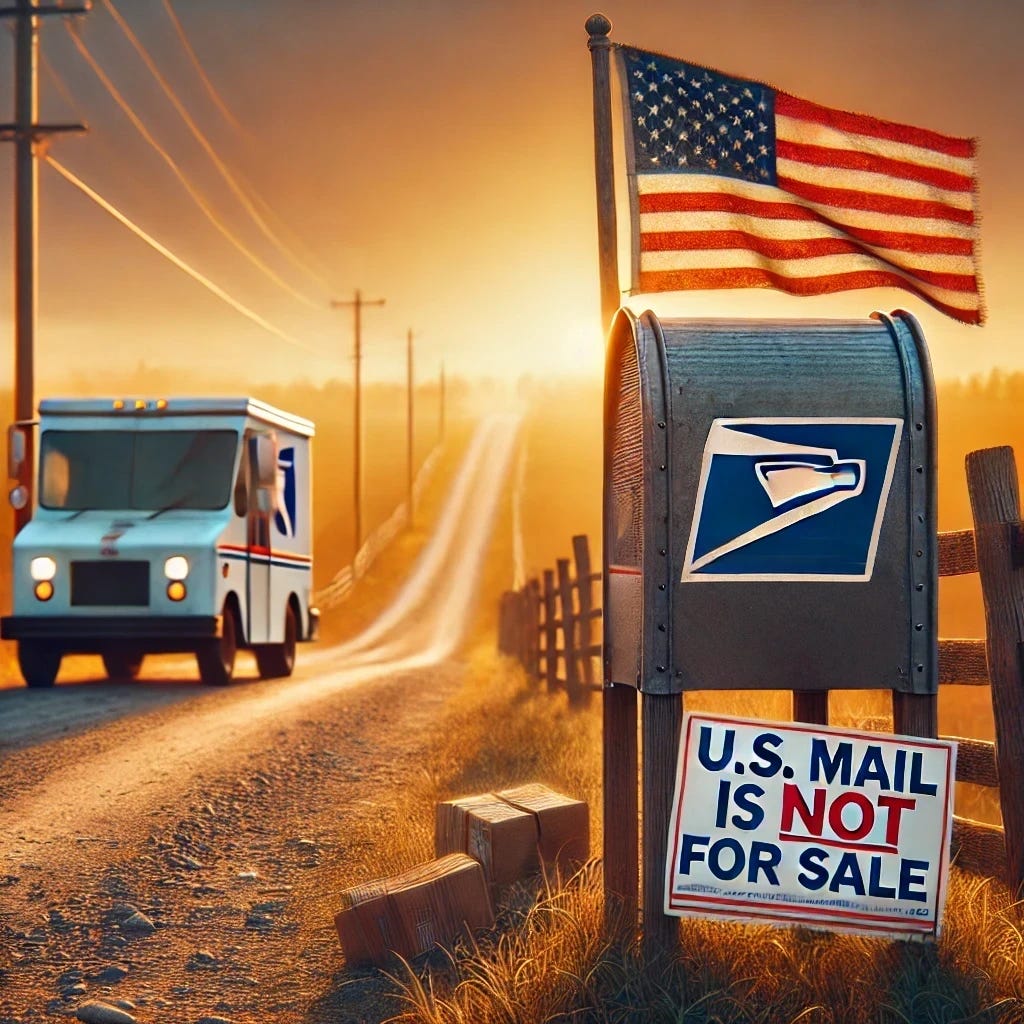
On March 27, 2025, a bipartisan group of U.S. Senators introduced a resolution to stop the privatization of the United States Postal Service. It may sound like a bureaucratic move, but for millions of Americans, especially in rural communities, it’s nothing short of a defense of democracy, dignity, and basic daily life.
Independent News. Just $1/Week.
We just hit 10,000 subscribers—thank you! We’re offering full access to The Coffman Chronicle for just $1 a week ($52/year) to celebrate.
Get exclusive analysis and fearless reporting you won’t find in corporate media.
When a Carrier Retired, Communities Feel It
When a longtime mail carrier retires, it doesn’t just mean someone new is delivering packages. It means confusion, delays, and a temporary collapse in the quiet system once taken for granted.
Mail carriers know all roads—unpaved, unmarked, and sometimes absent from GPS. They know when an address is mistyped, where the dogs bark, and who needs their mail left closer to the door. For a time, it may take two to do the work once done alone.
Multiply that across thousands of towns and rural roads, and you begin to understand what the USPS really is: not just a delivery service, but a deeply embedded community lifeline.
The Push to Privatize & Who’s Pushing Back
In January, House Resolution 70 was introduced to affirm that the Postal Service must remain public and independent. Then in March, as the deal between former Postmaster General Louis DeJoy and the Department of Government Efficiency (DOGE) came to light—including plans to cut 10,000 jobs in just 30 days—the Senate followed with its own bipartisan resolution.
These moves are more than symbolic. They're a line in the sand. What’s happening behind closed doors at DOGE isn’t about efficiency. It’s about dismantling one of the last truly universal public services we have.
No Tax Dollars, No Problem?
One of the most damaging myths about the USPS is that it drains taxpayer resources. It doesn’t. The USPS is entirely self-funded through postage and service fees, and no tax dollars cover its operations.
So why is DOGE—whose mission is to cut “wasteful government spending”—targeting a self-funded agency? The answer: ideology. Privatization isn’t about saving money. It’s about shrinking government and handing public infrastructure to private hands.
The Constitution Backs It But Doesn’t Guarantee It
The United States Postal Service is one of the few federal services explicitly authorized by the Constitution. Article I, Section 8 empowers Congress “to establish Post Offices and post Roads.”
But here’s the catch: it’s a power, not a mandate. Congress can support it or dismantle it. That’s why legislative protection is critical. The USPS exists today not because it must, but because we choose to maintain it.
Rural America Will Suffer First
Rural communities rely on the USPS like cities rely on public transit or broadband. It’s not optional; it’s essential.
USPS is often the only entity that delivers to the end of long dirt roads, doesn’t charge extra for remoteness, and employs local residents who understand the terrain and the people. Many rural carriers use their own vehicles, taking on the cost and risk themselves just to keep their communities connected.
And when the nearest neighbor is five miles away, the idea of a “centralized mailbox bank” just doesn’t work.
In fact, in over 40% of U.S. ZIP codes, the Postal Service is the only carrier offering six-day-a-week delivery. No other provider matches that coverage.
Voices from the Frontlines
The push for privatization hasn't gone unnoticed or unchallenged. Across the nation, postal workers and their unions are raising their voices in protest.
Mark Dimondstein, President of the American Postal Workers Union, warns:
“Privatization is a terrible idea. Our message is, no. Private business is interested in doing things that are profitable, as they should be. But that is the distinction between private business and what we are, a public service.”
Brian Renfroe, President of the National Association of Letter Carriers, emphasizes the potential consequences:
“We have to understand that privatization, in whole or in part, will raise prices, close post offices, reduce service, and undermine good living wage union jobs.”
Their words have been echoed nationwide as postal workers, community members, and activists have taken to the streets.
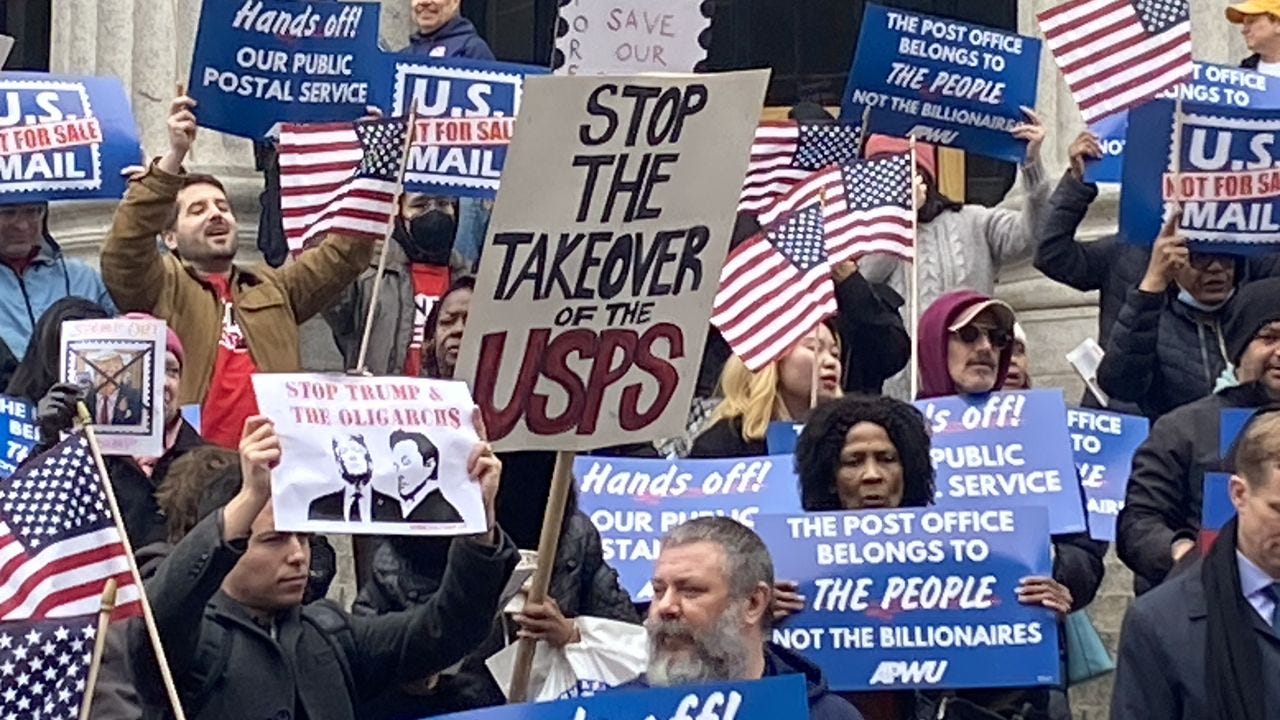
From St. Louis to Houston, Youngstown to Brattleboro, workers have rallied at post offices large and small, holding signs that read:
“U.S. Mail is Not for Sale” and
“Whose Postal Service? The People’s Postal Service.”
One protester in Luzerne County, PA, put it plainly:
“They think no one’s paying attention. We are.”
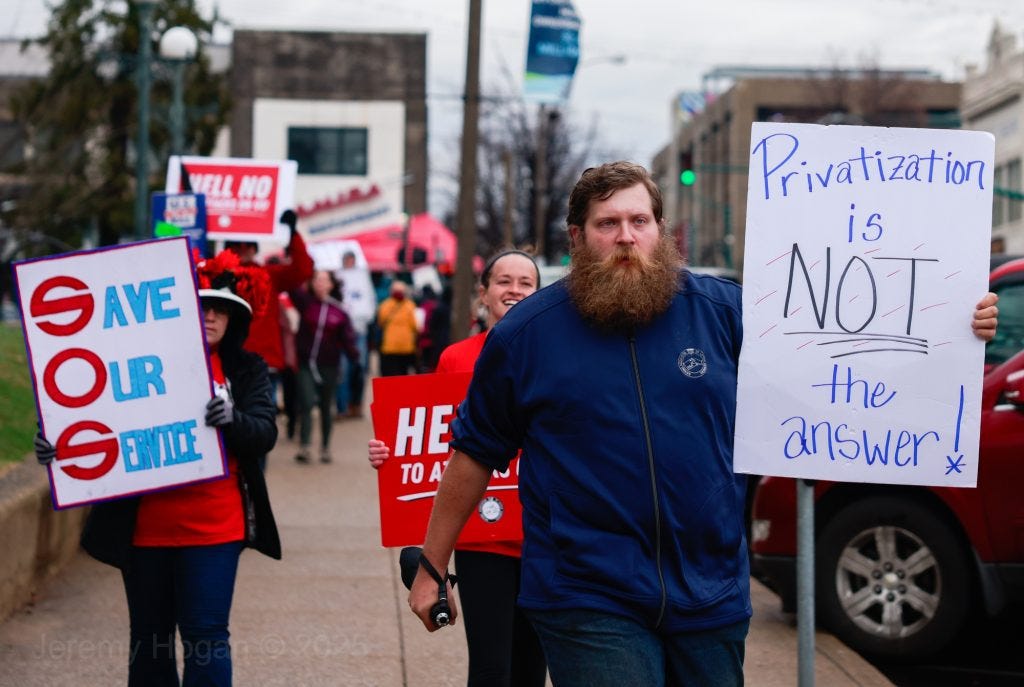
These protests aren’t just symbolic; they’re a nationwide outcry against an attempt to erode public trust and public jobs in the name of efficiency.
A Retirement Cliff and a Dangerous Shortcut
The USPS is facing a looming workforce crisis. Most postal workers are middle-aged or older, and many are nearing retirement. At the same time, fewer young workers are entering the field because wages and conditions aren’t what they once were.
Cutting 10,000 jobs with no long-term staffing plan is like gutting the fire department during a drought. Delays aren’t a possibility; they're a guarantee.
It’s About Trust and Democracy
The USPS delivers mail-in ballots, Social Security checks, VA prescriptions, and tax documents. It treats a rural route with the same urgency as a high-rise in Manhattan. It doesn’t matter what you earn, who you vote for, or how far you live from a city center.
That’s not just service. That’s public trust, built over centuries.
We’ve covered the privatization push before. See our reporting here:


The second post is over 45 days old and is now behind the paywall. Consider becoming a paid subscriber for $1 per week to access our entire archive plus exclusive content and occasional early access.
What We Stand to Lose
The Postal Service is one of the last public goods that binds this country together. It delivers across every ZIP code, supports hundreds of thousands of union jobs, and operates not for profit but for people.
Privatization would turn that on its head, and make basic civic access a matter of how much you can pay or where you live.
We can’t let that happen.
Take Action
Contact your representatives and ask them to co-sponsor House Resolution 70 and Senate Resolution 147.
Share stories from your community; these changes feel abstract until they hit home.
Support postal unions and workers. They’re on the frontlines of this fight.
We just hit 10,000 subscribers—thank you! We’re offering full access to The Coffman Chronicle for just $1 a week ($52/year) to celebrate.
Bibliography:
“Peters and Sullivan Lead Colleagues to Introduce Bipartisan Resolution to Support the Independence and Critical Services of the United States Postal Service.” U.S. Senate Committee on Homeland Security & Governmental Affairs, March 27, 2025.
“House Resolution 70 – Expressing the Sense of the House that Congress Should Take All Appropriate Measures to Ensure the USPS Remains an Independent Establishment of the Federal Government and Is Not Subject to Privatization.” Congress.gov, January 28, 2025.
“Postal Union Leaders Discuss the Future of the Post Office After Postmaster General’s Resignation.” FOX 8 Live, March 26, 2025.
“Protests Erupt Over Plans to Change the U.S. Postal Service.” Newsweek, March 28, 2025.
“Postal Workers Defend USPS Against DOGE Attack.” Truthout, March 25, 2025.
“Privatizing the USPS Could Harm Businesses and Disproportionately Impact Rural Areas, Experts Say.” Business Insider, March 20, 2025.
“Letter Carriers, Postal Workers Rally Against Proposed Job Cuts, Privatization of USPS.” Labor Tribune (St. Louis), March 23, 2025.
“Houston Postal Workers Say Privatizing Agency Would Harm Rural Communities.” Houston Chronicle, March 22, 2025.
“Postal Workers Rally in Youngstown to Protest Potential USPS Privatization.” WFMJ, March 24, 2025.
“Protesting the Privatization of the USPS in Luzerne County.” WNEP, March 25, 2025.
The USPS is one shining example of government efficiency and dedication to the US Citizens. "Neither rain, nor snow nor gloom of day keeps the service from the completion of their appointed rounds". Let it be.