


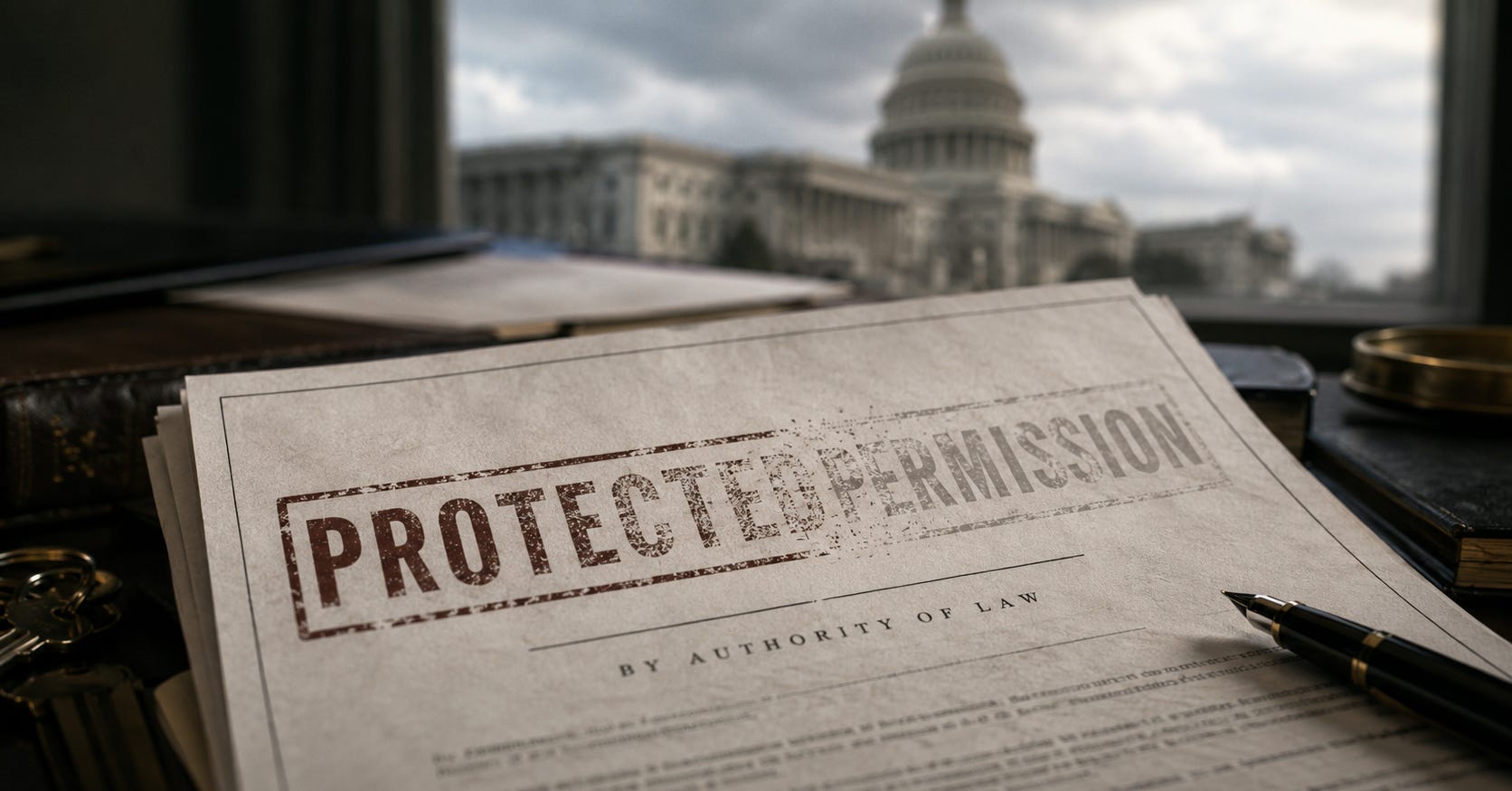
The Work Permit Becomes a Warning
The first thing power takes is not always a person. Sometimes it takes the paper that allows that person to keep working.
At kitchen tables in Florida, Massachusetts, Ohio, New York, Pennsylvania, and New Jersey, a Haitian worker can look at the same life most Americans would recognize: a lease, a school calendar, a car payment, a medicine bottle, and a shift schedule written by a manager who needs them to show up tomorrow. None of that looks temporary when the rent is due, or feels temporary to the child waiting after school, the patient expecting care, the elderly person waiting for help, or the family that has spent years turning uncertainty into ordinary life.
The government has a way of making ordinary life sound smaller than it is. It calls the status temporary, the work permit authorization. It calls the deadline administrative and the disruption policy. The kitchen table has different words for it: rent, groceries, medicine, childcare, a paycheck, a parent, a future.
That is the human reality behind the latest fight over Haitian Temporary Protected Status, or TPS. Before the argument becomes legal, partisan, or another immigration headline shouted through Washington, it begins with people who followed the process the government gave them. They registered, renewed, worked lawfully, and built lives in the open, not in hiding.
Now the same government may tell them the paper no longer protects them. That is where the warning begins. When lawful protection can be made to feel like a favor, the question is no longer only who gets to stay, but what the law means when power changes its mind.
Support independent media that follows the power.
The Coffman Chronicle is built to track who holds power, who abuses it, who profits from it, and who pays the price.
Paid supporters get full Tony Michaels Podcast episodes, deeper transcript analysis, paid columns, archives, and the reporting framework behind the show.
If you believe independent media has to survive outside billionaire platforms, corporate media, and party-approved gatekeepers, become a paid supporter today.
Congress Created the Protection
Temporary Protected Status did not appear by accident. Congress created it. In 1990, Congress added TPS to immigration law as a limited protection for people already inside the United States who could not safely return home because of armed conflict, natural disaster, or extraordinary conditions. It did not make them citizens or permanent residents, nor put them on a direct path to citizenship. Instead, it created a lawful category for a hard reality. Sometimes a person can be removable under ordinary rules, even though return is still unsafe.
Haiti received TPS after the 2010 earthquake. Syria received it during its civil war. Both designations were extended and redesignated before the Trump administration moved to terminate them. On June 25, 2026, the Supreme Court decided Mullin v. Doe, which was consolidated with Trump v. Miot, and allowed the Haiti and Syria TPS terminations to proceed while litigation continued.
The word temporary is an essential element of this story. Congress can debate how long TPS should last, what conditions justify renewal, and whether people who have lived under the same temporary status for years deserve a different statutory answer. Temporary status does not have to become permanent because time has passed.
However, temporary does not mean meaningless. A person with TPS is within a legal framework that Congress created. They apply, renew, and receive work authorization through a process. Their ability to work, rent, drive, pay taxes, support children, staff businesses, and remain with their families flows through that structure. They aren’t hiding.
That is the contradiction at the center of TPS. It is congressional protection administered by executive power. When lawmakers fail to defend the protections they created, those protections start to look less like law and more like mercy, and mercy can be withdrawn. Law is supposed to mean more than that.
The President Administers the Law. He Does Not Own It.
There is a difference between administering a law and owning the people who live under it.
TPS does give the executive branch a real role. The Department of Homeland Security, or DHS, reviews country conditions, consults with appropriate agencies, and determines whether the statutory requirements are still met.
Administration is necessary, but administration is not monarchy. A president does not get to treat a congressional statute as personal permission to decide whose stability counts and whose can be discarded. An agency does not own a person’s lawful life because that life runs through agency paperwork. The executive branch may control the process, but it does not own the law.
The danger grows when Congress lets the line blur. The more lawmakers leave unclear, the more presidents claim. The more hard votes are avoided, the more ordinary people wait to learn whether they are protected by law or merely tolerated by power.
That is how concentrated power often arrives, not always with emergency declarations from a podium. Sometimes it arrives in the form of forms, deadlines, status codes, notices, renewals, and agency memos. It takes a life built in public and makes it conditional again.
A worker can have permission to work on Monday and uncertainty by Friday. An employer can build a schedule around lawful labor and then be told the authorization may vanish. A family can plan around rent, school, and medicine, then discover that the legal floor beneath them was not as solid as the government made it seem.
Congress does not have to run DHS, but it must define its powers clearly enough that a president cannot turn statutory protections into a permission slip.
When Congress gives up power, the people lose power at the kitchen table.
The Court Exposed the Hole Congress Left
The Supreme Court did not create the weakness in Temporary Protected Status, but it did expose it. In Mullin v. Doe, consolidated with Trump v. Miot, the Court held that the TPS statute bars judicial review of nonconstitutional claims challenging DHS decisions to terminate a country’s TPS designation. Lower-court orders could not delay the terminations of the Haiti and Syria TPS designations while litigation continued.
That is not only a court story. It is a Congress story. Congress created TPS, gave the executive branch authority to designate, extend, review, and terminate that status, and included a judicial-review bar in the statute. The Court read that bar broadly. If lawmakers believe that gives presidents too much largely unreviewable power over statutory protection, they can change the statute.
For years, TPS has carried more weight than the word temporary can honestly bear. Families settled under it. Employers hired under it. Children grew up under it. Then, when the executive branch moved to withdraw that protection, Washington acted as if the only meaningful question was whether a court would stop it.
That is not enough. Courts can interpret statutes. They cannot substitute for a legislature that refuses to clarify the law it wrote. If review is too weak, the answer is not theatrical outrage, but legislation.
This Is Not Open Borders. It Is Ordered Government.
There is a cheap way to dodge this argument. Just call it open borders. Pretend that any defense of lawful process means no one can ever be removed, no status can expire, and no border can be enforced. That is not the argument here.
A country has the right to enforce immigration law. Congress has the right to decide who may enter, remain, work, adjust status, or leave. TPS does not erase that authority. It exists inside it.
The issue is not whether TPS must last forever, but whether a lawful status created by Congress can be treated as casual because the people beneath it are politically vulnerable. Can a president turn statutory protection into executive preference while lawmakers avoid public decision?
If Congress believes TPS has drifted too far from its purpose, it should say so. If long-term TPS holders deserve lawful permanence, Congress should make that case. If they do not, Congress should own that too.
Public law should be made in public. A country can enforce immigration law and still require its government to obey immigration law. That is not weakness. That is the minimum standard for a republic.
The First Target Is Always Easy to Abandon
Power rarely tests its reach on the protected first. It looks for someone easier to isolate. It looks for someone the public has been taught to fear, resent, ignore, or classify as outside ordinary concern. It looks for someone whose rights can be made to sound like special treatment and whose protection can be recast as indulgence.
Not every target is the same. Immigration law, citizenship law, criminal law, voting law, war powers, and pardon power are not interchangeable. However, concentrated power has habits.
It tests whether the public will accept fewer explanations, fewer records, fewer hearings, fewer votes, and fewer places where the government has to answer. We have seen that pattern in fights over birthright citizenship, voting machinery, domestic-terrorism labels, war powers, and pardons. The subject changes. The structure does not.
Power finds the category with the least public sympathy, expands there first, and carries the precedent somewhere else.
Some Americans may not support extending TPS. Some may believe it has lasted too long. Those arguments belong in the open. However, no one who cares about constitutional government should be comfortable with lawful protection being reduced to executive tolerance.
You do not defend constitutional limits because you agree with the first person targeted. You defend them because power never stops with the first target. The first target is where the public is trained to look away. The precedent is what remains after it does.
The Damage Lands at the Kitchen Table
Washington has a gift for making damage sound administrative. A work permit expires. A designation ends. A renewal window closes. A status changes. Those phrases are clean enough to fit inside a government notice. They make disruption sound like paperwork completing its natural life cycle.
Yet status is not only status when a person’s paycheck depends on it. The Supreme Court ruling could strip hundreds of thousands of Haitians and Syrians of work authorization and deportation protection. Reuters reported fear in Haitian communities where TPS holders have spent years raising families, opening businesses, and filling jobs in health care, hospitality, construction, and caregiving.
That is where the issue leaves Washington and enters ordinary life. It enters the apartment where a family has to renew a lease, the workplace where a manager may lose a trained employee, the school where a child carries adult fear into class, and the church, hospital, nursing home, farm, warehouse, restaurant, or small business that experiences immigration status as whether someone can show up.
That is not only a liberal concern. Florida Republican Carlos Giménez called deporting Haitians under TPS back to Haiti a “huge mistake.” Ohio Republican Gov. Mike DeWine warned that ending protection would affect manufacturing, food work, elder care, family support, housing, small businesses, and communities relying on Haitian workers.
The decision is made at the top, but the cost spreads downward. Presidents announce. Agencies process. Lawyers argue. Judges rule. Members of Congress issue statements. Then the family has to do the math.
The groceries do not become temporary because the status is temporary. The medicine does not become temporary. The child’s need for a parent does not become temporary. The rent does not wait for Congress. Washington calls it status. The kitchen table calls it rent, groceries, medicine, childcare, and whether someone is still allowed to work tomorrow.
And for families seeking protection from dangerous situations, the economics are only the first layer of disruption. Many are also facing serious safety concerns.
Congress Cannot Be a Comment Section
Congress has options. That is what makes the silence worse. Lawmakers do not have to pretend the only choices are executive discretion or judicial rescue. They do not have to wait for families to panic before discovering that the statute they wrote needs attention.
Congress is not a comment section. It is the branch that created the law. If the executive branch has too much power to terminate protections, Congress can narrow it. If courts have too little room to review whether the government followed the rules, Congress can create that room. If long-term TPS holders have been left in limbo, Congress can stop hiding from the choice.
None of this requires Congress to erase immigration enforcement. It requires Congress to govern. That means demanding the country-condition record before protections are terminated. It means requiring documented consultation with agencies and experts. It means creating meaningful review when procedure is ignored. It means transition periods that recognize how long people have lived under lawful status.
Most of all, it means voting. A statement lets a lawmaker sound concerned without being accountable. A hearing allows a member to perform outrage without changing the law. A lawsuit lets Congress pretend someone else will handle the burden. A vote makes responsibility visible.
If Congress does not like how presidents use the statute, Congress should stop acting like a pundit and start acting like the branch that wrote it. because every time Congress refuses to decide, someone else does.
They Followed the Law Congress Wrote
Return to the kitchen table. That is where the argument becomes hardest to avoid. The person sitting there did not create TPS. They did not write the renewal rules, control Haiti’s collapse, or decide that temporary protection could stretch across years while Congress avoided the harder question of what should happen when temporary becomes ordinary life.
They did not design the contradiction, but they lived inside it. They registered when the government told them to register. They renewed when the government told them to renew. They worked when the government gave them authorization to work. They paid rent, raised children, joined churches, filled shifts, cared for patients, paid taxes, and built lives in the open.
Now the same government may tell them the process no longer protects them. That does not mean TPS must last forever. It does not mean Congress has no right to change the law or that the executive has no role in enforcing statutory limits, but hard decisions have to be made honestly and publicly. They have to be made through law, not through abandonment disguised as administration.
Congress cannot create a protection, let people rely on it, avoid the difficult votes for years, and then pretend the fallout belongs only to the president, the courts, the agencies, or the immigrants themselves.
What Congress cannot do is disappear, because when Congress disappears, protection becomes permission. Law becomes tolerance. Ordinary people learn that following the rules may still leave them defenseless when power decides the rules no longer serve its purpose.
Temporary Protected Status began as congressional law. It should not end as presidential mercy.
They followed the law Congress wrote. The question now is whether Congress will follow it too.
Support The Coffman Chronicle
If this piece spoke to you, share it with someone who still believes law should mean more than presidential will.
The Coffman Chronicle is built on a simple idea: when Congress gives up power, the people lose power. That loss lands at the kitchen table, in the paycheck, the lease, the work permit, and the lives of people told to follow rules power can later abandon.
If you can afford it, become a paid subscriber and help keep this work going. If not, read, share, comment, and keep the argument in the open.
A republic does not defend itself. People do.
Sources:
“Florida Republican Says Deporting Haitians with TPS Would Be ‘Huge Mistake.’” The Guardian, July 5, 2026.
“As Deportation Protections End, Haitians Confront Fear and Uncertainty.” Reuters, July 1, 2026.
Supreme Court of the United States. Mullin, Secretary, Department of Homeland Security, et al. v. Doe et al.; Trump, President of the United States, et al. v. Miot et al. Slip opinion, June 25, 2026.
U.S. Department of Homeland Security. “Termination of the Designation of Haiti for Temporary Protected Status.” Federal Register 90, no. 228, November 28, 2025.
U.S. Department of Homeland Security. “Termination of the Designation of Syria for Temporary Protected Status.” Federal Register 90, no. 181, September 22, 2025.
Once Trump was elected our Republican controlled Congress gave up its authority to make or enforce laws or even comment meaningfully on laws the executive branch broke. So much for protecting refugees, for helping minorities, for science, or truth.