


The old party labels are still printed on the ballot. The coalitions underneath them are starting to move.
Governor Josh Shapiro’s message was direct: Pennsylvania voters elected Fetterman as a Democrat, and Shapiro said he should “honor” that choice. His warning came after reporting that Donald Trump and Republicans had quietly sought to persuade Fetterman to abandon the Democratic Party or become an independent. Fetterman, for his part, said he was not changing parties: “I’m a Democrat, and I’m staying one.”
That is the headline, but it is not the whole story.
The deeper story is that Fetterman may be testing one of the central questions of the great American realignment: can a politician keep one party label while building a new political audience underneath it?
He has not changed parties. He may never change parties, but the more important question may be whether he has changed constituencies.
That is where the gamble begins. Fetterman may believe he is broadening his map for 2028 by becoming more acceptable to Republicans, independents, and culturally conservative voters in Pennsylvania. On paper, that is not irrational. Pennsylvania is a purple state. A Democrat who can win some Republican approval may look, at least from a distance, like a politician building a stronger general-election coalition.
However, there is a problem with that theory. Pennsylvania Democrats get the first say.
A February Quinnipiac poll captured the danger in plain numbers. Overall, 46% of Pennsylvania voters approved of Fetterman’s job performance and 40% disapproved. However, the split underneath was upside down for a Democratic senator: Republicans approved of him 73% to 18%, while Democrats disapproved of him 62% to 22%. Independents leaned positive, 48% to 37%.
That is not just a polling quirk, but a warning light.
Fetterman’s problem is not that Republicans like him. In a healthier political system, cross-party appeal would be a virtue. His problem is that Democrats may no longer trust him, and in a closed-primary state, Republican applause cannot nominate a Democratic senator for another term.
Fetterman may think he is preparing for November, but Pennsylvania Democrats may be preparing a different question for him first: before you ask Republicans to reward your independence, why should Democrats still trust your representation?
This Community Is Powered by You
What started as a small circle has grown into something much bigger, and it’s all because of readers like you.
Every time you forward this email, post it on socials, or bring someone new into the fold, you’re helping build one of the most passionate, independent political communities out there.
Want to keep the momentum going?
Share this newsletter with someone who should be part of this conversation.
Thank you for being here. It means everything.
Fetterman’s Gamble
There is a version of John Fetterman’s strategy that makes political sense.
Pennsylvania is not a deep-blue state. It is a state where Democrats can win statewide, but usually not by ignoring independents, rural voters, union households, small towns, and people who may vote Democratic for one office and Republican for another. Fetterman knows this. His original brand was built around it: the hoodie, the shorts, the Braddock mayor story, the anti-polish aesthetic, the insistence that he did not look or sound like the consultants’ idea of a Senate candidate.
That was the appeal. Fetterman presented himself as a different kind of Democrat. Not a Republican. Not a polished Washington operator. A Democrat who could talk to people the party had lost, or at least stopped trying very hard to reach.
So it is possible that Fetterman sees his current posture as an extension of that same project. He may think he is doing what Democrats say they want, breaking through partisan walls, refusing to speak only to the base, and building a coalition big enough to survive in a purple state.
Yet, that explanation only goes so far.
The Quinnipiac topline could look survivable. The problem was underneath it. Republicans approved of Fetterman by a landslide. Democrats disapproved of him by a landslide. That is not the normal profile of a Democratic incumbent carefully expanding his coalition. That is a coalition flipping upside down.
That is where Fetterman’s gamble becomes dangerous.
If this is a general-election strategy, it may be aimed at the wrong election. Pennsylvania has a closed primary system, meaning Republican voters can vote only for Republican candidates and Democratic voters can vote only for Democratic candidates in party primaries. Republican voters praising Fetterman cannot rescue him in a Democratic primary unless they change registration. Independent voters cannot help him there either.
The problem is not that Fetterman is trying to appeal beyond the Democratic base. That can be smart politics. The problem is that he may be building goodwill with voters who do not get the first vote on his future while burning trust with voters who do.
A senator can survive disagreement. Voters do not expect total ideological obedience. A Democrat in Pennsylvania has to navigate a state that includes Philadelphia and Pittsburgh, as well as Erie, Scranton, York, Lancaster, the Lehigh Valley, coal country, farm country, and counties where Donald Trump remains dominant.
Nobody serious should pretend a Pennsylvania Democrat can win statewide by speaking only to the most progressive corner of the party.
However, there is a difference between broadening a coalition and appearing to swap one coalition for another.
Fetterman’s challenge is that his public breaks with Democrats have become part of his brand. He has not simply taken occasional dissenting votes. He has often positioned himself as the Democrat willing to rebuke Democrats. That wins attention, earns Republican praise, creates cable-news moments, and tells conservative voters that he is not like the rest of his party.
Yet, it also tells Democratic voters something else. It tells them that when the fight gets sharpest, Fetterman may be more interested in proving independence from them than accountability to them.
That is the risk hiding inside the word “independent.” Independence can mean courage. It can mean taking a hard vote, rejecting party pressure, or telling one’s own side an uncomfortable truth. Yet it can also become performance, a brand built less around principle than around the applause that comes from embarrassing the people who elected you.
The issue is not whether a senator is allowed to change his mind. Of course he is. The issue is whether voters believe the change is rooted in conviction, calculation, or contempt for the base. Once that trust breaks, every vote gets interpreted through suspicion. Every Republican compliment becomes a warning sign. Every denial of a party switch sounds less like reassurance and more like a placeholder.

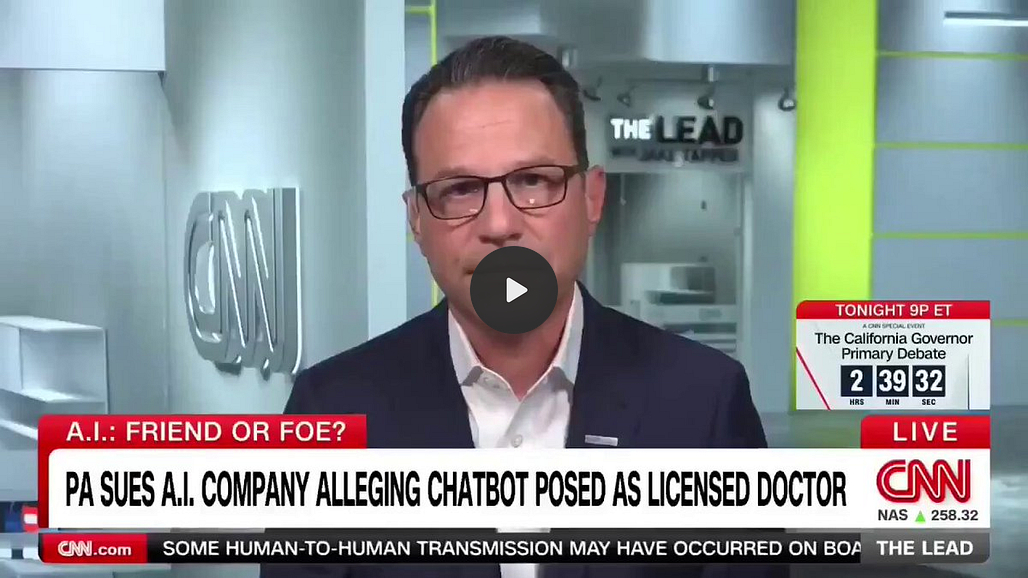
That is why Shapiro’s warning landed. It was not just a governor meddling in another politician’s future. It was a reminder that Fetterman’s Senate seat was not handed to him by Republican pundits or conservative donors. Pennsylvania voters elected him as a Democrat. Shapiro’s message goes directly to the question at the center of this story: if the party label still says Democrat, what obligations come with it?
Fetterman may think he is preparing for a broader November electorate, but in Pennsylvania, he has to get through May first.
That is the gamble. He may be chasing voters who could make him stronger in the general election while alienating those who decide whether he gets there at all.
The Sinema-Manchin Lane
Fetterman is not Kyrsten Sinema or Joe Manchin, and that distinction matters.
Sinema represented Arizona, a purple state with a long history of rewarding politicians who brand themselves as independent-minded. Manchin represented West Virginia, a state that had moved so far to the right that his Democratic label became a liability long before he officially left the party. Fetterman represents Pennsylvania, a true battleground state where Democrats still win statewide, but only by holding together a difficult coalition of cities, suburbs, unions, small towns, and independents.
The comparison should not be lazy. Fetterman is not following their exact path, but he is entering the lane they made famous.
Sinema showed how a Democrat could turn frustration with Democrats into a political identity. In December 2022, she left the Democratic Party and registered as an independent while remaining in her committee positions as a Democrat.
Manchin’s path was different. He was always a Democrat from a deeply conservative state, which meant his survival depended on distance from the national Democratic brand. When Manchin registered as an independent in May 2024, the Associated Press described him as often at odds with the Democratic Party and “an obstacle” to many Biden priorities, while also noting that he helped deliver the major climate and health-care law in 2022.
That complexity can’t be understated. Neither Manchin nor Sinema was simply a Republican in disguise. Both supported some Democratic priorities, broke with Democrats on others, and used their narrow-margin power to make themselves unavoidable.
Both became examples of a larger Senate pattern, the Democrat who gains national attention, donor interest, media oxygen, and Republican praise by becoming a problem for Democrats.
That is the lane Fetterman now risks entering.
The danger is not that he votes differently from his party on every issue. He does not. The danger is that his most visible political identity increasingly comes from moments when he breaks with Democrats, scolds them, or validates Republican arguments against them. That is what made Sinema and Manchin stand out more than their voting records. They became symbols. Their names became warnings inside Democratic politics, examples of what happens when a senator elected by Democratic voters becomes more valuable as an obstacle than as a partner.
Fetterman may believe he is avoiding that trap by saying he is not switching parties, but Sinema and Manchin are reminders that party registration is often the last step, not the first one.
The shift usually begins earlier, with a change in political incentives. A senator learns that cable news rewards intra-party conflict. Republicans praise the “reasonable Democrat.” National reporters frame the breaks as independence. Donors notice. Strategists whisper about crossover appeal. The politician starts getting more applause from people who did not elect them than from people who did.
Then the explanation changes.
At first, it is principle. Then it is independence. Then it is country over party. Then it is proof that the old party system is broken. Sometimes that argument is sincere. Sometimes it is survival. Sometimes it is both.
That is what makes Fetterman’s moment so revealing. He may not be preparing to leave the Democratic Party. He may sincerely believe he is trying to become a broader, less predictable, more Pennsylvania-shaped Democrat. But Sinema and Manchin showed how quickly “independence” can become its own political machine, one that feeds on the anger of the voters who once formed the base.
In Washington, there is always a market for the Democrat willing to embarrass Democrats.
That market can make one senator seem larger than the party that elected them, but it carries a cost. Democratic voters eventually start asking whether independence means independent judgment or independence from accountability.
Fetterman has not done what Sinema did, nor what Manchin did. However, he is testing the same premise: that a Democrat can strengthen himself by creating distance from Democrats.
Maybe that helps him with Republicans and independents in November. Maybe it makes him look authentic in a state tired of partisan scripts.
However, Sinema and Manchin offer a warning. Once a politician’s brand becomes most useful to the other side, their own voters may stop seeing independence and start seeing abandonment.
The Window Is Not Just Moving. It Is Narrowing.
The phrase “Overton window” gets used so often in politics that it can start to sound like jargon. However, the basic idea is simple. It is the range of political ideas considered acceptable to the public at a given time. Politicians usually operate within that range because the further they step outside it, the greater the risk of being treated as extreme, unserious, disloyal, or politically doomed.
For years, Americans were told that the window was moving, sometimes right, sometimes left, sometimes toward populism, technocracy, culture war, or anti-establishment anger.
However, the realignment we are living through now is not just about movement. It is about narrowing.
The acceptable space inside each party is getting smaller. The safe lanes are shrinking. Politicians who once might have been described as moderate, pragmatic, heterodox, or independent are increasingly forced into harsher categories: loyal or disloyal, fighter or sellout, principled or opportunistic, part of the movement or in the way of it.
That is where the great American realignment gets dangerous.
A narrowing Overton window does not mean Americans have fewer opinions. In fact, the opposite may be true. Gallup found that a record-high 45% of U.S. adults identified as political independents in 2025, while equal shares — 27% each — identified as Democrats or Republicans.
The country is not becoming simpler. It is becoming harder to represent.
See some of our related previous reporting here:
Note: Articles roll into the archive over time. Become a paid subscriber for full access to our extensive catalog.


That is the squeeze. Voters are more restless, more skeptical, and less attached to the old party brands. Meanwhile, inside the parties, the room for dissent is shrinking. Republican politics has been reorganized around Trump, loyalty tests, immigration, culture-war fights, and hostility toward institutions that once had broader bipartisan support. Democratic politics is being pulled between anti-Trump institutional defense, younger progressive anger, labor-populist economics, foreign-policy divides, and frustration with an establishment many voters believe moves too slowly and protects too much.
In that environment, every politician faces a harder question: where is there still room to stand?
For Fetterman, that question is especially sharp. He may think he is occupying a broader Pennsylvania lane, culturally blunt, pro-border enforcement, willing to criticize Democrats, willing to talk to Republicans, uninterested in progressive purity tests. That may feel to him like old-fashioned independence.
But inside today’s Democratic Party, many voters may not hear independence. ” They may hear abandonment.
The same act can mean different things to different coalitions. To Republican voters, Fetterman’s breaks with Democrats may look like courage. To independents, they may look like refreshing unpredictability. To Democratic primary voters, they may look like a senator using their votes as a platform to impress people who opposed him.
That is not just a messaging problem. It is a representation problem.
The Overton window was once discussed as a single national window. Today, there are several: a Republican primary window, a Democratic primary window, a cable-news window, a donor window, and a general-election window. A politician can be celebrated in one and punished in another.
That is why Fetterman’s strategy is so risky.
He may be moving toward the center of Pennsylvania’s broader electorate while moving outside the acceptable range of Pennsylvania’s Democratic primary electorate. He may be gaining permission from Republicans while losing permission from Democrats. He may be building a general-election argument before proving he still has a primary-election home.
This is also why the Sinema-Manchin comparison is important. Both operated in a narrowing party window. Sinema turned that squeeze into identity. Manchin turned it into leverage. Yet both eventually reached the same problem. There was less and less room for them inside the party whose voters originally sent them to Washington.
That is the larger story Fetterman is helping reveal.
His situation is not simply about whether he is moderate enough, progressive enough, loyal enough, or independent enough. It is about whether the political space that gave rise to his original brand still exists. The “different kind of Democrat” lane worked when voters believed he was expanding the party’s reach without abandoning its core. It becomes much harder when voters start to suspect that expansion has turned into substitution.
That is the difference between building a bigger tent and walking out of the tent while insisting the label on the flap still matters.
The great American realignment is not happening because everyone is moving neatly from one party to the other. It is happening because the old political categories are no longer holding. Voters are restless. Parties are hardening. Trust is breaking. And politicians are trying to survive in a system where the acceptable space keeps shrinking.
Fetterman may believe he is adapting to that reality. Pennsylvania Democrats may decide he is proving it.
The Realignment Is Not One Direction
The mistake would be to treat all these politicians as if they were making the same move. They are not.
Sinema did not become Geoff Duncan. Manchin did not become Graham Platner. Fetterman has not done what Sinema or Manchin did. Duncan is not drifting right; he moved left after breaking with Trump. Platner is not selling himself as a bipartisan dealmaker; he is running as an anti-establishment Democrat who argues that both parties have been too captured by money and power.
Different politicians. Different states. Different incentives. Yet they are all signs of the same unsettled politics.
Duncan is essential because he proves the realignment is not moving in only one direction. A former Republican lieutenant governor of Georgia, Duncan broke with Trump after the 2020 election, later joined the Democratic Party, and is now running for governor of Georgia as a Democrat. AP reported that he apologized to Democratic activists for positions he took as a Republican and is asking his new party to trust him in a crowded primary.
That is not the same move Fetterman appears to be making. It is almost the mirror image.
Duncan changed parties because his old party moved away from him. Fetterman has not changed parties, but he may be changing the voters he is trying to impress.
Duncan’s political problem is whether Democratic voters will accept someone who spent most of his public life as a Republican. Fetterman’s problem is whether Democratic voters will renominate someone who still calls himself a Democrat while increasingly sounding, on certain high-profile fights, as the kind of Democrat Republicans can use against Democrats.
One man is asking a new party to trust his conversion. The other may be asking his old party to tolerate his drift.
Graham Platner belongs in this story for a different reason. He is not a party-switcher. He represents another pressure point in the realignment: voters who are not looking for a softer version of the old politics, but a direct challenge to the people who have been running it.
AP reported that Maine Governor Janet Mills abandoned her Senate campaign after struggling to match Platner’s fundraising and enthusiasm, describing the moment as a sign that Democratic voters are rejecting establishment figures and embracing new risks. That makes Platner the counterweight to Fetterman.
Fetterman may be testing whether a Democrat can survive by becoming more acceptable to Republicans. Platner is testing whether a Democrat can win by telling voters the rot runs through both parties.
That does not mean Platner is saying Democrats and Republicans are identical. His critique is more targeted: both parties have politicians who have become too comfortable with corporate money, billionaire influence, and insider power.
That is not a Republican message or a centrist message. It is an anti-oligarchy message.
It is landing because many voters no longer believe the old Democratic establishment has met the moment. They see Trumpism on one side, but they also see Democratic leaders who seem unable or unwilling to fight with the urgency the crisis demands. AP quoted Indivisible co-founder Ezra Levin saying rank-and-file Democrats do not want “the Democratic Party as we know it” and want “fighters.”
This is why Platner complicates the Fetterman story in a useful way. Without him, the realignment can look like Democrats moving right, distancing themselves from the base, and becoming more useful to Republicans. Platner shows the other force inside the Democratic coalition: voters moving against the establishment, not because they want more Republican-friendly Democrats, but because they want Democrats who fight harder against concentrated power.
There is a difference between anti-party politics and anti-establishment politics.
Anti-party politics holds that the party itself is the problem, so the politician builds a brand by standing apart from it. That was Sinema’s path. It was part of Manchin’s path. It may be part of Fetterman’s gamble.
Anti-establishment politics says the party has been captured, weakened, or domesticated by money and insiders, and must be forced to fight again. That is closer to Platner’s lane.
Both are symptoms of broken trust, but they point in different directions.
Fetterman’s version risks telling Democratic voters: I need distance from you to survive. Platner’s version tells Democratic voters: the party needs pressure from you to become worth fighting for.
That is why the realignment is not one clean ideological migration. It is a series of rebellions, defections, rebrandings, and survival strategies unfolding simultaneously.
Some politicians are looking for a new audience. Some voters are looking for new fighters. At the same time, the old party establishments are discovering that they cannot control either one as easily as they used to.
The realignment is not one direction. It is a collision.
The Kitchen-Table Consequence: Voters Get Used as Launchpads
The real cost of political realignment is not just party confusion. It is voter trust.
For most people, politics is not an academic map of ideological factions. It is more basic than that. Voters choose a candidate because they believe that candidate will represent them, protect certain values, fight certain fights, and strengthen one side of government rather than the other.
That does not mean voters expect perfection. They know politics requires compromise. They know a senator from Pennsylvania cannot represent only Philadelphia, only Pittsburgh, only Scranton, only rural counties, only college towns, or only union households.
Yet voters do expect honesty about who a politician is trying to serve. That is where realignment becomes personal.
When a candidate runs as one kind of politician and then uses the power voters gave him to build a different kind of brand, voters have every right to feel used. That is not because politicians can never evolve, or because every act of independence is betrayal, but because there is a difference between expanding a coalition and quietly replacing one.
That difference is the heart of the Fetterman problem.
Pennsylvania voters did not send him to Washington because they wanted a senator built in a consultant’s lab. They sent him there, in part, because he seemed like the opposite of that. Fetterman’s appeal was that he looked blunt, working-class, unpolished, and hard to intimidate. He seemed like someone who could speak to places Democrats had lost without sounding ashamed of being a Democrat.
That was the promise: a bigger Democratic map, not a smaller Democratic commitment.
So when Republican praise becomes louder than Democratic trust, the question changes. It is no longer just whether Fetterman is being independent. The question is whether the people who elected him are still the ones he feels most accountable to.
That is not a Washington question. That is a kitchen-table question.
Voters do not experience representation as a theory. They experience it when their health care is debated, when their union contract is threatened, when their Social Security check becomes a bargaining chip, when a shutdown threatens federal workers, when immigration politics gets turned into a spectacle, when war powers are treated as optional, and when corporate power gets one more senator willing to call caution “realism.”
They experience it when they ask a simple question: Is this person still fighting for people like us?
Party labels are supposed to help answer that question. Imperfectly, yes, but they still matter because they tell ordinary voters which coalition a candidate is likely to strengthen once in office. When that label becomes less reliable, the burden shifts back to trust. And trust is much harder to rebuild than a campaign slogan.
This is why the “country over party” language can cut both ways.
At its best, it means a politician is willing to put constitutional duty, public welfare, and democratic norms ahead of partisan convenience. No party deserves blind loyalty.
At its worst, “country over party” becomes a shield against accountability. It lets politicians portray criticism from their own voters as narrow, partisan, or unreasonable. It turns disagreement into proof of courage. It allows a senator to claim the moral high ground while avoiding the harder question: whose interests are being advanced by this break, and whose power is being weakened?
That is the difference between principle and performance.
A principled break costs something. It is tied to a clear value. It can be explained to the voters who made the politician powerful in the first place. Performance is different. Performance looks for applause. It finds the audience most eager to reward the break, then mistakes that applause for proof of wisdom.
That is the danger in this realignment. Voters become launchpads for reinvention. A candidate uses one coalition to gain office, then starts auditioning for another coalition once safely there. The people who knocked doors, donated small dollars, defended the candidate, and turned out in the rain are told to be patient while the senator courts the voters who never wanted him in the first place.
That is not independence. That is a bait-and-switch dressed up as courage.
And it is not limited to Fetterman.
Sinema’s voters had to ask whether the independent brand she built in Washington still reflected the Democratic coalition that elected her. Manchin’s voters had to ask whether his leverage served West Virginians or mainly preserved his own power in a Senate where one vote could command national attention. Duncan now has to ask Democratic voters in Georgia to believe that his party switch is more than a career adjustment. Platner is asking voters to believe that anger at both-party corruption can become representation, not just another campaign message.
The common thread is trust. Who gave this politician power? Who benefits from how that power is being used? And when the politician changes, do voters get an honest explanation or just a new brand?
That is where the great American realignment becomes a democratic problem. The problem is not simply that politicians are moving. Movement is normal. Coalitions change. Parties evolve. Voters shift. New issues emerge. Old alliances break.
The problem is when political identity becomes slippery enough that voters cannot tell what they are buying until after the election is over.
For working families, that matters. They do not have lobbyists sitting outside committee rooms. They do not have donor retreats where senators quietly explain their real thinking. They do not have cable-news greenrooms where their anger gets converted into a brand. They have ballots, primaries, and a limited number of chances to decide whether the person who asked for their trust still deserves it.
That is why Fetterman’s 2028 problem is not just tactical, but moral.
He can try to win more Republicans. He can try to hold independents. He can try to sell himself as the rare Democrat who refuses to play by Democratic rules. Maybe that helps him in November. Maybe it does not.
However, before he gets there, Democratic voters are entitled to ask whether his independence still includes accountability to them.
Because the danger is not that politicians change their minds. The danger is that voters become the launchpad for a political identity they never voted for.
The Question Fetterman Cannot Avoid
Fetterman can deny the party-switch rumors. He can say he is still a Democrat. He can argue that he is simply being independent, pragmatic, or Pennsylvania-first. All of that may be true.
Yet none of it answers the deeper question. The question is not only whether John Fetterman has changed parties. The question is whether he has changed constituencies.
That is the part voters have a right to examine. Party registration is formal. Representation is living. It is measured in votes, priorities, public posture, political alliances, and the audiences a senator chooses to reassure.
Who is Fetterman trying to comfort? Who is he trying to challenge? Who is he trying to impress? Who hears his independence as courage, and who hears it as abandonment?
Those questions matter because a senator’s power does not belong only to the senator. It comes from voters. In Fetterman’s case, it came from Pennsylvanians who were told they were electing a different kind of Democrat — not a Republican-friendly mascot, not a cable-news contrarian, not a senator whose highest political value would become proving he could irritate his own side.
They were told they were electing someone who could expand the Democratic map without surrendering the Democratic obligation. That is the line he now has to defend.
There is a difference between being hard to categorize and being hard to trust. Fetterman’s original appeal was that he did not fit neatly into the polished Senate mold. He looked different. He sounded different. He carried himself differently. In a political culture full of scripted candidates and donor-approved messaging, that made him feel authentic. But authenticity is not accountability.
A politician can be blunt and still be wrong. A politician can reject party scripts and still owe voters an explanation. A politician can win Republican applause and still have to answer to Democratic voters who gave him the seat.
That is where Fetterman’s current posture becomes so risky. The more Republicans praise him, the more Democrats wonder what they are being asked to tolerate. The more he presents himself as above party, the more his own voters may ask whether “above party” has started to mean above accountability.
That does not mean every Democratic criticism of Fetterman is fair. Some Democrats may want ideological obedience. Some may punish any deviation from the party line. Some may confuse disagreement with betrayal. A senator from Pennsylvania cannot govern as if he represents only the most online faction of the Democratic base.
But Fetterman’s problem is not one unpopular vote. It is the accumulation of signals. It is the repeated sense that his political energy is aimed more at distancing himself from Democrats than delivering for them. It is the public posture that seems to find more satisfaction in rebuking his own side than in explaining how his choices serve the people who elected him. It is the growing suspicion that “independence” has become less a governing philosophy than a reelection brand.
That suspicion may be wrong, but if Fetterman wants another term as a Democrat, he has to prove it wrong to Democrats first.
That is the unavoidable math of Pennsylvania politics. A senator can imagine a broader general-election coalition. He can picture Republicans crossing over, independents rewarding his unpredictability, and moderate voters seeing him as a refreshing break from partisan warfare. None of that matters if Democratic primary voters decide his independence no longer includes them.
That is why the party-switch reporting hit such a nerve. It did not appear in a vacuum. It landed on top of a larger trust problem. When Republicans reportedly see an opening, and Democrats feel compelled to warn a sitting Democratic senator not to leave, the issue is no longer only rumor control. It is political identity.
Fetterman may never switch parties, but if voters have to keep being reassured that he has not, that tells its own story.
A party label should not be a costume. It should not be a loophole. It should not be a temporary address that a politician uses while searching for a better neighborhood. It should tell voters something meaningful about which coalition that politician will strengthen when power is on the line.
That is what Fetterman has to clarify. Not for pundits. Not for Republicans eager to claim him. Not for Democrats eager to condemn him. For the voters who sent him to Washington.
If he believes his breaks with Democrats are rooted in principle, he should make the case directly to Democratic voters. If he believes Pennsylvania requires a different kind of Democratic politics, he should explain what that means beyond irritating national Democrats. If he believes his party has moved too far away from the voters he wants to represent, he should say that honestly and accept the consequences.
What he cannot do is expect voters to treat party identity as meaningful during the campaign and meaningless once he is in office. That is the heart of the accountability question.
Fetterman does not have to switch parties for voters to ask whether he has switched political homes. He does not have to become Sinema or Manchin for Democrats to recognize the lane. He does not have to register as a Republican for Republicans to see value in his drift.
The letter next to his name still matters, but it is no longer enough.
In the great American realignment, voters are learning to ask a harder question: not just what party a politician belongs to, but which coalition that politician is actually serving. That is the question Fetterman cannot avoid.
The Ballot Still Has Party Labels. The Politics Underneath Are Moving.
The old party labels are still on the ballot. They still matter. They still shape primaries, committee power, judicial confirmations, legislation, and which side controls the government. Yet they no longer explain everything happening underneath them. Coalitions are shifting. Voters are restless. Parties are hardening. Politicians are testing new audiences before formally abandoning old ones. That is the great American realignment.
It is not one clean movement from left to right or right to left. It is politicians leaving parties because their old coalition no longer has room for them. It is others staying inside parties while building brands around defying them. It is insurgents attacking the establishment from below. It is voters asking whether the label on the ballot still tells them who a politician actually serves.
And voters are allowed to be skeptical. They are allowed to ask whether a politician is expanding a coalition or replacing one. They are allowed to ask whether “country over party” means principle or performance. They are allowed to ask why the people who opposed a senator now seem more excited about him than the people who elected him.
That is not purity politics. That is representation.
In the great American realignment, the party label may stay the same long after the coalition beneath it has begun to shift. The danger is not just that politicians change. The danger is that voters are asked to keep trusting the label after the politics behind it has already shifted.
Fetterman has not changed parties, but voters have every right to ask whether he has changed constituencies. And in a democracy, that question belongs to them before it belongs to anyone else.
Want more analysis that goes beyond the headlines?
Subscribe.
Sources:
“Democratic Sen. Joe Manchin of West Virginia Registers as Independent.” AP News, May 31, 2024.
“Democratic Sen. Kyrsten Sinema Switches to Independent.” AP News, December 9, 2022.
“Geoff Duncan Broke with Trump. The Former Republican Wants Democrats to Make Him Georgia’s Governor.” AP News, February 2, 2026.
“Maine Gov. Mills Drops Democratic US Senate Bid Against Platner, Lamenting a Lack of Campaign Funds.” AP News, April 30, 2026.
“Restless Democratic Voters Are Challenging the Party Establishment.” AP News, May 2026.
“New High Identify as Political Independents.” Gallup News, January 12, 2026.
“Graham’s Platform.” Graham Platner for U.S. Senate.
Quinnipiac University Poll. “Would Josh Shapiro Make a Good President? Pennsylvania Voters Are Divided, Quinnipiac University Pennsylvania Poll Finds.” February 25, 2026.
Commonwealth of Pennsylvania. “Types of Elections.”
“Shapiro Says Fetterman Should ‘Honor’ Will of Pa. Voters and Not Switch to GOP.” The Philadelphia Inquirer, May 6, 2026.
Fetterman the DINO.
There should be laws that allow the Democratic Party to remove senators that do not operate under the Democratic umbrella